

After announcing the programmed end of thermal power in Europe for a long time, Stellantis is turning a new corner. The automotive group has decided to reintroduce diesel engines on a significant part of its European range. A decision that may seem paradoxical at a time when Europe is pushing massively towards the 100 % electric, but one that the automaker fully accepts.
Questioned by Reuters, the group simply explains that it wants to "maintain diesel engines in its portfolio and, in certain cases, increase its range of powertrains". In a press release, Stellantis even states that it is responding to "sustained customer demand". This change comes against a very particular backdrop: sales of electric vehicles are progressing less rapidly than expected, and Europe is gradually easing its regulatory trajectory around the combustion engine. As a result, the transition is proving longer and more complex than anticipated in the early 2020s.
Diesel is gradually returning to dealerships
In concrete terms, the movement began quietly at the end of 2025. Several models that were only available in electric version are now available in diesel. These include the Opel Combo, Peugeot Rifter and Citroën Berlingo MPVs, now available with the 100hp BlueHDi engine. The logic is simple: these family or professional vehicles are still used for long journeys, a field where electric vehicles are still struggling to convince.
This phenomenon is not confined to commercial vehicles. The Peugeot 308, Opel Astra and DS N°4 are also getting diesel engines, alongside hybrids and electrics. As for the Italian brands, nothing changes: the Alfa Romeo Tonale, Giulia and Stelvio will continue to run on diesel fuel. An important confirmation for European customers still very attached to this technology.
Some fifteen models concerned
In all, some fifteen vehicles are directly affected by this return to diesel in Europe, including several vans such as the Opel Vivaro and Citroën SpaceTourer. The Group is not talking about a massive return, but rather a strategic adjustment to cover all uses. This repositioning also reflects an economic reality. Price remains a decisive argument: in France, for example, an Opel Combo diesel starts at around €24,100, compared with around €37,000 for its electric version. A difference that is hard to ignore for many private and professional buyers alike.
Electric vehicles are making headway... but less quickly than expected
The context largely explains this turnaround. Stellantis has just announced over 22 billion euros expenses linked to the revision of its electrical strategy. The Group implicitly acknowledges that its initial targets were too optimistic. By 2025, according to ACEA, diesel will account for just 7.7 % of European registrations, compared with 19.5 % for the 100 % electric. But this rapid disappearance hides a reality: certain categories of motorists still can't find a credible alternative. Long distances, towing, intensive use and recharging constraints keep demand stable, particularly in Southern Europe and among professional fleets.
The only advantage over Chinese manufacturers?
The return of diesel also has a competitive dimension. The new Chinese entrants dominate the electric and plug-in hybrid segments, but offer virtually no diesel models. For Stellantis, maintaining this technology becomes a means of differentiation. In this way, the automaker seeks to secure its volumes while protecting its historical market shares. The group sums up its position pragmatically: it's not a question of abandoning electric vehicles, but of selling cars that really correspond to their uses.
The end of dogmatic all-electricity
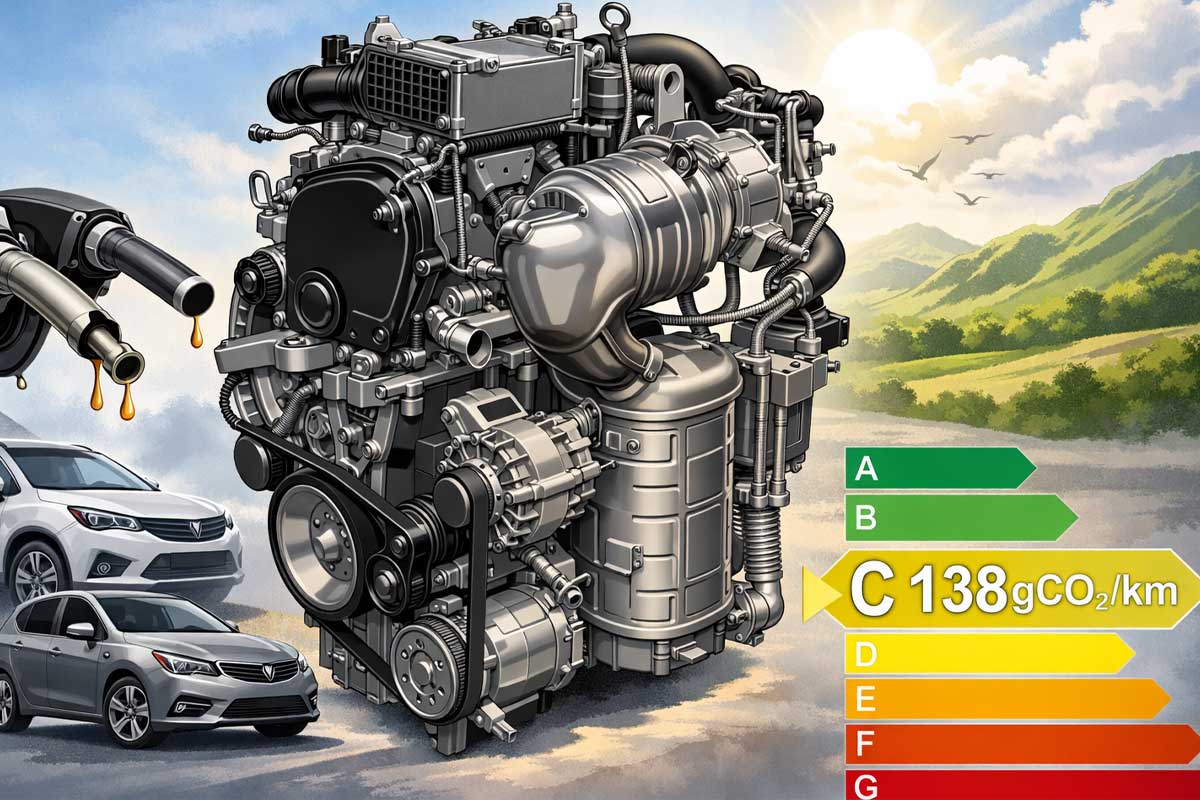
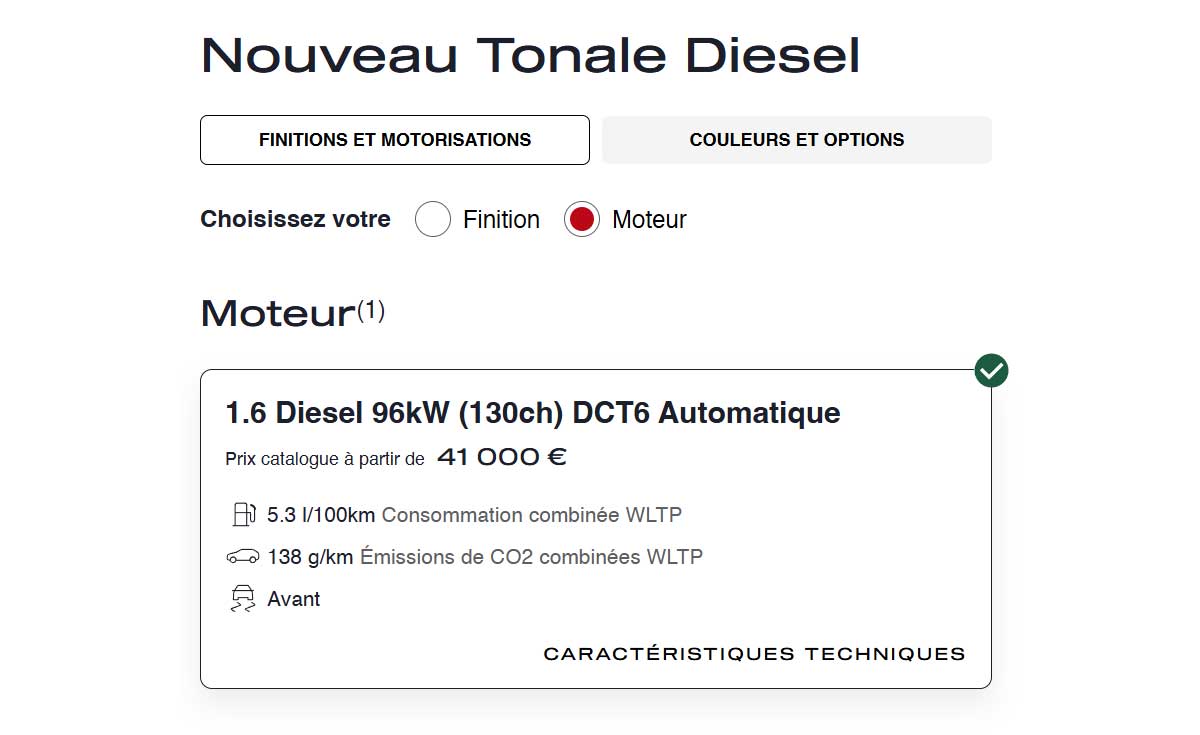
This choice confirms a broader trend in the automotive sector. After several years of very clear-cut discourse, automakers are returning to a multi-energy approach: electric, hybrid, petrol and now diesel will continue to coexist for longer than expected. At Stellantis, the message is clear: the transition will take place at the pace of the market, not just political objectives. And finally, the Group's current strategy can be summed up simply: rather than forcing customers to change technology, it's still better to sell them the car they're ready to buy. On the other hand, this means finding quick solutions with Brussels, as a diesel-powered Alfa Romeo Tonale emits 138g of CO2 per km.
 English
  French
  Italian
  Spanish
  Portuguese
  German
  Japanese
  Turkish
  Dutch
Dutch
For me it's a wise decision to continue to offer diesel on heavy vehicles, it's incomprehensible that Tavares has removed the 2 l HDi on the DS 7 , 3008 , 5008 while the VW group continues to offer diesel on their Suv .
Always such idiots at Stellantis. Now that diesel represents 3% of the market they're back 🤣. 3 years ago a 408 would have needed a diesel variation yes. Now it's over and then who wants a fragile diesel like the 1.5-liter . As for FCA🙄
Not 3, but 5 %
And 49 % of the fleet is diesel.
If there are no offers, there can be no sales.
The pool remains large.
So?
The 1.5 Hdi is still as fragile as ever!
Da kann ich nur recht geben. Ohne angebot keine verkäufe um so mehr hersteller das kapieren um so mehr kommt der diesel zurück.
They would do better to put the 2L mjt of the giulietta and jeep, much more reliable and powerful, if the tonale was available in 2 liters rather than 1.6 l, I would have been happy to change my juliette.
French manufacturers are asses. Personally, I have a mercedes diesel 2.2l engine and a bmw 530 3l 6 cylinder engine. I'm very satisfied with my vehicles, and given their lifespan and my age... I wouldn't give a penny in the years to come for electric crap or lame diesels.
Let's hope they're more reliable than the German crap, because when you see the repeated breakdowns on the S350D class, it's a real nightmare. But in any case, the Italians always have more reliable engines than the Germans, who love mechanical crap.
Geniuses at Stellantis and in the European Commission, 80% of Europeans live in apartment blocks, which means that electrification doesn't concern them...and PLEASE, equip your models with hypers reliable JTD or multijet and not blu hdi dung from Pijot, that's a tip! 😉
Hyper-reliable Fiat-Alfa? Is this a joke? And who's going to buy a vehicle that emits 138g of CO2 per km and pay a very high malus? Hardly anyone. In fact, Alfa Romeo was no longer selling cars in Europe because customers didn't want them.
Because of government naivety and brain washing, especially to our younger population, itc engines are so clean, even the new diesel s,no range anxiety, confident that you can do a long journey without worry,
Electric vehicles are good for town commutes.....that's it
This net zero is all about money for the upper classes and and wealthy government departments, they are full of pure bullshit
Long live the internal combustion engine.
138 g of CO2 for an Alfa Tonale! The Italians are totally lagging behind technologically.