

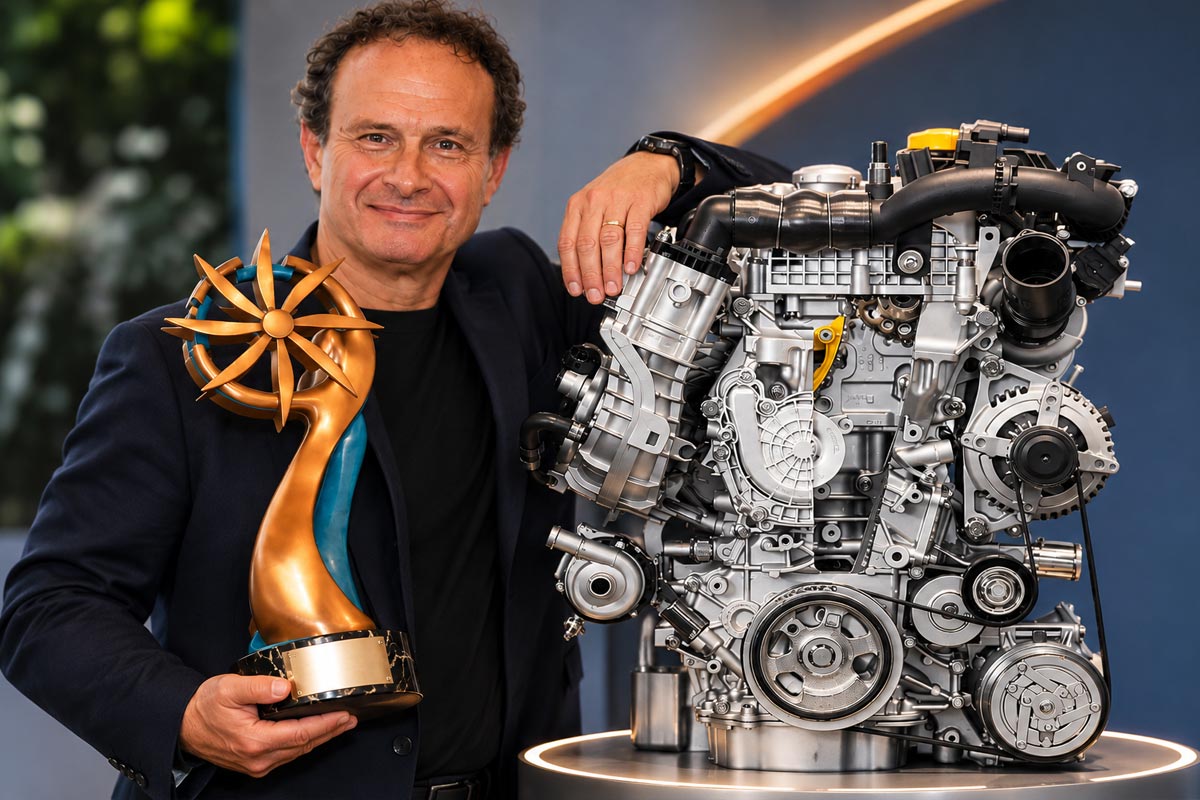
Stellantis has just received the prestigious Barsanti and Matteucci International Award, which recognizes innovation in the field of engine technology. This award specifically honors the group’s heritage of Italian engines, from the famous FIRE engines to common-rail technologies. But behind this recognition, the current industrial reality tells a somewhat different story.
An award that celebrates Italian mechanical engineering
On November 16, 2026, Stellantis announced that it had received the 25th Barsanti and Matteucci International Award. Established in Pietrasanta, Tuscany, this award honors Eugenio Barsanti and Felice Matteucci, two Italian pioneers who were responsible for the earliest research on the internal combustion engine.
Aldo Marangoni, vice president of powertrains at Stellantis, accepted the award. With forty years of experience in the automotive industry, he looked back on several decades of mechanical innovations, with a special focus on technologies developed in Italy.
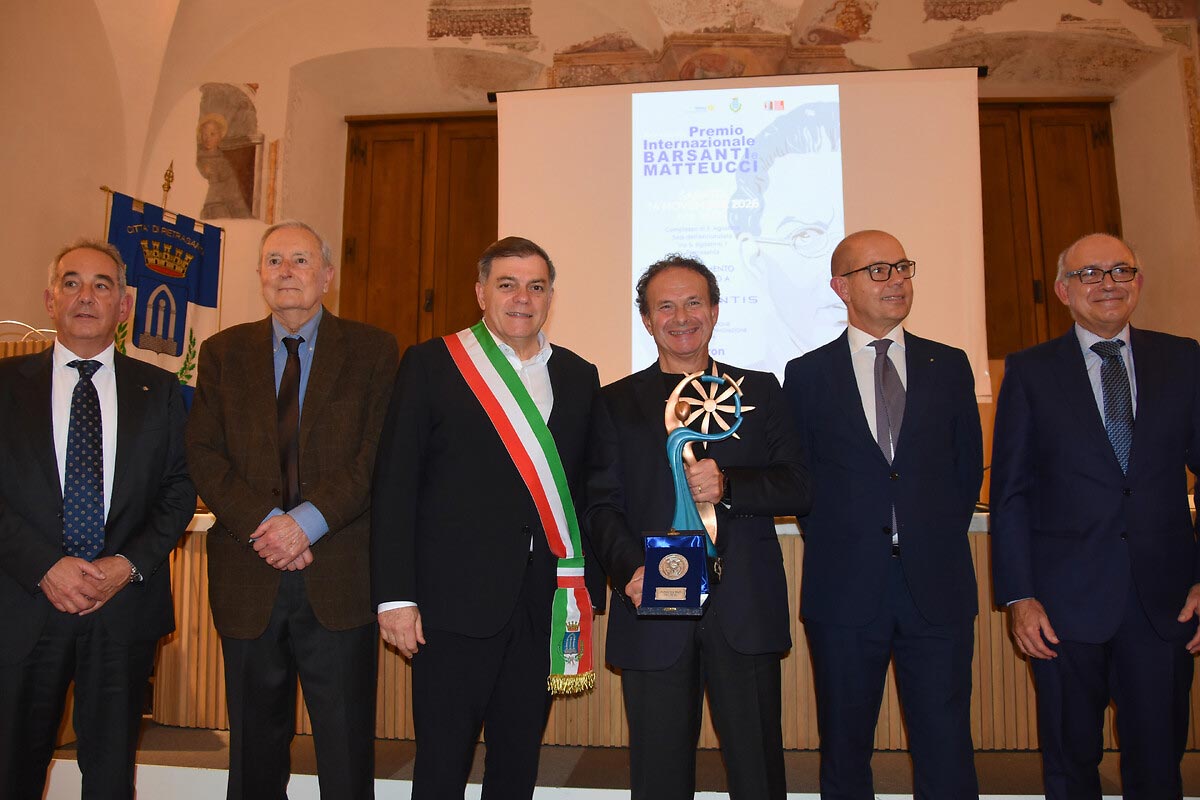
From FIRE engines to common-rail injection systems, including Abarth’s high-performance engines, Italian engineering has made a significant contribution to the group’s history. These technologies have at times crossed European borders to conquer other markets.
«We are proud to receive the Barsanti and Matteucci Award, which celebrates ingenuity and the ability to innovate—values deeply rooted in our history. Our industrial tradition teaches us that the true value of innovation lies in the ability to transform it into concrete solutions, to industrialize it, and to make it accessible to millions of people. This is what we have been doing for generations in the field of engines and mobility, and it is the same philosophy we apply today to new technologies: transforming technological complexity into user-friendly innovations capable of tangibly improving our customers» lives.”
Aldo Marangoni, vice president of the Powertrain division at Stellantis
Italian engines that have made history
Launched in 1985, the FIRE engine (Fully Integrated Robotized Engine) symbolizes this industrial success. Simple, compact, and economical, it powered millions of Fiats and Lancias before giving rise to a new generation of engines.
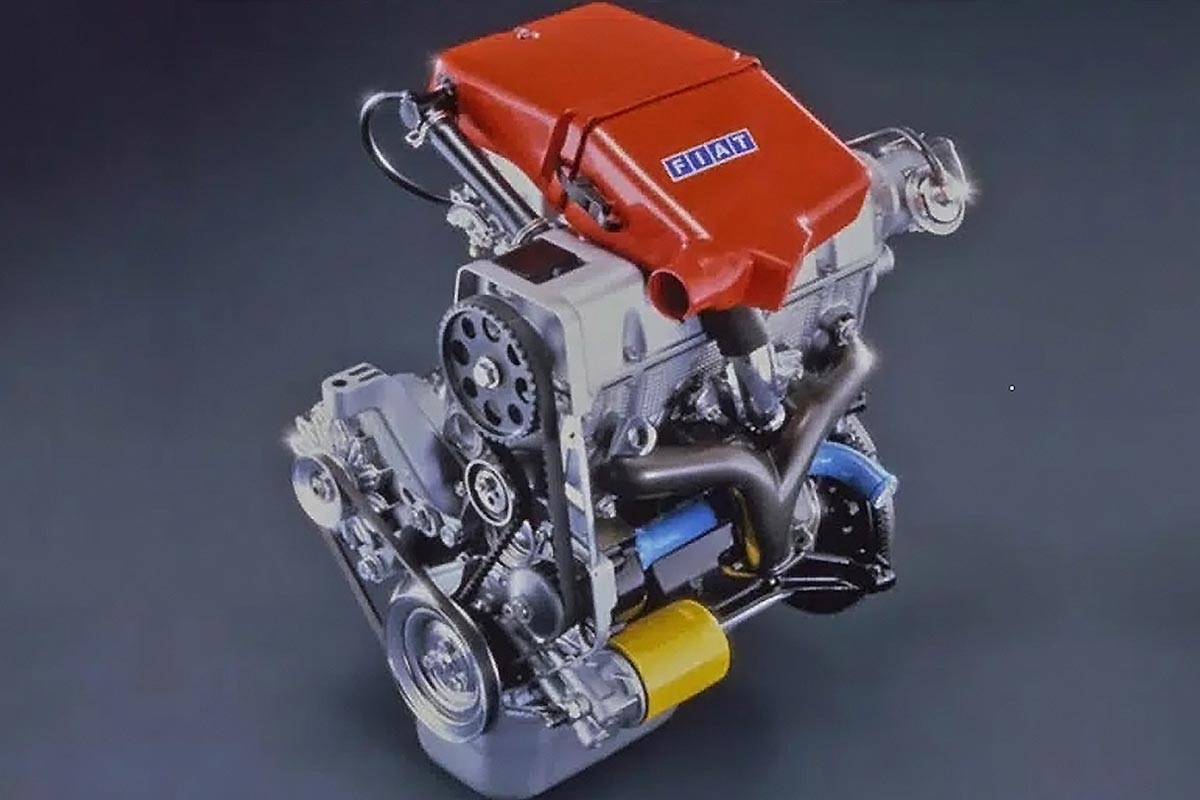
Its legacy is particularly evident in the FireFly engines, also known as GSE (Global Small Engine). This family of engines was developed during the Fiat Chrysler era, but production is now primarily concentrated in Brazil.

Stellantis also highlighted Brazilian FlexFuel engines, Abarth’s sports car models, and the recent Hurricane 4, illustrating the diversity of the group’s mechanical developments.

A recognition that stands in contrast to the reality of the industry
While Stellantis is celebrating its Italian automotive heritage today, the situation at its European plants is less encouraging. The EB2 and EP6 engines, which stem from PSA’s heritage, now play a significant role in the group’s engine lineup for Europe. Their production relies in particular on Hungary, Poland, and, more recently, Morocco.
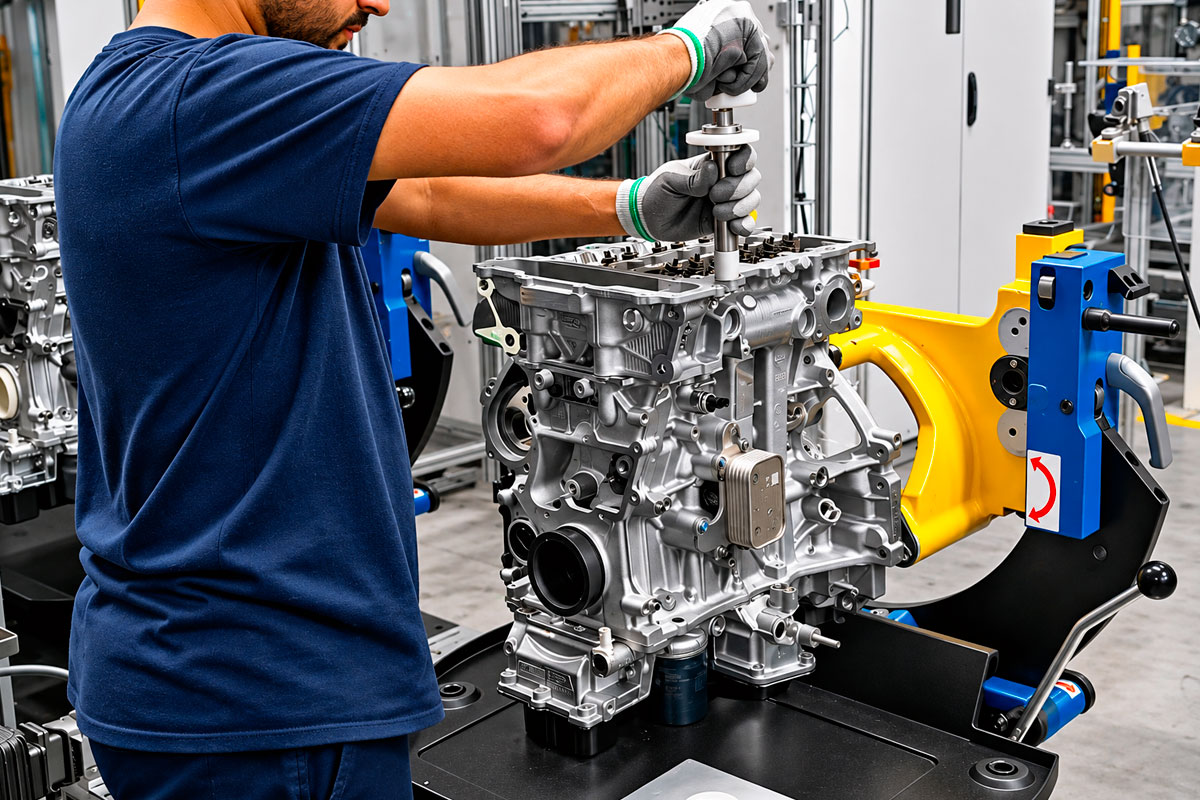
At the same time, Italian operations related to the GSE and GME engine families are running at a slow pace. This stands in stark contrast to the days when Italy was one of the Fiat Group’s main centers for engine development and production. On the other side of the Atlantic, Stellantis is also pursuing a different strategy, notably with GME six-cylinder engines produced in Mexico, GME four-cylinder engines, and V6 and V8 engines intended for the U.S. market.
Italian innovation is celebrated, but what does the future hold for its production?
With this award, Stellantis underscores its ability to transform technical innovations into solutions accessible to as many people as possible. The automaker highlights its internal combustion engines, hybrid and electric systems, as well as its REV technology designed for large North American SUVs and pickup trucks.
But this award also raises a question: What role does Stellantis intend to continue to assign to Italian-made engines in the coming years? For while Italian engineering has undeniably shaped the group’s automotive history, its industrial future now seems far less secure. This is a paradoxical situation for a manufacturer that has just been recognized for that very legacy.
 English
 French
 Italian
 Spanish
 German
 Japanese
 Dutch
How is it that the worst engine in history (Peugeot) is still on the market, even as Firefly engines are being phased out?
Perhaps in a market where profit is the driving force, since the Firefly engine is more expensive to produce…
In the end, whether it's cars or something else, we couldn't care less about the customers 😱
That's right… European capitalism is stale and idiotic.
PSA supporters (who still dare to speak up—what nerve!) are thrilled to see PureDaube all over the current lineup, refusing to see that they’re sawing off the branch they’re sitting on.
It isn't any more expensive to produce, since it is indeed manufactured in Brazil and is also used to power the Citroëns and Peugeots produced there. .
Well, that's a very good question,
What does the future hold for the Firefly engines, which are said to have replaced the unreliable 1.2-liter Puretech in Europe?.
Never again a Stellantis engine. I'm French. But after the 1.2 PureTech, I'm done with Peugeot and Citroën. I have two Renaults, and I'm happy with them.
Technically, there's no such thing as a «Stellantis» engine: it's either a PSA engine or an FCA engine.
You could say that the EB2 Gen 3 is the most "Stellantis" of them all because it benefited from everyone's expertise in making it more reliable.
The 1.2 Purtech engine is a PSA—and therefore French—invention that, unfortunately, was chosen over the Fiat Group's Fire engine.
I’ve been driving cars with Italian engines—like the 1.6 Multijet, 1.2 Fire, and 2.4 Multijet—for years. I’ve never had any problems—these engines have all exceeded 300,000 km, and the 2.4 has even gone past 400,000. With very low fuel consumption, the diesel engines are a bit noisy—that’s their only flaw. On the other hand, the PureTech—supposedly the best engine—is a real disaster, as everyone has seen.
The PureTech engine is a millstone around the Stellantis Group's neck, brought on by its inconsistent leadership.
Thank you, Mr. Tavares. Treating customers like idiots—that’s the result: a great captain of industry. France has a “Mozart of finance”—and we can see the result, too.
The 1.2 Purtech engine is a PSA—and therefore French—invention that, unfortunately, was chosen over the Fiat Group's Fire engine.
It isn't any more expensive to produce, since it is indeed manufactured in Brazil and is also used to power the Citroëns and Peugeots produced there. .
Yeah, me too. I'm sick of Citroën and Peugeot—nothing but engine problems with my gas and… diesel cars.
I’m not very impressed with Italian motorcycles and cars, with a few exceptions. They’re often too flimsy in construction and have too many «cheap» components, such as starters, water pumps, cooling systems, and alternators. This usually resulted in fragile and high-maintenance finished products. In short, the end result was unreliable products.
I speak from experience after owning 5 different Fiat models!
Welcome to 2026!
Then you have to understand everything from an industrial standpoint, and that’s often much less about «marketing.« A factory is expensive. The Brazilian GSE is manufactured in an FCA factory designed for that purpose. As a result, it’s inexpensive.
The new plants for the Moroccan and Hungarian EB models were partially subsidized. That, combined with the fact that the EB is more fuel-efficient, is why it’s the one we see in Europe. Customers haven’t cared about that for a long time 😳
FIAT Panda Erdgas, built in 2008 … with more than 400,000 km on the odometer … what more could you ask for?
French cars have always been of low quality, and that is a fact. This is evidenced by the fact that, with the exception of Bugatti, they have never had any high-end brands. Before the sell-off, Italy had Lancia, Maserati, and Ferrari. Italian engines have always been a hallmark of excellence in the world of mechanics.
With all of Stellantis' activities and advertising campaigns, customer service seems to be falling by the wayside.
I've been waiting for three-quarters of a year now for reimbursement of repair costs under warranty for our Citroën Berlingo.
The French Stellantis Group has »merged» with the FCA Group. French executives wanted to get rid of everything that wasn’t French, claiming it was »rotten.» Yet, in terms of the percentage of vehicles over 10 years old, Italian cars are giving everyone else a run for their money…
I have a 208 hybrid. I'm having trouble starting it. Sometimes it starts, sometimes it doesn't. The Peugeot dealership can't figure out what the problem is, and you...
I wonder why the Ram 1500 V6 diesel didn't get the recognition it deserves!