

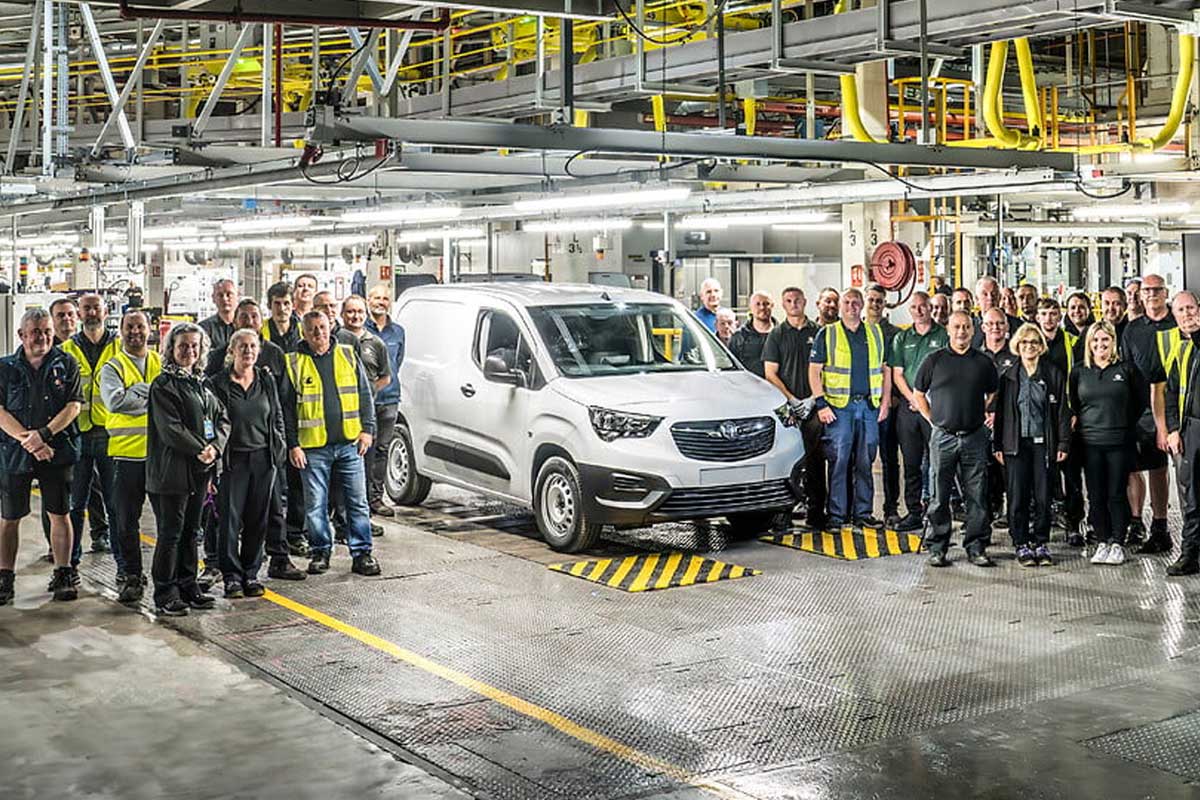
A few days after launching an unprecedented sales offensive in Europe to sell its electric vans at diesel prices, Stellantis continues to send mixed signals on its industrial strategy. The Group has confirmed an investment of around £50 million (nearly €60 million) in its Ellesmere Port plant in the UK. But at the same time, it warns that the future of the site could be in doubt if current regulations on electric vehicles do not evolve.
A new line for electric vans from 2027
The investment announced by Stellantis will enable the installation of a new assembly line dedicated to medium-sized electric vans at the Ellesmere Port plant in north-west England. Production is scheduled to start in 2027.
This line will be used to manufacture electric versions of the Vauxhall Vivaro, as well as other commercial vehicles marketed under various Group brands.
The Ellesmere Port site already occupies a special place in the industrial organization of Stellantis. Today, it is the Group's only site entirely dedicated to the production of electric vehicles. It assembles battery-powered versions of several of Europe's best-known compact vans, including the Citroën Berlingo, Peugeot Partner and Fiat Doblò.
The plant employs around 950 people, and in recent years has also produced 30,000 bodies for export to a Group plant in Algeria. In all, some 14,500 electric vans have recently been assembled here.
But there's one detail that sums up the market's difficulties: a large proportion of these vehicles are not sold in the UK. exported to other countries.
Regulations that worry Stellantis
Although Stellantis is investing today, the manufacturer is quick to warn that the economic viability of the plant remains uncertain.
The main reason is the ZEV (Zero Emission Vehicle) mandate imposed by the UK. This regulation obliges manufacturers to reach a minimum sales quota for electric vehicles.
For light commercial vehicles, the rule is particularly demanding: 24 % of sales must be electric. If a manufacturer fails to meet this proportion, it must pay a fine of up to 18,000 pounds (around 21,000 euros) per missing vehicle.
The problem, according to Stellantis, is that the market is not keeping pace with the regulations.
Since the beginning of the year, electric commercial vehicles have accounted for less than 12 % of UK sales, around half the regulatory target. For a leading manufacturer in this segment like Stellantis, the gap is rapidly becoming costly.
The group is thus faced with a dilemma: produce more electric vans, which are not selling well, or reduce sales of diesel models, which are still in demand from professionals.
A strategy already in evidence in Europe
This situation explains some of the group's recent decisions. As we recently explained, Stellantis has launched a radical marketing campaign in Europe: selling some electric vans at the same price as their diesel equivalents. The deal covers compact and mid-range models from Citroën, Peugeot, Fiat Professional and Opel, and is due to run until June 2026.
The aim is clear: to artificially accelerate the adoption of electric vans in order to get closer to regulatory targets and avoid potentially huge penalties.
The manufacturer is particularly exposed in this segment. In Europe, Stellantis has a market share of almost 30 % in commercial vehicles, which means that any delay in the electric transition could result in massive fines. Some estimates already point to a risk up to 2.6 billion euros by 2027 if the electricity mix remains too weak.
A warning after the closure of Luton
The announcement of this British investment also comes in a sensitive industrial context. Stellantis recently decided to close its historic Luton diesel plant, ending over a century of production and cutting around 1,100 jobs.
The message sent by the Group is therefore twofold. On the one hand, Stellantis confirms its industrial commitment to the UK with this new investment in Ellesmere Port. On the other, it warns that without rapid changes in the regulations governing electric vehicles, production could become economically unsustainable.
At a time when the Group has already announced a strategic reset accompanied by over 22 billion euros in expenses, The question of industrial profitability is now at the heart of all decisions. And the Ellesmere Port plant could well become a new symbol of the tug-of-war between automakers and regulators over the electric transition.
PS: Italpassion is not anti-electric vehicle, it's the news from Stellantis that has been like this for several months.
 English
  French
  Italian
  Spanish
  Portuguese
  German
  Japanese
  Turkish
  Dutch
Dutch