

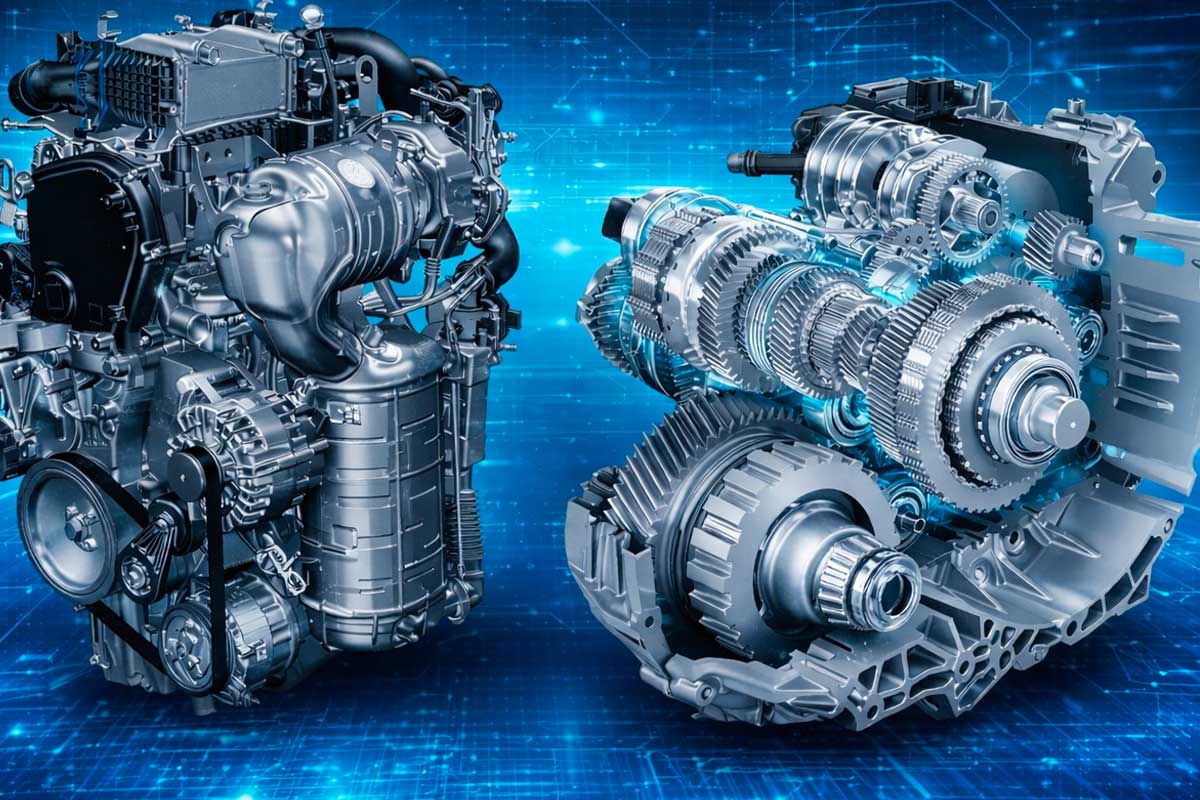
At a time when the European automotive industry is engaged in massive electrification, Stellantis has chosen a more pragmatic path. The Franco-Italian group is not giving up on electric power, but refuses to make it the sole answer to market needs. Behind this inflexion lies a technical project far more ambitious than a simple return to diesel: the birth of a Euro 7 diesel engine that has been thoroughly modernized, electrified and designed to last. This choice marks a break with the past. Above all, it sends out a clear message: not all customers are ready, or forced, to switch to the 100 % electric.
A context that prompts Stellantis to rethink his plans
The last few months have been full of weak signals... that have become obvious. Slowing sales of electric cars, hesitation on the part of private customers, persistent reluctance on the part of business fleets: the energy transition is not following the hoped-for timetable. At Stellantis, this reality has led to several structural decisions, including the postponement of the new Alfa Romeo Giulia and Stelvio until 2028, in order to reintroduce a combustion engine under the hood.
The Group's new management team has adopted a more open approach. Brands retain a certain degree of technological freedom, as long as they comply with regulatory constraints. And within this framework, diesel has never totally disappeared. It still survives today in some of the Group's models, such as the Alfa Romeo Tonale, proof that demand still exists, particularly among long-distance drivers.
The programmed end of BlueHDi
However, this relaunch will not be based on the engines of the past. The 1.5 BlueHDi diesel, inherited from the PSA era, is living out its final months. Initially scheduled to be updated to meet the Euro 7 standard and extend its career to 2030, this engine has finally been discarded. Stellantis has decided. The future of diesel will no longer lie in France, but in Italy. The Group is now relying on a well-known and reputedly robust architecture: the Multijet engine.
The Multijet is back in force... XXIᵉ century version
At the heart of this new strategy is a new 1.6-liter diesel engine, directly derived from the latest generations of Multijet. This engine has been extensively reworked to meet the requirements of the Euro 7 standard, but also to adapt to an environment where combustion alone no longer has a place. For this new diesel will never be “simple”. It will systematically be combined with light electrification. Stellantis plans to add its eDCT6 transmission, a dual-clutch automatic gearbox already used on the Group's petrol hybrids.
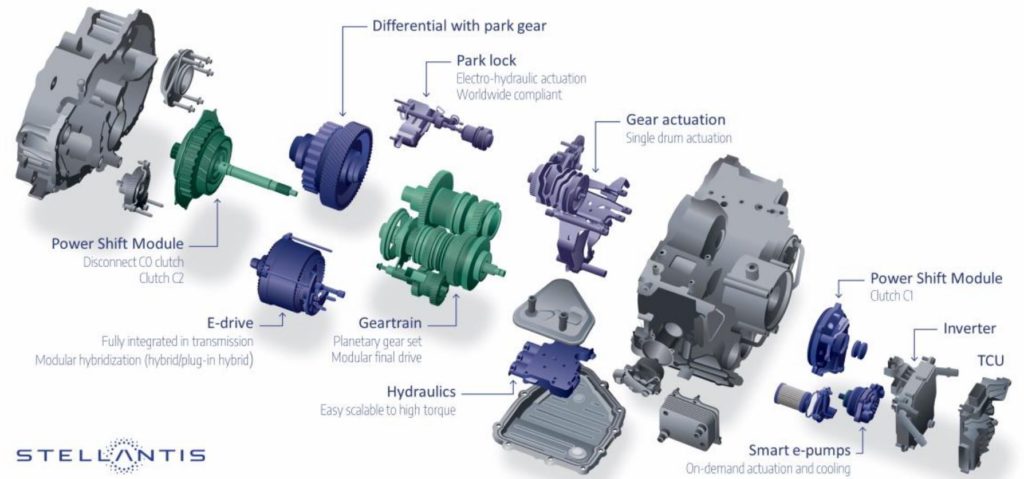
This is where the project takes on a truly disruptive dimension. The eDCT6 gearbox integrates a 20 to 28 hp electric motor, powered by a 48-volt lithium-ion battery. This architecture makes it possible to assist the internal combustion engine, recover energy during braking and even make very short trips in 100 % electric mode.
In practice, this light hybrid diesel promises a significant drop in fuel consumption, reduced CO₂ emissions and full compliance with Euro 7, without sacrificing range or freeway enjoyment. An almost ideal equation for corporate fleets, heavy-duty drivers and all those for whom electric power remains restrictive. This choice also implies a symbolic consequence: the abandonment of the TCT gearbox by certain brands, notably Alfa Romeo, in favor of a technical solution common to the entire Group.
A diesel engine designed to power the entire range
Unlike previous generations, this new engine is not intended for a few isolated models. It is destined to become Stellantis' European diesel base. Several sources point to its arrival as early as 2026 on strategic models, including the future DS Nº7 and the Lancia Gamma.
Underlying this strategy is a clear-sighted observation. Electricity is on the advance, but not everywhere and not at the same pace. Infrastructures remain uneven, costs high, and business uses still largely dependent on combustion engines. While the Chinese competition is focusing on zero-emission vehicles, Stellantis has chosen to diversify its offering. This new Euro 7 diesel hybrid is not a step backwards. It is a technical response to an energy transition that is slower and more complex than expected.
An industrial and symbolic turning point
If this information is officially confirmed, Stellantis won't be content with prolonging the life of the diesel. The group could well redefine its role in the post-2030 era, betting on a sustainable coexistence between electric and hybrid. And the symbolism is strong: after several years dominated by French powertrains, Italian engineering could become the backbone of the Group's new-generation diesel. Official confirmation could come as early as May 21, at a major industry event organized by Stellantis in the USA. A date to keep a close eye on.
 English
  French
  Italian
  Spanish
  Portuguese
  German
  Japanese
  Turkish
  Dutch
Dutch
Good thing. The 1.5, even if made more reliable with the new AAC chain, was too light. It originally replaced two engines. The DV4 and DV6. Very good engines. But they preferred to make a 2in1 with this DV5/DVR. The potential for improvement is greater with this 1.6 FCA. And I think both Peugeot and Fiat will be happy to have it under the hood. The 2.2 FCA has recently been introduced in the group's commercial vehicles. The only engine that still held up well at PSA was the 2.0 HDi. But they discontinued it a year or two ago...
After replacing the controversial puretech with the multijet II on the gasoline side, it's the blue HDI's turn to make way for this euro 7 e-multijet.
It's a palace revolution that marks the end of the Tavares era and Peugeot's dominance of the Stellantis Europe brands.
That said, it's an excellent decision. Combining the frugality of a good modern diesel engine with the zero emissions at low speeds (especially in town) of an electric motor is like having the best of both worlds: no or low harmful emissions in town with very measured extra-urban consumption.
Ich fürchte, wir Kunden bekommen mit den Hybriden nicht nur das beste aus beiden Welten, sondern auch das Schlechteste: hohe Verbräuche wegen hohem Gewicht und höhere Fehlerrate weil mehr eingebaute Teile gegenüber einfachen Verbrennern, hohe Wartungskosten wegen der Komplexität und andererseits Batterieausfälle wegen zu kleiner Batterie und häufiger vollständiger Nutzung von 0 bis 100%. Ich möchte so eine komplexe Maschine nicht, wenn es Alternativen gibt
A new engine that's already outdated. Efficiency (internal source) poor and reliability still not mastered. In short, Stellantis will please some. But I'd advise against buying one! Already with light hybridization, what do they expect?
You're so wrong, you don't comment when you don't understand.
They hope to pass the euro7 standards. Unless you've misread, everything is already explained. .
The 1.6 mjtd Fca is more reliable than the 1.5 Hdi PSA. Equipped with hybridization, it should do the trick, but that doesn't mean we can't offer electrics, gasoline hybrids and DCs.
Super Idee, jetzt warte ich nur noch auf die Umsetzung und hoffe daß dieser neue Diesel auch bei Opel Einzug hält. Wäre mein absoluter Favorit!
I'm no expert, but I'd be more convinced by a range-extender type solution with pure electric transmission, and a tiny combustion engine working only at one operating point to recharge the battery. It seems to me simpler, more reliable, more efficient and with greater driving pleasure.
I think we need to move on to the next stage, with range-extending systems or much more advanced hybridization. Micro-hybrids are outdated, they're just a way of using technology to save money.
Their technologies are already outdated
Stellantis is also planning to use Leapmotor's range-extender technology, so any technology is good for the customer's choice: diesel, hybrid, electric, etc. .....
Where do you get your information from?
Bei aller Diskussion über die Technologien muss man immer sich Betriebswirtschaftlich denken.
Es nützt nichts das beste Produkt zu haben wenn es keiner kaufen will oder kaufen kann. Man muss das Produkt haben das sich am besten verkauft.
Like other European automotive groups, Stellantis is faced with a schizophrenic market, with regulations forcing it to electrify at breakneck speed and customers still very attached to combustion engines. This means that we have to maintain two business models that consume a lot of cash flow, with the development of new powertrains representing the largest investment item.
Warum möchte jemand nich einen Verbrenner fahren? Ist mir schleierhaft.
Ich fahre lieber verbrenner.
Denn der Ausbau der e säulen im ländlichen Gebieten ist mager und die
Preise der e Autos noch zu hoch.
Und Solch ein Motor wäre gut nur müssen die Kinderkrankheiten da erstmal raus.
Damit es sich lohnt.
Der nächste Ladepunkt von Bestensee ist 28 km entfernt. Noch Fragen?
Another engine hastily cobbled together to meet a new standard when they were already struggling with the previous one.
Reinvesting in diesel combustion when sales have totally collapsed since dieselgate... at a time when electrics are taking off. BMW is selling over 40% of X1s in electric form, and the iX3 has sold its production quota for 2026.
Stellantis is decidedly never in the right tempo. And continues to make bizarre choices. It would have been smarter to invest in full hybrids. Eliminate the PHEVs, which are sold at far too high a price.