

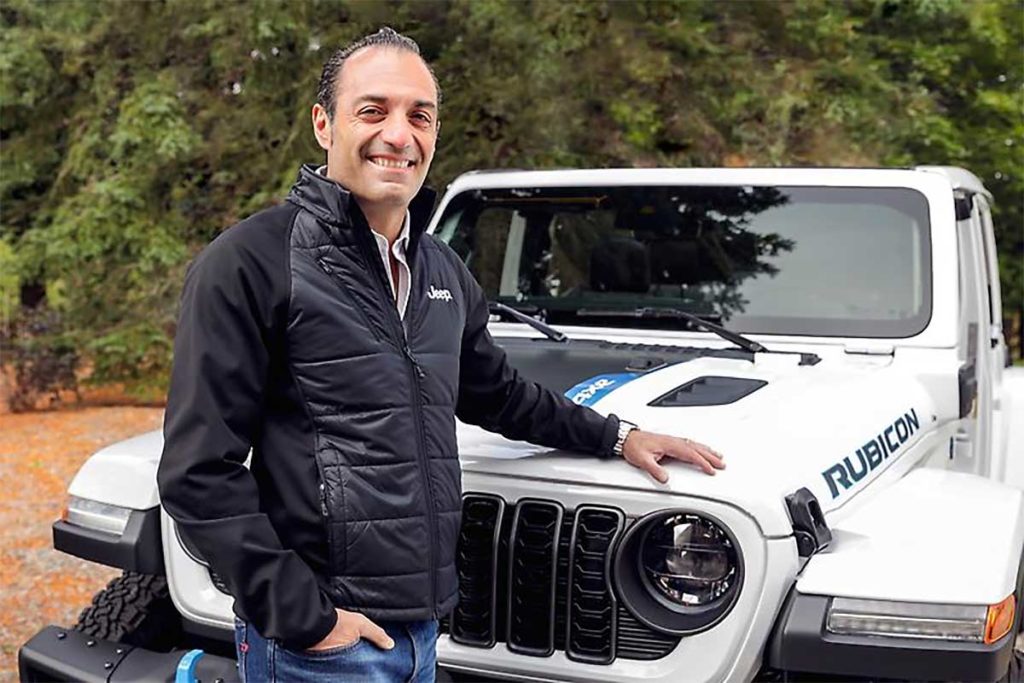
Antonio Filosa is definitely not a man to mince his words. A month after he criticized european rules deemed "bad" for the automotive industryCEO of Stellantis took advantage of Goldman Sachs Industrials & Autos Week to make a clear admission that many automakers were thinking but not daring to say: internal forecasts on the electric transition were simply wrong. And the group has already profoundly reoriented its strategy.
"Some assumptions were wrong
Asked about Stellantis' American and European trajectory, Antonio Filosa acknowledged a major discrepancy between the internal projections made in recent years and market reality. The group once envisaged 50 % electric penetration in the US by 2030. Today, the market has still not passed the 6 % mark. As for Europe, the idea of reaching 100 % electric by 2035 now seems too optimistic, given actual demand and purchasing power. "Some assumptions were wrong, but we listened to the market", he assumes. In the space of four months, Stellantis says it has reviewed its product and investment strategy.
Hybrids once again become a strategic weapon
And the most obvious example comes from the United States. Long considered to be the natural home of electric vehicles for Stellantis, the North American market is rediscovering hybrids... and even V8s. The return of the Hemi engine to Ram pick-ups created a commercial earthquake: ten thousand orders in twenty-four hours, fifty thousand in six weeks, to the extent that production had to double. Today, Filosa is convinced that hybrids, and in particular simple hybrids, will become one of the preferred technologies of American motorists.
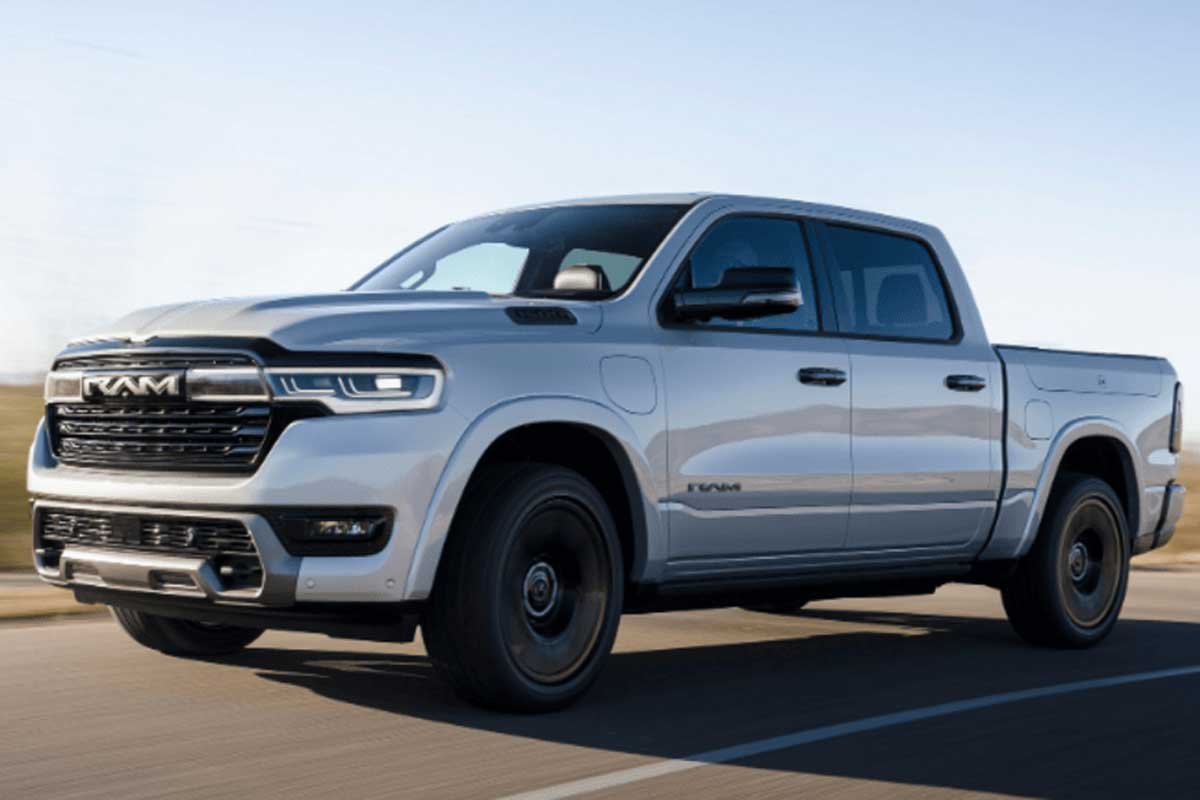
The success of the Ram V8 is no flash in the pan. The new Jeep Cherokee, completely redesigned after "listening to consumers", arrives in the second largest segment in the United States, where it intends to play a structuring role. Stellantis sees it as a perfect example of product refocusing driven by demand, not by regulatory or marketing dogma.
The United States relaxes, Europe questions
The American dynamic is all the more promising in that it is accompanied by a major political change. The Trump administration has just eased CAFE standards, offering manufacturers greater flexibility. Filosa sees this as an opportunity to rebalance the product mix and capture new demand that no longer existed ten months ago.
In Europe, the mood is very different. Brussels is preparing a long-awaited new regulatory package, but there's no sign yet of any immediate easing. Filosa once again calls for a "balanced and gentle" energy transition, reminding us that a reasonable equation must take into account three pillars: environmental protection, job preservation and affordability.
It also highlights an often overlooked fact: the needs of light commercial vehicles differ profoundly from those of private cars. The high cost of electric power in this segment makes it essential to adapt standards, while opening up to alternative technologies such as synthetic fuels. This contrasts with the more rigid positions taken in recent years (100 % electric, hydrogen, etc.).
Change of method and revised strategy
While Filosa appears to be on the offensive when it comes to the company's technological direction, he is much more cautious when it comes to the financial situation. He assures us that Stellantis is broadly in line with its forecasts at the end of November, but acknowledges that the priority is to return to positive cash flow generation. A few more months of progress "quarter after quarter" will be needed to solidify the company's fundamentals.
Capital Market Day, now scheduled between May and June 2026, will unveil the Group's new strategic plan. This extra time shows management's determination to rebuild a realistic project, based on revised assumptions and a finer reading of the market. Improving launch discipline, controlling inventories and moving upmarket in profitable segments should be the major levers of this reconquest.
A new era for Stellantis?
In just a few weeks, Antonio Filosa will have imposed a clear change of direction: returning Stellantis to a strategy aligned with real demand, market diversity and the economic imperatives of the moment. This approach contrasts sharply with that of his predecessor Carlos Tavares, who was more focused on an accelerated electric transition.
By publicly acknowledging that certain assumptions were wrong, the CEO is sending a rare signal in the industry: that of a company ready to quickly correct its trajectory rather than suffer the consequences of a rigid strategy. The American market is already responding positively. Europe, on the other hand, is still waiting for the framework that will allow it to breathe again. If Brussels relaxes its vision, Stellantis promises to invest more on the continent. If not, the game could be played elsewhere... where consumers dictate the tempo, not regulations.
 English
  French
  Italian
  Spanish
  Portuguese
  German
  Japanese
  Turkish
  Dutch
Dutch
Mouais nothing new under the sun. Filosa is one of Trump's clients, so he doesn't give a damn about the future of the environment. In short, he's going to realign Stellantis to sell V8s to the US. As for the Italians...
My poor friend, if you knew the cataclysms the earth has undergone in 4 billion years and it's still here, tell yourself that you and all the humans on this planet will disappear sooner or later, that planet earth, polluted or not, will still be here for another billion years! 😂
Ah well, the Romans and Egyptians and other peoples were already consuming as much oil and coal and gas 2000 years BC as they have in the last 100 years? 🤨
It's not the Earth that's my problem. Yes, it will recover. It's rather those who hope for a "human" future who need to ask themselves questions. I'm too old, so I'm more interested in the planet's environment and respect for others. Something that seems to be more and more abused by all this rabble who only think of their own money first. But then, man has always been a selfish parasite.
Die Religion der Auspuff-Proleten haben ihre ganz eigenen Gelehrten. Physiker und Geologen wurden offensichtlich bekehrt und erheiligen nun das zugewachsene Ozonloch als Götze.
Dio , per fortuna , non ha permesso all'Uomo di modificare il clima . Sono millenni (ripassa un po di geologia) che il clima varia sulla Terra. Si trovano fossili di conchiglie nel deserto oppure sui fianchi delle nostre montagne. Vuol dire che nei tempi addietro in quei luoghi ci fu il mare. L'Uomo può inquinare , questo si , ma la Natura è talmente potente che non si fa condizionare più di tanto.
Dio...è un Scherzo?
What Tavares and Imparato wanted now appears to be totally off the mark. You can't force people to buy electric cars if they don't want to, for the same reasons (range too short, practicality with recharging difficulties, purchase price).
Hybridization is needed, and constraints need to evolve for the market to adapt gradually. Otherwise, drivers will keep their old, polluting cars, and we'll end up with the opposite of the desired effect: lower CO2 emissions.
Tavares wanted to be ready for 2035, and the performance of Tesla and the Chinese in Europe shows that it's possible to sell EVs in Europe. The big problem is that Stellantis' EVs are clearly not up to scratch. Just look at the tests: range is shorter than advertised, and recharging is a disaster!
What kind of argument is that?
Personally, I have a friend who bought an electric R5 a year ago and had a lot of problems that I won't go into here, otherwise I wouldn't have enough space for a comment...but I guess it didn't teach him a lesson, because he's just bought a Tesla! 😂😂😂
Yes, it would be interesting to know what problems your friend has with the Renault 5 E-Tech. I think it's a great design and I'd love to try one.
A year ago, the R5 was a new model that inevitably had some teething troubles.
All in all, a tremendous success!
Which clearly means that once you've tried electric, there's no going back.
Thermal is prehistory !!!!!
It seems that many of those who love internal combustion cars have a prehistoric passion. It would seem that many electric car owners also like to go back to combustion engines. A taste for the prehistoric past, no doubt...
il motto di questo signore è " MAGLIO UN UOVO OGGI CHE UNA GALLINA DOMANI ".intanto la gallina la mangiano i cinesi e i giapponesi.
Even if Filosa is right overall, he shouldn't forget that even if EV sales disappoint in volume terms, more are being sold every year.
All they need to do is cost less and sales will soar!
Electric cars are progressing very slowly, and are mainly bought by companies to go green and for tax reasons.
Wrong! It was the same speech 20 years ago for the Prius remark. Now you're the first to say "we need hybrids".
Spero che i cinesi continuino ad aprire 20 centrali a carbone l'anno per produrre auto elettriche, così aumenta l'effetto serra che io ho sempre freddo.
Filosa's orientation is now clear: favor the US with the necessary pragmatism.
As far as Europe is concerned, he will try to preserve a base in Italy for emotional reasons, as far as European regulations will allow.
It will take the previous team three or four years to repair the damage done to the quality of the vehicles, before customers get bored.
We're going to see the disappearance of Stellantis on the old continent
I don't understand why manufacturers don't develop new techniques for diesel engines, because I think it's possible to reduce fine particles with talented young engineers.
What are we going to do with our batteries? drive them underground... a big problem for the future.