

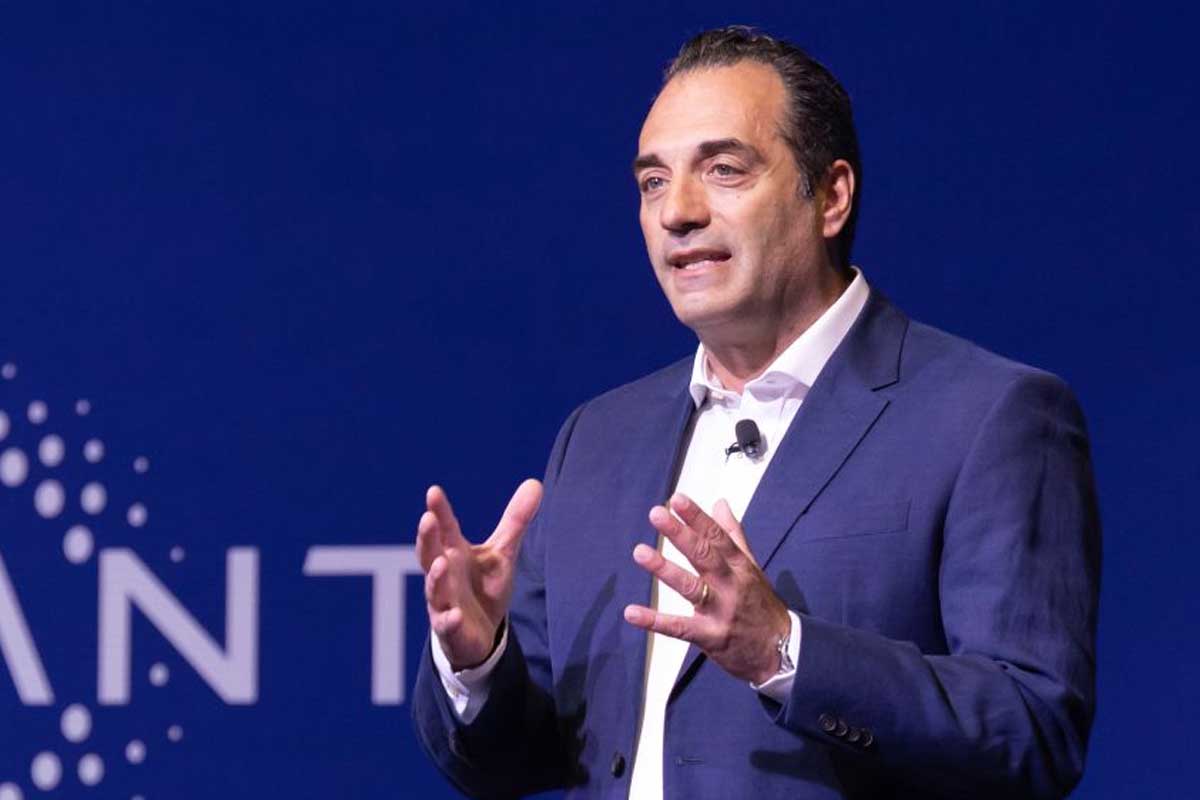
On the sidelines of the Detroit Auto Show, the CEO of StellantisAntonio Filosa, delivered a speech eagerly awaited by the American financial markets. Behind the reassuring formulas on strategy and execution, one strong idea stands out: the Group's brand portfolio could be profoundly reorganized in the United States, even if it means doing without certain Italian brands.
2026, the year of truth for Stellantis
Appointed CEO last spring, Antonio Filosa made no attempt to disguise the urgency of the situation. In front of investors, he described 2026 as "the year of execution", when Stellantis will finally have to turn promises into concrete results. The Group, born of the merger between FCA and PSA, is emerging from several difficult years in North America, marked by falling volumes and market share. The figures are stark: between 2021 and 2024, Stellantis sales in the United States fell by 27 %, dropping the group from fourth to sixth place in the market.
The United States as a priority
In his speech in Detroit, Filosa confirmed an assertive refocusing on the most profitable brands and those most recognized by American customers: Jeep and Ram. This choice is accompanied by a change of tone on electric vehicles, with a more pragmatic approach than that taken by former CEO Carlos Tavares. Without denying the energy transition, Stellantis now wishes to align itself more closely with the real demand of the American market, still largely dominated by combustion engines and hybrids. The aim is also to respond to a central problem: the average price of new cars in the USA, now close to $50,000.
More affordable models
One of the pillars of the new plan is affordability. Filosa spoke of a veritable price "reset" and the possible arrival of new models under the $30,000 mark. A mid-size Ram pickup has already been confirmed for 2026, while the project for a $25,000 electric Jeep, imagined during the Tavares era, now seems to have been abandoned. This product and price refocusing mechanically implies a rationalization of the offering. And it's precisely at this point that the question of Italian brands resurfaces.
Fiat and Alfa Romeo in the hot seat
When asked about the future of the brand portfolio, Filosa did not rule out a regional refocusing, explicitly citing Fiat and Alfa Romeo as struggling brands in the US. The information was confirmed by CNBC, which reports that the CEO is considering a reduction or geographical reorganization of underperforming brands. Figures for 2025 lend weight to this hypothesis. Alfa Romeo registered just 5,652 vehicles in the United States, down 36 %. Once the brand's second-largest market, the country is now just the fourth-largest in the world. With no major news expected before 2027, apart from a restyled Tonale, the situation shows no sign of improving in the short term.
The situation is even more delicate for Fiat. In 2025, the brand recorded just 1,321 registrations in the USA, an almost symbolic volume. The launch of the electric Fiat 500, produced at Mirafiori and pushed by the former management, was a resounding failure. Apart from the 500, the Fiat range no longer corresponds to the expectations of the American market, dominated by SUVs and large vehicles. And the fact that see Fiat looking to import Topolino makes you smile...
Rational rather than ideological choices
Filosa was careful to point out, however, that Stellantis wishes to "remain united". The idea is not to dismantle the group, but to adapt its presence to local realities. In an American market under pressure, concentrating investments on Jeep and Ram appears to be a rational rather than an ideological choice. The next capital markets day, expected between now and June, will be decisive. It will have to clarify whether Fiat and Alfa Romeo will maintain a presence, however small, in the United States, or whether Stellantis will gradually withdraw its Italian brands from the North American market. One thing is certain: for Antonio Filosa, 2026 will not be the year of half-measures.
 English
  French
  Italian
  Spanish
  Portuguese
  German
  Japanese
  Turkish
  Dutch
Dutch
Then there's Jeep, Ram and Dodge. And in particular the Charger and Challenger, worthy heirs to the MOPAR muscle cars of the Chrysler Group's heyday!
Indeed, it is wise to withdraw Alfa and Fiat, whose ranges no longer correspond at all to American tastes, and on the other hand to double down on Maserati, for whom reconquest involves this strategic market in the luxury sector.
Or not. How about withdrawing Maserati and Fiat and in fact merging AR with Maserati. And then use CHRYSLER as the actual luxury car division of this company. Maserati has been struggling to sell cars and NO ONE wants one out of warranty whic ruins their resale. It makes sense to focus Luxury aims on Chrysler.
At Stellantis, we change our minds like our shirts, we think that the electric Giulia and Stelvio 100% will sell, before belatedly backtracking to the point of having to delay the release of new models, we have an insufficient range for Fiat and Alfa Romeo, we're not renewing the Maserati range either, we don't advertise, and we never know where we're going. A pity, especially as the North American market was not insignificant.
Fiat heeft weinig toegevoegde waarde in Noord Amerika. Alfa als premium niche merk wellicht nog wel bestaansrecht.
Lokaal goedkopere multi merk modellen produceren op een smart car versie van het stellantis medium platform wellicht een idee? Voldoet prima aan de eisen van de consument.
Il mercato vuole che sia dominio del genere presente cioè potente vistoso
No Italian car brand they offer in the US is sseen flashy and exciting. They are all as poorly engineered but well.looking unreliable as they age cars
Well Americans dont like small cars. So Fiat is dead and Americans dont like Alfa Romeo build qualiity. It would make more sense to stoo wasting money and make Chrysler the actual luxury car unit for this company.
Not all people want a full computerized vehicle with a tv screen in it. There are some drivers who still want to drive instead of being driven. How about a vehicle thats comfortable to drive at a good price without all the automation.
Yea! A nice comfortable sedan for US roads with a Chrysler badge on it?
Weer een plan van een Ceo die het allemaal beter zal doen wat een lachertje ze blijven maar aan klooien en het gaat alleen maar slechter
Ze hebben het helemaal verkloot door heel slechte producten te leveren met nog veel slechtere en arrogante service en garantie en dat maak je niet goed met weer van die stomme plannen , nee dit gaat nooit meer goed komen met stelantis streep er door
I agree with you. Its the same rehash of nonsense for 20years. Only concentrate on Jeep and Ram and neglect all the other brands. They need a US CEO to either shutter 7 of their 14 brands which are all European and concentrate on the 7 remaining brands healthily.
In the US, all the Italian dealers are kept as independent of each other, with separate entities. They should consolidate Fiat, Alfa and Maserati under single dealerships to cut costs and offer a wider range of options at a single point. And yes, scheme some builds in the US to bypass tariffs.
Thats a good idea merging F, M abd AR together because no one is buying them in suffficient numbers. Fiat sold 1300 cars in 2025, Maserati 422 and Alfa Romeo 6000 in 2025? In the US. That is not a healthy market then...time to reshuffle resources towards Chrysler and Dodge who have an established auto marque and can easily sell more than 8000 cars in all of North America
It was a mistake to bring Fiat and especially Alfa Romeo back to the US. They need to recognize that Americans do not view these as premium brands and aren't willing to pay a premium for them, especially in the case of the 500 which offers comparably less for your money than the competition. There is a good case for the 500 in the USA but only if it's cheap. Alfa Romeo has nothing to offer that couldn't be sold as a Dodge just as well but again this is not a premium brand and can't cost more than the competition.
Nah, you have no clue. Fiat maybe, but Alfa Romeo has a place as a BMW and Audi competitor in the highly profitable US market. The issue has been product delivery and marketing.
Your mindset is one that destroys brands and companies.
Ho Hum! Nonsense! Alfa Romeo has been in the 15yrs and hasnt sold more than 11,000 units ever. They havent even met their 2011 sales target of 40,000units/year ONCE! A-R is not seen as an Audi or BMW competitor to Americans. Its seen as a Mazda or VW competitor.
True! And to Americans Alfa Romeo and Maserati hold no greater luxuriousness than a Chrysler. Chrysler is up there with Buick in the near luxury or luxury lite category. So it makes sense to focus on them as they price cars at what customers will pay.
Il mercato vuole che sia dominio del genere presente cioè potente vistoso
We want mid-range models, e.g. Giulietta, also in diesel, very efficient and economical as were my old mito jtd .....
Congratulations to the junior but a 1300 jtd is impossible ????
I dream of alfa but the choice is no longer there.....
"Our appeal is getting more selective..."
Hahaha! In other words "We build cars they dont like. We have to stop doing that.