
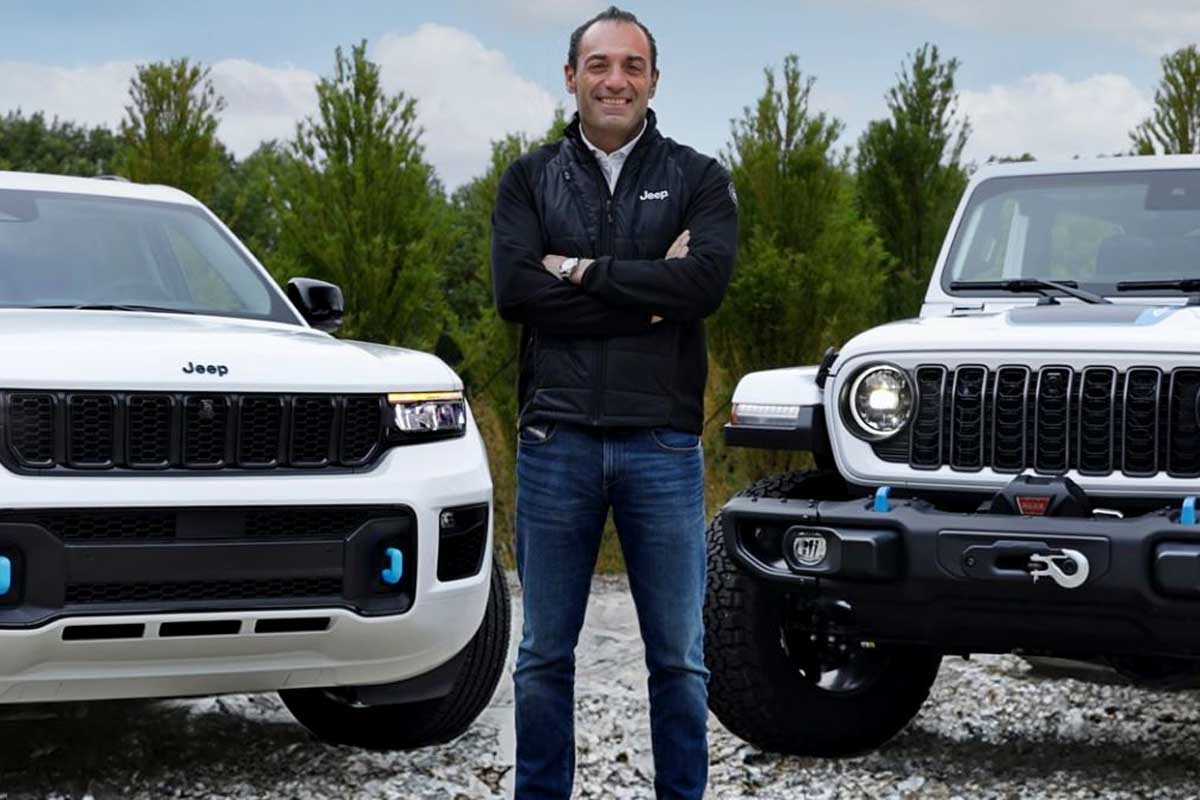
Five years almost to the day after the birth of StellantisThe automotive group born of the merger between FCA and PSA is going through a pivotal period. With its financial markets in turmoil, its electrical strategy being readjusted and the future of certain brands in doubt, the automaker is celebrating this symbolic anniversary in a context that is far from serene. And yet, at the head of the group for the past six months, one man displays an almost disconcerting optimism: Antonio Filosa.
A tense anniversary
On January 16, 2021, Stellantis was officially born, becoming the world's fourth-largest automaker. An industrial marriage greeted with caution, even skepticism, not least because Sergio Marchionne had always ruled out such an alliance. After the Carlos Tavares era, which came to an abrupt end at the end of 2024, the group is now entering a phase of profound recomposition. On the markets, the punishment is severe: market capitalization has fallen from around 65 billion euros in 2024 to almost 25 billion today. Nearly 40 billion euros have been lost, leaving shareholders and employees waiting for clear signals.
"I'm having a lot of fun"
Antonio Filosa chose to deliver his first real assessment at the Detroit Auto Show. Based in Detroit, where he spends around half his time, the new CEO has taken on a very personal tone, almost jarring in such a context. "I'm having the time of my life," he says. "I love my job, the teams, our brands. How could I be sad?" A statement that contrasts with the prevailing nervousness, but that also reflects his method: presence in the field, direct answers, ongoing dialogue. Filosa explains that he personally responds to dealers' messages and multiplies exchanges with the Group's ecosystem.
Dealers and unions: mending the rift
Under the previous management, relations with the sales network and unions, notably the UAW in the USA, had deteriorated sharply. Open letters, strike threats and public criticism marked 2024. Today, Filosa is calling for a gradual easing of the situation. Discussions with dealers are described as "constant", and relations with unions and suppliers are said to be "improving day by day". A change of tone that seems essential to support the industrial recovery.
America as a priority
The strongest signal sent by Stellantis concerns the United States. The group has announced 13 billion in investments in the Midwest, the largest industrial commitment in its century-long history. This will create around 5,000 direct jobs and up to 20,000 additional jobs in the supplier ecosystem. This decision confirms the company's commitment to refocusing on North America, a key market for Jeep, Ram, Dodge and Chrysler. By comparison, Italy is relegated to the background: 2 billion euros of industrial investment, supplemented by 7 billion in supplier purchases, with the flagship project of launching the Fiat 500 Hybrid at Mirafiori, expected to reach 100,000 units per year by 2027.
Electricity: the end of dogma
Another major turning point: the electrical strategy. In a U.S. environment shaken by tariffs and cuts in state aid, Stellantis has slowed down sharply. Plug-in hybrids have been suspendedA number of electric projects have been cancelled or rethought, while the return of iconic combustion engines, such as the V8 HEMI, has now been accepted. Filosa speaks of "freedom of choice" for customers. The future, he believes, will involve a balance between simple hybrids, range-extending vehicles, electrics and conventional combustion engines. A pragmatic approach, guided by real demand rather than ideological objectives.
Fifteen brands, then what?
With fifteen brands to manage, Stellantis has one of the most extensive portfolios in the industry. An asset... but also a burden. When asked about possible divestments or reorganizations, Filosa remains deliberately evasive. "Everyone would like to have Jeep, Ram, Dodge, Chrysler, Fiat, Peugeot, Citroën or Opel," he reminds us. The answers will come at the Capital Markets Day scheduled for 2026, which should also mark the presentation of the Group's new industrial plan. Until then, nothing has been officially ruled out, including a downsizing or repositioning of certain brands.
 English
  French
  Italian
  Spanish
  Portuguese
  German
  Japanese
  Turkish
  Dutch
Dutch
"Sergio Marchionne had always ruled out such an alliance. That says it all, because Stellantis is killing Italian brands.
Marchionne may have made mistakes by not renewing the Alfa Romeo and Fiat ranges sufficiently, but with FCA Italian cars remained Italian, and weren't going to borrow everything from PSA. Tavares will remain the gravedigger of the Italian brands, but can he make up for this under Filosa's leadership?
"... because Stellantis is killing Italian brands". STLA EU is REVIVING (!) FCA's Italian brands!
It was FCA that killed the Italian brands with chronic under-investment for over 15 years.
Apart from the Alfa Stelvio and Giulia and the electric-only 500... What was the renewal?
The Tonale / Jeep with an old chassis!?
Alfa would not exist today without Junior!
Who stopped the Punto? ...and the Lancia?
Thank you Marchionne.
That doesn't mean a thing! Under Merchione, no PSA, so no PSA base. Although the MPVs and SUVs were already in common party. And what about Lancia, which Merchione stupidly Americanized to sink the brand for good?
Filosa seems to me to be nothing more than an Americanized clown.
MPVs and SUVs - not all of the latter - predate Marchionne. And even the large Ducato-type SUVs predate PSA, since they were the fruit of collaboration between Fiat and Citroën (Fiat 242 and Citroën C32/C35).
And not all these vehicles are on PSA bases. The Ducato and Fiorino - and their cousins - are on Fiat bases.
"Filosa seems to me to be nothing but an Americanized clown".
In any case, it clearly doesn't inspire enthusiasm.
"he does not inspire enthusiasm You met him?
No, of course. But i'm european and his project - pro-american - doesn't excite me.