

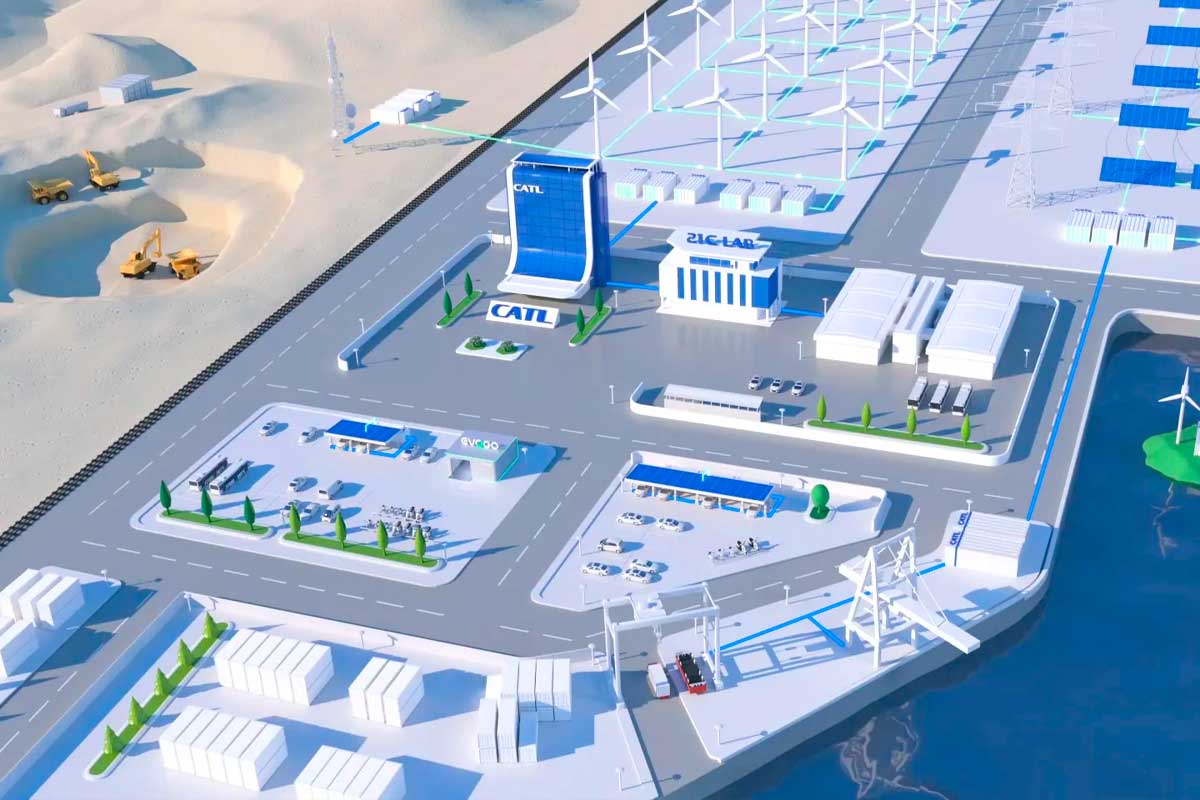
The industrial equation of Stellantis around the electric car is undergoing profound change. In the space of a few days, two major pieces of information have reshaped the Group's battery strategy: the official abandonment of the ACC gigafactory in Termoli, Italy, and doubts surrounding the American partnership with Samsung SDI. Two continents, two situations, but one common thread: electric power is expensive.
Termoli: the European gigafactory that won't happen
This time, there's no ambiguity. Automotive Cells Company (ACC), the joint venture between Stellantis, Mercedes and TotalEnergies, has officially launched labor talks to halt its gigafactory projects in Germany and Italy. The Kaiserslautern and Termoli sites had already been frozen since May 2024, but the decision now takes on a definitive dimension.
According to ACC, the market has changed profoundly. The Group explains that it needs to concentrate its resources in order to improve its competitiveness and technological maturity, making the planned investments in these two countries unsustainable. However, the Billy-Berclau/Douvrin site in France remains the strategic center, proving that the aim is not to abandon Europe altogether, but to scale back the initial ambition.
For Stellantis, the priority now is to avoid a social shock. The group assures that ACC employees will retain their jobs within its industrial perimeter, and points to the arrival of a production line for the e-DCT gearbox by 2026 at Termoli, accompanied by investments in Euro 7-compatible GSE combustion engines beyond 2030.
But at Termoli, the decision goes far beyond the technical issue of batteries. It rekindles a deeper concern: that of an industrial transition that never comes to fruition. The unions are speaking of a national emergency for the Italian automotive industry. The region is demanding concrete guarantees and asking Stellantis to play a direct role in the site's future. Regional president Francesco Roberti refuses to allow the region to be subjected to "top-down decisions" and demands a genuine industrial plan.
In the United States: the Samsung partnership becomes uncertain
While Europe is scaling back its ambitions, Stellantis is also reassessing its US strategy. According to Bloomberg, the group is considering exiting StarPlus Energy, the battery joint venture with Samsung SDI. No final decision has been taken, but the mere fact of considering an exit shows a profound change. After more than 22 billion euros in write-downs Stellantis is seeking to preserve its cash position. The US political context, less favorable to electric cars, reinforces this caution.
The Group has already exited another battery joint venture in Canada with LG Energy Solution, selling its stake for just $100 while continuing to buy cells. The objective is clear: secure supply without incurring industrial costs.
Spain, the new pillar of the European battery strategy
While Western projects are slowing down, another is moving ahead at high speed. In Aragon, near Zaragoza, the gigafactory developed with the Chinese company CATL is entering a concrete phase. With an investment of over 4 billion euros, a final capacity of 50 GWh and up to one million batteries per year by 2028, the project is now at the heart of Stellantis' European electricity strategy. About 2,000 Chinese technicians to take part in construction3,000 local jobs are expected.
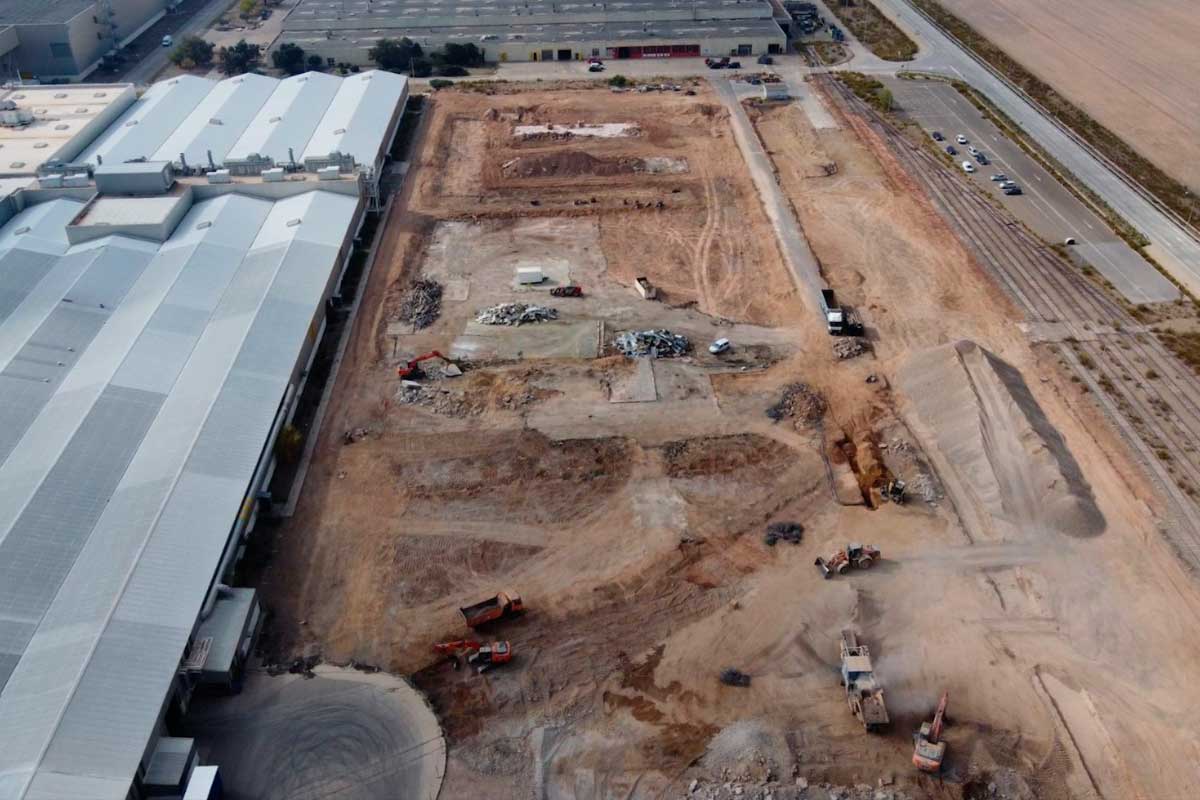
The choice of Spain is no accident. The automotive site is among the most efficient in Europe, labor costs are more competitive and energy is mostly renewable, and cheap. Above all, CATL's LFP technology makes it possible to produce cheaper batteries, essential for the Group's future electric city cars.
In just a few months, Stellantis' battery strategy has changed. The aim is no longer to produce everywhere, but to produce where it remains economically viable. Europe is losing an Italian gigafactory, the United States is becoming uncertain, and Spain, in partnership with China, is becoming central. Rather than complete industrial autonomy, Stellantis now seems to favor a pragmatic approach: fewer factories, fewer financial risks, but solid partners to remain competitive on the price of electric cars.
 English
  French
  Italian
  Spanish
  Portuguese
  German
  Japanese
  Turkish
  Dutch
Dutch