

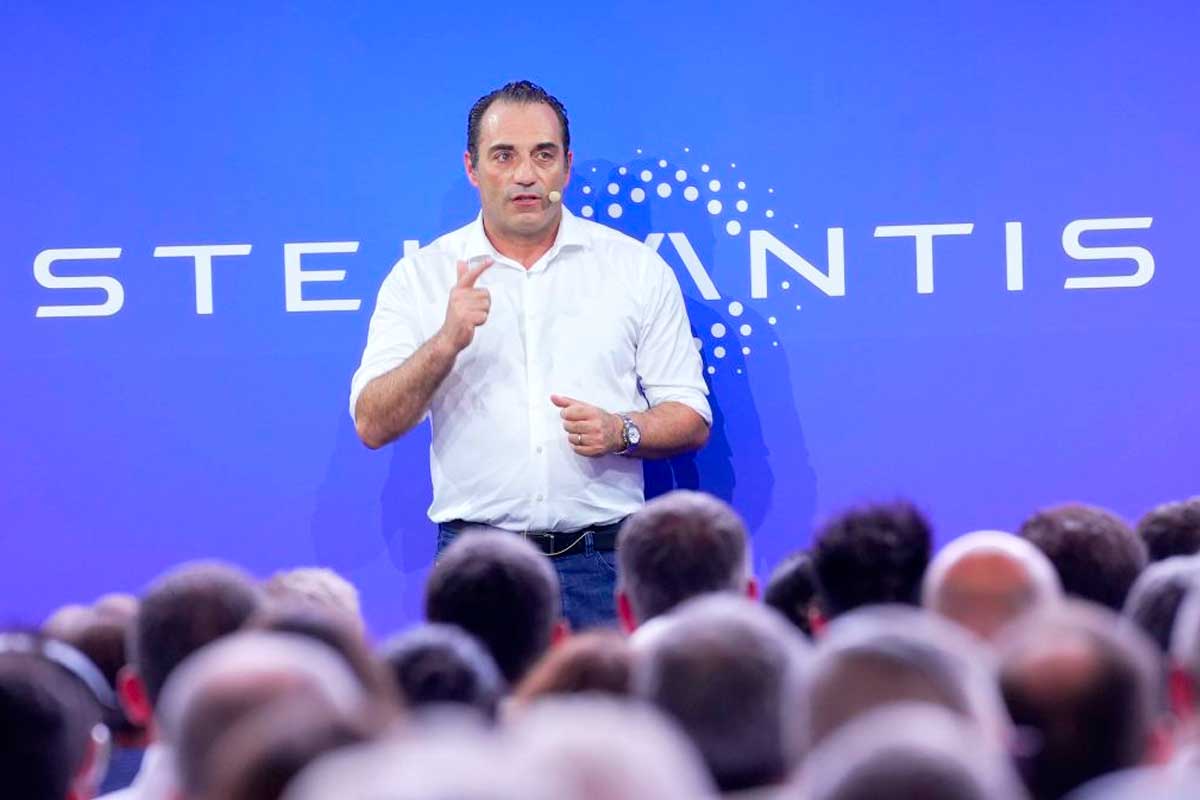
After months of anticipation and speculation, Stellantis has finally unveiled the timetable for its future industrial plan. The automotive group will officially present its new strategic roadmap on May 21, 2026, at its Investor Day, held at Auburn Hills, Chrysler's historic headquarters in Michigan. The announcement was made on Thursday, January 29 by Stellantis, at a time when the Group is engaged in a profound phase of industrial and strategic transformation. This meeting has been identified as a key moment for the future of the world's fourth-largest automaker.
A strategic meeting at a pivotal time
This new Investor Day will be more than just a financial communications exercise. It will enable the Group to clarify its priorities for the medium and long term, at a time when the automotive industry is undergoing a major transformation, between energy transition, accelerated digitalization and the questioning of global industrial balances. Under the leadership of new CEO Antonio Filosa, management will present the major industrial and financial orientations of the future plan, with the aim of reassuring investors and markets after a period of considerable turbulence. Stellantis has already indicated that practical details of the event, including how to attend, will be communicated in the coming weeks.
After the Carlos Tavares era
This appointment is all the more closely scrutinized as it comes after the end of the Carlos Tavares era, a period marked by choices that were sometimes contested, notably regarding the pace of electrification and industrial management in Europe and the United States. Since then, Stellantis seems to be rebalancing its priorities, with an assertive refocusing on North America and a return to favor of the internal combustion engine and hybrid, to the detriment of electrification deemed too rapid in certain markets. Investors are now waiting for clear answers on the Group's new trajectory.
Yes, the United States remains Stellantis' largest and most profitable market, but it is also the one that has been the focus of many difficulties in recent years. After seven years of declining sales, exacerbated by poorly perceived price rises and overproduction which penalized the dealer network, the Group has embarked on an in-depth review of its strategy. The new course calls for around $13 billion in investments, mainly aimed at turning around the historic Jeep, Dodge and Ram brands. This decision, led by Antonio Filosa, aims to reconnect the company's offering with the expectations of the American market, by focusing on more competitive pricing, inventory reduction and the return of iconic models. Technological flexibility becomes a central pillar, with multi-energy platforms capable of accommodating combustion, hybrid or electric powertrains according to demand.
First signs of recovery on the other side of the Atlantic
This new approach is beginning to bear fruit. In the second half of 2025, Stellantis recorded the first tangible signs of a trend reversal, with sales on the rise and the end of the long negative spiral for Jeep. A more aggressive sales policy, combined with a less restrictive US regulatory framework on electrification, has enabled the group to limit the risks associated with forced electrification. Dodge's CEO has already announced that Hemi V8 engine production to triple by 2026.
Europe and Italy, the big question marks
While the strengthening of the Group's presence in the United States is clear, there are still serious concerns in Europe, and more specifically in Italy. By 2025, the Group's Italian car production has fallen to around 379,000 vehicles, including just over 213,000 passenger cars, a historically low level, comparable to that of the 1950s. The target set in 2023 of one million vehicles produced in Italy by 2030 now seems a long way off. The stagnation of the European market, the loss of market share and insufficient utilization of industrial capacity are undermining the Group's entire production base on the Old Continent.
Testing the credibility of new management
The industrial plan to be presented on May 21 will have to solve a complex equation. On the one hand, to consolidate the North American turnaround, essential to the Group's overall profitability. On the other, it must propose a credible trajectory for Europe and for Italy, Fiat's founding country, which remains a symbolic and industrial pillar of Stellantis. This will probably involve allocating higher-volume, higher-value-added models, strengthening the hybrid offering and reviewing certain decisions inherited from the previous governance. For Antonio Filosa, this industrial plan will be a real test of credibility. It will have to demonstrate that Stellantis' global rebalancing can sustain the Group's growth without further sacrificing the industrial role of its European sites.
 English
  French
  Italian
  Spanish
  Portuguese
  German
  Japanese
  Turkish
  Dutch
Dutch
It's about time!
After 13 months in office.
I hope we won't be disappointed and that no brand will be sacrificed.
They all need a chance, so not just one modern model per brand.
Filosa was appointed CEO of Stellantis on May 28, 2025, and took up his post on June 23, less than a year later.
https://www.stellantis.com/fr/actualite/communiques-de-presse/2025/mai/stellantis-annonce-la-nomination-d-antonio-filosa-veteran-de-l-entreprise-de-25-ans-au-poste-de-ceo
So, unless he's a management genius, he can't work miracles as it is.
So exactly one year (give or take a week) between his appointment and the presentation of his plan...
Filosa seems to have a better "feel" for the automotive world than his predecessor Tavares, whose main concern was his bank account...
Über Tavares mag man denken was man will und er hat mit Sicherheit die ein oder andere Stellschraube als Sanierer überdreht. Fakt ist aber, dass PSA ohne Tavares niemals Opel übernommen hätte. Desweiteren wäre ein Konstrukt aus FCA und PSA niemals ohne Ihn enstanden. Tavares ist einer der besten Sanierer, der zur richtigen Zeit am richtigen Ort war. ( mit Sicherheit 1 -2 Jahre zu lange ) aber es ist bekannt dass Sanierer keine Visionäre sind. Von daher alles zu seiner Zeit. Jetzt gilt es nach vorne gerichtet neue Strukturen zu schaffen.
But why wait until May 21?
Are we to believe that Tavares' ex-policy isn't as bad as it's made out to be?
Why take so long?
in my opinion, he'll take advantage of the opportunity to make an initial assessment of his actions ("you've seen what we've done in the U.S. and how it works").