
At a time when production of the Fiat Grande Panda urgently needs to accelerate to make up for months of backlog in orders, the factory Stellantis in Kragujevac, Serbia, is now operating at full capacity as a social laboratory. On the same assembly lines, Serbian, Italian, Moroccan, Algerian and Nepalese workers rub shoulders. All are working towards the same industrial goal, but not under the same wage conditions. A testimony gathered by the Italian newspaper Corriere della Sera brings to light a reality that is hardly visible from the outside: in Kragujevac, everyone is paid according to the contract of their country of origin. As a result, for the same job, pay differentials range from 600 euros to over 2,000 euros per month.
The Grande Panda, a strategic model under stress
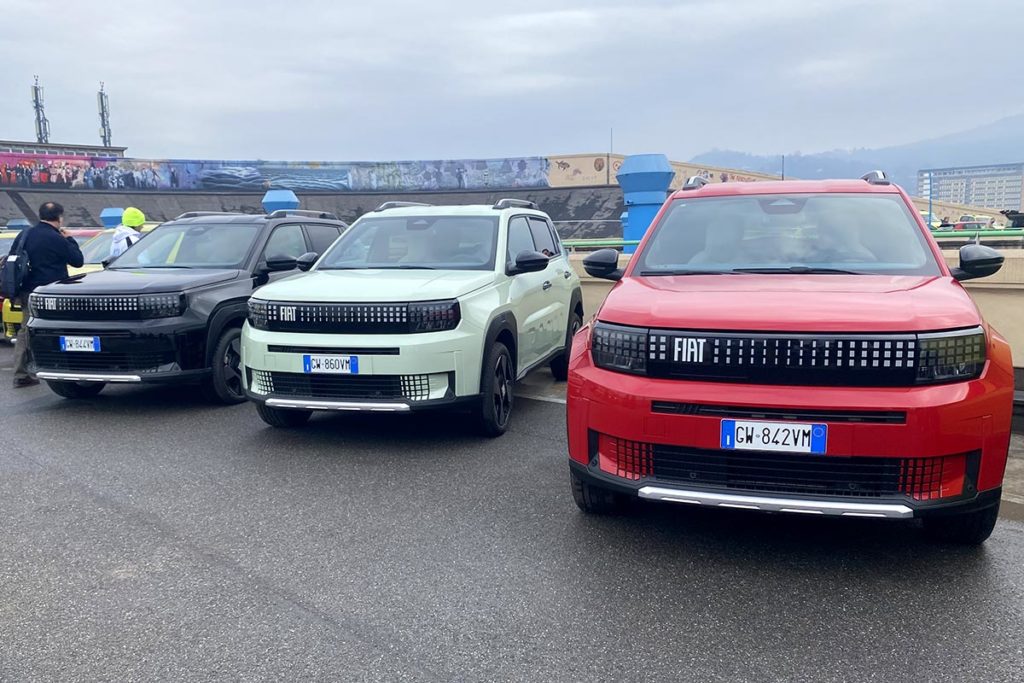
For several months, the Fiat Grande Panda has been at the heart of the Italian brand's relaunch strategy. Produced exclusively in Serbia, it is to become a pillar of the range, with hybrid, electric and internal combustion versions. The problem is that ramping up production has fallen well behind schedule, and Stellantis is still struggling to meet orders that have been building up for many months. Despite the gradual shift to three shifts and the introduction of night shifts, production remains under pressure. Added to this is a new setback: deliveries of the right-hand drive versions, destined in particular for the UK, have been postponed until March 2026. A situation which illustrates the site's persistent difficulties in achieving its target of around 500 vehicles per day.
Working 1,600 kilometers away for a full salary
To keep up the pace, Stellantis called on workers from several countries. Among them are around a hundred Italians, from ailing factories such as Pomigliano d'Arco, Melfi, Cassino, Termoli and Mirafiori. Giovanni, a given name, is one of the workers temporarily sent to Serbia.
His testimony to the Corriere Della Serra newspaper is straightforward. Being 1,600 kilometers from home is not a choice of comfort, but a necessity. In Italy, his salary is cut by solidarity contracts. Some months, he only worked ten or eleven days. In Serbia, on the other hand, he can finally earn a full salary. With night bonuses, overtime and travel allowance, his salary can exceed 2,000 euros. A level of income that enables him to pay his mortgage, bills and children's expenses. Without actually saving anything.
One plant, many wage realities
In Kragujevac, not everyone is on the same footing. Italian workers retain their Italian contracts, with conditions far superior to those of their local colleagues. Serbian workers, on the other hand, earn between 600 and 800 euros a month. Many also hold down a second job to make ends meet. Moroccan, Algerian and Nepalese workers complete this international workforce, often young, sometimes with their first industrial experience. According to Giovanni, everyone is paid according to the rules of their country of origin, a disparity known and denounced by the Serbian trade unions, but which, for the time being, does not seem to have created any open tensions on the lines. On the shop floor, relations remain generally serene. The more experienced Italian workers often play an informal supervisory role, particularly in matters of quality and safety.
The hidden cost of mobility
Contrary to popular belief, life in Serbia is not cheap. Rents have risen sharply with the arrival of foreign workers. An apartment can cost over 800 euros a month, forcing workers on the move to share accommodation and expenses to keep costs down. Even with the daily allowance paid by Stellantis, the equation remains tight. At the end of the month, Giovanni estimates he can put aside barely a hundred euros. Enough to get by, but far from enough to compensate for the distance from his family. The first return to Italy is only planned after 45 days, with a plane ticket paid for by the company. In the meantime, family life is reduced to daily video calls. A temporary sacrifice, but a trying one.
A temporary solution to a structural problem
This testimony sheds light on a broader reality: production of the Fiat Grande Panda today rests on a fragile balance of constrained mobility, wage disparities and temporary solutions. For some Italian trade unions, producing in Serbia a model that could have been assembled in Pomigliano or elsewhere in Italy is seen as a painful symbol. One thing is certain: behind the ramp-up in production of the Fiat Grande Panda, there are men and women who, in order to continue working, accept to cross Europe and live, for a few months, far from their families.
 English
  French
  Italian
  Spanish
  Portuguese
  German
  Japanese
  Turkish
  Dutch
Dutch
Personally, I find it shameful. It's clearly a kind of modern "Germinal". Stellantis is really pitiful at the moment. Enough to put you off buying. It's a good thing 80% customers don't know about it (and the same goes for reliability problems, by the way).
I agree. But this social dumping is a habit at Stellantis, well especially the ex-FCA. Who remembers the famous "Marchionne" agreement, a real attack on employee rights obtained through blackmail?
There's nothing new under the skies,
Immigrants and migrants for work have always existed and have always been exploited, that's what I call modern slavery.
Sindacati, scioperi, magistratura, stato-grande fratello,
Gli altri paesi sono "piu accoglienti e creano meno problemi"!
Pensi realmente quello che stai dicendo ...
Non e vero abbiamo fatto l'Europa per essere uniti nel lavoro e nella fraternita...non per diventare sotto uomini o schiavi dei grandi gruppi industriali....almeno e cosi che l'intendenvo
Poi Ho avuto macchine italiane fin'ora ma sono deluso del fiabilita de motori ...Punto, grande Punto e sopratutto l'ultimo Doblo che Ho buttato per niente, il motore si e rotto a 142000kms sull'autostrada e la FIAT benche sappia di questo diffetto non mi ha proposto niente....
This is to try and catch Renault with its Dacia factories in Romania, Morocco and Brazil.
... And the Chinese pressure!?
Certainly much less than 600 €!?
Scandoloso ritengo siano gli innumerevoli pseudo intenditori che acquistano vetture Fancesi Tedesche Giapponesi Coreane ecc...ecc. snobbando auto del gruppo Stellantis Personalmente o sempre prediletto auto di marchio FIAT Che non mi hanno MAI .deluso La prima fu Fiat 1100 coda di rondine fiat 1300 fiat 132 fiat 126 fiat 124 fiat 135 Croma ,Attuslmente posessore dj una 500L city cross 1300 cc motoreche sviluppa una potenza invidiata da possessori di auto STRANIERE di pari cilindrata
This is truly shocking. Fiat/Stellantis not paying workers for doing the same job purely because of where they originate from. I agree with Hans, this is shameful. This is a crucial model, & Stellantis are messing this up at every turn. I was hoping Grande Panda would bring me back to Fiat but I'm not sure i can support a company who treats workers like that.
Gelijk heb je ,het is schandalig dat ze werkmensen zo betalen en dat de sindicaten dat aanvaarden en toelaten
A Stellantesque situation...
I stopped being a stellantis customer a long time ago. They are nothing but unscrupulous money pumps.
Modern slavery is more than ever their leitmotif.
1 lost customer means 25 lost customers! Too bad for them!...
Stellantis is a mega-holding company that has absorbed most of the European manufacturers - what a shame.
French industry has been sold off, so when you hear Macron saying that France needs to be reindustrialized, you wonder how to go about it...
I don't understand why the Stelantis group continues to operate, given the working conditions of the workers on the assembly lines, the reliability of the equipment manufactured and the failure to respect and monitor warranties. Europe should intervene and fine them severely for not respecting the rules.
What about unfair competition from China?
In that case, let's close the borders!
Before looking for lice on Stellantis.
Out of interest, what vehicle would you buy? Cars made in India and China pay workers really badly too, and working hours there are really long. Are Renaults made in Europe?
Toyota, personalmente o Volvo anche se quest'ultima è un po fuori portata
This is too much unsatisfied things to see how company descriminate the workers from different country to pay for the same work shameless.
And i heard that the peoples are sharing the single kitchen with 40/45 peoples in a single apartment the workers from nepal are very unsatisfied even the company didn't provides them the proper bed to sleep to relax after this hardwork just for 600 euros shameless towards on you STELLANTIS hope you will solve this kinda problem asap.
Trabajadores de España también hemos estado allí ayudando, no es un país barato para nada. Si pagaran más a los Serbios no tendrían que suplir con los demás, pronto veremos este problema nosotros. Son muy buena gente, que les vaya bien.
A bloody mess. Stellantis aren't exactly setting the bar high. All workers should be paid the same regardless of their origins. A pitiful mess!
Stellantis seem to have had a plan for Fiat, the more you look in to it the more you find actions which don't make any sense. Gigafactory project with an outdated battery type = no more gigafactory, Grande Panda in Serbia only, puretech's engine preferred over fiat superior fire engine... Is this a repeat of the Nokia saga?
I stopped being a stellantis customer a long time ago. They are nothing but unscrupulous money pumps.
Modern slavery is more than ever their leitmotif.
1 lost customer means 25 lost customers! Too bad for them!...
Wenn unterschiedliche Bezahlung für die gleiche Arbeit vom deutschen Staat vorgemacht wird, ist es doch für die Industrie nicht illegitim. Ich habe damals im 2-Jahresvertrag als Sonderprogrammlehrer im Auslandsschuldienst 4000 DM verdient, verbeamtete Kollegen haben monatlich 5-stellig verdient und die einheimischen Ortskräfte unter 500 DM. Wohlgemerkt für die gleiche Arbeit. Seitdem weiss ich, dass es keinen gerechten Lohn gibt.
Ok, die Frage ist, was soll der Bericht? I have a Fiat Grande Panda bestellt. Auslieferung war für Mitte Oktober angekündigt. Auf zweimalige Nachfrage beim Händler konnte kein Lieferdatum genannt werden. Habe dann beim Kundenservice FIAT angefragt, die wollten ein Bild vom Kaufvertrag, dieses habe ich unverzüglich gesendet. Mein Vorgang hat eine Bearbeitungsnummer. Bis dato keine Rückmeldung. Nicht gerade Kundenfreundlich.
Tja so ist das mittlerweile mit vielen Firmen und Politikern etc daran kann man erkennen das die Menschheit am Ende ihres wissen gelangt ist und daraus resultierend falsche wege beschreitet die nicht nur stellantis sondern die gesamte Menschheit betreffen Rom ist zerbrochen und genauso wird diese Gemeinschaft auf der Welt dahingerafft werden. Alles halt nach und nach. Rom wurde auch nicht an einem Tag erbaut und ist auch nicht an einen Tag untergegangen.
If anyone is paying 800 euros for rent in Kragujevac Serbia, they are getting ripped off!!!! Rent for a small apartment shouldn't be more than 200e + 200e for all the bills including heat, cell phone and cable.
As a serbian it is normal for me that Italians get paided more and Nepalese less. By the way...if you and your wife have 800e pay checks you can live perfectly normal life in Serbia. Who ever claims otherwise is either delusional or infected by consumerism (never enough of everything).
As a Serbian in America, are you paid less or more than an Italian or a Nepalese who does the same job as you?
Marko, i can't believe that actual Serbian can utter such words. I'm not sure when was the last time you visited Serbia, since you're writing from USA, but 800 euros don't guarantee normal life, for a while now.
You can certainly find apartments for less than 800 euros/month in Kragujevac, but not for 200 euros, as you say. Maybe 15 years ago you could.
As for Stellantis and their practices, this is nothing new, and their unfair practices towards employees have been well documented and known for years now.
Whatever happened to equal pay for equal work? Cost of Living in Serbia seems to impact all workers the same. Trade Unions will respond no doubt.
I can assure you that Serbian trade unions will not. Can't guarantee same for trade unions of other countries.
Mi sembra un ritorno all'era degli schiavi, quando la mano d'opera veniva diciamo reclutata forzatamente nei paesi di origine dei malcapitati.
Italians have biggest saleries, than Serbs 600 euros (800 euros if you work over time and weekends) and than others like Moroccans, Algeriens and Nepalies. Rent of 800 euros are for apartmens nicely done and newly constracted. Regular renta for one bedroom apartment goes from 400 euros and up. But recently they went up because of high number of foreign workers. Local people dont wont to work for that salary and are leaving there factory jobs, only ones that are left are people who dont have any other option.
È inutile che ci giriamo intorno, la colpa non è solo della direzione di Stellantis che perde soldi in borsa ogni giorno o dei dividendi risicati agli investitori. Il motivo di situazioni come questa sta nella concorrenza dei cinesi che, tutti, dirigenti operai impiegati, sono abituati a studiare di più, lavorare di più mangiare di meno fare meno vacanze lavorare anche quando sono ammalati. O ci adeguiamo al loro modello simile a quello che avevamo noi anni fa oppure ci estinguiamo. O potremmo provare a chiudere le frontiere per guadagnarci qualche anno ancora di sopravvivenza.
Siamo davvero al bivio il terzo mondo diventerà l ultimo il mondo sta andando con un orologio biologico sballato una vergogna lavorare insieme e i diritti diversi si sta toccando il fondo mi sa che presto finiremo in giudizio tipo arca di noe
È solo la punta di un'iceberg. Le vetture Stellantis risparmiano innanzitutto sui vostri soldi. Risparmiano sugli operai. Risparmiano sulle soluzioni tecniche. Risparmiano sui test di validazione e di sicurezza. Risparmiano sui materiali. Risparmiano sui fornitori. Risultato: vetture inaffidabili e pietose. Date retta al mercato: scegliete altro, i vostri soldi meritano meglio!
Direi di porre un veto alle vetture di Stellantis in Italia, ricordo quando Maroni affermo che avevano dati tanti soldi alla fiat che avrebbe potuto acquistare l'Italia
Tussen de landen staat ook KALKOEN, waar ligt dat op de wereld??