

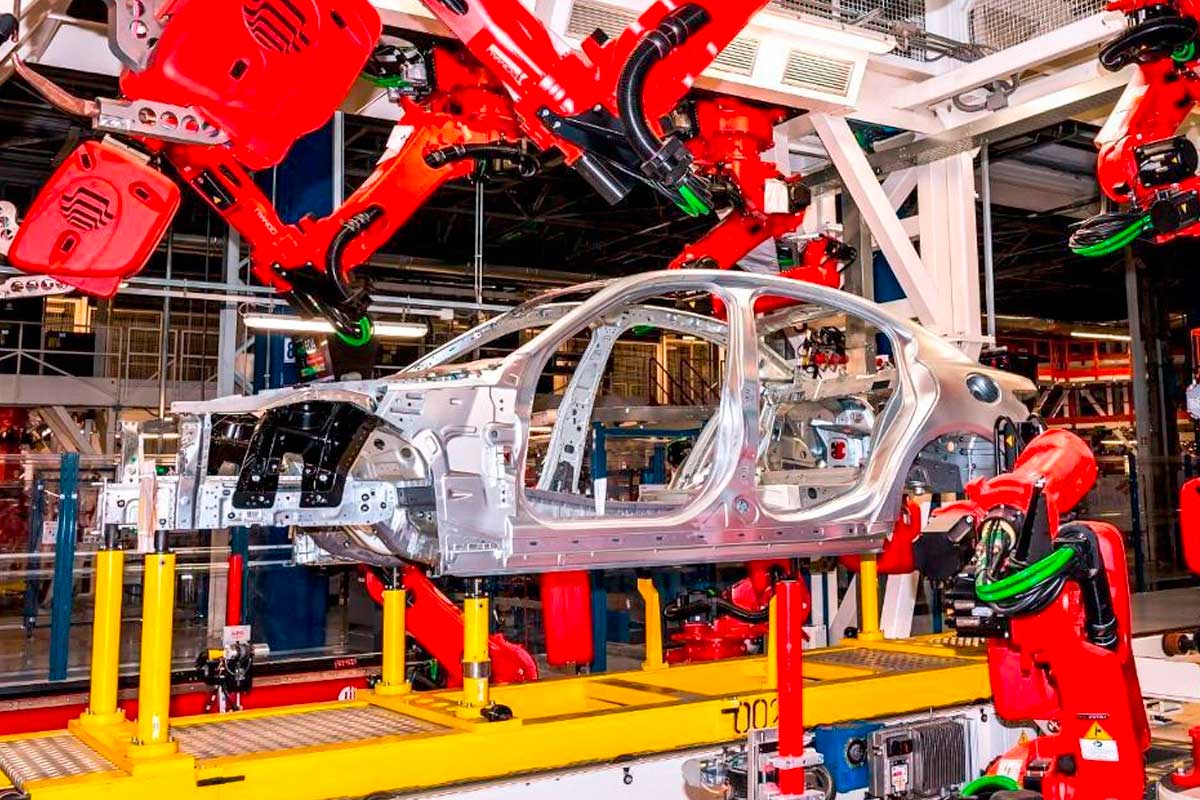
The year 2026 will begin as 2025 ended for the plant Stellantis Cassino: doors closed, lines shut down and employees placed on solidarity contracts. On Monday December 29, the Group announced a new production stoppage from January 2 to 16, effectively extending a full month of inactivity since the site has already been shut down since mid-December. This situation is no longer exceptional, but illustrates a deep-seated, structural crisis, closely linked to the strategic choices made in recent years.
Cassino, symbol of a deepening crisis
The figures speak for themselves. In 2025, production at the Cassino plant didn't even reach 18,000 vehicles, a historically low level. And projections for 2026 are even bleaker, with Alfa Romeo volumes unlikely to exceed 13,000 units. For a region that has built its economic and social equilibrium around the automobile, the situation is becoming critical. The absence of new models before 2027, or even 2028, and the chronic under-utilization of facilities are fuelling growing concern that Cassino will survive on announcements and promises alone, with no real short-term industrial plan.
Alfa Romeo, prisoner of a bet 100 electric %
At the root of this impasse was a strategic choice that is now widely called into question. Stellantis' original plan was to transform Alfa Romeo into a 100 % electric brand by 2027. In this scenario, the Tonale was to gradually end its career, while the new all-electric Stelvio was to be introduced in 2026, followed by the new electric Giulia in 2027. These two models were to be the successors to the current Giulia and Stelvio, whose volumes are declining year after year. Except that this irreversible shift to electric power was conceived without any real plan B. The STLA Large platform dedicated to future Alfa Romeo models has been developed exclusively for the electric 100 %. Hybrid powertrains, whether light or rechargeable, were simply not foreseen in time. As a result, even though the market for electric vehicles is slowing down sharply, Alfa Romeo finds itself with models that are technically ready... but commercially unsuited to the new reality.
Stellantis' strategic shift comes too late
The paradox is cruel. Since his arrival, the new CEO of Stellantis, Antonio Filosa, has clearly decided to change course. At the end of 2025, he publicly acknowledged that assumptions about the electricity transition were wrong. In-house forecasts had predicted massive electric vehicle penetration in both Europe and the United States. The reality of the market, marked by vehicle prices, purchasing power and usage, has forced a complete rethink of strategy. From now on, Stellantis wants to offer a wide range of powertrains for each model and each brand: combustion, light hybrid, plug-in hybrid and electric. A pragmatic approach, dictated by real demand, and already crowned with success across the Atlantic with the return in force of hybrid powertrains and even the V8 at Ram.
But in Europe, and at Alfa Romeo in particular, this turnaround comes too late. The new Giulia and Stelvio were conceived, designed and industrialized around the all-electric concept. Adapting the STLA Large platform to hybrid powertrains requires time, additional investment and extensive technical validation. Hence the postponement to 2027, or even 2028, for these two key models.
"Everything was ready, but nobody wanted it anymore
I mentioned this situation myself a few months ago at theAlfa Romeo Tonale PHEV test drive. On the occasion of this test drive, I spoke to Cristiano Fiorio, then head of communications and marketing at Alfa Romeo. Lucid about the strategic shift taken by Stellantis, he didn't hide a certain bitterness. In his own words, "everything was ready" to launch sales and production of the new Stelvio. The teams, the production facilities, the product itself: everything had been aligned according to the initial roadmap. But the market, for its part, had already begun to turn its back on an imposed electric transition that was too rapid and too rigid. The product was ready, but the context was no longer.
2026, a sacrificial year for Cassino
The consequences are very real today. With no new-generation Giulia or Stelvio, and no hybrid alternative ready for production, the Cassino plant finds itself without a real industrial engine. As a result, 2026 looks set to be almost a blank slate, and 2027 could yet be another year of painful transition. The site is paying the price for a strategy based on technological dogma, without sufficiently integrating market signals. In stark contrast, Antonio Filosa now advocates a more balanced transition, taking into account the environment, employment and affordability.
 English
  French
  Italian
  Spanish
  Portuguese
  German
  Japanese
  Turkish
  Dutch
Dutch
Niemand zat te wachten op een ev in Europa.Dat samem met te dure elektriciteit en al genoeg belast netwerk.Wie heeft daar vertrouwen in.Ook zijn ev voertuigen te duur..Te lage autonomie van evt goedkopere ev,s zullen voor meer laadproblemen zorgen.Europa word geen ev land, wel een gedwongen.
Tavares and Imparato had announced all new Alfa Romeo models to be exclusively electric. We're paying for the mistakes of incompetent people, incapable of understanding the market.
Tavares and Imparato... Generally speaking, to be responsible for billions of euros of investment but not even to have a plan B, that's crazy...
Yes and no...basically it's FCA Europe's totally screwed up product plans. 10 years of under-investment and nonsense can't be corrected in 3-4 years (once Stellantis is up and running). If we add a PSA that's a "bit player" technologically (the example of the lousy 3cyl used for everything is blatantly obvious) ...Winning combo.
There's no such thing as Plan B in the auto industry! This isn't an American TV series...
Let's not forget the shared blame, Stanisla and Potté, if you don't mind obscuring the truth.
OK for Alfa, but for the Fiat 500, the idea of making it a 100 % EV is FCA's idea and the idea of making it a hybrid is Tavares'!
So if you're going to lay all the blame on him, learn to be more nuanced!
It's true. Tavares' race to cut costs has eliminated quality at the expense of profit.
Let's hope they take advantage of this big delay to change the design of the Stelvio 2, which is nothing like an Alfa Romeo...
Bij stelantis is het een grote klerezooi ze kunnen geen eens 1 betrouwbare auto bouwen , servise en garantie kan niet slechter en al die plannen mislukken totaal geen goed plan A laat staan een goed plan B nee het blijft daar gewoon een rotzooi in plaats eens te kijken hoe het wel moet zoals bij Toyota nee blijven ze maar aankloppen en daarbij zijn ze nog arrogant ook , geef ze nog 2 jaar en stelantis is van de aardbodem verdwenen , dus ga ,o door
Potté, the design is Italian and by Alfa.
Maar was dit niet een strategie opgelegd door de EU en de sustainable development goals van het WEF waar vele CEO's zich aan committeren om binnen de Europese elite niet als zonderling in de groep te worden versleten? De CEO's vinden wel een nieuw bedrijf om ideologisch te leiden, de arbeiders niet.
Korrekte Analyse. Die Rechnung wurde ohne die Kunden gemacht. Ps Guilia zuverlässiger als Mercedes und BMW, weil kein Hybrid Antrieb,,!
Stellantis' problem as I see it is an overabundance of models and poor brand loyalty. And as an OEM they consistently put out vehicles with poor reliability that fall close to the bottom of almost all consumer car reliability comparisons . New car values drop like a stone once on the road. Many who know their cars would never buy a new Stellantis-made vehicle. Please, guys, drop the poor selling lines, spend some money on design & make the rest super reliable - then your sales will grow. And study the Mazda story, too.
Genau so gehört es gemacht.
So much for putting the cart before the horse, they wanted to go all-electric faster than the music... especially for a brand like Alfa Romeo, which has built its reputation on combustion engines. Some visionaries at Stellantis! 😂😂😂
What nonsense. People want EVs they just don't want 2nd rate overpriced products produced by third rate companies like Stellantis
It's strange that the same platform is available in both combustion and hybrid versions in the USA? Their excuse is a bit bizarre, especially since there's nothing to stop the EV from coming out before the hybrids. I get the impression that they're just late.
I invite you to read an article dedicated to this platform for a better understanding. https://www.italpassion.fr/stellantis/stellantis-la-plateforme-stla-large-sera-en-4-versions-avec-differents-moteurs/
There's no way that we are ready for a complete switch to Electric. The technology needs to be perfected more to actually be useful to everyone. It's simply just being forced upon us and normal people can't afford it.
Reichweitenstarke Elektroautos wie den Leapmotor B10 gibt es für 32000 Euro. Damit kann man inEuropa überall hin kommen. Ich war im Sommer in Frankreich, 2400 km oder 1800 Meilen. Gar kein Problem. Und wesentlich günstiger als ein Benziner. Ich für meinen Teil will keinen lahmen und lauten und teueren Verbrennerstinker mehr
Peugeot buys Opel and 6 months later the new Opels come out on a Psa base. Today, new models come out from Peugeot and Citroën /Ds, but when it comes to making a new model from the Italian brands, it's always full of lame excuses to justify the delay, and in the end, everyone's disappointed, like with the 65 hp of the 500.
Y mientras tanto son tomar las decisiones que deberían tomar
Por culpa de Xavier Peugeot no se pone DS bajón el paraguas de Citroen y volver a ser una linea de la marca matriz,pero claro ese incompetente es Peugeot , ya todos sabemos como Peugeot trata a Citroen , la destripo para beneficiar a Peugeot
The classic case of not listening to the consumer. Nobody wants an EV!
I didn't have a car for years. An EV like this also led to buying a car again. It's just a lot better than a combustion engine and it's a lot of fun to drive with it.
Ich will EV. Und im allgemsteigen die Zulassungszahlen von Elektroautos
Esto no ha hecho más que empezar. Es tal la ventaja que nos lleva China que cualquier cosa que no sea un acuerdo comercial China - UE nos aboca a la quiebra de numerosas marcas europeas. Marcas que tarde o temprano serán compradas por los chinos y les tendremos que dar las gracias.
Bonjour on leur dit de se jeter dans la seine ils le font en plus y nous font gobé leur voiture électrique qui sont doit disant zéro pollution.c'es trop drôle y continue a bousiller la planète enfin ce qu'il en reste voiture électrique vélo panneau solaire éoliennes que des plaisagues.
This is where we realize that the 2 partners Tavares and Imperato didn't have the broad shoulders to manage a brand like Alfa Romeo.
For Tavares, the only thing that thrilled him was the 2-digit operating margin.
As for Imperato, the former head of Peugeot, he thought that a 2008 could make a good Alfa Romeo, shame on him...
Ich warte seit Jahren auf einen elektronischen Alfa. Nun haben wir 2 Tesla. Wenn die eigenen Leute, ja eigentlich alle Chefs der Autokonzerne, Elektro stets als Nische oder notwendiges Übel bezeichnen wundert es mich nicht. Wo ist denn der fertige Alfa? Ich habe noch nichts gesehen.
Ben Zelf absoluut al mijn hele leven alfa rijder/fan en rij momenteel een stelvio 2.0 en een Giulia quadrofoglio Ik hoop dat stoppen met die 100% electrische shit ( ben zelf electrotechnicus😜).
We rijden Alfa voor de beleving !!!
European media need to stop this propaganda that people don't want EVs.
What they don't want is poorly designed, poorly executed, overpriced EVs from lack lustre European legacy manufacturers
The price of esparto is too high for the market. Consumers are looking elsewhere for excessive margins...
The very choice of the name " Stellantis " for an automobile manufacturing group, implies that the bean counters at the top understand absolutely nothing about cars...
I'm sorry, but from Mulhouse, another PSA plant that's broken down, I have a different view. And it's going very well for Cassino too. The cause is not the choice "EV or not" knowing that basically we're talking about Giulia or Stelvio which sell very little anyway! The cause lies rather in the absence of intelligent investment to bring out commercially correct and desirable products! In short, FCA's mistakes have been repeated over and over again, and Tavares has amplified them by focusing solely on margins.
Die EU Politik in ihrem Klima Wahn bestimmt was gekauft werden soll!
Und die Automobilevorstände waren
willenslose Erfüllungsgehilfen.
Die Rechnung bezahlen die Mitarbeiter. Alfa Romeo trifft es besonders hart.
Schon immer, unter welcher Führung auch immer, unterfinanziert. Tolle Modelle wurden nie weiterentwickelt wie Giulietta, 156-SW,159-SW,Spider, Coupe usw...
Ich kann die ganzen Ankündigungen gar nicht mehr zählen über die Jahrzehnte.
Nur SUV's in allen Größen mit Stellantis Einheitsmotoren oder Elektro sind zu wenig für diese großartige Marke!
Weltweit steigen die Absatzzahlen von Elektroautos. Nix Klimawahn EU
EV s are not compatible to all environments Geographically or either Geographical distances in all different countries and jurisdictions. !
Marchionne cut investments in 2008 in favor of Jeep and the US, and the consequences are now evident. By all market standards, they should have replaced the 159 sedan and wagon in 2013, but they didn't. To introduce them in 2013, they should have invested in their development and industrialization in 2009-2013. Moreover, they discontinued the 159s in 2011 without replacing it (try to imagine BMW doing something similar), and loyal customers received nothing from 2011 until 2016.
The replacement sedan came out late, in 2016, and the bulky SUV in 2017, and the latter didn't replace the elegant 159 station wagon for many in Europe. Now they've delayed the replacements again and, in my opinion, have lost the last customers in this segment. The new Giulia and Stelvio, hybrid or not, will ultimately be needed by so few people that they won't justify the cost of industrialisation.
EVs were always a fad especially in big countries like Australia with vast distances between towns. A reasonable idea for city dwellers but not suited for the country drives. Why buy a hybrid, paying excessive prices to have two engines, not much logic there either.
Stellantis Autos sind Schrott. Das ist der Grund. Es gibt inzwischen fantastische, zuverlässige Elektroautos. Ich fahre selbst elektrisch und würde nichts anderes mehr fahren wollen. 100 Kilometer kosten mich 3-5 Euro. Es fährt leiser, umweltfreundlicher und spassiger. Für mich nie mehr lauten, lahmen, teueren Verbrennerstinker.
As a former mechanic, I've always been against the total shutdown of internal combustion engines. I couldn't see how to recharge all those cars with all those skyscrapers and the exorbitant tariffs, nothing beats a good diesel engine that pollutes less than petrol and that sound of an in-line 6-cylinder engine, too good, happy new year 👍⛽