

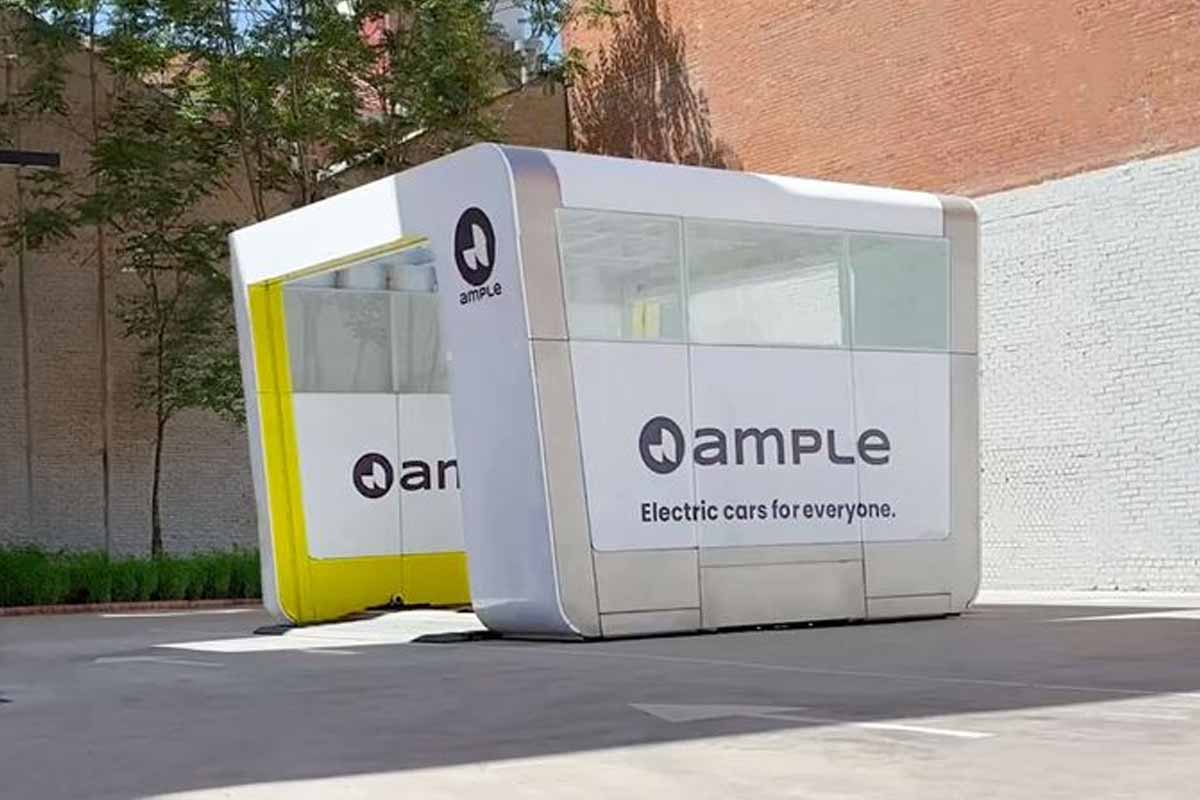
We told you. 2025 was supposed to be the year of the big clean-up, and the facts follow one another at an almost brutal pace. After the bankruptcy of Stellantis' Chinese joint venturethe gradual shutdown of investments in hydrogenthe massive redirection of billions of dollars to United States and Brazilor the decision to stop production of PHEV models on the American market, another announcement, however significant, went relatively unnoticed. The Ample company, specialized in rapid battery exchange and backed by Stellantishas just declared itself bankrupt.
A promising innovation... on paper
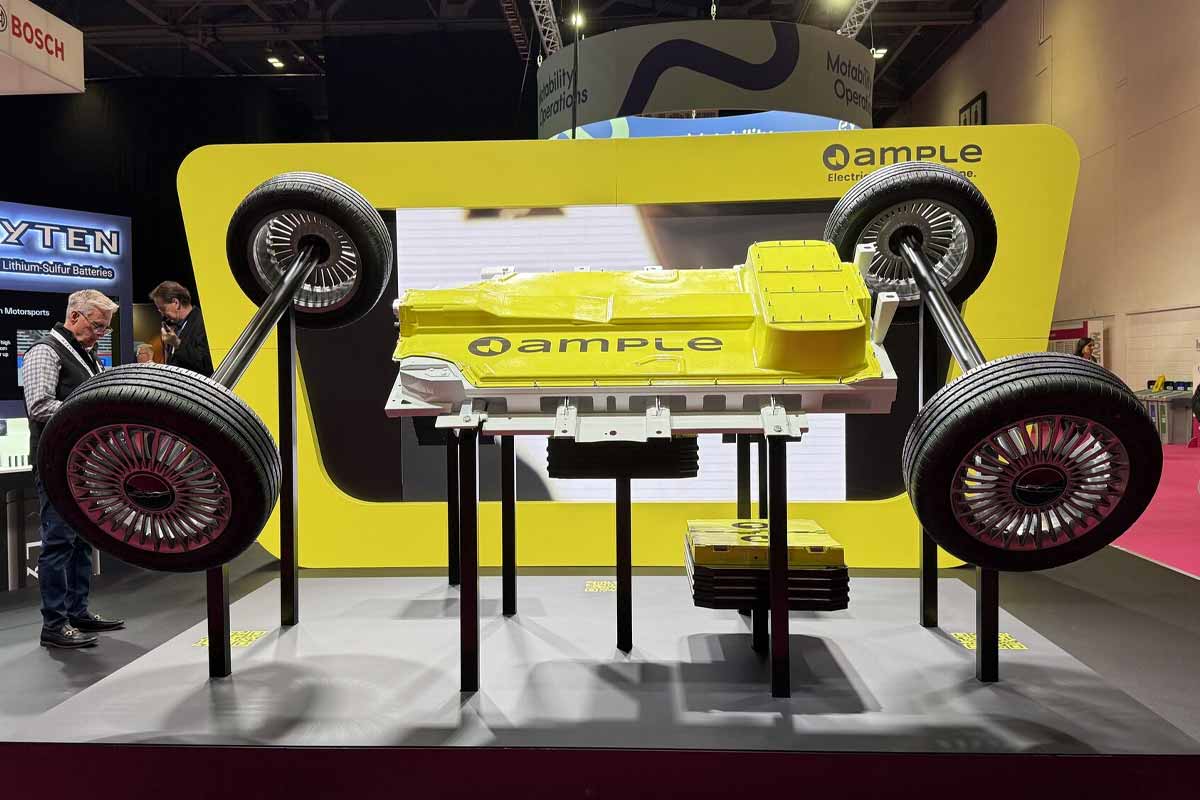
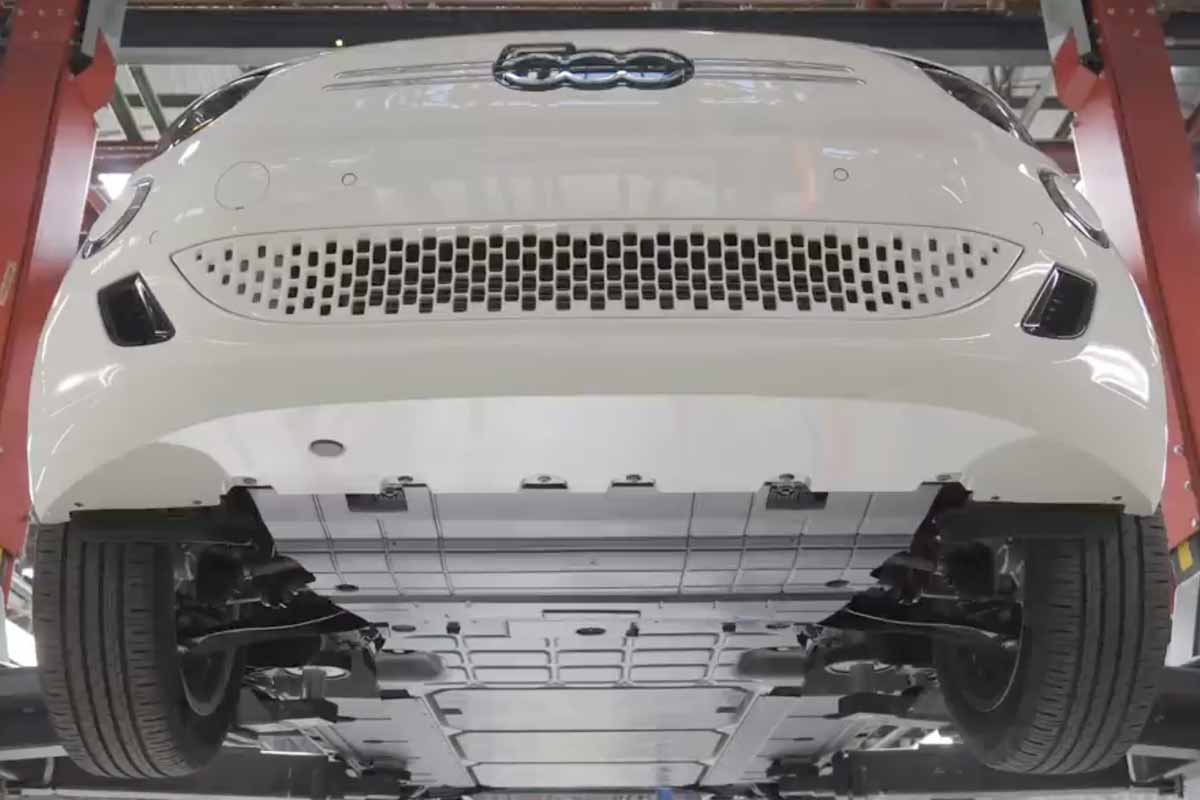
Flashback. In June 2025, we were already talking about this technology presented as revolutionary. In Madrid, a pilot fleet of Fiat 500e cars was on the road with a simple promise: to eliminate one of the main obstacles to electric vehicles - the time it takes to recharge. The principle was attractive. Instead of waiting for long minutes (or even hours, depending on power) plugged into a charging point, the driver entered an automated station. In less than five minutes, the empty battery was removed and replaced by a full one, all controlled by a mobile application. This "battery swapping" solution, developed by the American company Ample, was operated in Madrid by the mobility service Free2move, a direct subsidiary of Stellantis. At the time, enthusiasm was real. Olivier François, CEO of FIAT, saw it as a concrete response to range anxiety and a means of optimizing the use of urban fleets.

Six months later, the cold shower
Six months after the launch of the service in Madrid, reality has caught up with the rhetoric. On December 22, 2025, Ample officially filed for Chapter 11 bankruptcy protection in the United States, in the U.S. District Court for the Southern District of Texas. The information, revealed by the Spanish press, confirms what some observers feared: despite a model deemed innovative, the service has not found its audience, particularly on the American market. In the US, Ample offered battery swaps for just $13. Not enough to convince users already accustomed to increasingly rapid recharging. In Madrid, the symbolism is strong: the station installed near the M-607, inaugurated in September, has simply disappeared. No official statement has yet been issued for Europe, but the link with the American bankruptcy seems obvious.
A model already undermined by developments in the electric sector
Ample's problem is also one of timing. When the project was launched, recharging times were a real brake. By the end of 2025, many electric vehicles will be able to go from 10 to 80 % of battery in around twenty minutes. Compared with this, the real gain from battery swapping is limited to around fifteen minutes. For many users, this difference does not justify an additional constraint: monthly subscription, questions about battery ownership, uncertainties about the battery's state of health or longevity. In China, this model works, thanks in particular to NIO, which has made battery swapping a core part of its industrial strategy.
Over the course of its existence, Ample raised around $330 million. At the time of its bankruptcy filing, the company's assets were estimated at between $10 and $50 million, while its liabilities were in the region of $100 million. In its filing, the company states that it is still seeking $6 million in order to pay outstanding wages and organize an orderly closure of its operations. A discreet epilogue for a technology which, just a few months ago, was the subject of enthusiastic press releases.
A further signal in Stellantis' strategy
For Stellantis, this bankruptcy is no doubt not insignificant. It illustrates a period of extremely rapid, sometimes brutal, strategic refocusing, in which technological bets deemed to be of low priority are ruthlessly abandoned. After China, hydrogen and American PHEVs, Ample becomes yet another symbol of this year 2025, marked by radical choices. The Group now seems to be concentrating its resources where profitability is immediate and volumes guaranteed, even if this means turning the page on projects recently presented as avant-garde.
 English
  French
  Italian
  Spanish
  Portuguese
  German
  Japanese
  Turkish
  Dutch
Dutch
Basically, Stellantis is becoming even more of a builder to avoid😳