

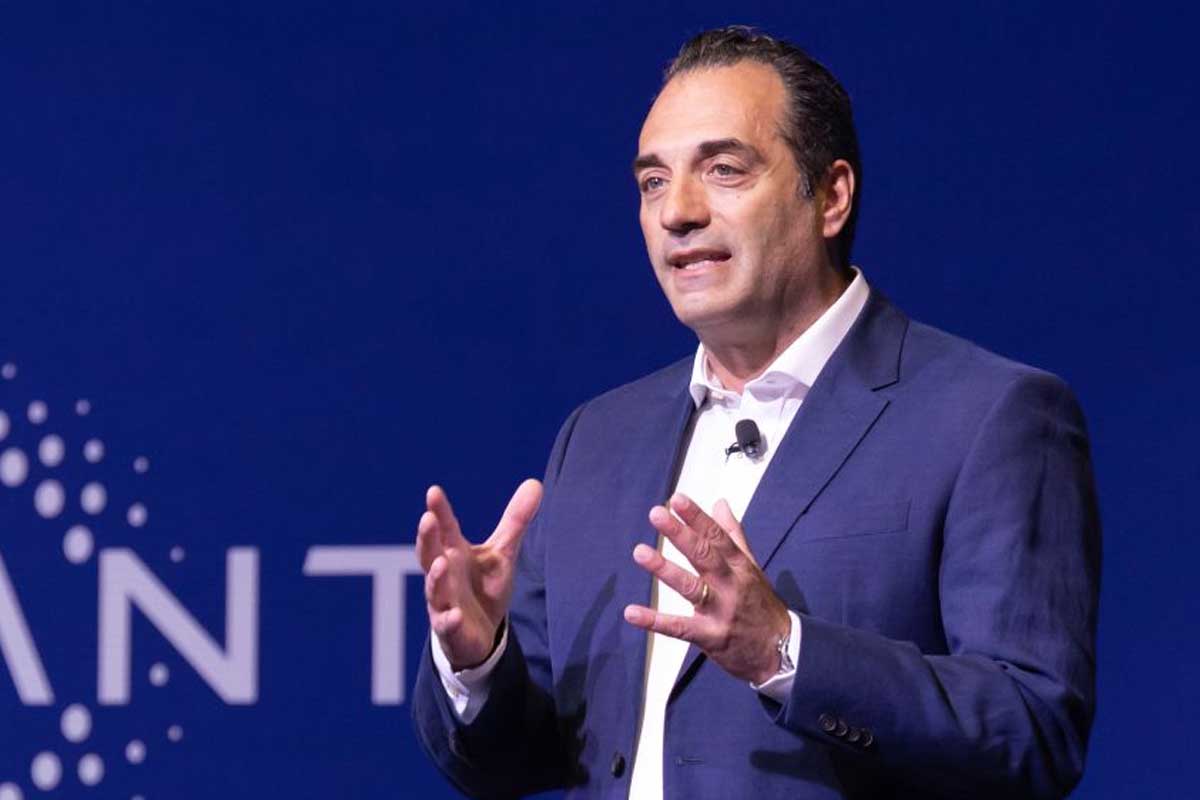
May 21, 2026 could mark a major turning point in the history of Stellantis. On that day, Antonio Filosa is due to unveil an eagerly-awaited new industrial plan. And with good reason: the Group is going through a period of profound transition following the end of the Carlos Tavares era.
The former CEO left the Group at the end of 2024. He was succeeded in spring 2025 by Antonio Filosa, in a particularly complex context. A few weeks ago, Stellantis announced more than 22 billion euros in exceptional charges, A sign that a major clean-up was underway.
In other words, the «Dare Forward 2030» plan is already a thing of the past. The Group needs to start afresh.
The end of compulsory all-electricity
When Carlos Tavares was running Stellantis, the course was clear: accelerate towards the 100 % electric. But market reality proved more nuanced than expected.
Demand for electric cars remains uneven around the world, while regulations and customer expectations are changing rapidly. Antonio Filosa must therefore strike a balance between regulatory requirements, particularly in Europe, and consumer preferences.
Between 2026 and 2032, the strategy now seems clear: multi-energy. Hybrids should play a central role, as should electrics, but with a much more pragmatic approach than in the past. Stellantis may rely less on its own technologies for electric vehicles and more on its partners.
Batteries: a clean sweep of projects
This new strategy can already be seen in the industrial policy around batteries.
In particular, Stellantis is looking to end partnership with Samsung in the United States (the plant is meanwhile being converted to making energy storage batteries), while several European projects were reviewed.
The ACC gigafactory projects at Termoli in Italy and Kaiserslautern in Germany are abandoned. On the other hand, the ACC plant in northern France continues to produce NMC batteries. But according to several sources, production yields are still far from target.
For the future, Stellantis seems intent on relying much more heavily on its joint venture with CATL in Spain. The ambitious goal is to produce up to a million batteries a year, particularly LFP batteries, which are more affordable and better suited to certain segments.
Electric motors continue to gain momentum
Despite the slowdown in certain projects, Stellantis is obviously not giving up on electric motors. The Emotors plant in Trémery, France, continues to produce electric motors at a steady pace. Over 500,000 units have already been manufactured, proof that electrification remains an important component of the Group's strategy. But electric will no longer be the only solution.
The comeback of hybrid engines
The new industrial plan should restore the central role of electrified combustion engines.
The Termoli plant in Italy is set to produce the new eDCT gearbox, which will be used to hybridize many of the Group's engines. It could also assemble Euro 7-compatible Firefly engines, electrified thanks to this transmission. This Firefly engine could even become the benchmark for the Group's B and C segment models.
The Hungarian plant that currently produces the EB2 and EP6 engines could reduce production of the EB2 if the Firefly replaces it in several models. On the other hand, the EP6 could continue its career, particularly after its evolution in the United States with a hybrid HEV system developing around 210 hp. It's not out of the question that this evolution will also benefit the European version.
As for the 3.0L V6, its future is more clearly assured. This engine will continue its career in the coming years, notably with Alfa Romeo and Maserati. It should equip future Quadrifoglio versions of the Milanese marque, while remaining a mainstay of the Maserati range. The big unknown still concerns its level of electrification. Stellantis is currently working on adapting it to Euro 7 standards, which inevitably implies some form of hybridization, but it's not yet certain whether it will be a conventional hybrid (HEV) or a plug-in hybrid (PHEV). One thing is certain: work is well underway to extend the life of this strategic engine in the Group's Italian sports car range.
As for the top-of-the-range 2.0L GME petrol engines, the situation is less clear. The four-cylinder GME could also receive hybridization, but Stellantis has not yet officially communicated on this subject.
A new generation of diesel engines is also on the cards. At the Pratola Serra plant in Italy, where 350 jobs were cut by 2025, Stellantis is reportedly preparing a new Euro 7-compatible diesel engine incorporating hybrid technology. Two versions are envisaged: a 2.2-liter for commercial vehicles, and a 1.6-liter for certain passenger cars. The aim of this development would be to maintain the competitiveness of the Group's commercial vehicles in Europe.
In the United States, the Hemi V8 makes a comeback
The strategy is very different across the Atlantic. Stellantis has already reintroduced the Hemi V8, slightly hybridized. The group even plans to triple production, with a target of 100,000 units by 2026. Gasoline engines remain essential in this market. The United States will continue to use the 2.0-liter GME, 3.0-liter GME and, of course, the Hemi V8.
Platforms evolving more slowly than expected
Platforms are another key element of the future industrial plan.
The CMP platform, currently used on many B and C segment models, is set to continue its career until at least 2032.
Its successor, the STLA Small, is due to follow, and should be 100 % electric. A logical strategy for small cars, provided that costs and range finally become compatible with customer expectations.
The STLA Medium platform continues to spread. It already equips several models and will be used for vehicles such as the Peugeot 3008, Jeep Compass, DS N°8 and the future Lancia Gamma.
The return of the Giorgio platform
Another subject of particular interest is the Giorgio platform. This architecture, which equips the Alfa Romeo Giulia and Stelvio, was due to be abandoned in favor of STLA Large. However, it could finally be used again for some top-of-the-range European models, notably by Alfa Romeo and Maserati.
The question remains as to whether the STLA Large platform will be used in Europe. Could models such as the Jeep Wagoneer S and Dodge Charger, already marketed on this basis, arrive on the European market?
Leapmotor could accelerate electrification
Another interesting element: Stellantis could use technology from Chinese manufacturer Leapmotor, in which the Group holds around 20 % of the capital. In the short term, certain electrical platforms or technologies could therefore come from this partner, enabling Stellantis to accelerate electrification without investing heavily in in-house developments. Not forgetting the latest rumors of a tie-up with Xiaomi and Xpeng.
A complex regulatory equation in Europe
This multi-energy strategy also responds to a very strong regulatory constraint. In Europe, automakers must achieve an average of 95 g of CO₂ per kilometer for their sales. This limit has been lowered to 81 g/km in 2025, then will be lowered to 59 g/km in 2030. Stellantis will therefore need to combine high-performance hybrids and electric cars to achieve this average.
Very different rules in the United States
The situation is very different in the United States. There, the Group is faced more with taxes on imports, whether of vehicles or spare parts, rather than strict CO₂ constraints.
But this stability remains relative: a political change could quickly alter the rules of the game. Nevertheless, Stellantis takes part in the « Project Vault »Donald Trump's initiative to create a strategic reserve of minerals needed for batteries and electric motors.
Nevertheless, the market share of electric cars in the USA was 6 % in 2024, 7 % in 2023, 8 % in 2024 and still 8 % in 2025. Electric cars are therefore not a strategic priority for Stellantis in the USA.
A hybrid strategy... while waiting for affordable electrics
In short, Stellantis' strategy between 2026 and 2032 will be based on a mix of hybrid and electric vehicles.
Firefly and EP6 engines should ensure the transition, while electric power will continue to progress thanks to STLA platforms and industrial partnerships with CATL and Leapmotor.
After 2032, the Group could accelerate towards more affordable electric cars, notably on the STLA Small platform, when batteries will be cheaper and more efficient.
But beyond technologies, another challenge awaits Stellantis: building a coherent range for each of its many brands. And on this point, it will now be up to the Group's marketing department to transform this industrial strategy into genuine commercial success.
An increasingly regionalized strategy
Beyond the industrial announcements to be made on May 21, one trend already seems clear: Stellantis could push the regionalization of its operations even further.
Since its creation in 2021, the group has already been operating with different strategies for different markets. But the next phase could accentuate this logic.
In the USA, the strategy should remain focused on powerful gasoline engines and high-end platforms. The four-cylinder and six-cylinder GME engines should continue their careers, alongside the recently relaunched Hemi V8. The STLA Large platform also appears to be designed primarily for this market, where large SUVs and muscle cars continue to dominate.
In Europe, the reality is very different. Regulatory constraints and consumer expectations are pushing towards more efficient hybrid powertrains. Three- and four-cylinder 1.0, 1.5 or perhaps 1.6 and 2.0-liter engines could thus form the core of the range, notably on the CMP and STLA Medium platforms. Electrics, meanwhile, could rely increasingly on technological partnerships with Chinese players, while the Giorgio platform could finally be relaunched for top-of-the-range models from Alfa Romeo and Maserati.
Latin America should follow an even different trajectory. The region has long been using hybrid or flex-fuel solutions tailored to its market, and this pragmatic approach is set to continue in the years ahead.
In other words, Stellantis could gradually become an even more multi-regional manufacturer, with technologies, platforms and powertrains adapted to each region of the world.
A strategy that may seem less clear-cut than a single global plan, but which perhaps corresponds better to the current reality of the automotive industry.
 English
  French
  Italian
  Spanish
  Portuguese
  German
  Japanese
  Turkish
  Dutch
Dutch
1 year to draw up a plan... 10 years to implement it?
That's what's needed, I hope. You need to have a long-term vision (the right one if possible) and stick to it!