

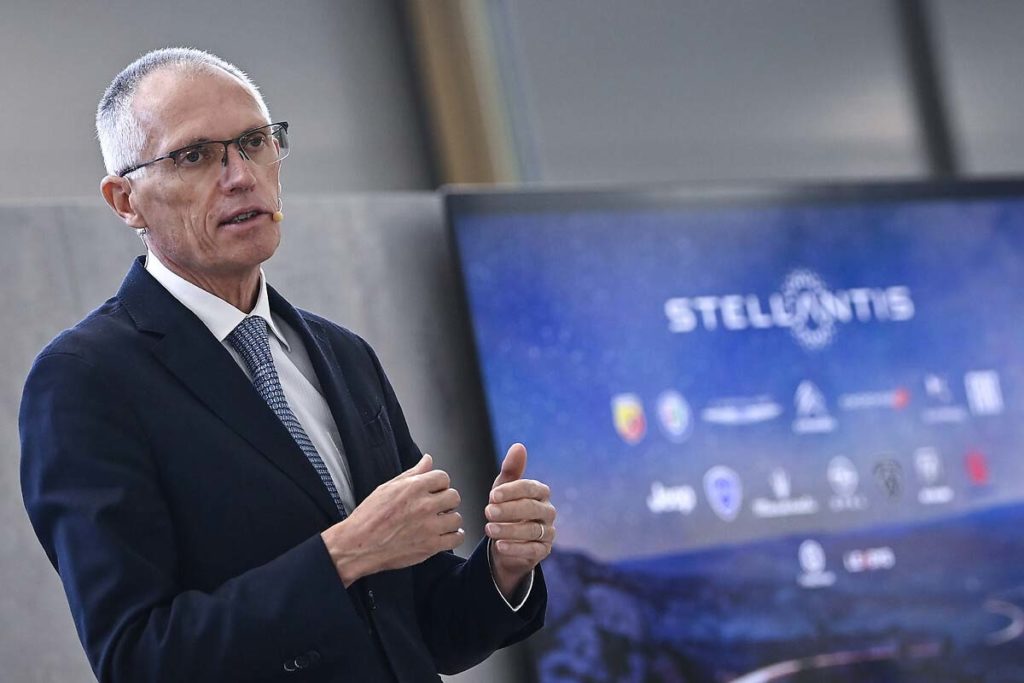
The contrast is striking. On the one hand, Stellantis continues to pay millions of euros for the departure of its former CEO Carlos Tavares (this is contractual). On the other hand, the group's Italian workers will have to forgo their production bonuses in 2026. This situation is fuelling social anger in several plants, at a time when management claims it wants to rebuild the Group's future after a year 2025 marked by colossal losses.
Tavares continues to be expensive
The 2025 financial report published on February 26 reveals an element that does not go unnoticed: even after his departure at the end of 2024, Carlos Tavares continues to be remunerated. The former boss, already paid 23 million euros in 2024, still received almost 12 million euros in 2025. In other words, the bill for his departure is far from over.
In the same document, Stellantis also details the remuneration of the new management: Antonio Filosa, who became CEO in May 2025, earned 5.42 million euros. John Elkann, Group Chairman, received around 2.45 million euros. These amounts illustrate the high cost of the managerial transition undertaken after Tavares' ouster.
A tense 2025
Officially, Stellantis assumes a phase of profound transformation. John Elkann and Antonio Filosa describe a «crucial» year, marked by difficult decisions against a backdrop of economic tensions, regulatory uncertainties and increased competition.
In particular, Antonio Filosa acknowledged a major strategic error: the Group had «overestimated the speed of adoption of electric vehicles». This poor anticipation contributed to a massive loss, estimated at over 22 billion euros. As a direct consequence, priority is now given to financial recovery, with a gradual return to profitability expected from 2026. But this turnaround has an immediate social cost.
No bonus for Italian workers
Employees at several Italian industrial sites, including Mirafiori and Termoli, have learned that the 2025 production bonus will simply be abolished. In 2025, some workers had received up to 2,000 euros. This year, the amount will be... zero.
The official reason is simple: financial targets were not met. But for the unions, it's a «double penalty». Employees have already suffered prolonged periods of short-time working in recent years. Many have even invested in the Group's shares via internal plans. Today, they find themselves deprived of bonuses at a time when the company continues to pay the consequences of past strategic choices. At Mirafiori, the resumption of production of the Fiat 500 hybrid is therefore accompanied by a paradox: producing more, with no additional gain on the pay slip.
Anger rises in factories
This decision triggered social unrest. Strikes were organized, notably in Turin and Termoli, to denounce the abolition of the bonus. The unions are pointing the finger of blame directly at the previous management and warning of a possible industrial disengagement in Italy.
Some representatives also point to a situation that is difficult to accept: while Italian employees are deprived of bonuses, Stellantis continues to pay them in other parts of the world where the Group invests more, such as North Africa and South America.
The current situation illustrates a deep fracture. On the one hand, management claims to want to rebuild Stellantis around a customer-focused strategy and better industrial execution.
On the other, Italian workers feel they are paying the price for past mistakes, particularly those linked to the electric transition. And while the company promises a return to growth in 2026, one reality remains in 2025: the millions of euros linked to Carlos Tavares' exit continue to be paid... while the workers' bonuses disappear.
 English
  French
  Italian
  Spanish
  Portuguese
  German
  Japanese
  Turkish
  Dutch
Dutch