

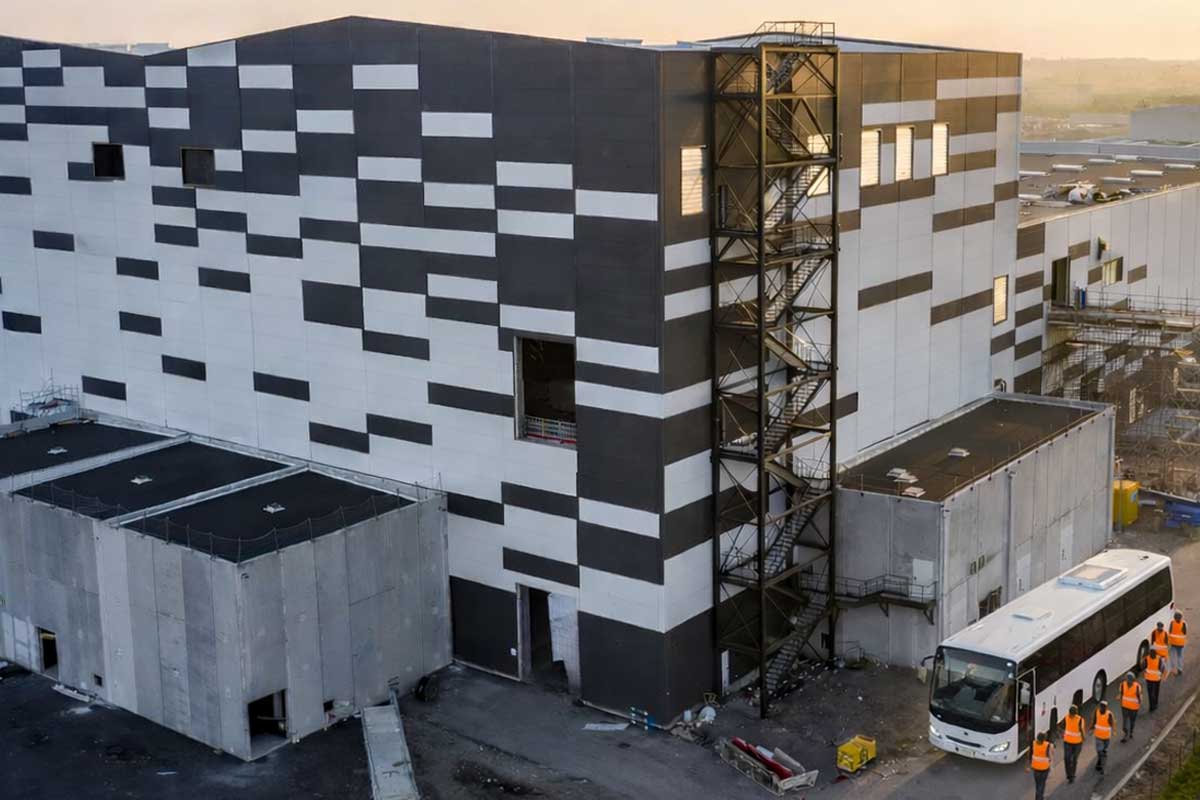
The electricity strategy of Stellantis is going through a new period of turbulence in Europe. The cause: persistent industrial difficulties at Automotive Cells Company (ACC), the European joint venture responsible for supplying batteries for the Group's future electric models. To such an extent that some major launches are now threatened with delays of up to eight months, while the plant is currently running far short of its initial targets.
Significant delays for Peugeot, Opel and Citroën
According to information relayed by Bloomberg, the new long-range electric Peugeot 3008 and 5008 are directly affected by ACC's current inability to produce sufficient cells. The problem is not confined to Peugeot: Opel and Citroën are also said to have been forced to postpone the launch of their long-range electric versions. At the root of this situation is a production level well below expectations. The Douvrin plant in northern France currently equips only around 1,000 vehicles a month, a volume far short of the joint venture's initial ambitions.
ACC calls on Chinese know-how
To break the deadlock, ACC has opted for a pragmatic solution: to rely heavily on Asian expertise. 80 Chinese specialists from supplier EVE are already on site, and their number is set to rise to 120 experts in the coming weeks. Their mission is clear: to accelerate ramp-up and reduce the still very high scrap rates of between 15 and 20 %. The stated aim is to triple production by summer 2026, to reach a rate of over 3,000 vehicles per month. A significant step forward, but still insufficient to cover Stellantis' overall needs.
Batteries NMC vs LFP
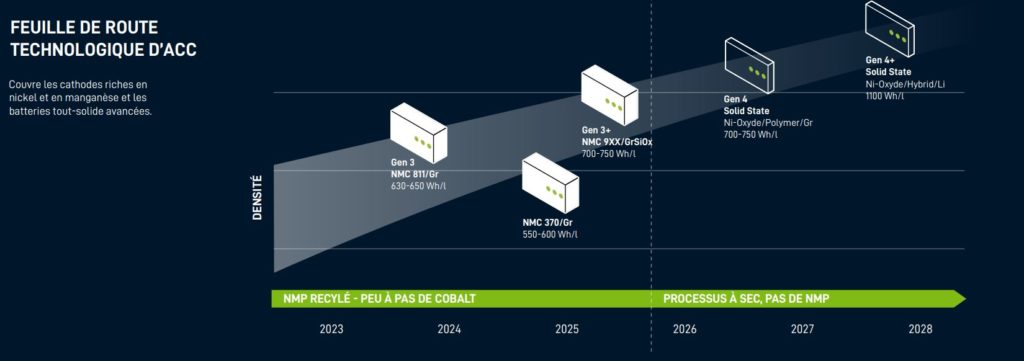
ACC's industrial difficulties also stem from an unfavorable technological context. The joint venture produces NMC (nickel-manganese-cobalt) batteries, while the European market is increasingly moving towards LFP (lithium-iron-phosphate) technology, which is around 20 % cheaper and better suited to current economic constraints. Stellantis has already taken note of this trend. For Europe, the Group has chosen to rely on CATL, with a future gigafactory in Zaragozain Spain, representing an investment of over 4 billion euros. This choice mechanically weakens ACC's strategic role in the Group's battery ecosystem.
Termoli: the gigafactory that never saw the light of day
This loss of influence is also reflected in Italy. Initially, ACC was to transform the historic Termoli site into a battery gigafactory, an emblematic project of the Italian electrification plan. But this project is now considered archived, even if it was never officially abandoned. At the latest Automotive Round Table at Italy's Ministry of Enterprise, Stellantis Europe boss Emanuele Cappellano confirmed that Termoli would ultimately focus on production of e-DCT gearboxes and GSE enginesThis will ensure the site's industrial continuity beyond 2030. An implicit admission: the Italian plant will not produce ACC batteries.
Stellantis and Volkswagen appeal to Brussels
Faced with these structural difficulties, Stellantis is not remaining silent. Antonio Filosa, its CEO, has co-signed a letter to the European Union with Volkswagen boss Oliver Blume. In it, the two executives call on Brussels to defend the European automotive industry, by introducing targeted incentives and a CO₂ bonus reserved for "Made in Europe" electric vehicles.
These delays come at a pivotal time for Stellantis. Under the leadership of Antonio Filosa, the group is thoroughly reviewing its electric roadmap. Several projects have already been scrapped or slowed down, such as the electric Ram 1500 pickup, while some plug-in hybrid versions of the electric Ram 1500 are in the pipeline. are gradually disappearing in North America.
 English
  French
  Italian
  Spanish
  Portuguese
  German
  Japanese
  Turkish
  Dutch
Dutch
In this story, it's Europe that's at fault for wanting to impose electric vehicles on automakers overnight, without any forethought, while the Chinese have a head start in battery technology.
Not "overnight", companies have had years to comply with the law. VAG has done this very well, and is ready to face up to international competition (moreover, they have caught up with and then beaten Tesla in the electric segment, even though the ID.Polo and ID.Cross are not even on the market), whereas Stellantis wanted to sell the wrong products at the wrong price, and there is no continuity in the ranges. The C3 Aircross has grown by some 25cms from one generation to the next, and offers a battery and electric motor worthy of a city car...
The ë-C3 Aircross is now available only in 54 kWh and 400 km, which is fair enough for the price.
And it's available in thermal.
It's a good thing it's 25 cm longer - the C3 is already an SUV!
VAG will be using Chinese engineers to make their new IDs, apparently.
It's not much better.
Let's hope that ACC pulls through, otherwise we'll have to accept that China has won and that the EU will have done everything in its power to help it.
You're right Jacques, it's a matter of life and death for the European automotive industry of tomorrow!
Only EVs have been increasing in sales since 2024.