

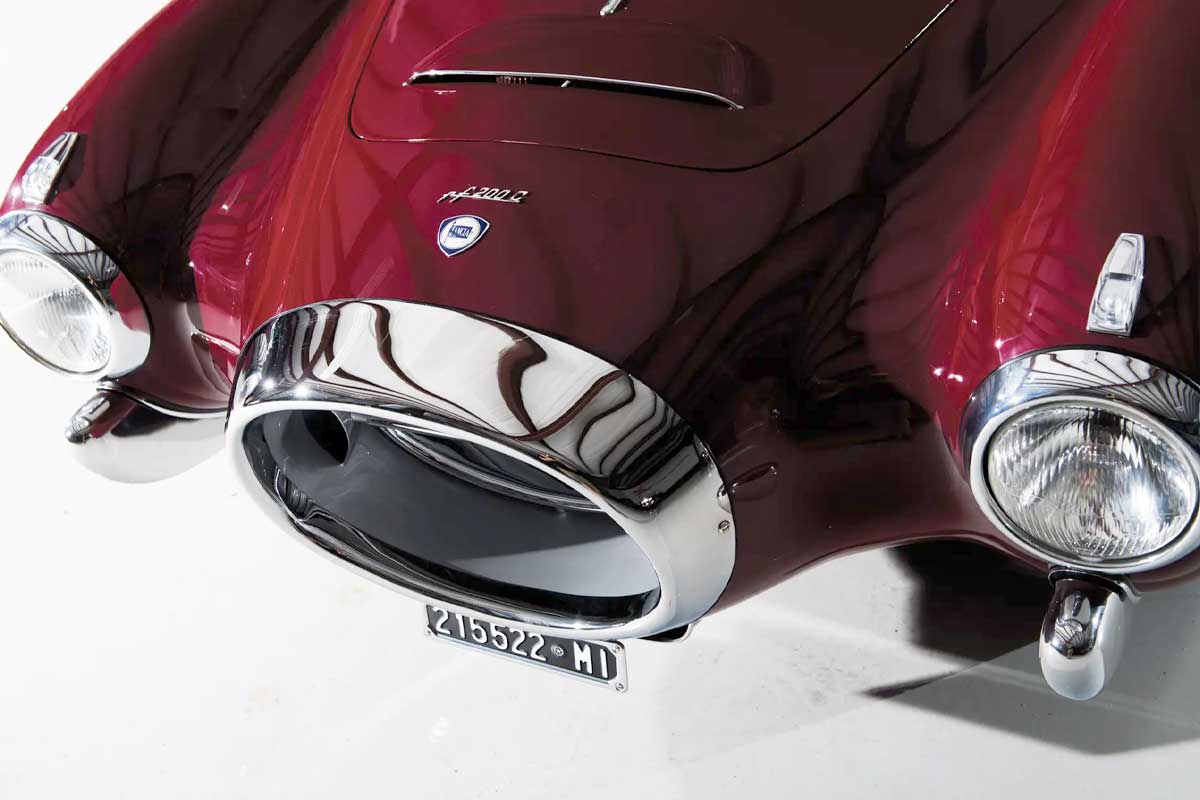
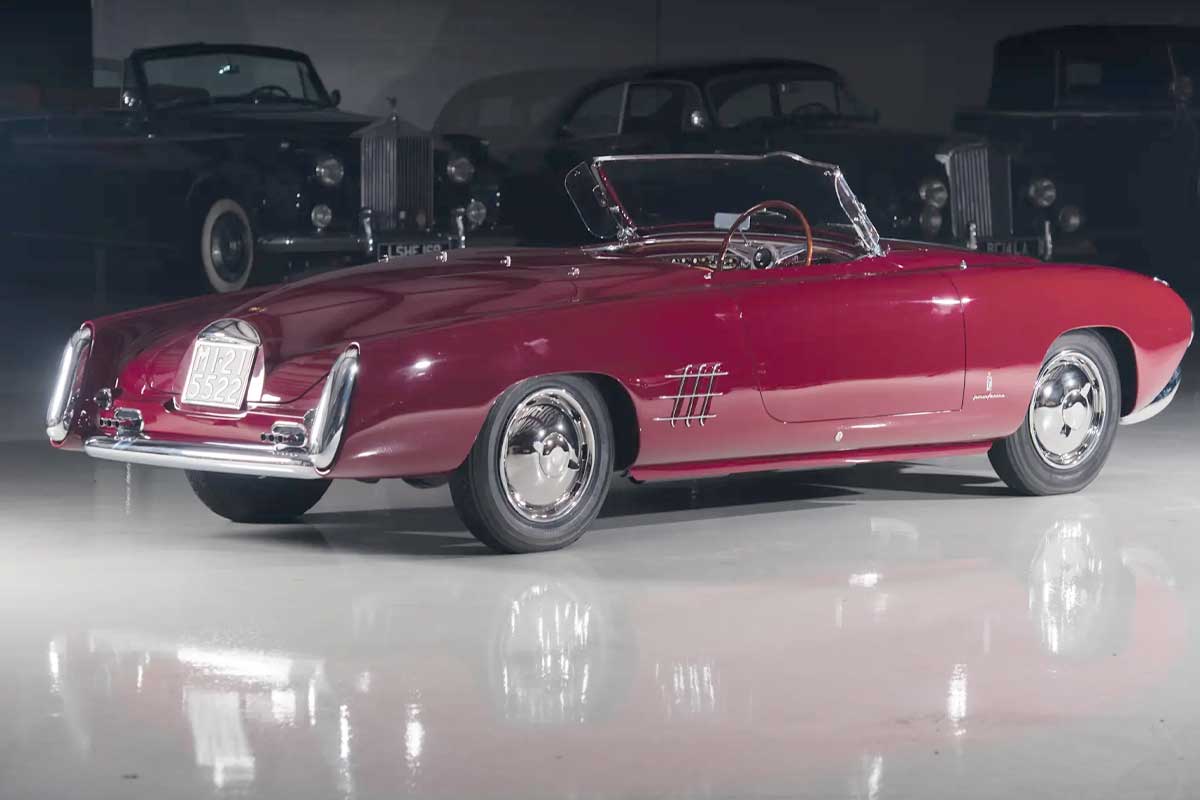
When it comes to Lancia With the Aurelia PF200 Spider, we're not just talking about an Italian convertible from the 1950s. We're talking about a rolling manifesto, a radical design object born at a time when the automobile was already dreaming of aviation, supersonic speed and a future yet to be invented.
When Lancia redefines grand touring
In 1950, the Lancia Aurelia caused a sensation at the Turin Motor Show. Its name evoked the Via Aurelia, one of the great roads of ancient Rome, and the model imposed a new vision of Italian grand touring: refined, technical and daring. But two years later, still in Turin, coachbuilder Pininfarina decided to go much further. Based on the very rare Aurelia B52, a chassis produced in less than a hundred examples and reserved exclusively for special bodywork, Pininfarina presented an unidentified object: the Aurelia PF200 Spider. More than a car, it's a declaration of stylistic freedom.
The "aviation" trend on four wheels
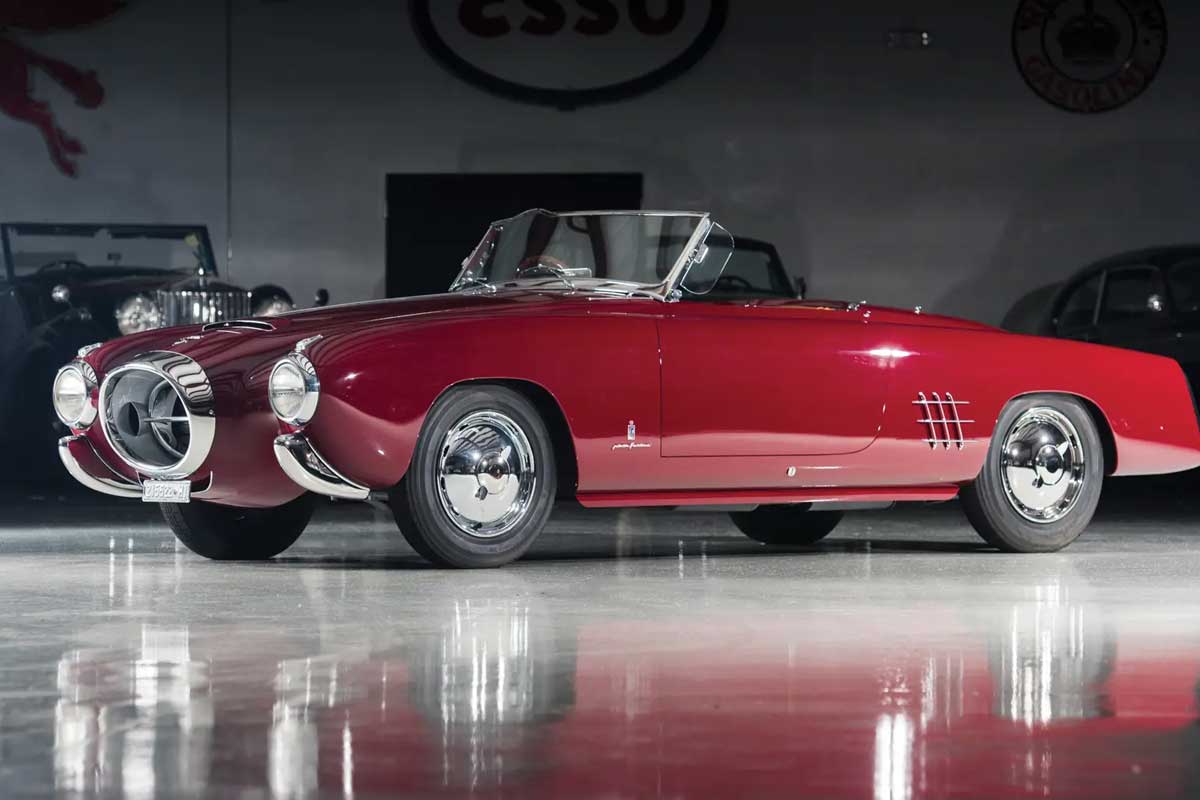
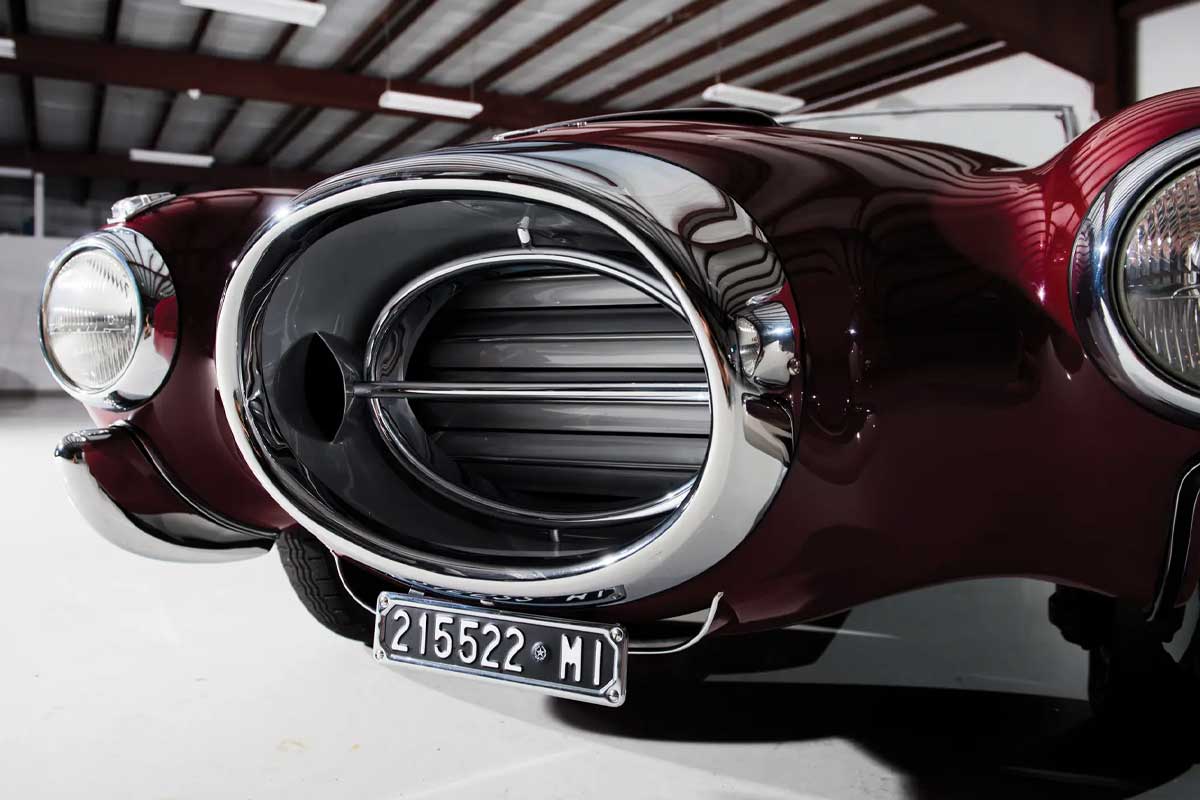
The early 1950s were marked by the emergence of jet aviation. This fascination permeated all fields, and the automobile was no exception. The design of the PF200 Spider is one of the most radical examples. Its prominent nose, perfectly circular on the prototype, directly evokes the air intake of a North American F-86 Sabre fighter. The windscreen is steeply raked, the fenders adopt a flowing "pontoon" style, and the body line remains perfectly continuous all the way to the tapering stern. At the rear, six individual tailpipes emerge above the bumper, like nozzles ready to spit flames. Nothing is discreet, nothing is conventional. The PF200 never set out to please everyone. It wanted to make its mark.
First a prototype
Beneath this spectacular bodywork lies a serious powertrain. Lancia's 1,991 cm³ V6, fed by two Weber carburetors, develops around 90 horsepower. Coupled with a four-speed manual gearbox and transaxle transmission, the whole package is based on a modern architecture for its time, with four-wheel independent suspension and hydraulic drum brakes. But the PF200 was never conceived as a production sports car. It was a laboratory, a technological and aesthetic showcase, intended for shows and concours d'élégance rather than open roads.
Between 1952 and 1956, Pininfarina produced a handful of PF200s: three Spiders and between three and four Coupes, all different. The Turin prototype is the only one to feature a perfectly circular nose. Subsequent versions adopted a more elliptical front end, sometimes without chrome trim, and many details changed from one model to the next. Since most of the archives were lost in a fire at Pininfarina, it is now accepted that fewer than eight PF200s were built, and that barely more than half of them would survive.
The B52-1052 chassis, the PF200 C
The best-documented example is undoubtedly chassis B52-1052, known as the PF200 C. Presented at the Geneva Motor Show in 1953, then in Turin the same year, it features an oval nose, chrome strips behind the doors and small bumpers under the headlights. It was also the only model to bear a "pf200 C" badge on the front, suggesting a sportier interpretation of the concept. The car won a Grand Prix d'Honneur at the Stresa Concours d'Elegance in 1953, before being registered in Milan and exported to the USA in the 1960s. There, it remained in the hands of an enthusiast for over forty years, before benefiting from an exceptional restoration, spread over almost ten years.
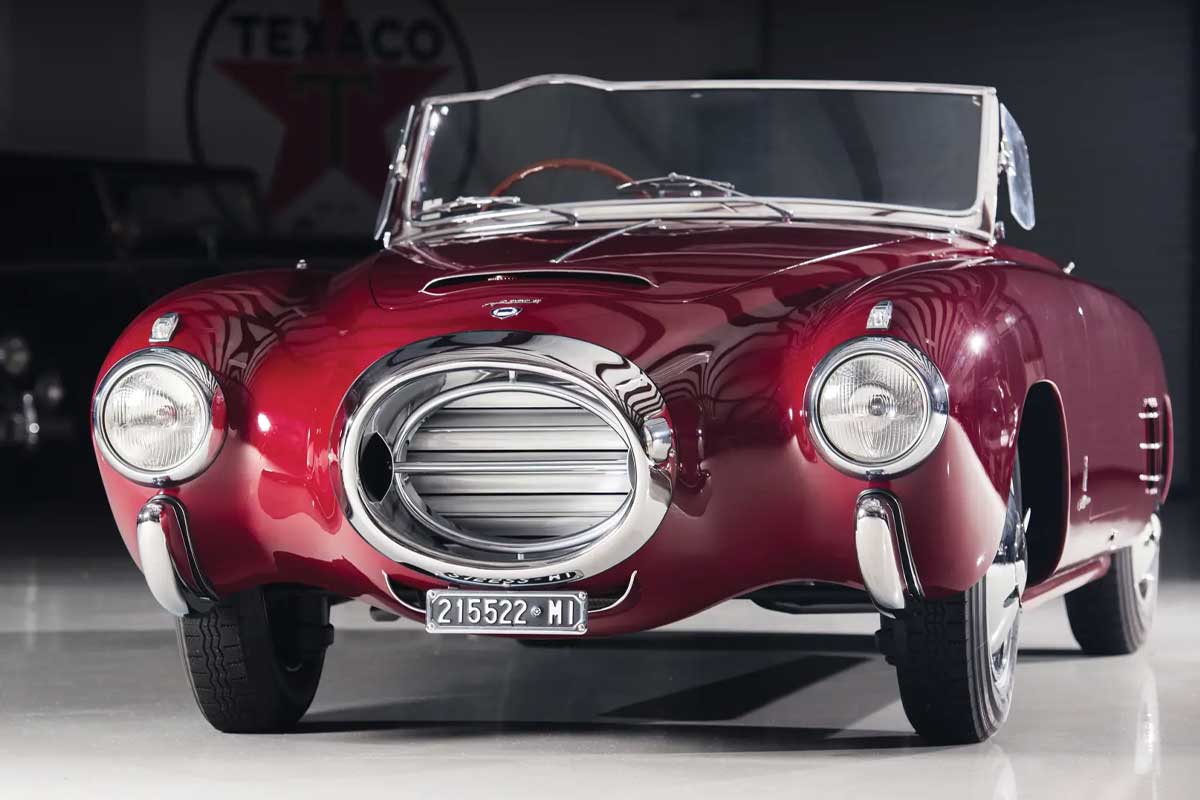
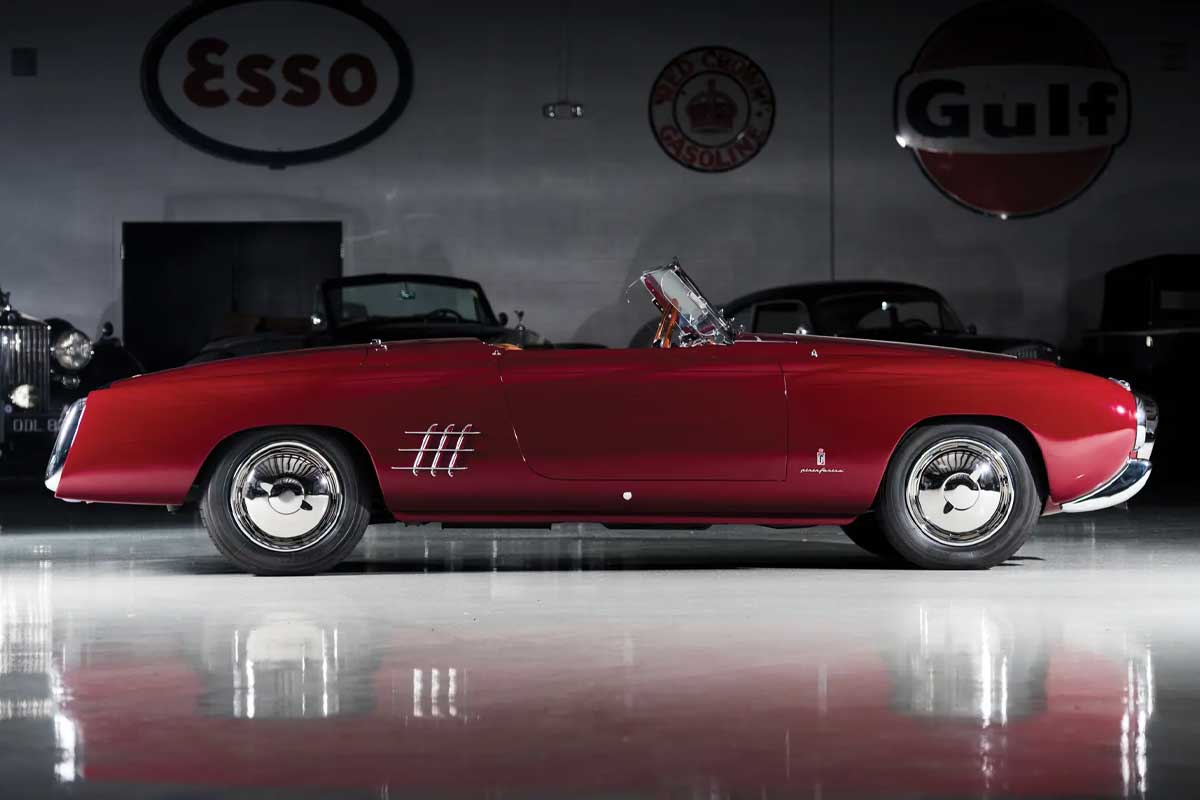
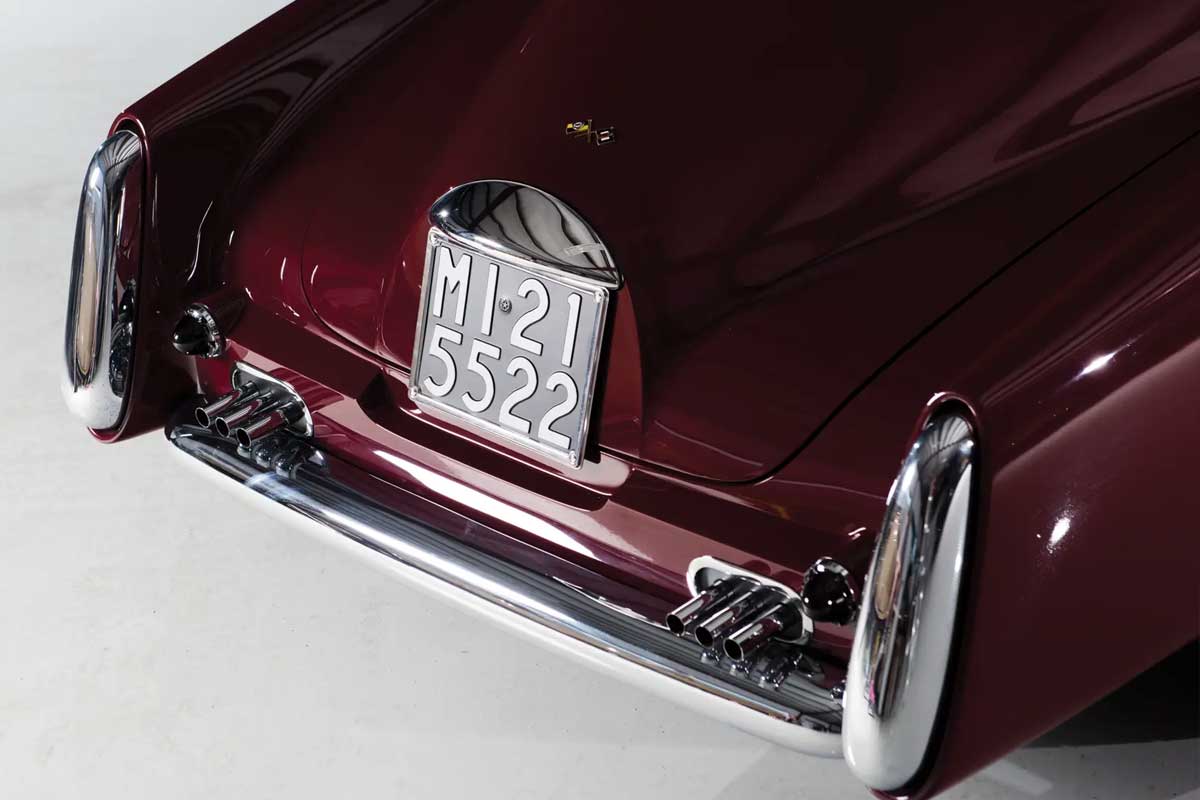
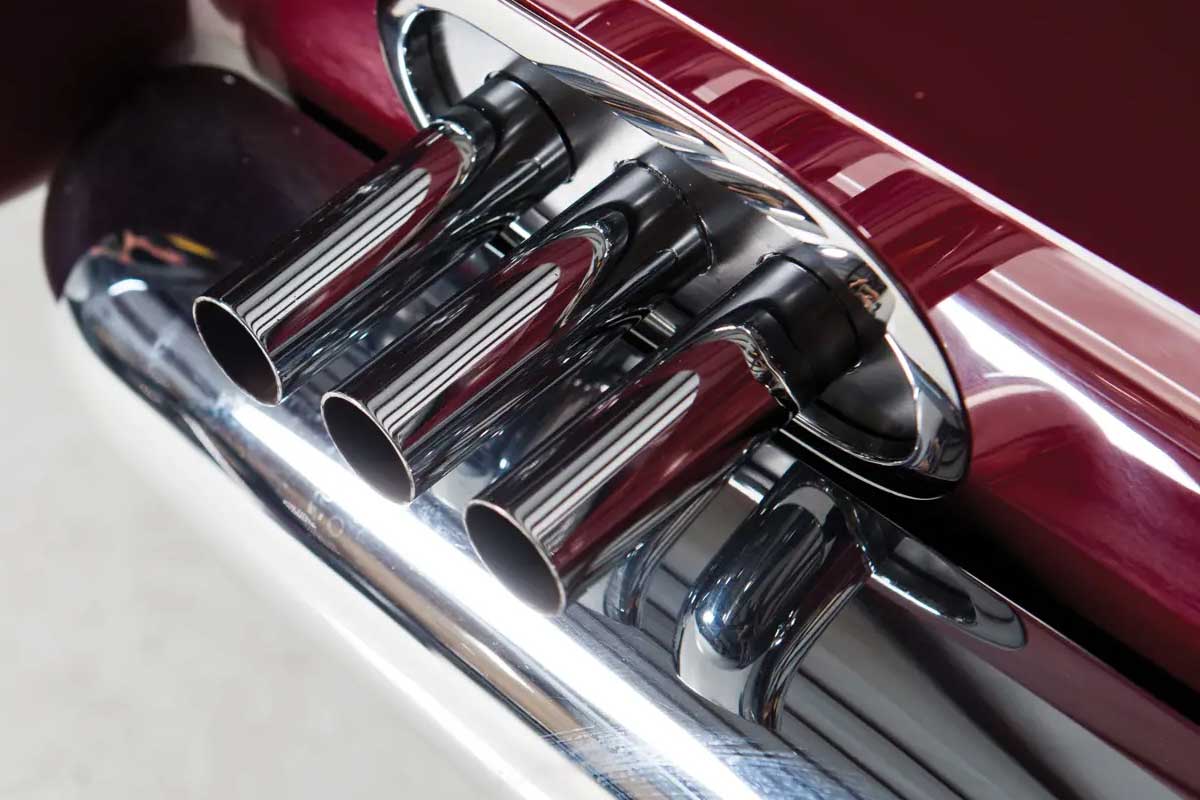
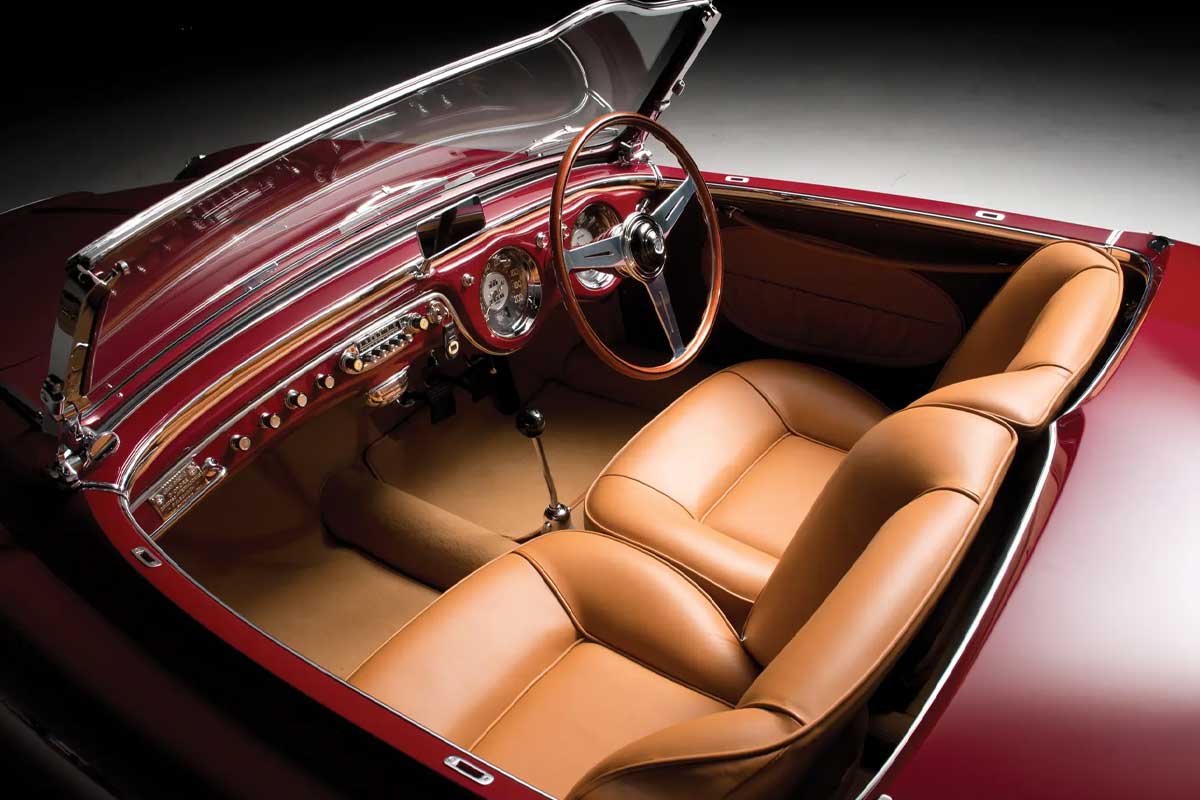
Presented in the greatest American and European elegance competitions, the PF200 C accumulates awards, culminating in a class victory at the prestigious Concorso d'Eleganza Villa d'Este in 2015. Its condition, history and unique character make it a rolling museum piece. This recognition is also reflected in the market. In 2014, and again in 2017, the car was sold at auction by RM Sotheby's, fetching around $1.1 million and then almost $1.25 million a few years later.
Even today, the Lancia Aurelia PF200 Spider remains one of the most daring examples of post-war Italian motoring. A car born at a time when people dared to dream without limits, even if it meant building cars that seemed ready to take off.
 English
  French
  Italian
  Spanish
  Portuguese
  German
  Japanese
  Turkish
  Dutch
Dutch
Warum wird zu wenig über den Lancia «Stratos» geschrieben? Ich kenne noch dieses Auto aus den siebziger Jahren und bin ihm verfallen. Warum darf es dieses Auto nicht mehr geben, obwohl viele Rallye's damit gewonnen wurden? Zumindest sollte dieses Auto zur Spitze der italienischen Automobilkunst gehören. Andere Hersteller besinnen doch auch ihrer Fahrzeuge, die sie berühmt gemacht haben.
Gruß, Andreas Auth, Essen (NRW), Alemannia