

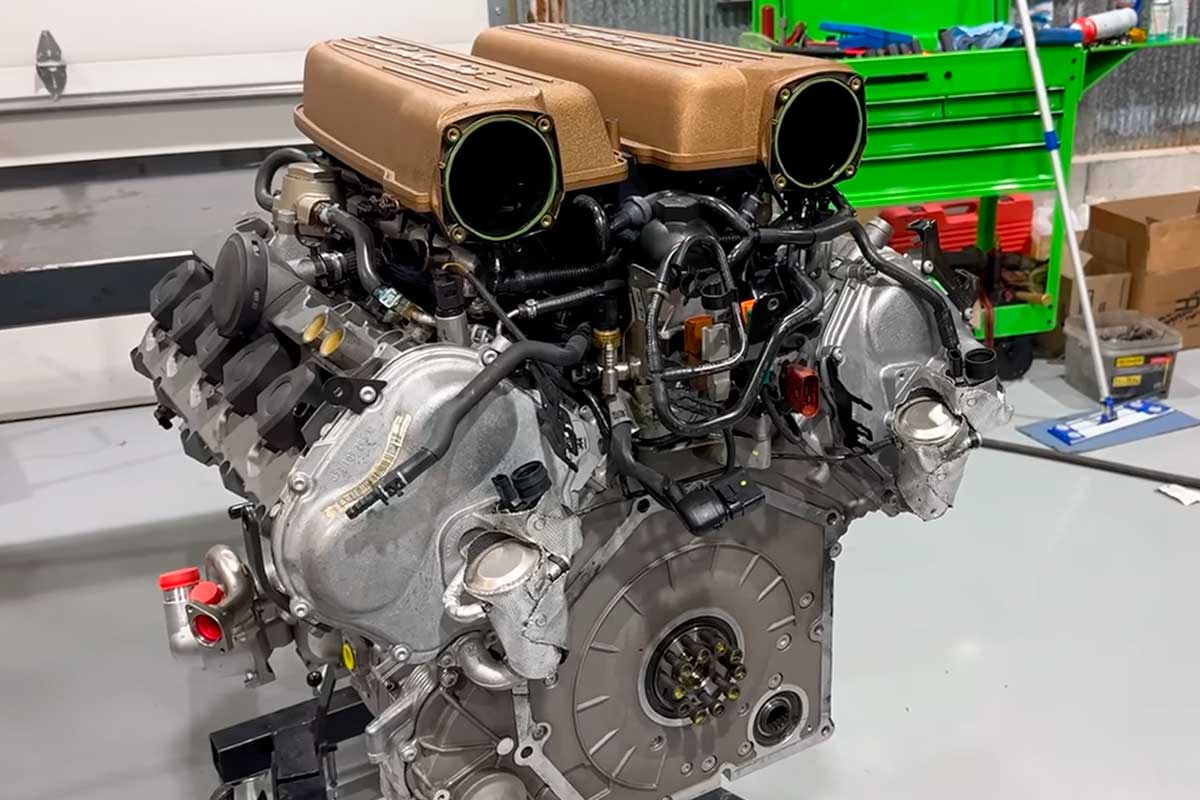
There are engines you take apart out of curiosity, and others you take apart because they look like a crime scene. This one clearly falls into the latter category. On Eric's workbench, from the YouTube channel I Do Cars, we find no ordinary engine, but the 5.2-liter V10 from the Lamborghini Huracán Performance, announced at 630 hp. An exotic, expensive, rare engine... and above all "very, very damaged". The detail that immediately makes you wince: less than 20,000 miles (32,000 km) on the odometer, and an abrupt end "somewhere around 7,000 rpm". It literally exploded.
Filings where there should never be any
Even before disassembly, the V10 Lamborghini makes life difficult. Normally, Eric attaches the engines to his support via the clutch housing. Except that here, on the transmission side... is the timing chain. The chain is at the rear. He has to improvise.
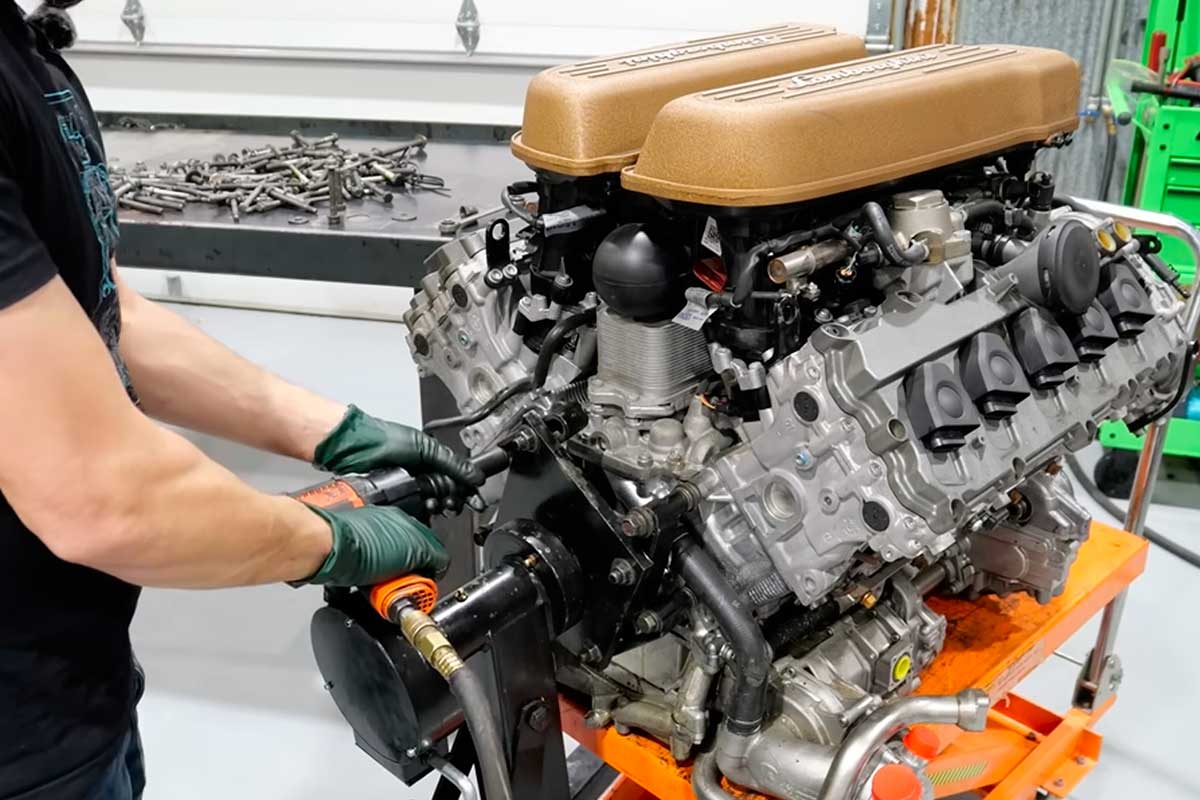
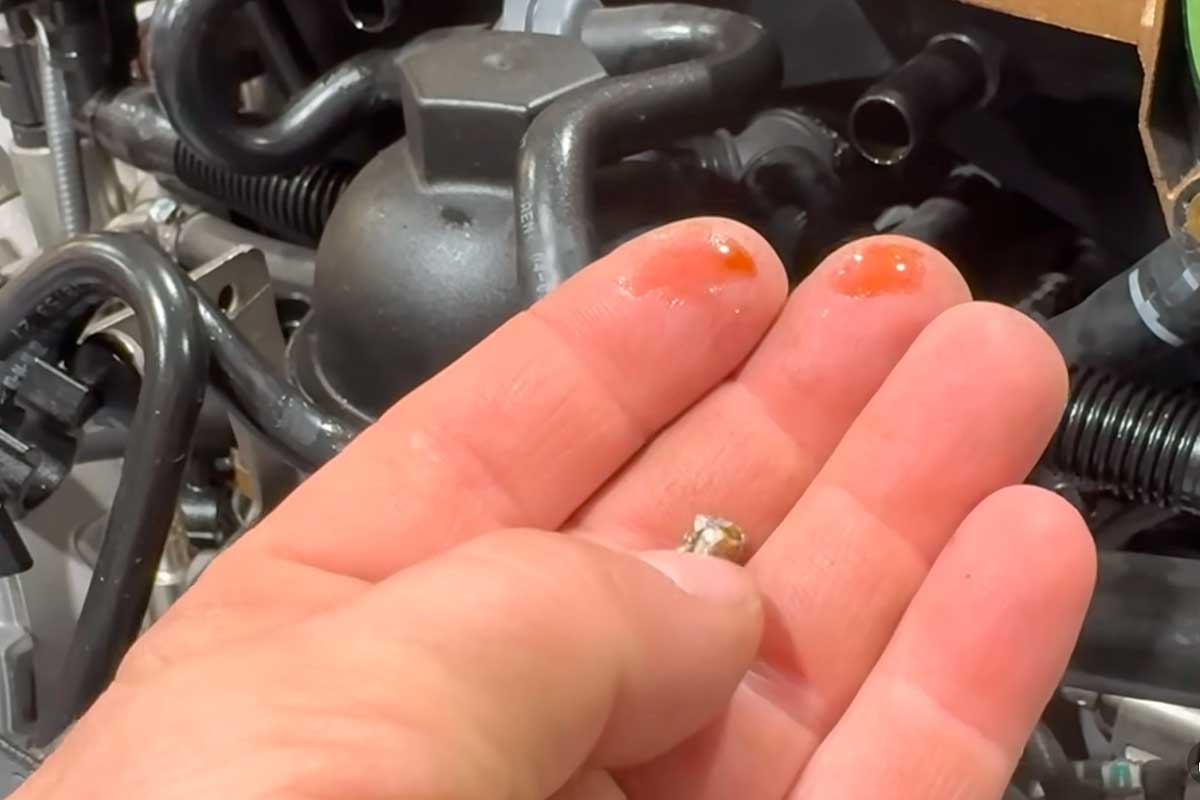
Once the engine is finally in place, he discovers bits of metal in the intake, as if the engine had spat out part of itself into the manifold. And when it comes to fitting the spark plugs, things don't get any better: one misses completely, another refuses to come out despite the fact that it turns "as if it were free".
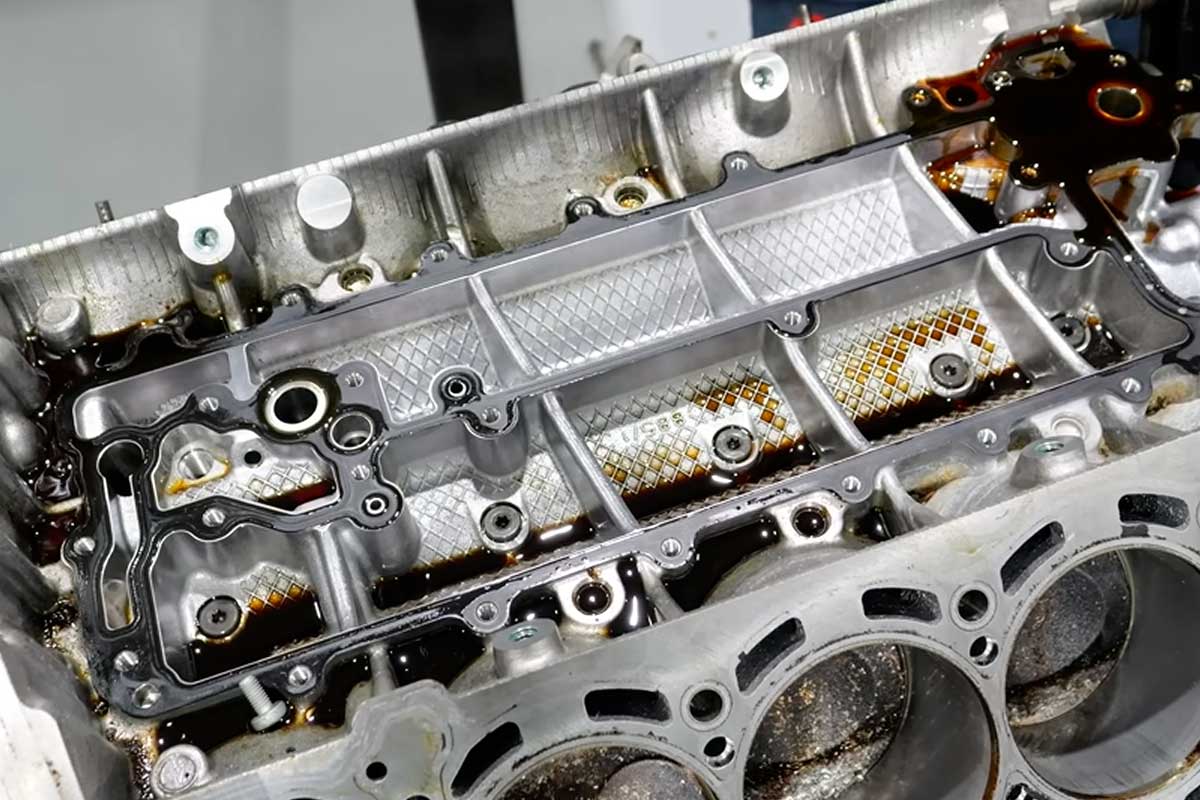
When the intake plenum falls away, the first thing you notice is what you'd expect from a Lamborghini: smooth, almost "sculpted" ducts. Eric even compares the level of finish to that of other high-performance engines he knows well.
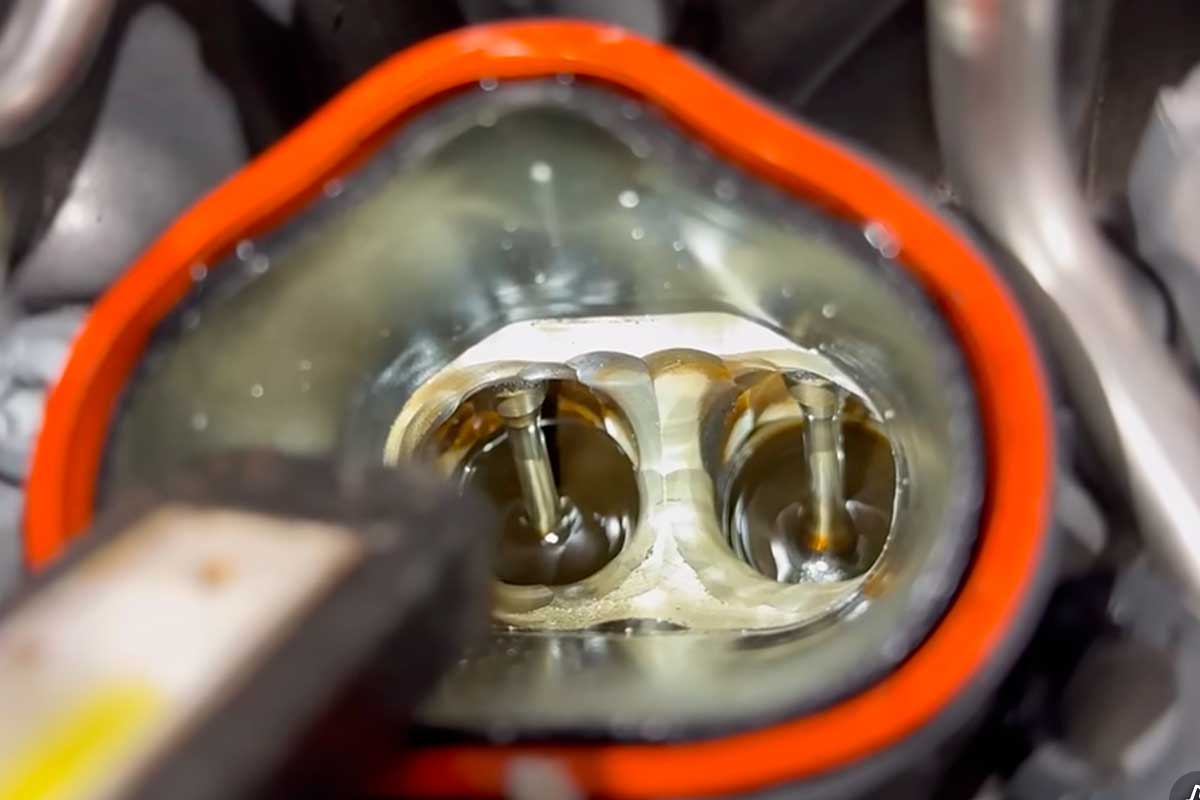
There's oil above the valves, and above all, one valve is simply destroyed: part of it is missing, and the corresponding area looks like a jaw that has lost its teeth. Suddenly, the riddle of the stuck spark plug becomes logical: if a valve has failed and pieces have gone down into the cylinder, everything could have got in the way, welded together and jammed. It's an engine that has swallowed its own organs.
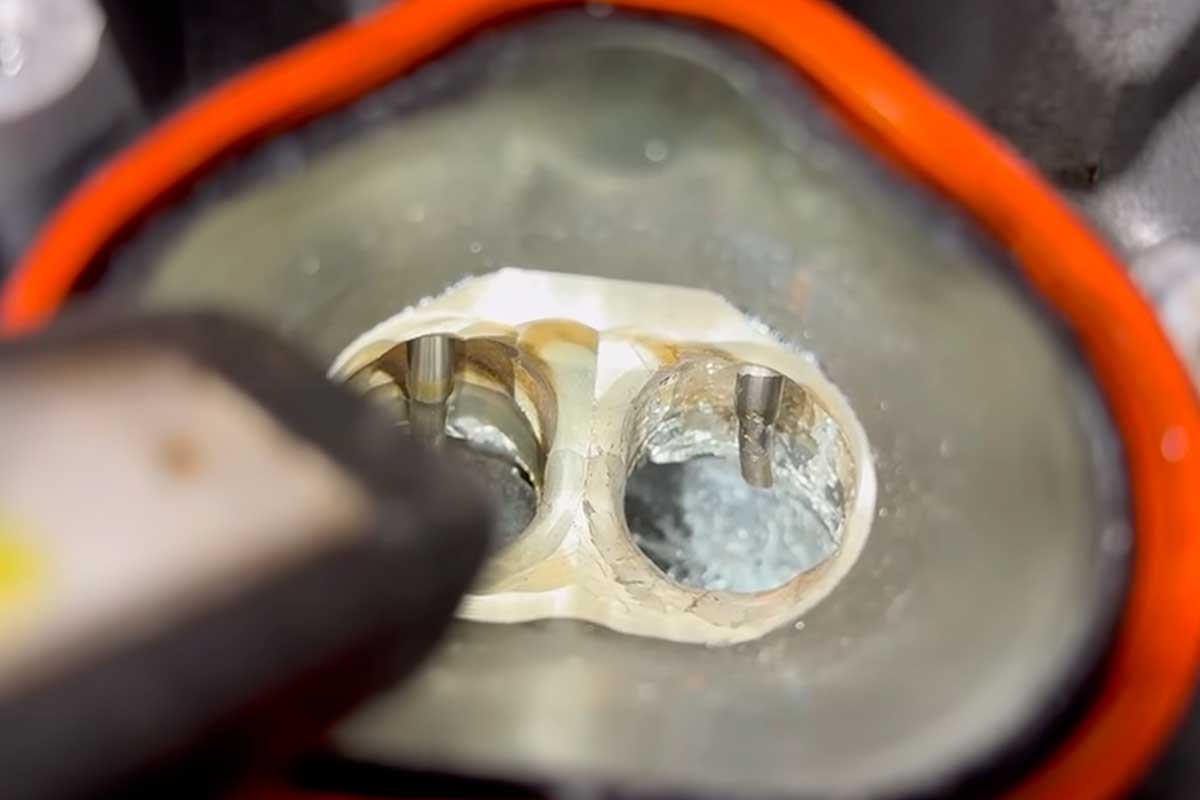
Distribution: a worrying liquid
Eric removes the timing covers to reveal a system as complex as you'd imagine a supercar V10 to be: multiple chains, tensioners, rails, a stack of components where everything seems designed for precision. Until that moment when the oil that flows out is the wrong color. This cocktail never bodes well: either the engine has suffered a cooling problem, or it has suffered an internal rupture that has mixed up the circuits, or the breakage has opened up a passage where none existed before.
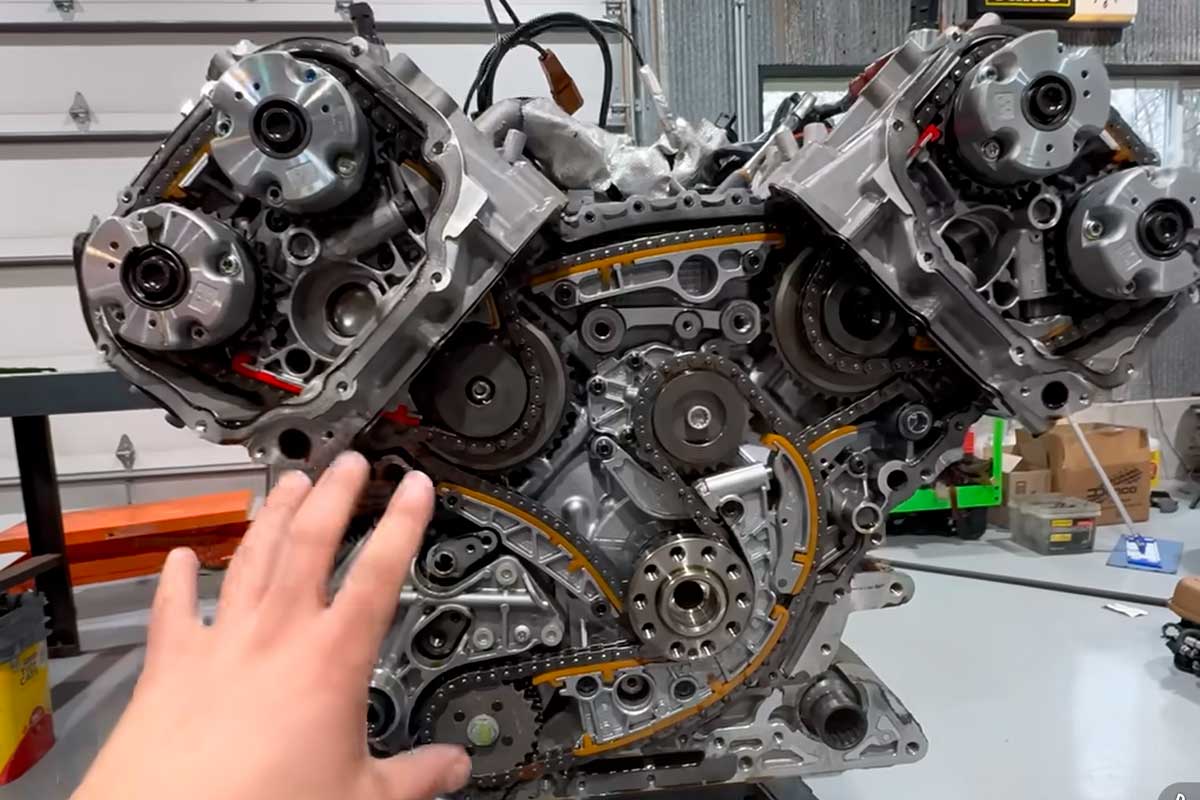

When the breech rises...
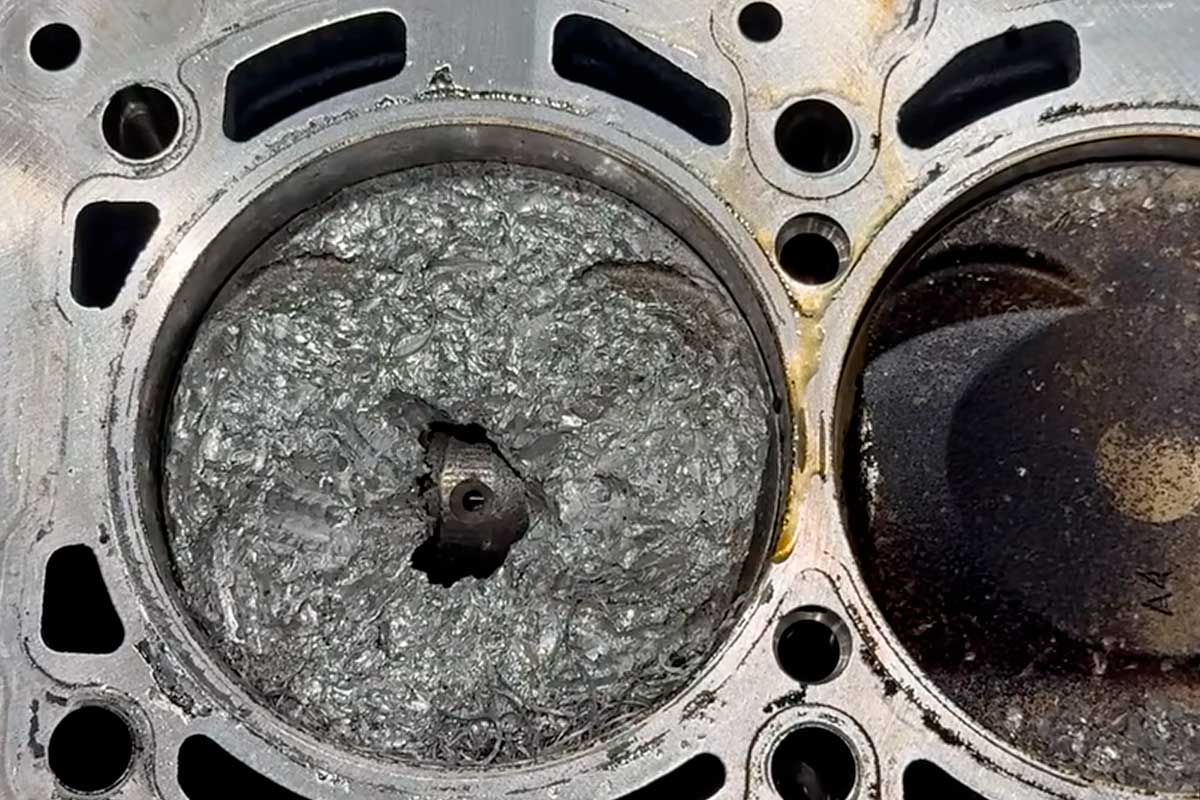
On opening the first cylinder head, we see impacts on a piston, wear in a cylinder, and above all a piston that appears "turned" by about 15 degrees. And on the other side: broken valves, missing parts, damage to a piston that ended up with a complete hole.
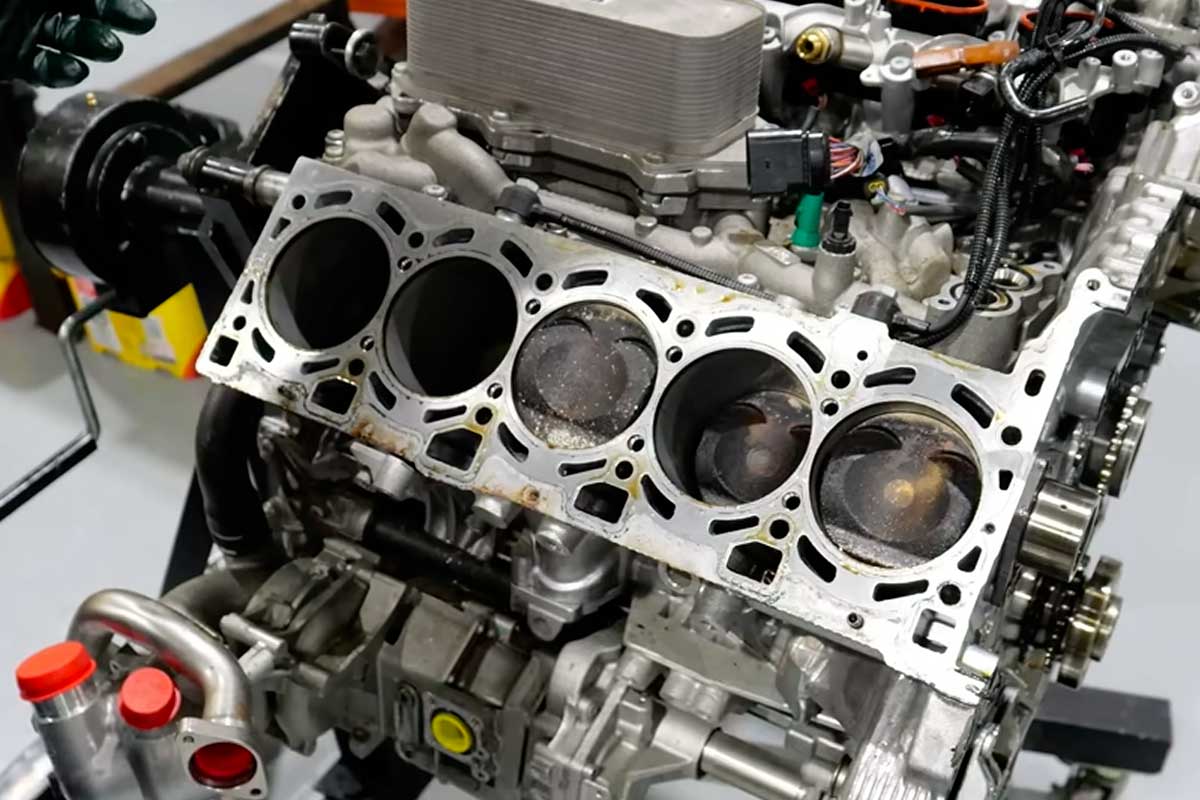

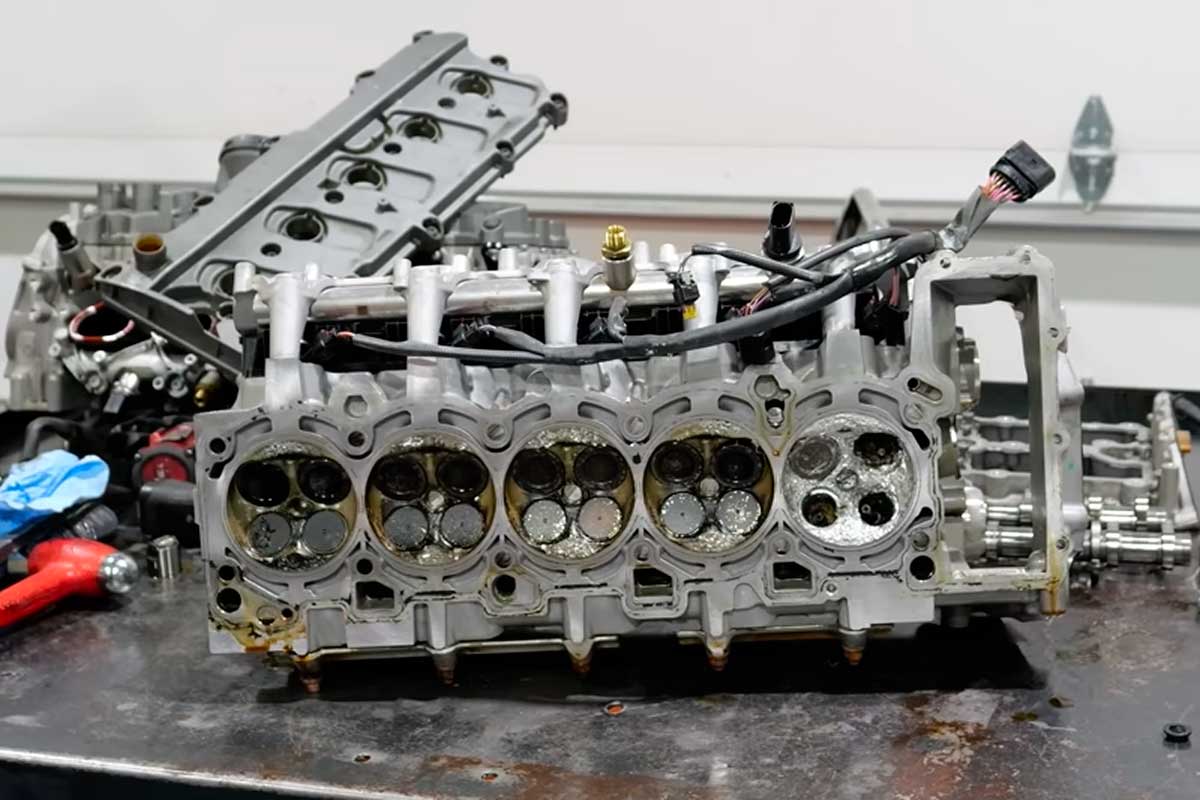
Then a combustion chamber so hammered by debris that Eric says he can't remember ever seeing one in such a state. And two valves are missing. What if these exhaust valves had "managed" to get out through their own ducts?
Two scenarios, one explosion
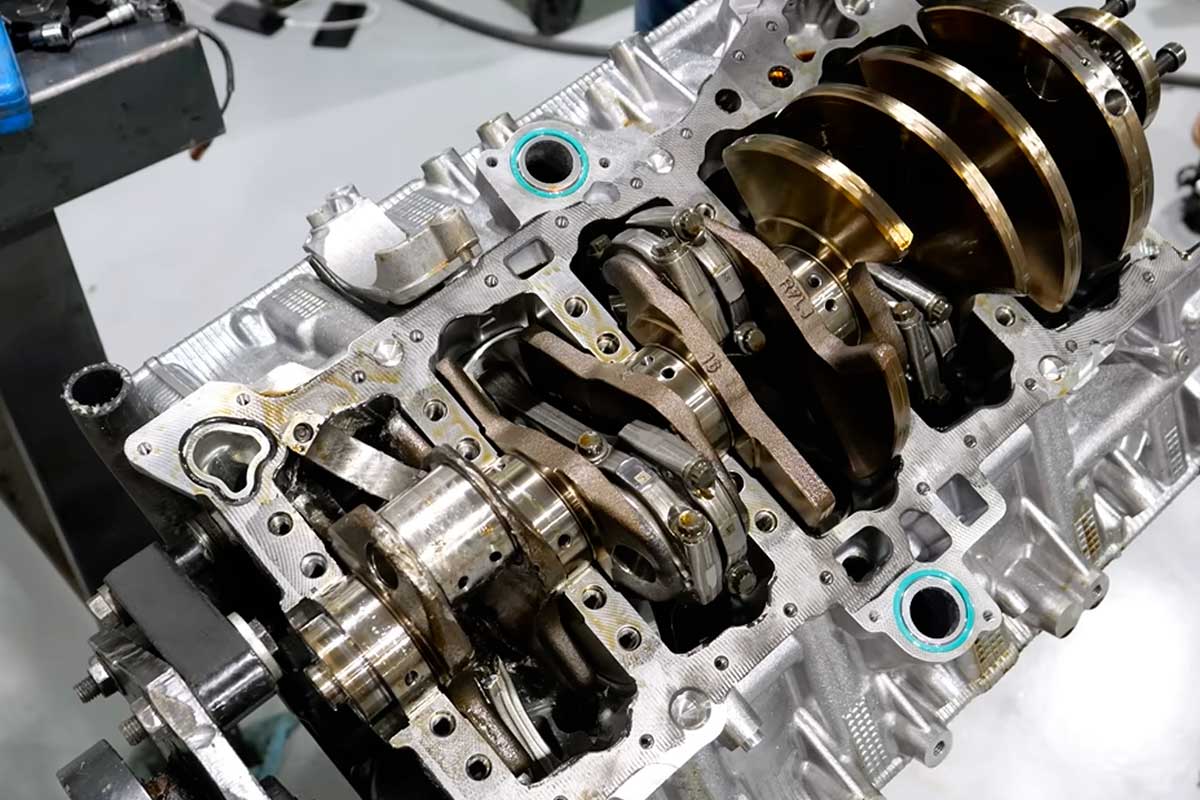
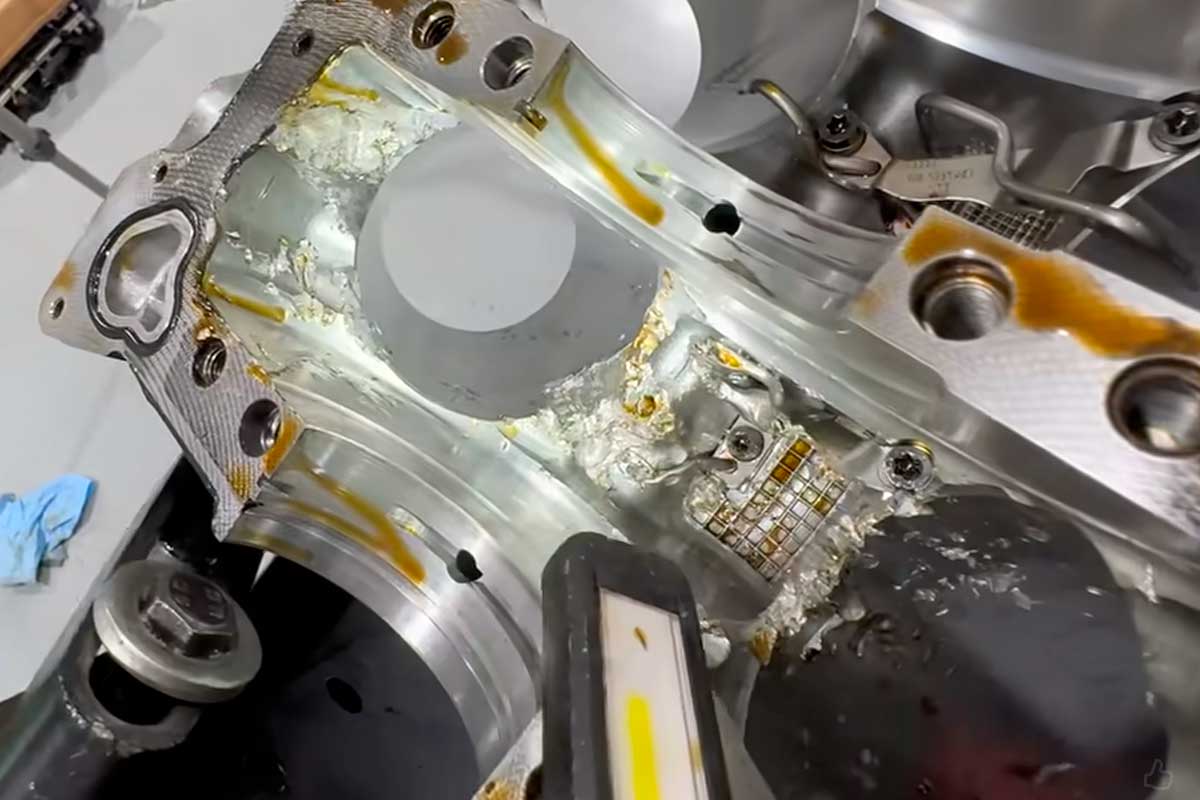
In the end, Eric sees at least two failures, but he can't clearly explain the connection. The first scenario: one or two injectors stuck open. He also mentions another possibility: over-revving. This could break the connecting rods, possibly triggering a cascade of exploding valves. But how do you over-rev a Huracán equipped with a robotized gearbox, which is supposed to avoid this kind of scenario?
In the end, this is what a Lamborghini V10 engine that explodes at 7,000 rpm looks like: a magnificent piece of engineering... reduced to a metal puzzle by a failure that, even after more than an hour of disassembly, still has its dark side.

 English
  French
  Italian
  Spanish
  Portuguese
  German
  Japanese
  Turkish
  Dutch
Dutch