

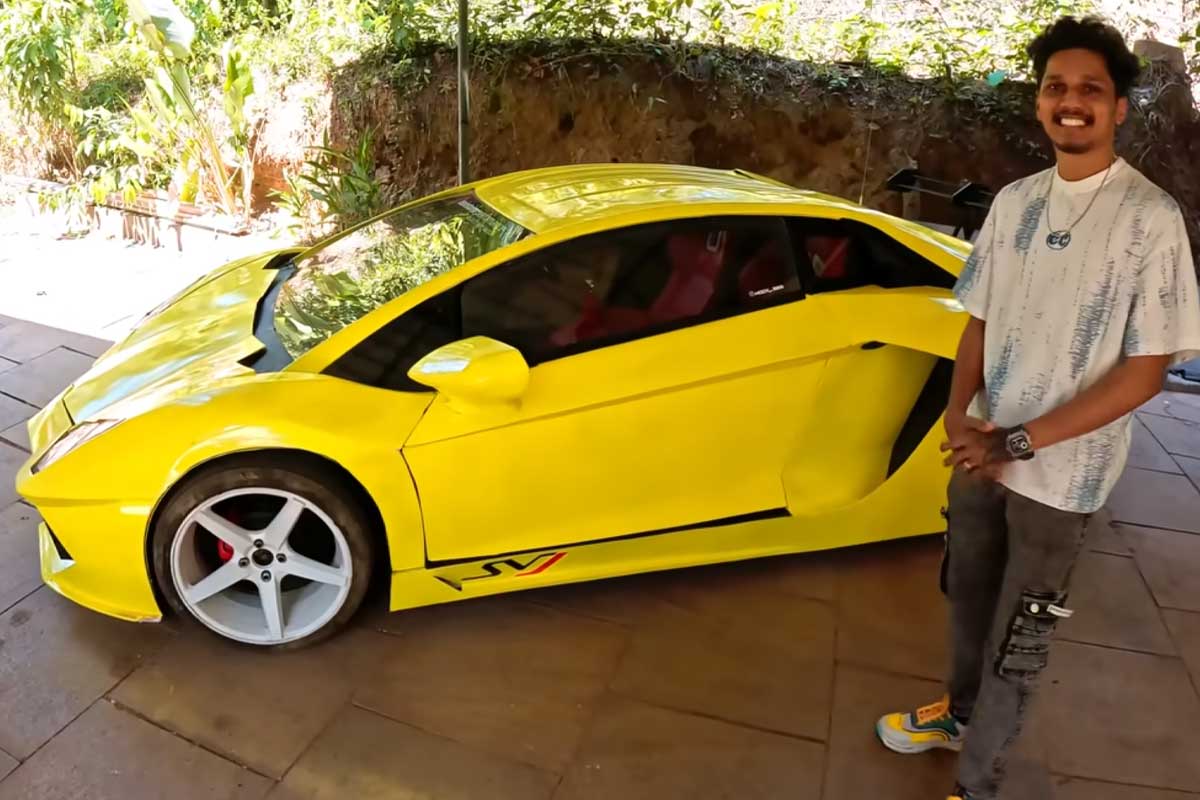
Turning a very cheap car into a supercar: the idea may seem improbable. Yet in India, a car enthusiast has managed to pull off the feat. From a Tata Nano, the little city car once known as the world's cheapest car, he created a replica of a Lamborghini entirely handmade.
The result is surprising: proportions close to the original, butterfly doors and a silhouette reminiscent of the Italian supercar. Behind this unusual project lies a whole year's work, a great deal of ingenuity... and an overwhelming passion for cars.
The Tata Nano, the world's cheapest car
Before becoming the basis for this spectacular transformation, the Tata Nano was the very opposite of a Lamborghini. Introduced in 2008 by Indian carmaker Tata Motors, this mini-city car was designed to be accessible to the widest possible audience.
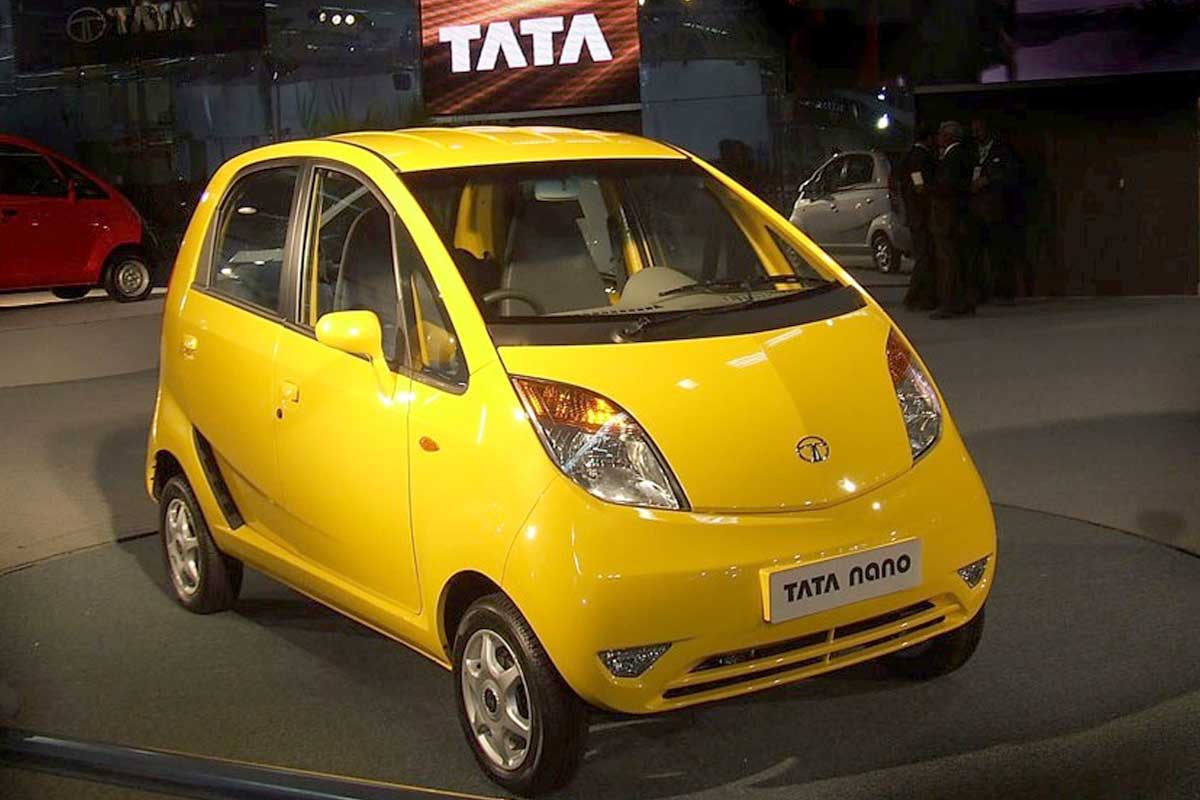
With its small two-cylinder engine developing around 33 to 38 hp, the Nano was designed primarily for urban mobility. Its top speed barely exceeded 100 km/h, and its performance remained very modest, with a 0 to 100 km/h time of close to 30 seconds.
Its main argument was its price: around 100,000 Indian rupees at launch, or around 2,000 to 2,500 dollars. This unbeatable price earned it the nickname of the world's cheapest car. But despite its ingenious concept, the Nano never met with the success it had hoped for, and production came to a halt in 2016.
A Lamborghini built entirely by hand from salvaged parts
Yet it's this little city car that formed the basis of an astonishing project carried out in the southern Indian state of Kerala. One enthusiast decided to transform his Nano into a replica of Lamborghini Aventador.
What's most impressive is that he built the car without ever having seen an Aventador in real life. To reproduce the proportions and details, he used a simple scale model as a reference for dimensions and shapes.
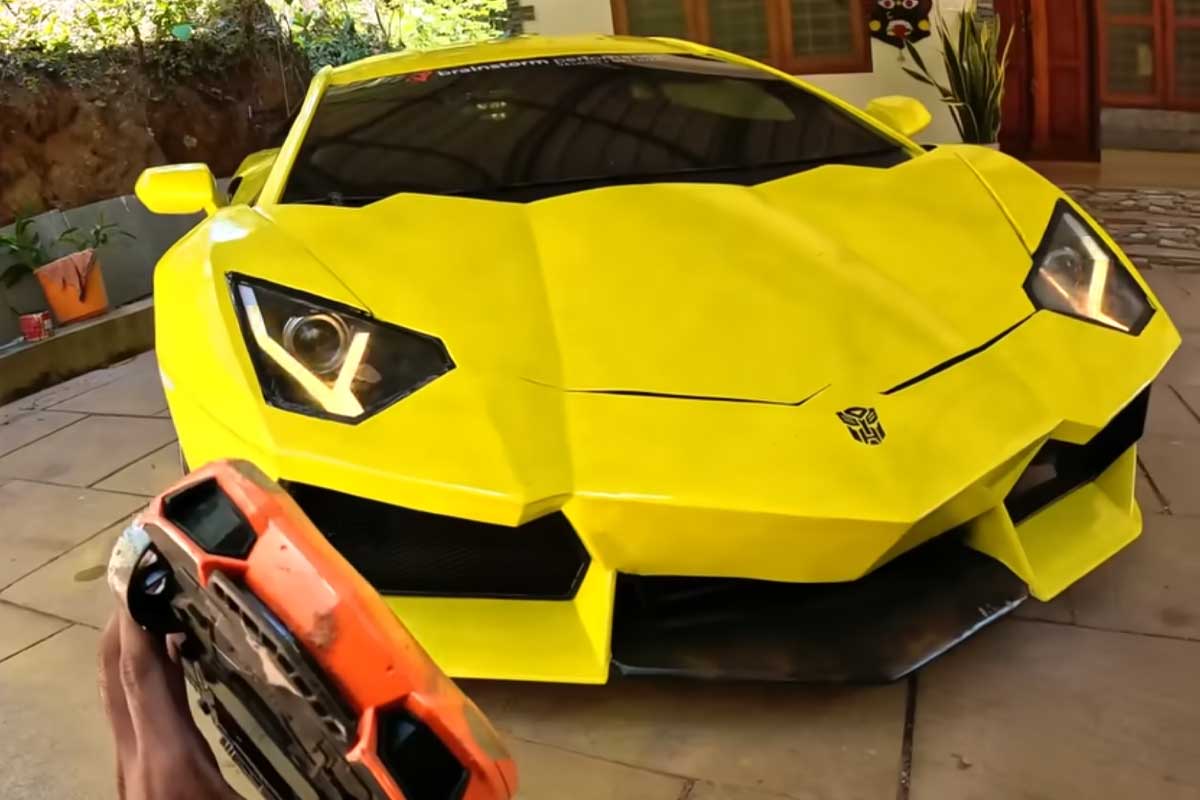
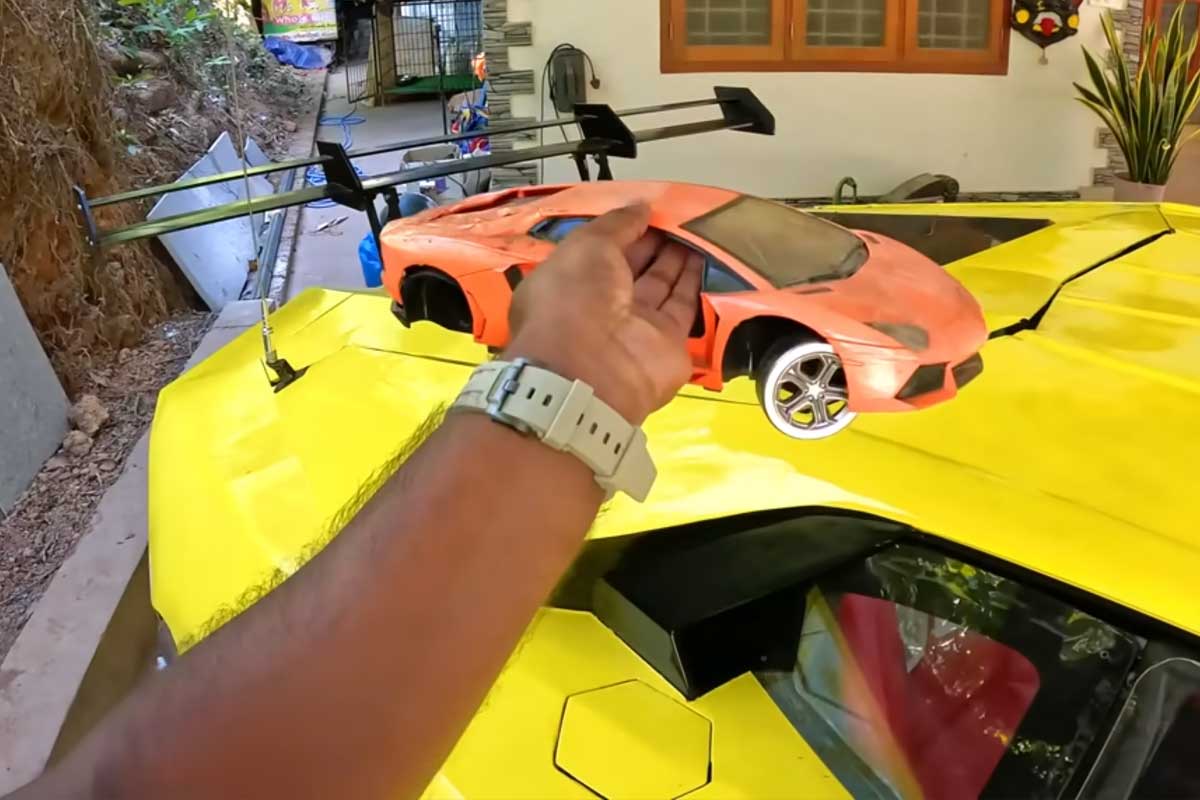
The body was entirely fabricated from various materials and salvaged parts. The panels were shaped and then assembled to reproduce as closely as possible the angular design of the Italian supercar.
Even the most emblematic elements have been recreated:
- a large wooden rear spoiler; ;
- side air intakes ;
- Lamborghini-inspired headlights; ;
- and, above all, gullwing doors, the visual signature of Sant'Agata Bolognese supercars.
The car was finally painted yellow, a color deemed more eye-catching and spectacular than the shade initially envisaged.
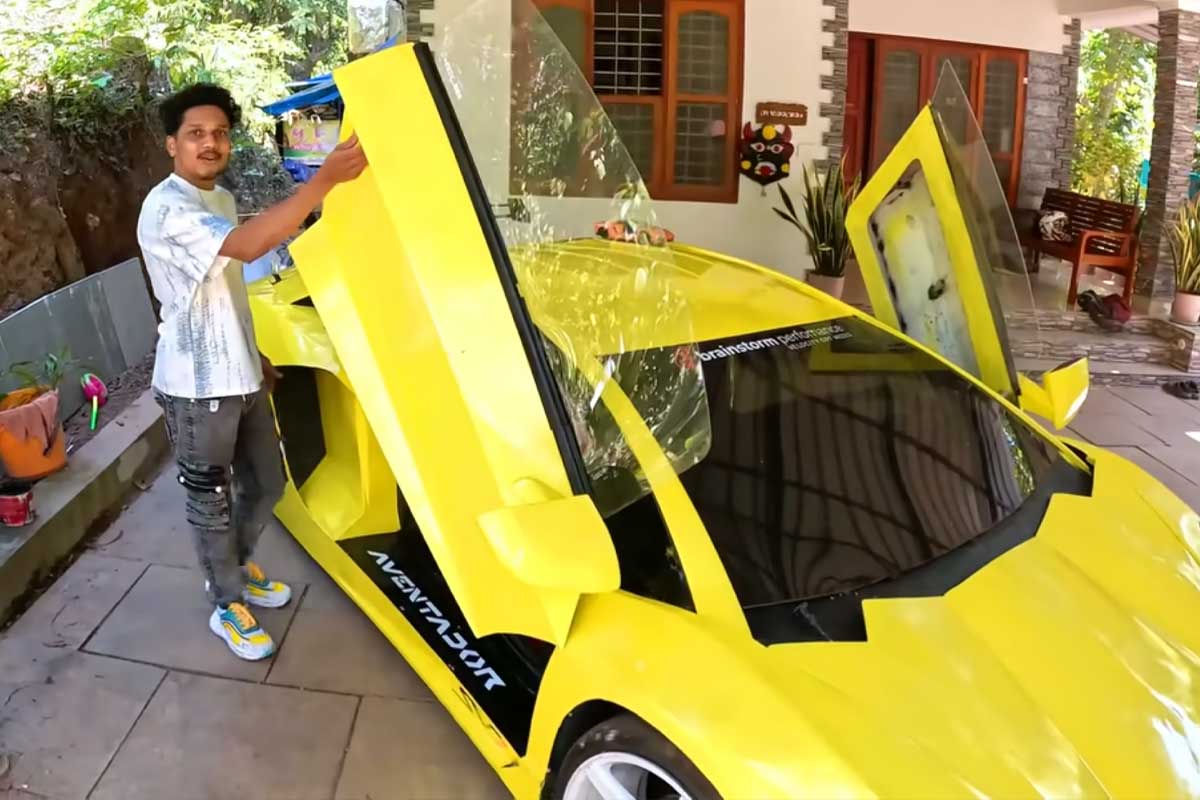
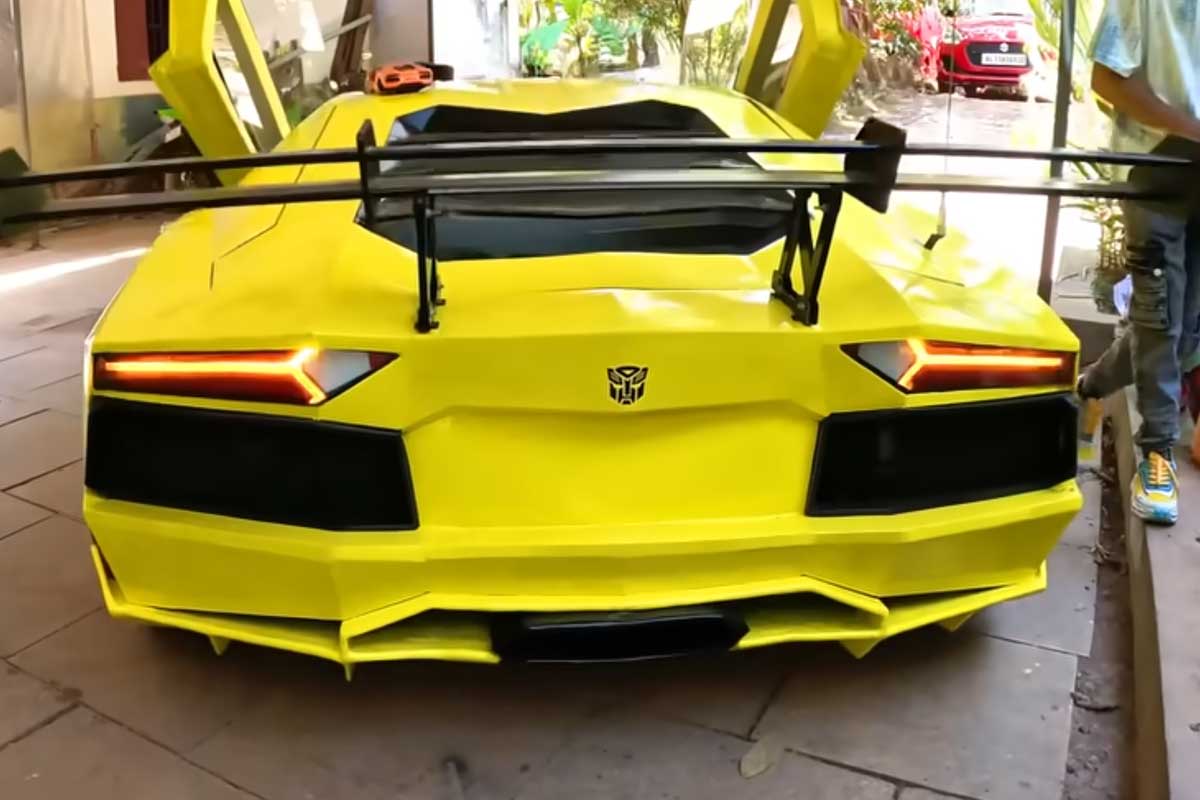
Beneath this bodywork, the car remains a hand-crafted machine. Many parts come from different vehicles salvaged from scrap yards. The wheels, for example, come from another model, while the suspension uses motorcycle components. Some parts of the chassis have even been lengthened to achieve the right proportions.
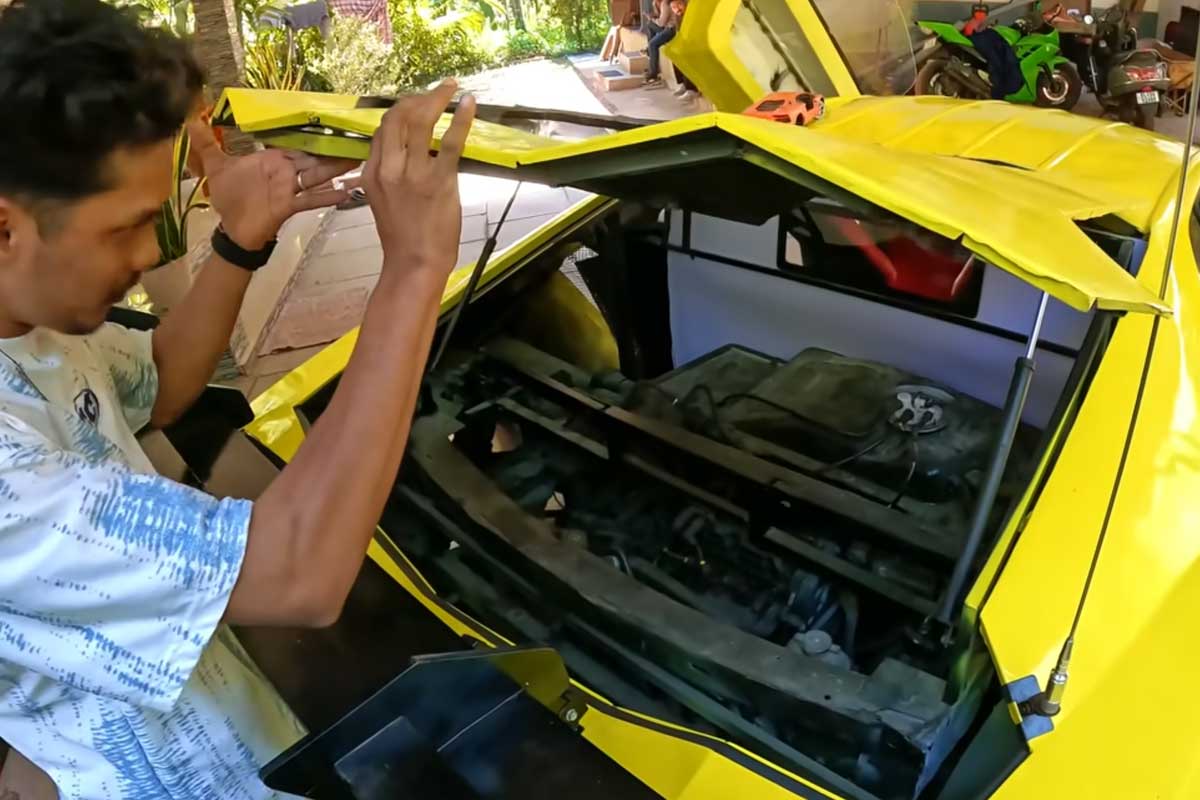
The engine remains that of the Tata Nano, installed in the rear as on the original city car. The fuel tank has been repositioned, and several components have been adapted to enable the car to function.
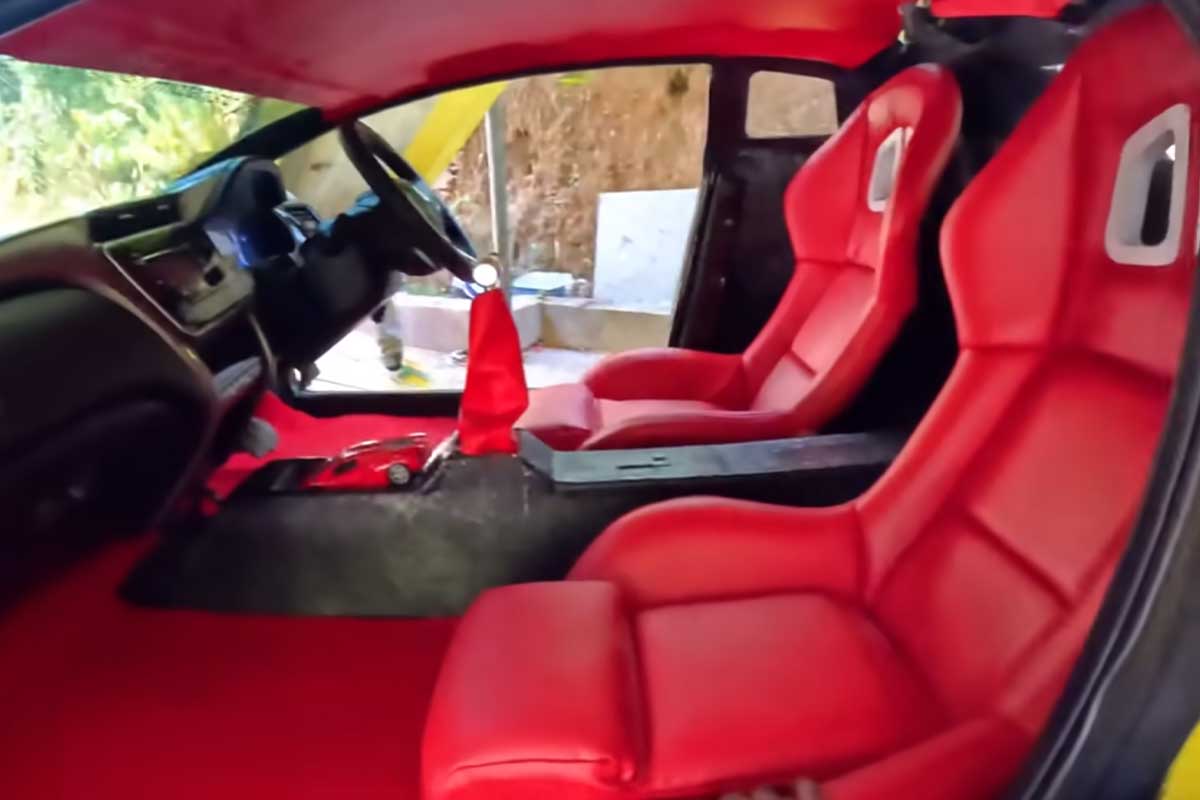
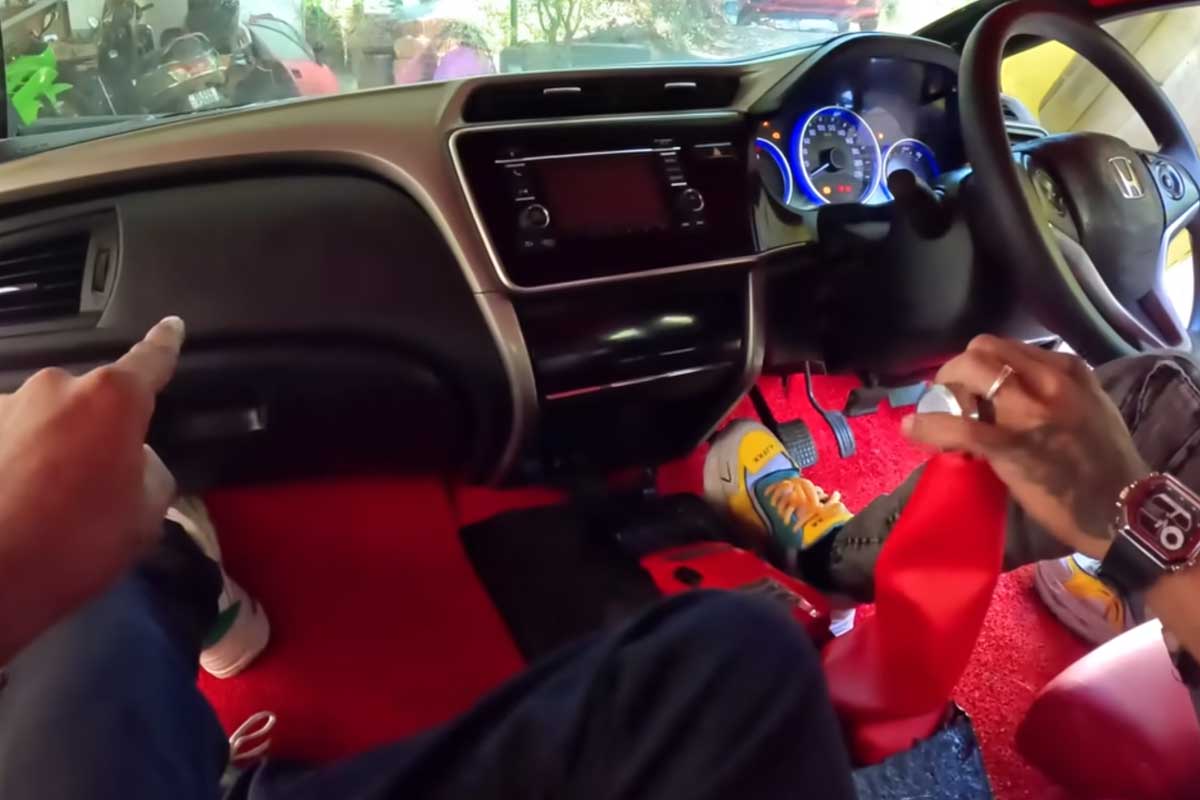
Inside, the apprentice craftsman sought to recreate the ambience of a real sports car. This includes a Honda-inspired dashboard, a multimedia system and various instruments, including a speedometer taken from a Honda City. The seats have also been handcrafted to give the interior a sporty feel.
A year's work and nearly 3,000 euros
The project was not created by a manufacturer or a professional tuner. Its creator actually runs a tattoo studio and built the car in his spare time. All in all, the transformation took him around a year to complete and cost almost 300,000 rupees (around 3,000 euros) for parts and materials alone. This sum obviously doesn't take into account the hundreds of hours of fabrication required to assemble and adjust each component.
A Lamborghini that almost can't run
Despite its spectacular appearance, this hand-built Lamborghini is virtually unroadworthy. Like many projects of this type, it is not homologated.
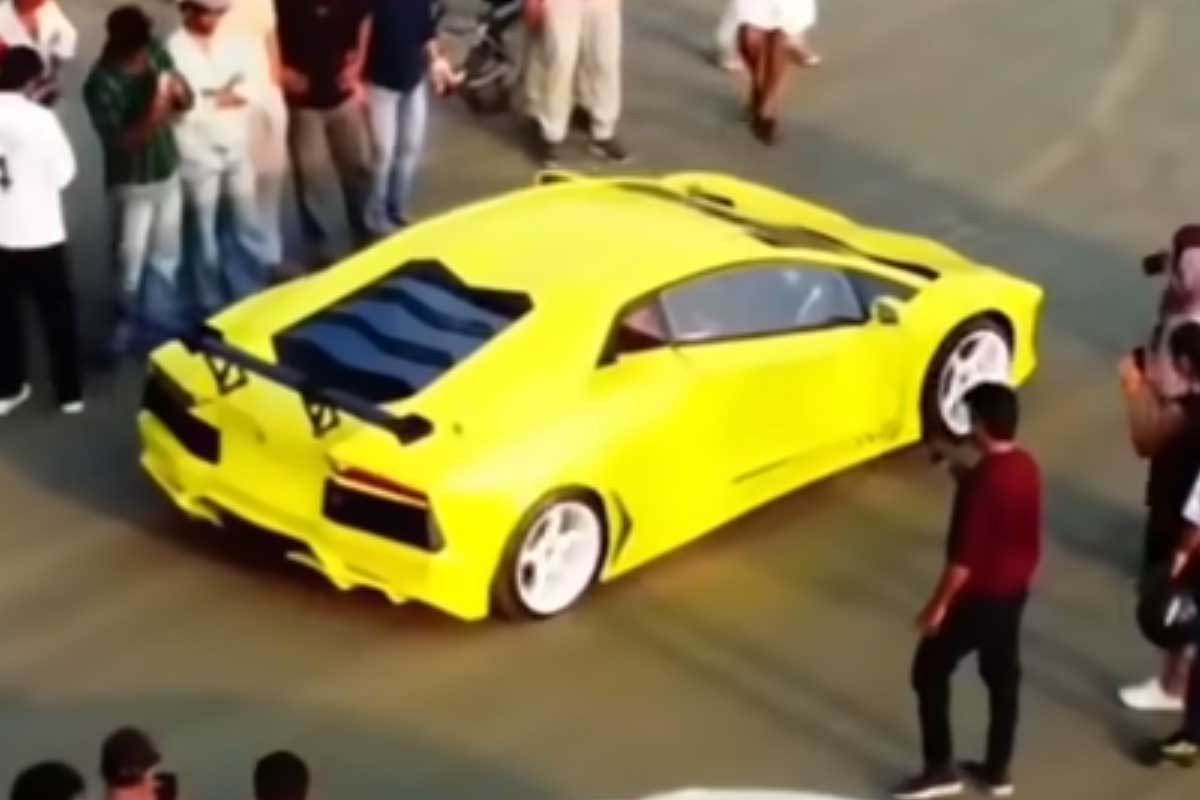

Its creator was simply able to try it out on a beach or on private land. As the roads around his village were in poor condition, the car even suffered a few scratches on its first journeys. Nevertheless, the owner hopes one day to be able to fully test his creation in order to identify its faults and improve the design.
Above all, this project shows what passion for cars - especially Lamborghini - can produce, even with limited means. Transforming a Tata Nano, a car designed to be as economical as possible, into a Lamborghini replica requires impressive creativity and determination. And who knows, maybe, as with the 3D-printed Lamborghini, What will the Italian brand call it?

 English
  French
  Italian
  Spanish
  Portuguese
  German
  Japanese
  Turkish
  Dutch
Dutch