

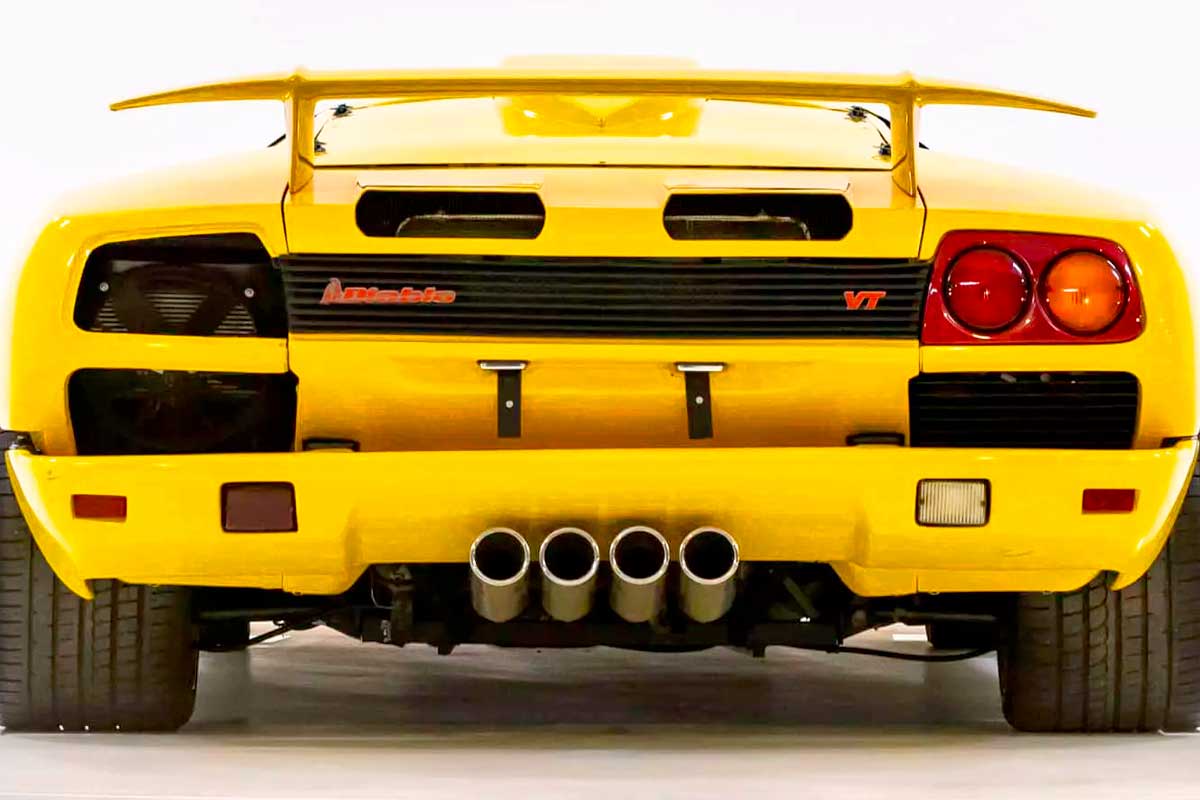
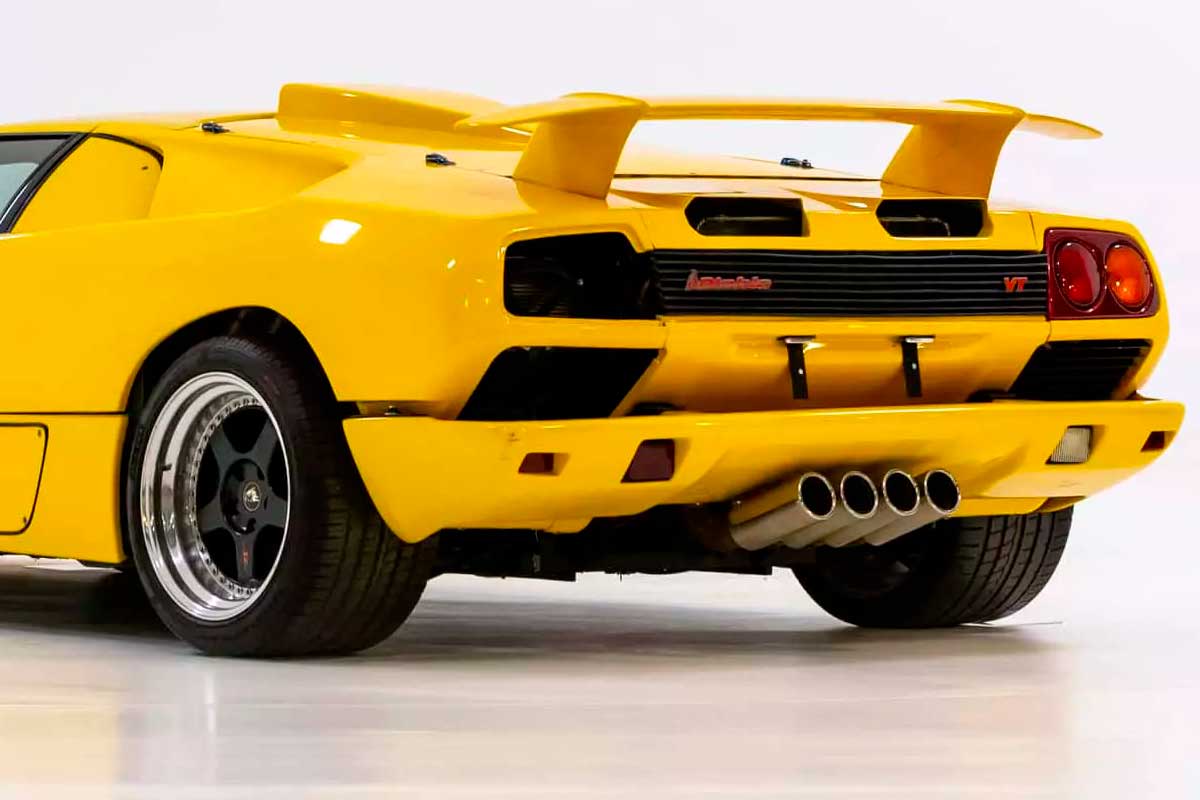
At first glance, this Lamborghini Diablo yellow simply looks tired. Imperfect bodywork, strange details... and above all, a missing taillight. Yet this detail is not the result of an accident or a botched repair. On the contrary, it's the visible signature of one of the best-kept secrets in modern automotive history. For this Diablo is not a Lamborghini like all the others: it served as a laboratory for the engine that would give birth to the Bugatti Veyron.
A Diablo that isn't really a Diablo
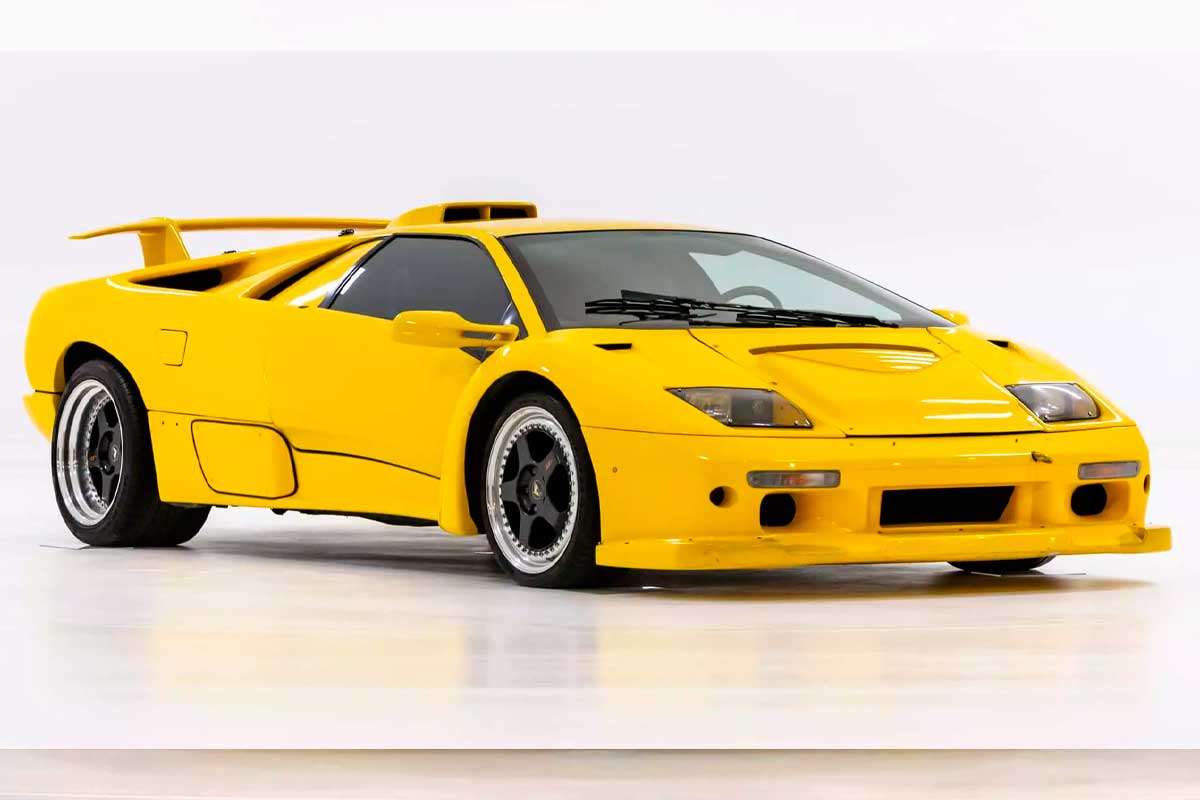
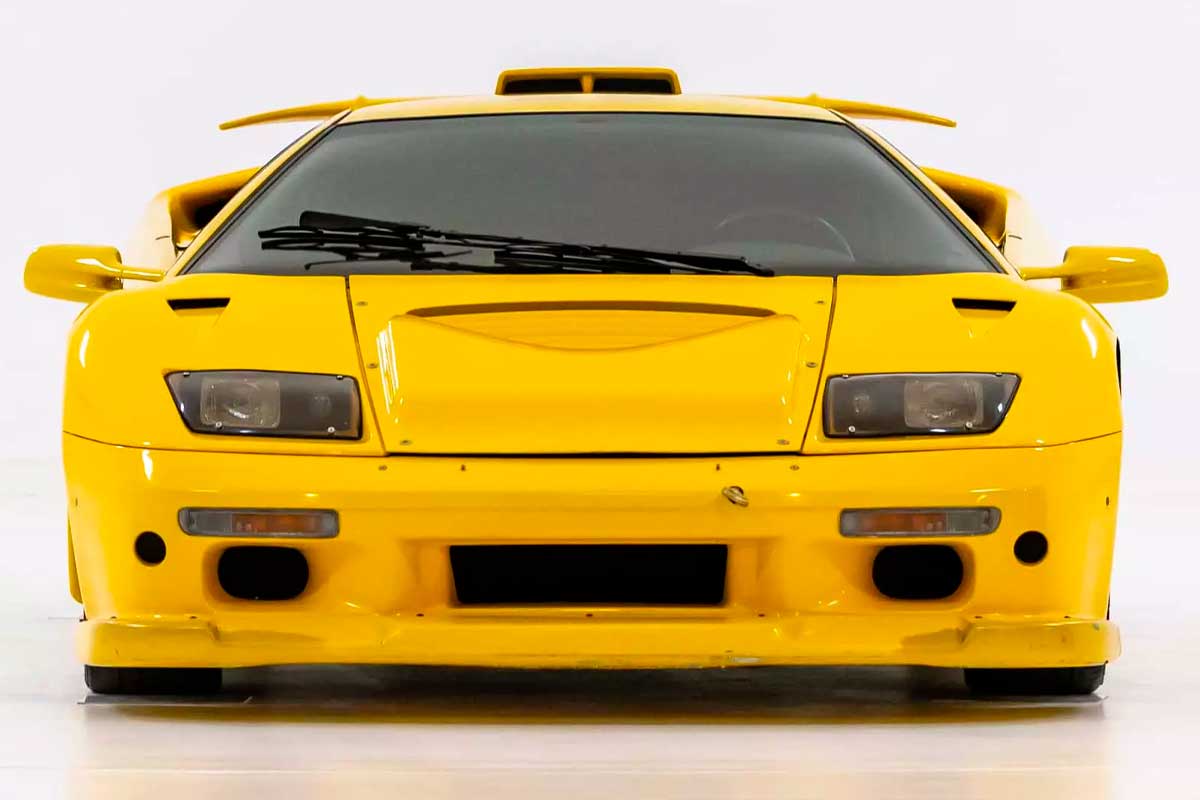
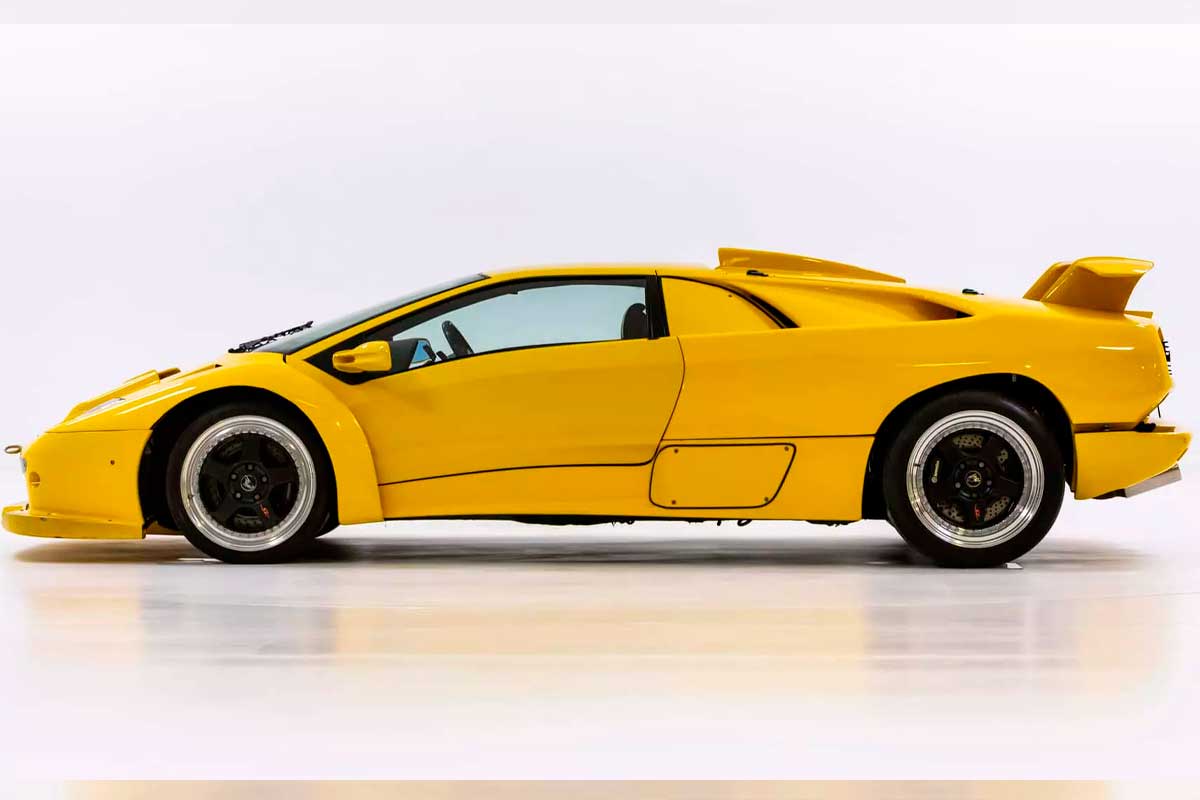
When you look closely at this Lamborghini Diablo, something doesn't seem quite right. The proportions seem slightly altered, the air intakes are more numerous than on a production model, and the rear end looks almost cobbled-together. This is no accident. This car is a test mule developed at the end of the 1990s, at a time when the Volkswagen group was secretly preparing a totally overblown project. At the time, Volkswagen had just acquired Lamborghini and Bugatti. At the head of the group, Ferdinand Piëch had a clear ambition: to create the most powerful and fastest production car ever made. To achieve this, he needed an uncompromising, unrivalled engine. This was to be the W16.
The W16 engine
Before becoming the soul of the Bugatti Veyron, the W16 was still only an experimental project. An absolutely unconventional engine: 16 cylinders, 8.0 liters in displacement, four turbochargers, and a targeted power output of 1,001 hp, almost double that of the supercars of the time. An engine so massive that no existing platform was really designed to accommodate it. Rather than develop a specific chassis for this test phase, Volkswagen made a bold choice. The Lamborghini Diablo, with its wide, low profile and rear mid-engine, seemed to be the best candidate. Its generous dimensions allow the W16 to be installed between the rear wheels, albeit with some heavy modifications. But everything fits to the millimetre. Literally.
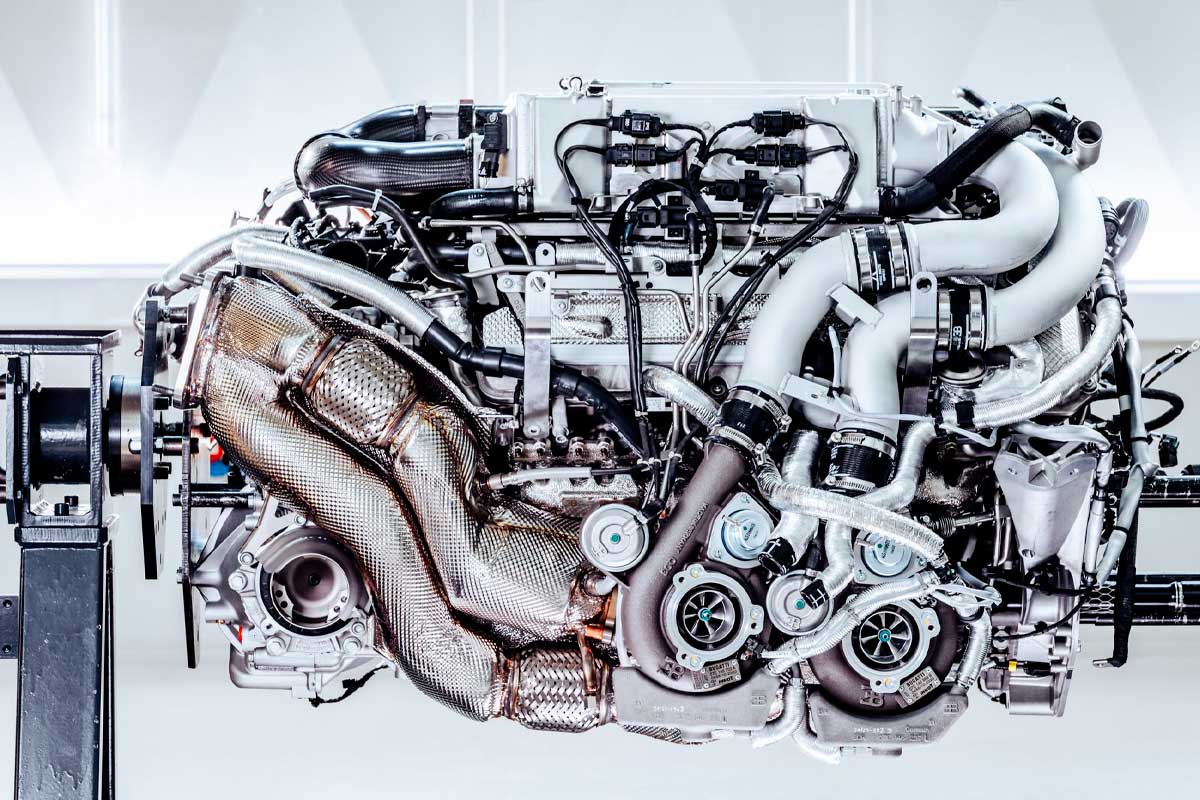
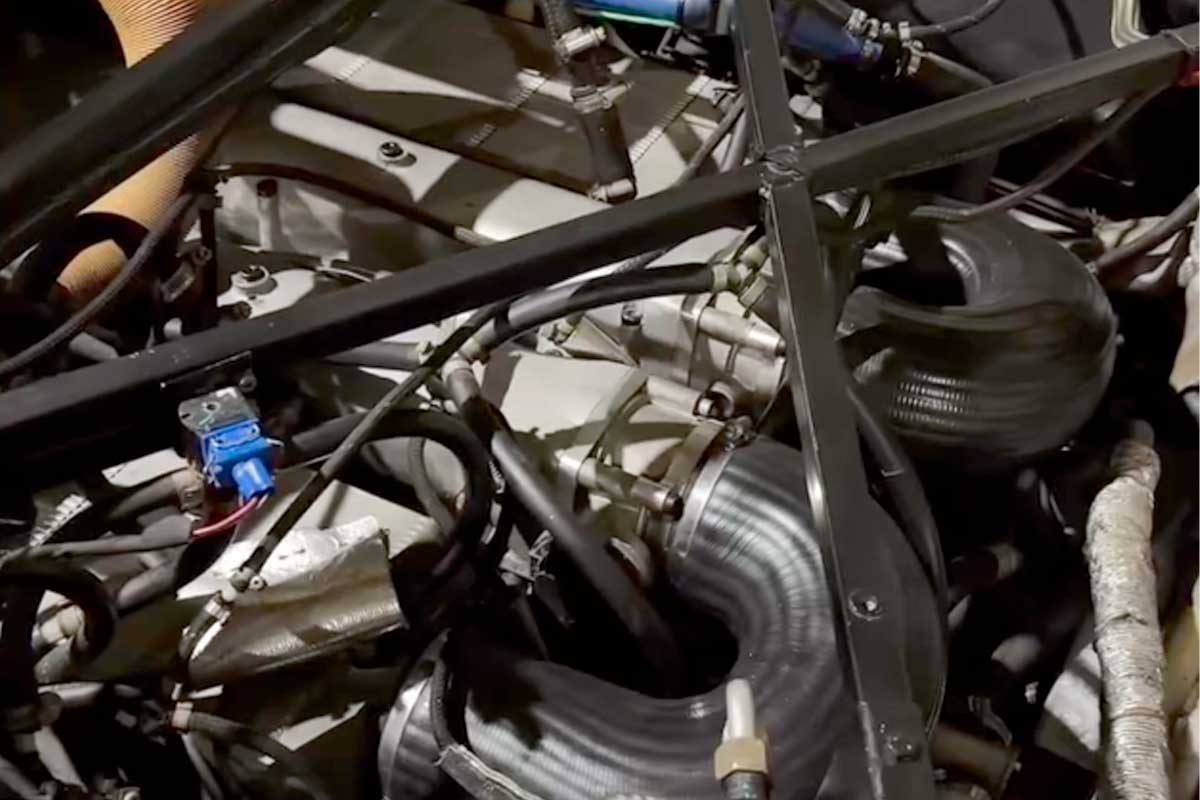
Why has this tail light disappeared?
That's where the missing tail light comes in. The W16 takes up so much space that engineers have to make concessions. The left rear light is sacrificed for lack of space. This detail, almost anecdotal in appearance, is in fact the most visible proof of the enormity of the engine and the experimental nature of this prototype. The car becomes a veritable technical patchwork. Elements of the Diablo SV, Diablo GT and even headlamps from other models in the group are all present. The objective is not aesthetics, but mechanical validation: cooling, reliability, high-load behavior. The additional air intakes cut into the bodywork testify to the difficulty of channelling the heat generated by this unusual engine, which is far more demanding than the original Lamborghini V12.
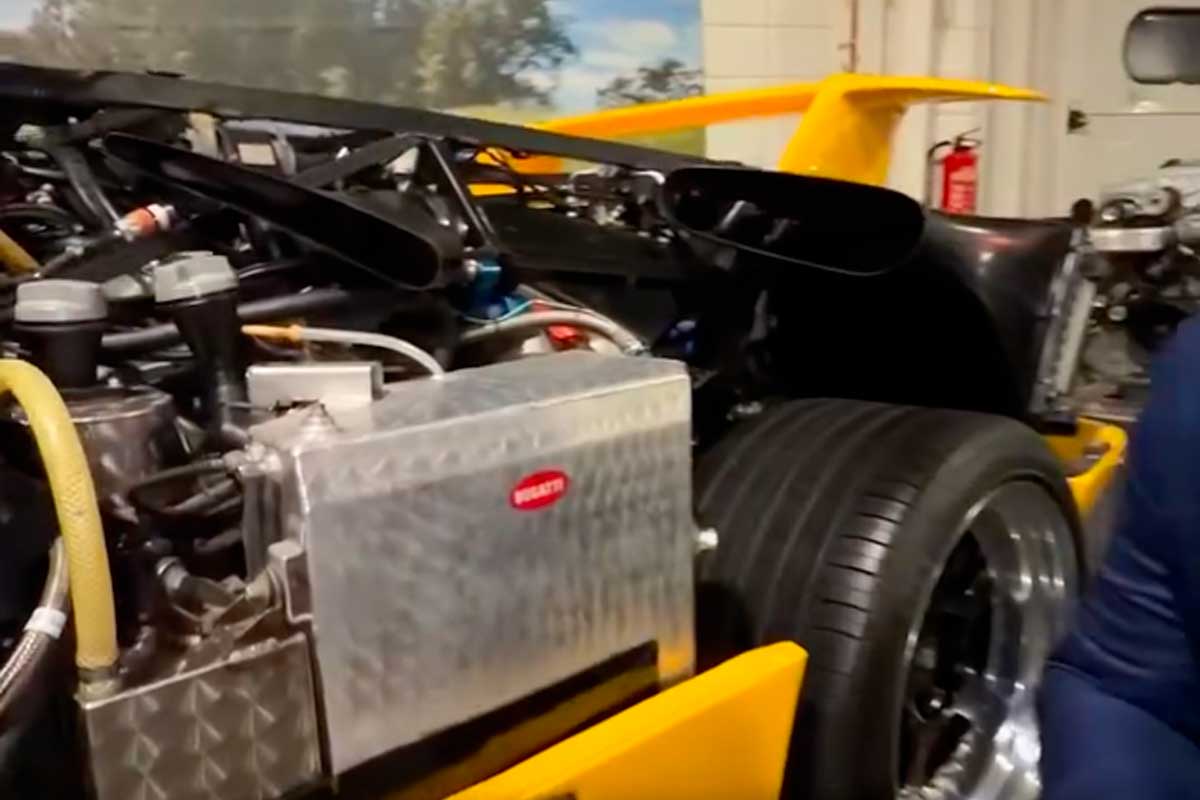
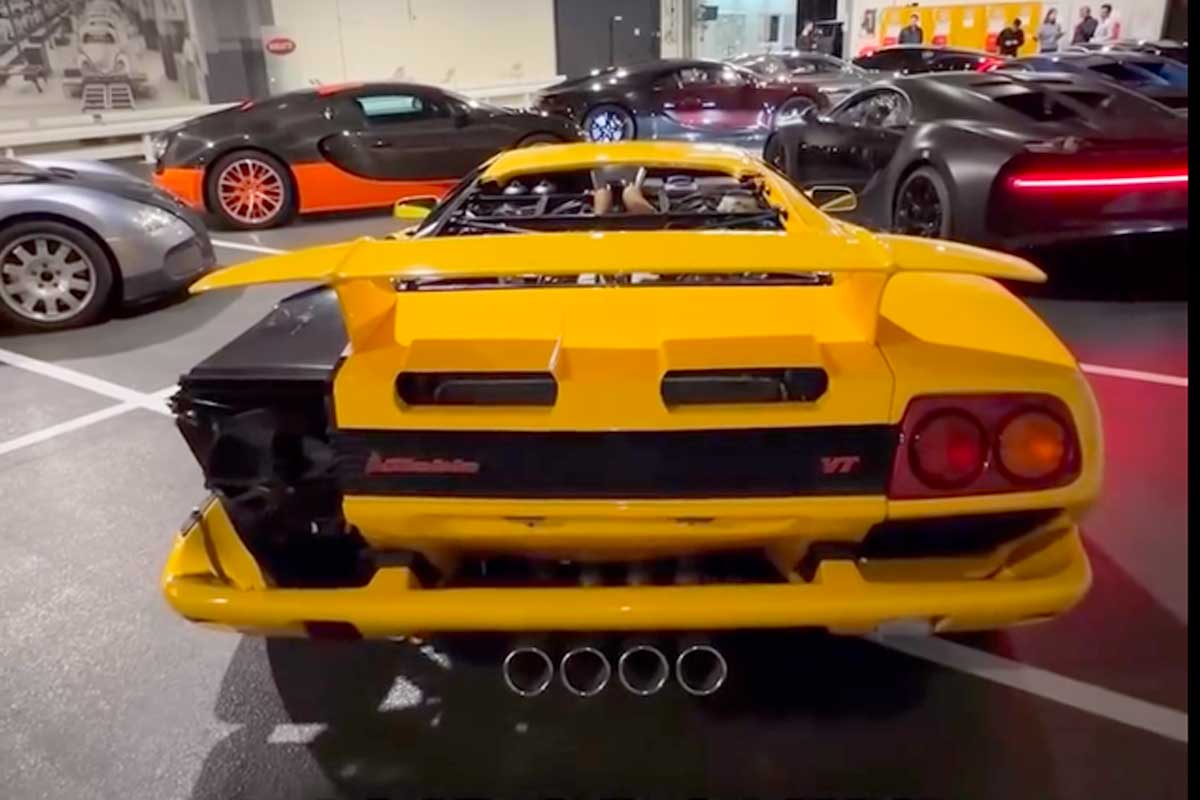
A test prototype long in the shadows
For years, the existence of this Diablo W16 remained confidential. It was neither intended for the press, nor for the public. It was driven, tested and sometimes suffered, but always far from the spotlight. It was only recently that images from the Autostadt archives surfaced, revealing this automotive Frankenstein to the general public. Today, this experimental Lamborghini Diablo can be seen at the Autostadt Museum in Wolfsburg. A highly symbolic place, a stone's throw from the Volkswagen factory, where the most significant pieces in the group's history are on display. Looking back, it's fascinating to note that one of the most mythical engines in automotive history made its debut in a Lamborghini, not a Bugatti. Without this sacrificed, cobbled-together, imperfect Diablo, the W16 might never have achieved the level of reliability required by the Veyron, then the Chiron and the Mistral.

 English
  French
  Italian
  Spanish
  Portuguese
  German
  Japanese
  Turkish
  Dutch
Dutch