

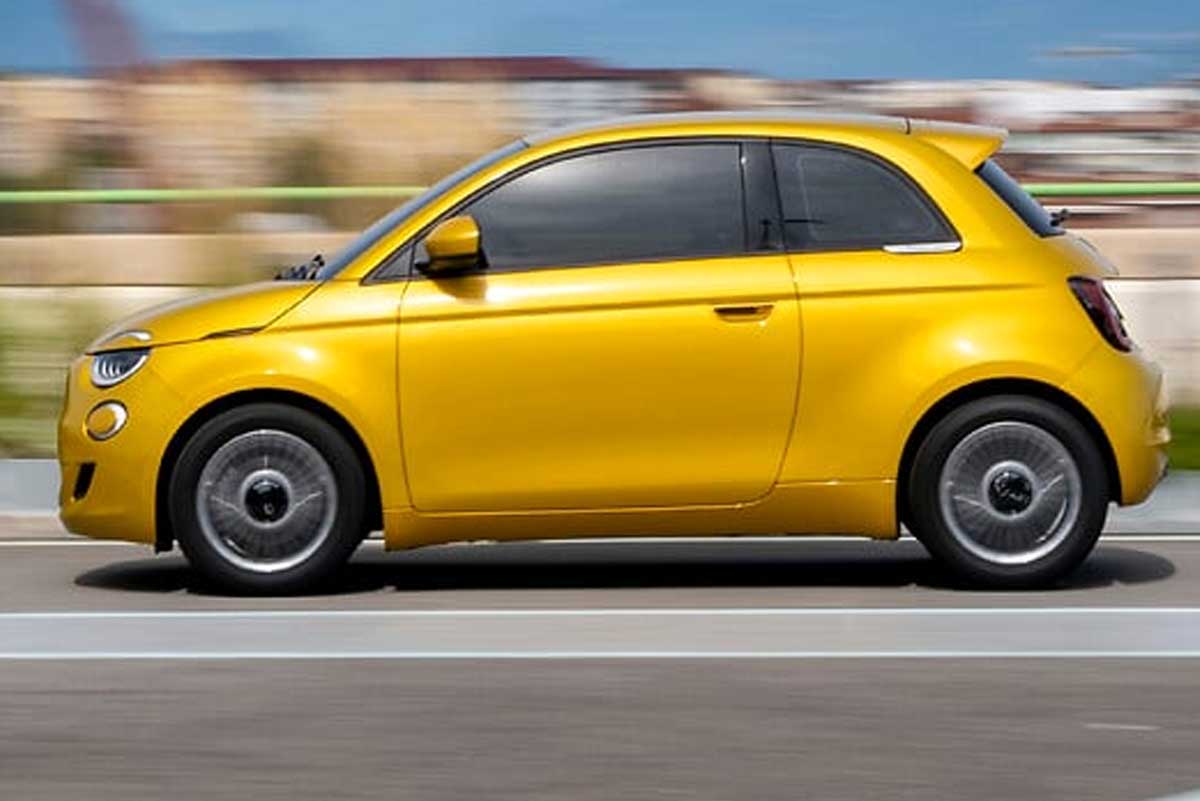
Since the presentation of the new 65 hp Fiat 500 hybrid, ironic comments have been pouring in on social networks. Many make fun of its claimed performance, in particular its 0 to 100 km/h time of 16.2 seconds, a figure that admittedly seems from another era. But is the Fiat 500 really the slowest car in the A-segment? And above all, does it really deserve to be called slow?
To understand the extent of the debate, we need to go back to the previous 500 hybrid. With its 70hp Firefly three-cylinder, the 2020-generation 500 accelerated from 0 to 100 km/h in 13.8 seconds. Not a missile, but more than sufficient for urban use. The new generation loses 5 hp, gains over 80 kg, and is logically penalized in terms of acceleration. Does this make it the pariah of the segment? Not quite.
A disappointing specification sheet, but a context that must be understood
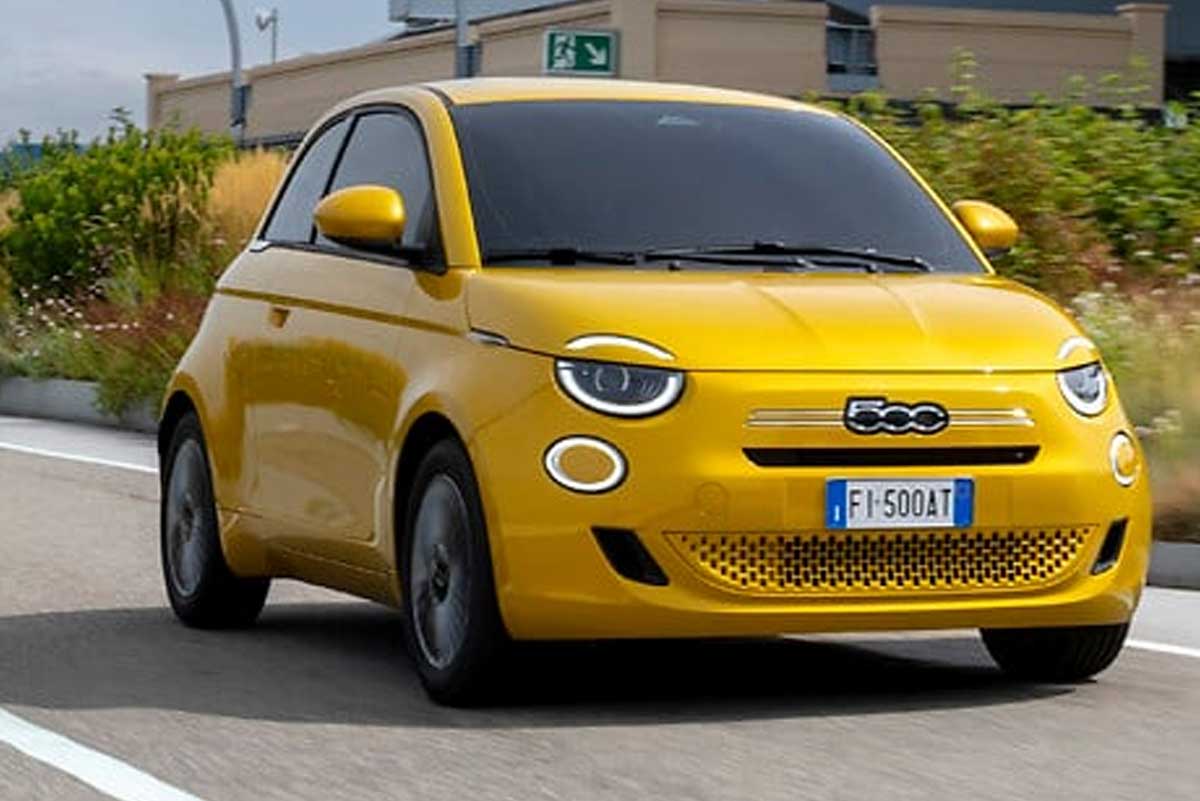
The new 500 hybrid is the result of a compromise that Fiat had not anticipated 2020. The brand saw its future in electric power, but the sharp drop in sales of the 500e forced Stellantis to rethink its strategy. The result: a small hybrid city car developed at breakneck speed, on a platform designed primarily for electric motorization. The technical setback is real: maximum speed of 155 km/h versus 167 previously, equivalent co2 emissions... but the car gains in safety, rigidity and technology. Its greater weight goes a long way towards explaining the extended 0 to 100 km/h time. This is the point that amuses (or exasperates) many motorists: the 2025 version of the 500 takes longer to reach 100 km/h than an 85 hp TwinAir 500... marketed over ten years ago. And yet, it's impossible to understand its performance without comparing it to other current city cars.
Is it really the slowest?
To clear up the vagueness, we had to look at what our direct A-segment rivals were offering. And then, surprise: the little Fiat is not at all the snail some people describe it as.
- Old Fiat 500 70 hp: 13.8 s
- New Fiat 500 65 hp: 16.2 s
- New Fiat 500c 65 hp: 17.3 s
- Fiat Panda 65 hp: 14.9 s
- Dacia Spring 45, 65 hp: 13.7 s (electric)
- Hyundai i10 63 hp: 17.8 s
- Toyota Aygo X 72 hp: 14.8 s
- Kia Picanto 68 hp: 14.6 s
- Suzuki Ignis 83 hp: 12.7 s (no longer sold)
Then there's the astonishing case of the Hyundai i10. Its 63 hp version accelerates from 0 to 100 km/h in 17.8 seconds (measured on the Hyundai configurator), a record... but in the wrong direction. It's the i10, not the Fiat 500, that unofficially wins the title of slowest city car on the market. Even the new Fiat 500C hybrid, at 17.3 seconds, beats the Hyundai. In the past, there was even a Hyundai i10 63 hp ECO with a 0 to 100 km/h time of 18.4 s!
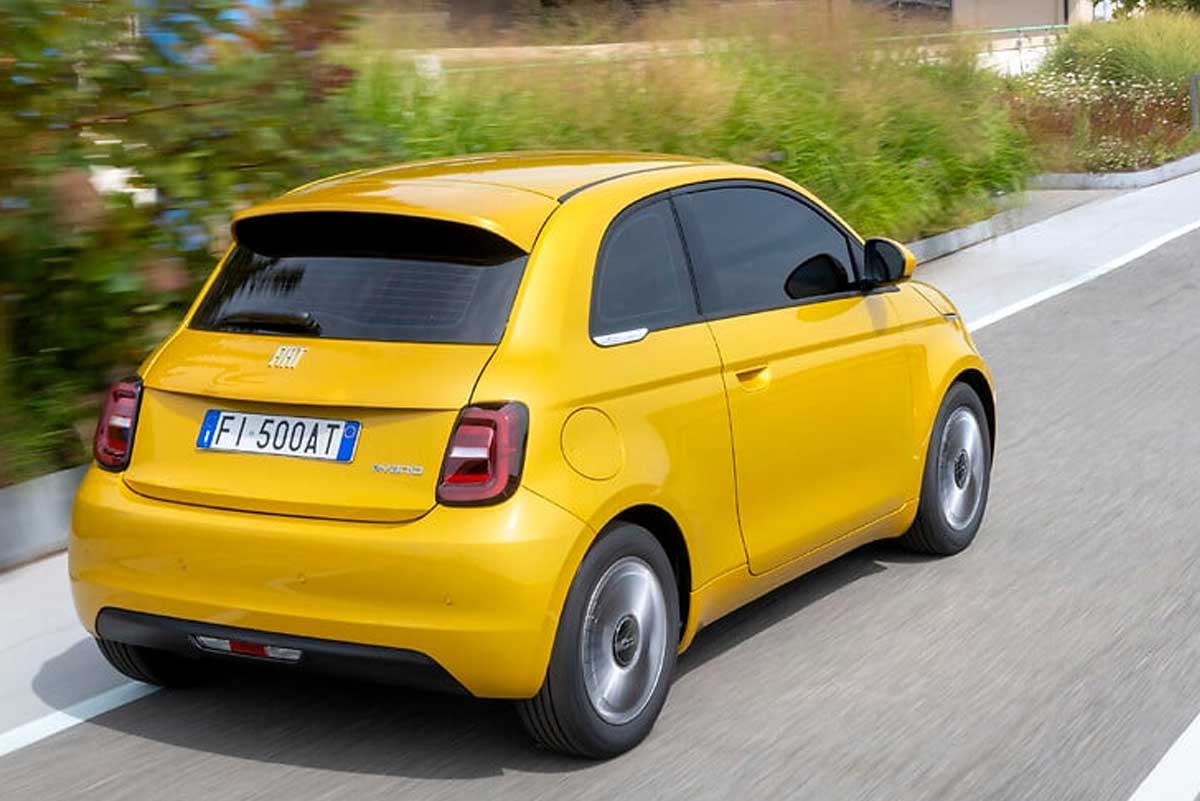
So the gap isn't as ridiculous as you might think. The A-segment's combustion-powered city cars all flirt with a 0-100 km/h time of between 14 and 16 seconds. The new 500 is at the bottom of the table, but it doesn't sink. Above all, it remains within the norm in a segment where engines have been deliberately toned down, optimized for sobriety and increasingly stringent emissions standards.
Verdict: not the slowest, but not a car to "win a red light".
The new Fiat 500 hybrid is not the slowest city car on the market. It's not even an isolated case: the competition has very similar figures, sometimes even worse. But it suffers from a symbol: that of a car which, instead of evolving, gives the impression of regressing.
Fiat plays the card of efficiency, simplicity and controlled cost. On these points, the 500 hybrid should do well. But don't expect to impress anyone at the start of a red light. Performance is adequate for city driving, decent for the fast lane, and overall in the middle of the segment... but no more.
 English
  French
  Italian
  Spanish
  Portuguese
  German
  Japanese
  Turkish
  Dutch
Dutch
Frankly, 0 to 100 is not the first criterion in practice. You'd have to compare, for example, what the 50 to 100 or 80 to 120 ....en 3, 4 and 5 resumptions give.
Le Moniteur auto , press review, makes good tests, I hope they will do it for her. On the freeway it may be a little(?) annoying in the uphill and downhill but if it's occasional it passes, for regular it's better to take another vehicle ... or make do.
Problem ist die geringe Leistung plus den hohen Preis. Für ein reines Stadtauto (was auch noch sehr lahm ist,) schon sehr teuer angesiedelt. Der 100 PS Mildhybrid hätte ihm besser gestanden. Sehr schade...
It's clear that what counts is pedal response, so to speak... and the gearbox spacing is essential. But on the other hand, the weight/power ratio is very limited here...
"il rapporto peso/potenza è molto limitato "
Direi il rapporto (peso/potenza)/prezzo!
Guten Tag allerseits, na , hört doch endlich auf mit dem sinnlose gequatschte. Es wird in jedem Land viel zu viel, schnell gefahren, daher auch zu viele Unfälle gebaut und das traurigste ist, zu viele toten im Verkehr. Und zusätzlich kommt noch, dass in keinem Land das schnelle fahren erlaubt ist, deshalb sollte müsste man die Autos maximal auf Autobahnen mit 120kmh plombieren und auf Hauptstrasse auf 80 kmh plombieren. Mit der heutigen Technologie ist es ein kinderspiel umzusetzen.
But thats it, ok so on a motorway dash away from a toll plaza it might not be the best car, but as a city runabout, 0-60 times really don't matter - in most cities most might not ever get to 30mph lol
La Hyundai i10 è un progetto datato ma da una vettura progettata nel 2025, lo scatto 0-100 rimane una barzelletta.
Per la Aygo, tra poco ci sarà la ibrida con 116 cv mentre il dato riportato è per la sola versione benzina. Diciamo che questo articolo difende l' indifendibile. I 65cv ad un prezzo di 19 mila euro per modello base, porta questa autovettura fuori mercato. Peccato perché il design è vincente.
Most city cars are modest performers. You don't buy this kind of car to do 0 to 130 km/h at the exit of a tollbooth.
The only thing that surprises me, even though the "new" Fiat 500 is much better in many areas than the old Fiat 500, is its reduced performance (with less horsepower and more weight, it's inevitable). Another engine with 20 or 30 more horsepower would be welcome.
non tutti possono acquistare il macchinone "per andare da 0 a 130 km/h alla fine di un casello".
Sai quantii Italiani hanno fatto Torino-Reggio Calabria o Torino-Bisceglie con la 127, il portapacchi strapieno e la nonna nel portabagagli?
This 500 is cursed or what... The electric version is choking on sales and now the petrol version, which was supposed to save it, is being bashed because the engine is choking on performance...
Good luck to FIAT, and let's hope this bad press doesn't compromise sales too much...
A poorly thought-out project is always complicated to readapt.
It's mainly an adaptation to save the model and the factory, which is showing its limits.
Non è la più lenta.
È la seconda più lenta del lotto.
E non mi sembra una cosa di cui andare fieri
Poi Picanto e i10, auto gemelle, 5cv di differenza e 3 secondi di differenza sullo 0-100? Mi sembra strano
Si tratta delle informazioni visualizzate sui configuratori dei marchi.
La Picanto è leggermente più piccola e leggera della i10. Io ho avuto tutte e due e la i10 è più comoda e rifinita ( un po' come la vecchia Ypsilon rispetto alla Panda).
Grazie, non lo sapevo.
Un motore imbarazzante, credo che faccia fatica pure ad affrontare i cavalcavia
sì in effetti mia suocera aveva la Picanto 1.0 aspirato e quando buttavi giù tutto sembrava che ti avessero rubato il motore.
In compenso la Stonic di mio suocero, che ha il 1.0 120cv, quando butti giù almeno un po' va.
I find the excuses a bit easy, sorry. The Hyundai Kia are not better than the others, but they are cheaper and available with 2 more powerful engines. As for the Aygo, it's now a true 116 hp hybrid. In short, the 500 pseudo hybrid is out of date.
I happen to drive a Clio with 67hp manual gearbox. So yes, in 1st 2nd gear, it's still largely usable in town. But if there are 2 of you, and the road climbs a bit or you slack off with the gearshift, it's a bit slack.
All cars under 100 hp can be considered a bit flabby and heavy. Modest performance isn't necessarily an obstacle for many buyers.
For a city car, reduced performance isn't necessarily an obstacle.
I've driven the 69hp Fiat 500 without hybridization countless times, then the 70hp hybrid model, and it's never stopped me from hitting the road when I've rented it.
Personally, I'm glad that this Fiat doesn't give in to the "always more" trend.
It's good enough, no matter what anyone says... If it's hard to climb, too bad, we'll climb slower. Trouble overtaking? Never mind, you can overtake on another occasion...
Tired of this hurried world... A la Cool 👍
Je zou haast voor een elektrische 500e gaan die lekker pittig in 9 seconden naar 100 km/h vliegt
Der 1,4l Multiair mit 105PS, meinetwegen mit Mild-Hybrid, dann würde ich den 500er holen.
Der Twinair mit Mir-Hypridc wäre auch akzeptabel.
Aber es wird leider kein Investment in fallengelassene Motoren geben.
Die guten Zeiten sind vorbei. Schade.
A mio avviso, contestualmente al parco circolante le cui performance aumentano sempre di più, avere un veicolo che seppur super robusto per via dello chassis concepito per un mezzo totalmente elettrico ma equipaggiato con un powertrain non sufficientemente potente per quella massa, tale da risultare non sicuro in svariati contesti di mobilità che siano un sorpasso in autostrada, piuttosto che un minimo di spunto in zone collinari non trovo sia motivo di vanto per Fiat (Stellantis).
Sie schreiben, dass der neue Fiat 500 Hybrid aus einem Kompromiss heraus entstanden ist. Ich würde das eher einen faulen Kompromiss nennen. Fiat hat sich mit seiner rein elektrischen Strategie völlig verkalkuliert. Jetzt musste schnell "irgendwas" zusammen geschustert werden. Und der neue 500 Hybrid kam dabei heraus. Das wäre vielleicht noch okay gewesen, wenn man diese Fehlentwicklung jetzt nicht zu solch einem abstrusen, maßlos überzogenen Preis anbieten würde. Da soll der Kunde einmal mehr die Zeche für (politische) Fehlentscheidungen zahlen.
A little turbo and it's resolve. The 1.0 firefly turbo gîtes 101 hp
Hm, hm, hm. Nun wird der neue 500er fast ein wenig verrissen. Die Gewichte der heutigen Autos sind wirklich hoch; unter 980 kg ohne Fahrer geht fast gar nichts mehr. Auf der anderen Seite gibt es eine Masse an uebermotorisierten Autos. Panda und 500 sind hinreichend motorisiert. Mehr muss es nicht sein. Fiat sind keine Angeberautos sondern stehen immer auch für "italianita" Und das erfüllt der neue 500 er wirklich. Wenn der 3+ 1 kommt, könnte ich mit Fiat reden müssen. Bis es soweit ist
fahre ich Pandina - in "blue italia".
Hopelijk komt Fiat binnen een paar maand met een turbo uitvoering met 100 pk. De Firefly motoren heen een goede en betrouwbare naam. De Puretech motor van Peugeot heeft een slechte imago. Of dat nog terecht is dat kunnen we ons afvragen. Mensen denken soms ook nog steeds dat Fiat's roestbakken zijn.