

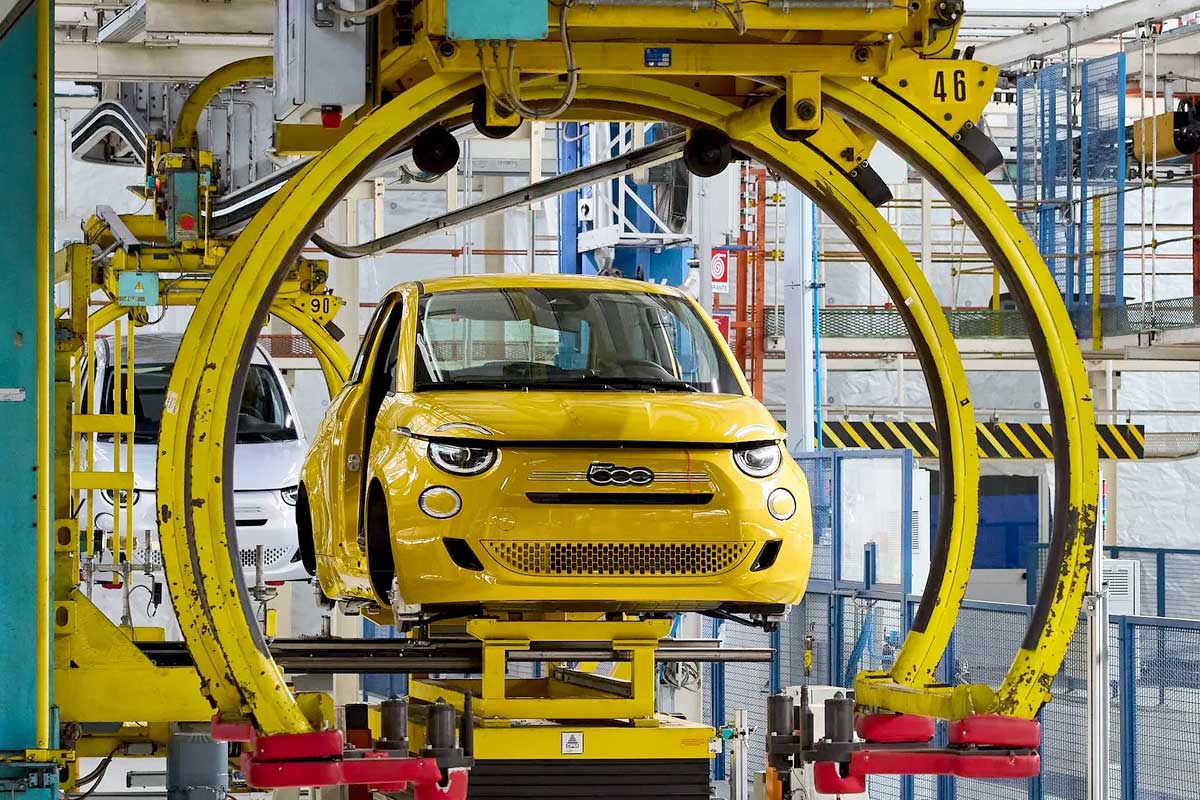
For almost twenty years, Mirafiori has lived in slow motion. Partial unemployment, under-utilized lines, an uncertain future: the historic Fiat in Turin seemed condemned to survival rather than production. Then, in the space of a few weeks, everything changed. The end of short-time working, the return of production rates, the relaunch of production with the Fiat 500 hybrid... to the point of provoking the unthinkable: a strike due to work overload.
From chronic under-activity to overheating
January 31 marked a symbolic turning point for Mirafiori. Partial unemployment and solidarity contracts officially came to an end, closing a social parenthesis that had been open for almost two decades. In speeches, this date was to embody a new beginning, supported by the industrial launch of the Fiat 500 Hybrid and the promise of more than 100,000 vehicles produced per year.
But on the ground, the transition was brutal. No sooner had the lines been restarted than tensions began to build. On Monday February 2, between 10.10 and 11.10am, production came to a halt. Not because of a technical problem (although a computer bug had already paralyzed the site the day before, sending 1,200 workers home), but following a one-hour walkout by exhausted employees.
"The pace is hellish
The core of the protest is clear: there aren't enough hands on the Fiat 500 hybrid production line. According to the mobilized employees, some workstations are permanently overloaded, a direct consequence of the voluntary redundancies encouraged in recent years. Gianni Mannori, Fiom delegate at Mirafiori, speaks of weeks of unanswered warnings. Stress is mounting, work rates are accelerating, and the pressure is becoming unbearable for teams who have barely recovered from years of short-time working. For many, the contrast is stark: after being underemployed for so long, workers suddenly find themselves having to absorb an ill-prepared ramp-up.
Hiring announced... but too slow
On paper, however, Stellantis didn't stand still. The Group has announced the recruitment of 440 operators to support Mirafiori's relaunch, mainly via temporary contracts. But here again, the reality is more complex. Recruitment agencies are struggling to find immediately operational profiles, and the integration process is moving slowly. This discrepancy between industrial objectives and the actual number of people on the line is fuelling a feeling of injustice among employees. All the more so as many feel that they have already paid a heavy price during years of short-time working, with their incomes slashed and permanent uncertainty about the future of the site.
"After having starved us, we can't accept everything".
The phrase, uttered by the union representative, sums up the mood at Mirafiori today. The strike, which has been described as almost spontaneous, is not simply a demand for a reduction in production rates. It expresses a deep-seated weariness and a new demand: that of an industrial revival that does not come at the expense of working conditions. The unions are calling for faster recruitment, but also for investments tailored to the real needs of the Fiat 500 hybrid production line. Without this, they warn, the ramp-up will remain fragile, and the social climate could rapidly deteriorate.
Ironically, Mirafiori now finds itself the victim of its own restart. The plant, which was struggling to produce just a few months ago, is now having to cope with social overheating, chronic understaffing and recurring technical problems. An explosive cocktail for a site that many were hoping would finally emerge from the shadows.
 English
  French
  Italian
  Spanish
  Portuguese
  German
  Japanese
  Turkish
  Dutch
Dutch
In fairness Fiat aren't helped in trying to hire staff when people don't want to work weekends/overtime etc........& then Italy will wonder why the car industry has collapsed lol
Stellantis unable even to hire...
Well, that's nothing new in Italy! Thirty years ago, when I was waiting for my Lancia, there were delays due to «factory problems«. Fortunately, it didn't last.