

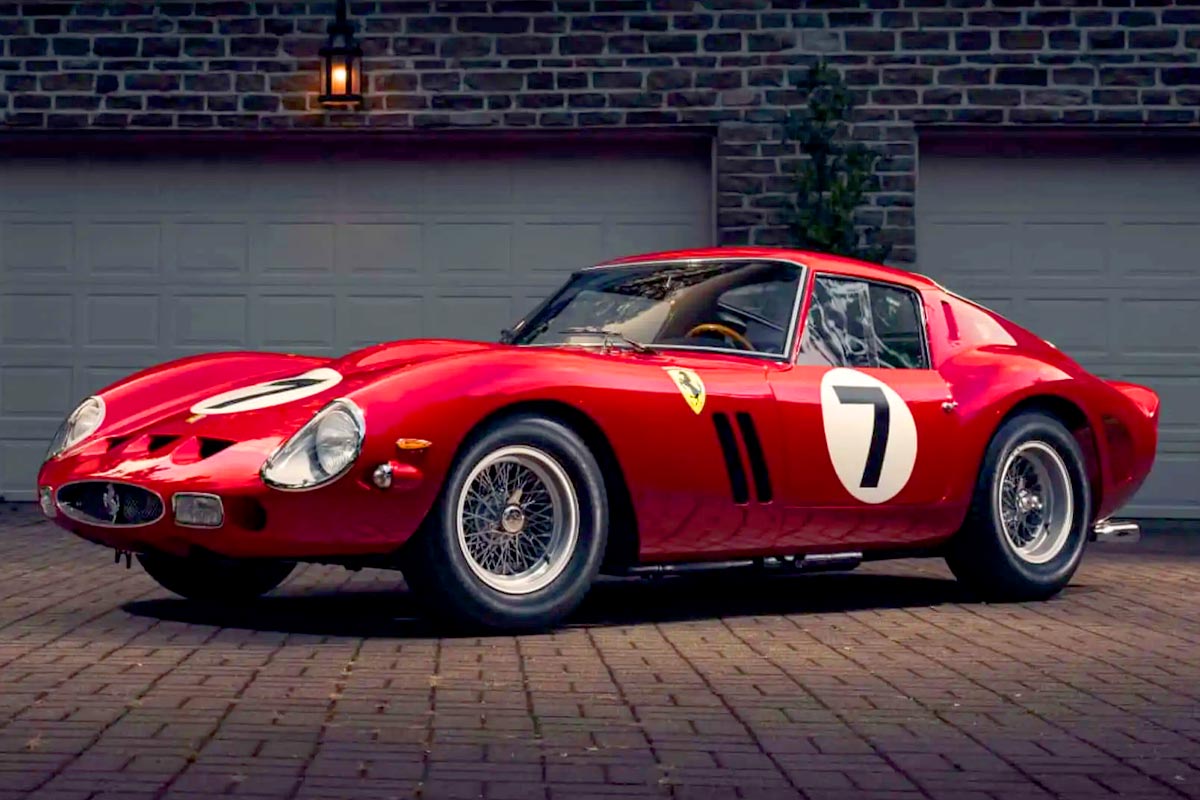
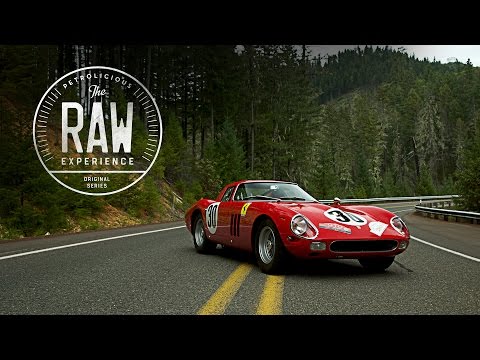
While some modern supercars are already reaching new heights at auction, a car designed in the early 1960s continues to dominate the global collector's market. At over 60 years of age, the Ferrari 250 GTO remains not only an absolute benchmark, but also the most coveted car on the planet. The recent sale of an example for 38.5 million dollars is another striking demonstration of this. But why this Ferrari is it worth so much? The answer lies as much in its history as in what it represents.
Thinking first and foremost about racing
Officially presented in February 1962 at Ferrari's traditional pre-season press conference in Maranello, the 250 GTO (for Gran Turismo Omologato) was never a simple road car. Although homologated for legal circulation, it was first and foremost conceived as a competition weapon for the GT category of the FIA championship. At a time when the line between racing and civilian cars was still blurred, the GTO embodied Ferrari's most radical approach: selling a car that was virtually ready to race to a select few customers. Under the initial direction of engineer Giotto Bizzarrini, then Mauro Forghieri after his stormy departure following a disagreement with Enzo Ferrari, the project took on an almost obsessive dimension. Every element was optimized for performance, with no compromise on endurance, the premier discipline of the 1960s.
An extreme rarity, controlled by Enzo Ferrari himself
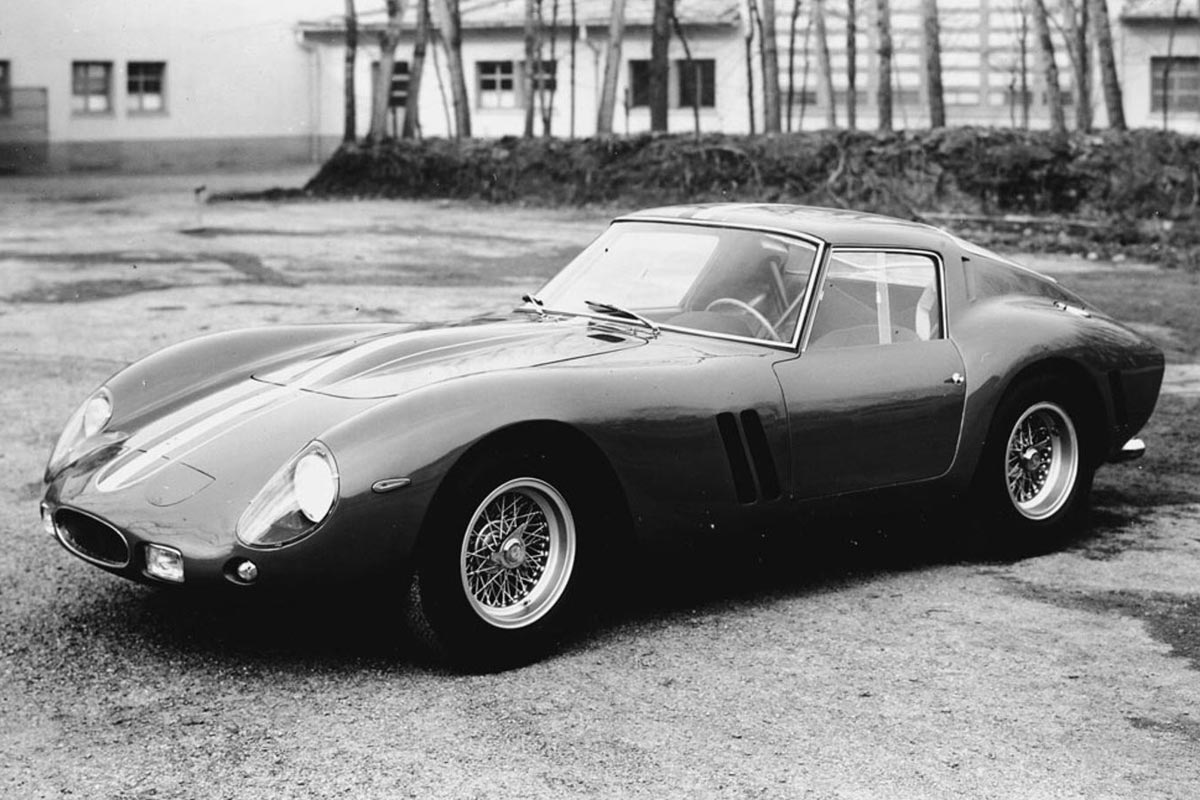
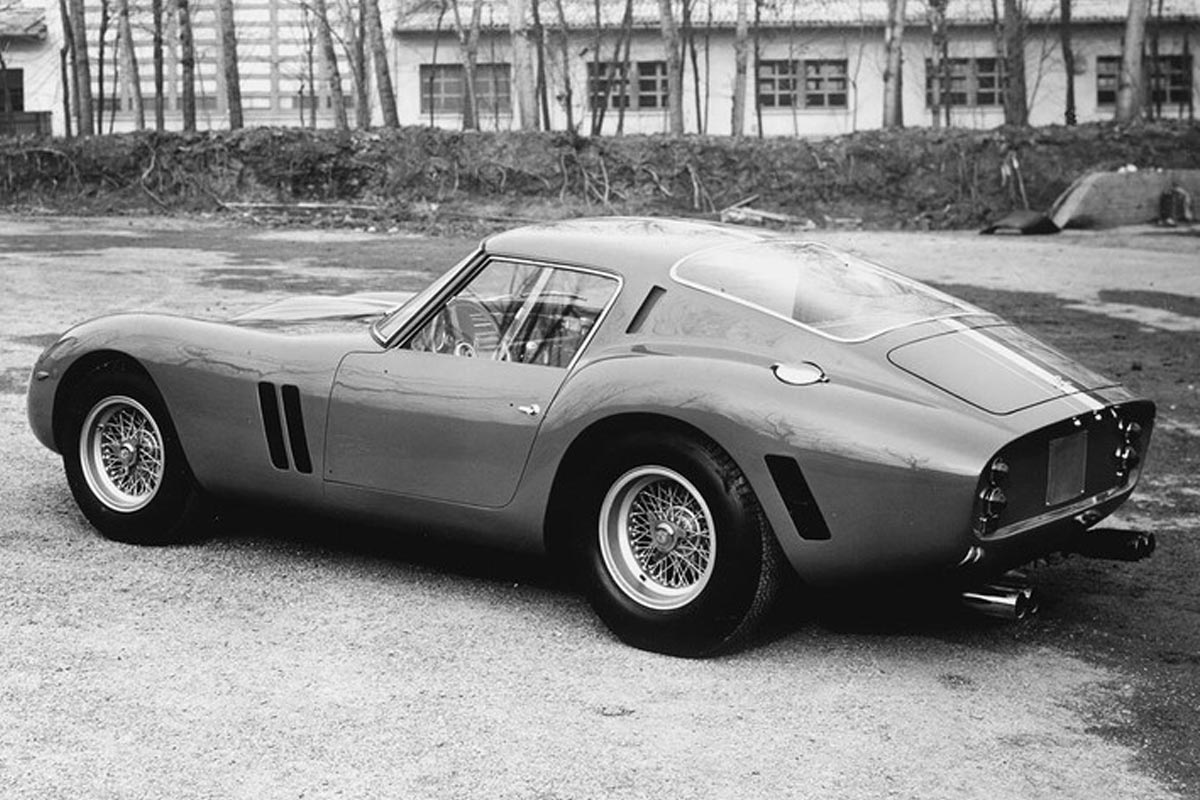
Between 1962 and 1964, only 36 Ferrari 250 GTOs were produced. Thirty-three were produced in the first series, followed by three "Series II" versions with modified bodywork. At the time, they cost around $18,500, a colossal sum for a GT. But money wasn't enough. Enzo Ferrari personally validated each potential buyer, refusing to sell his GTOs to customers deemed unsuitable. This drastic selection explains a fact almost unique in automotive history: the 36 examples produced still exist today. All raced, all used, but all survived. In the world of collecting, this combination - extreme rarity and total survival rate - is quite simply unrivalled.
Career in competition
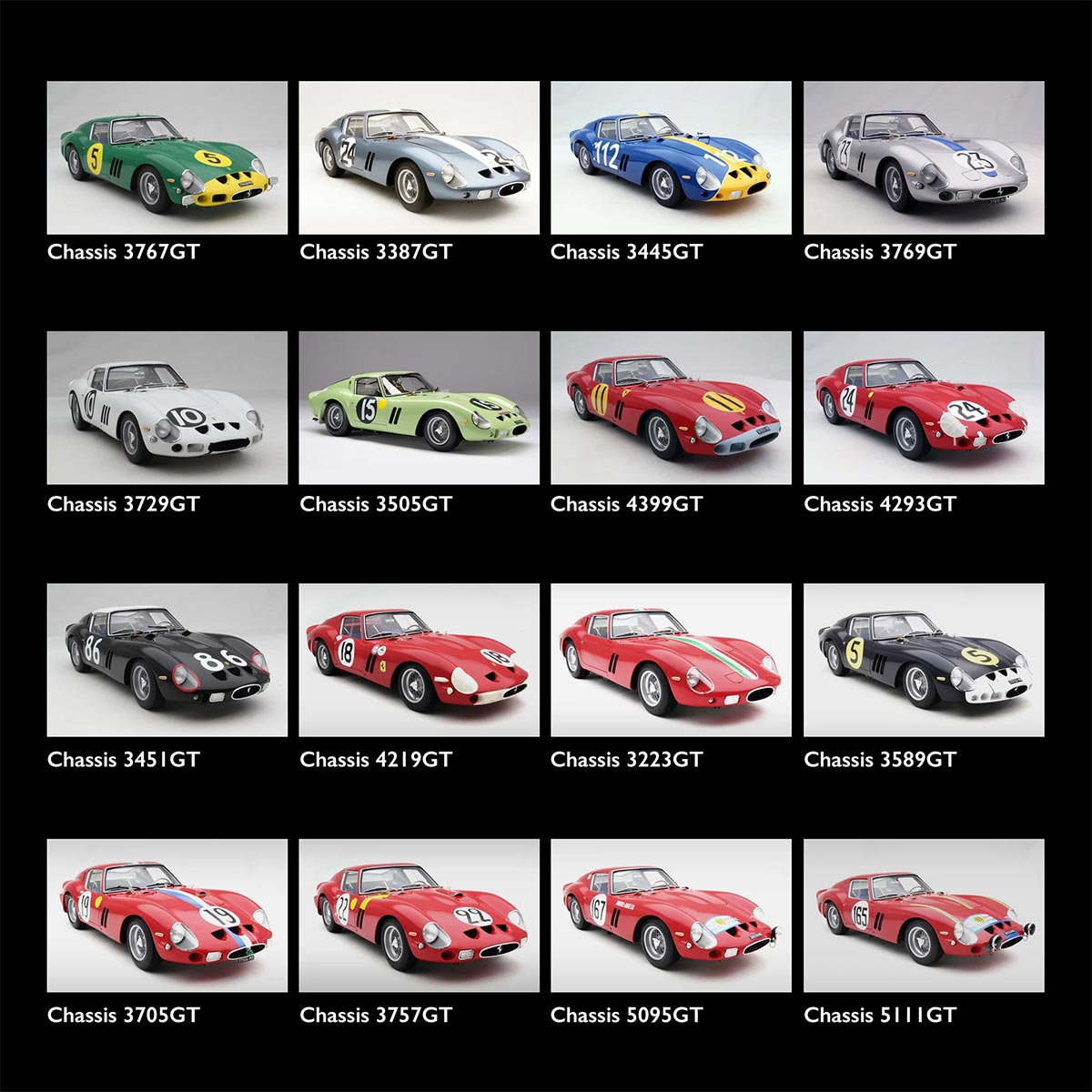
Right from its first race appearance, the 250 GTO struck hard. At the 1962 Sebring 12 Hours, Phil Hill and Olivier Gendebien won the class and finished second overall, ahead of lighter, more powerful prototypes. The message was clear: Ferrari had an exceptional machine. What followed was a succession of successes. Three consecutive titles in the FIA International GT Manufacturers' Championship, class and overall victories in such legendary events as the Targa Florio, the Tour de France Automobile, the Nürburgring 1000 km, Goodwood and the 24 Hours of Le Mans. In just a few seasons, the GTO became an absolute reference in endurance racing and a symbol of technical domination.
The swan song of the V12 Colombo
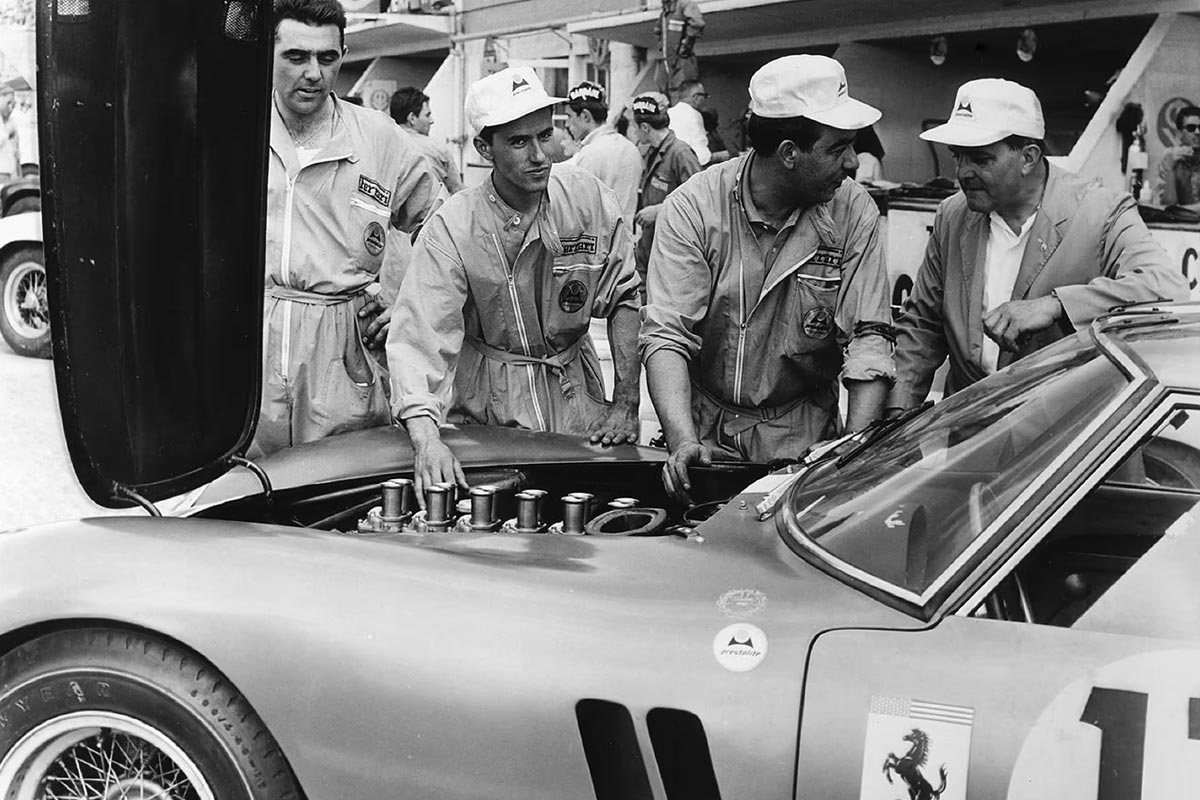
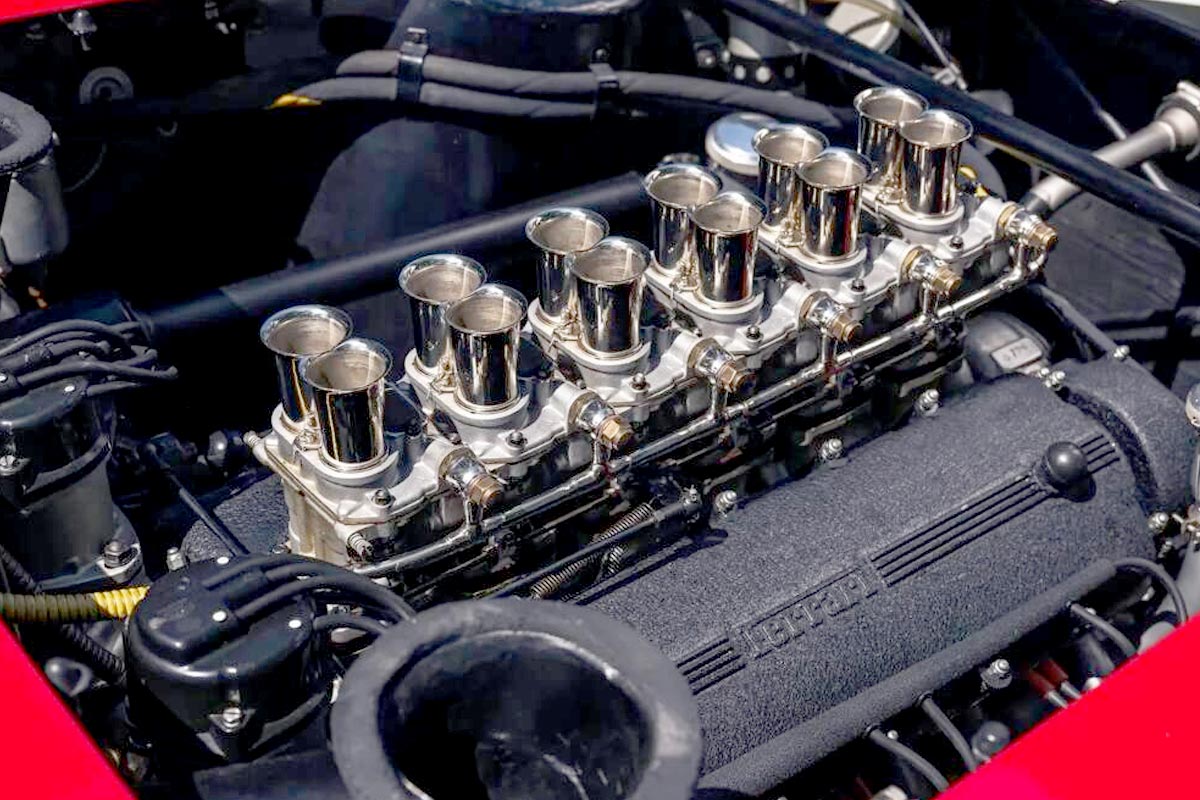
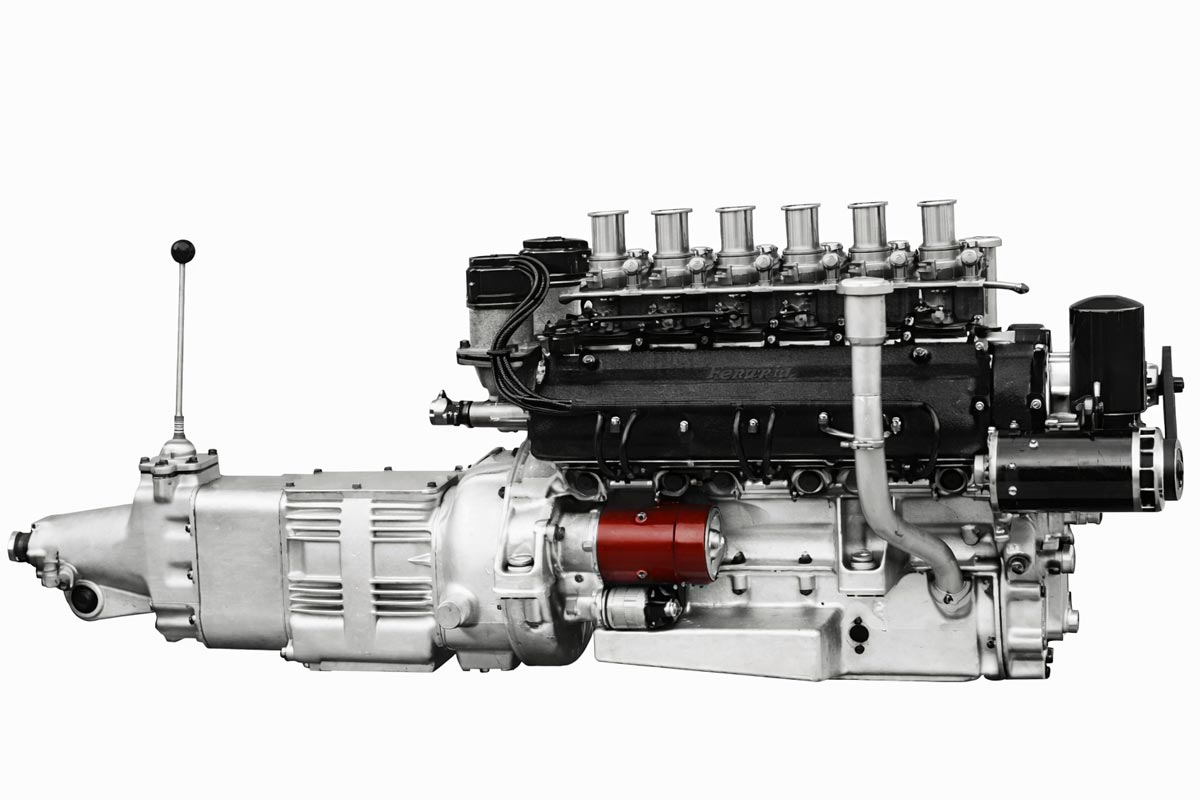
Beneath its long hood lies one of the most admired engines in Ferrari history: the V12 Colombo. Designed by Gioacchino Colombo as early as 1947, this engine accompanied the brand's evolution for more than a decade. It reached its apogee in the 250 GTO. With its 3.0-liter displacement, six double-barrel Weber carburetors, overhead camshaft and remarkable reliability, it developed almost 300 horsepower, an impressive figure for its time. But beyond pure performance, it's its endurance that impresses. Capable of withstanding 12- or 24-hour races without faltering, this V12 is a direct contributor to the legend of the GTO. More than sixty years later, it is still cited as one of the greatest naturally-aspirated engines ever produced.
A rolling work of art, universally admired
If the Ferrari 250 GTO is worth tens of millions today, it's not just for its figures or its track record. Its design plays a fundamental role. The result of extensive aerodynamic work by Bizzarrini and Forghieri, enhanced by the talent of coachbuilder Sergio Scaglietti, the GTO combines efficiency and elegance like few other cars in history. Its proportions, muscular wheel arches, long hood and compact stern have survived the decades without a wrinkle. For many historians, designers and enthusiasts, it is quite simply one of the most beautiful cars ever designed. A reputation that has never wavered since 1962.
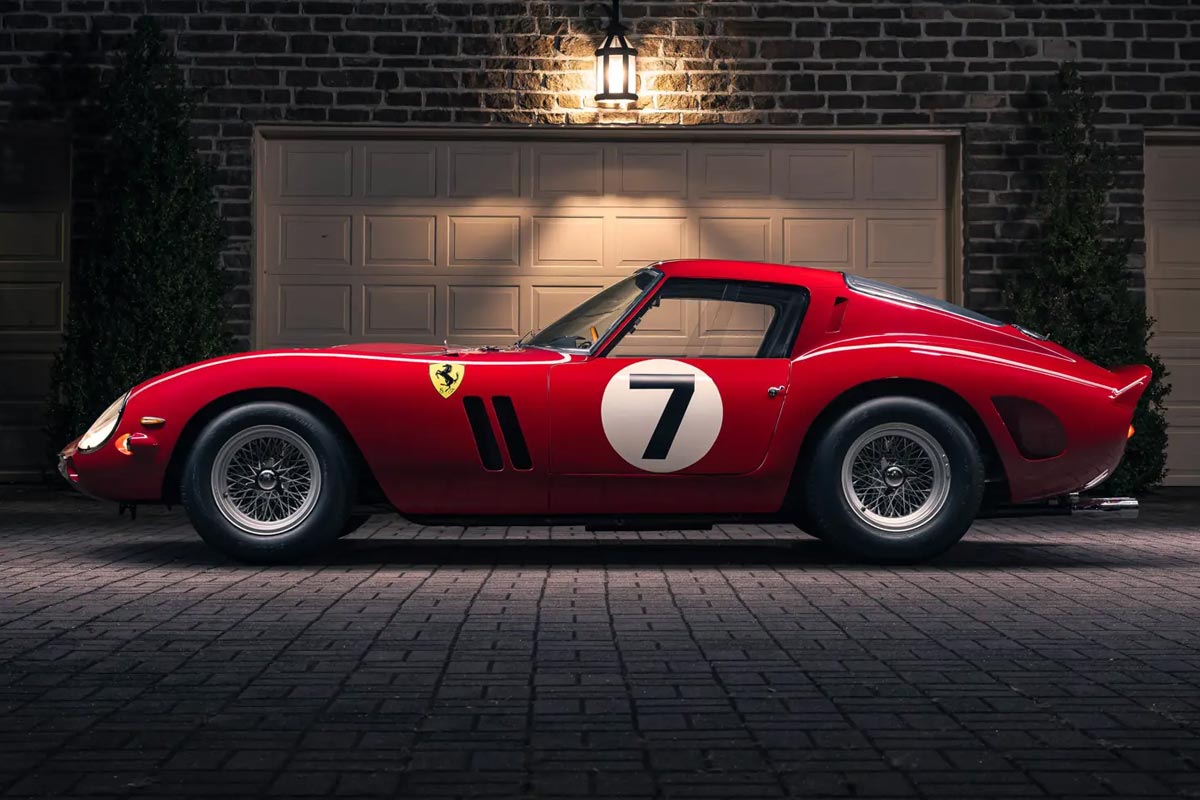
Today, owning a Ferrari 250 GTO is much more than just owning a car. It's a major piece of motorsport history, an objet d'art and the ultimate symbol of economic power. Successive sales, sometimes for over $50 million depending on the history and condition of the chassis, have definitively placed the GTO at the top of the market. The recent sale for $38.5 million of a unique example, never extensively restored and featuring an unprecedented configuration, only confirms a long-standing trend. It has become the collector's absolute Grail.
 English
  French
  Italian
  Spanish
  Portuguese
  German
  Japanese
  Turkish
  Dutch
Dutch
I've always dreamed of this one. Stunning lines, and when you lift the hood ....on waits for the sound, or rather the music...I find the lines as beautiful as the jaguar E, but more bestial.
It's a marvel, like many old Ferraris. Although I prefer the 250 GT SWB. But it's not really in my price range 😬