
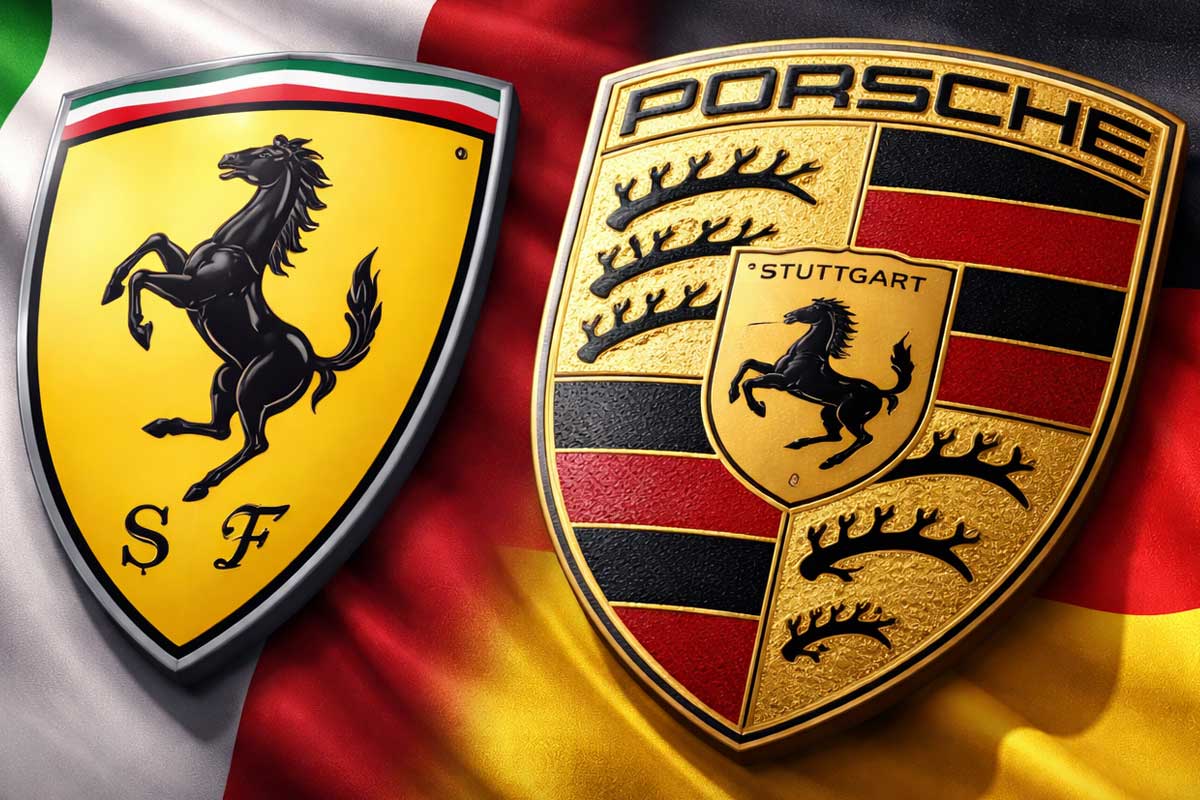
At first glance, the resemblance is uncanny. Two of the world's most prestigious automotive brands, Ferrari and Porsche, both feature a prancing horse on their logo. Graphic coincidence, discreet homage or deliberate borrowing? The reality is more subtle, and much older than the history of the modern automobile. Contrary to popular belief, this similarity is neither the fruit of a marketing strategy nor of cross-fertilization between two rival manufacturers. It has its roots in two distinct historical trajectories, shaped by the European culture of the early 20th century, in which the horse occupies a central symbolic place.
The Porsche horse, a direct heritage from Stuttgart
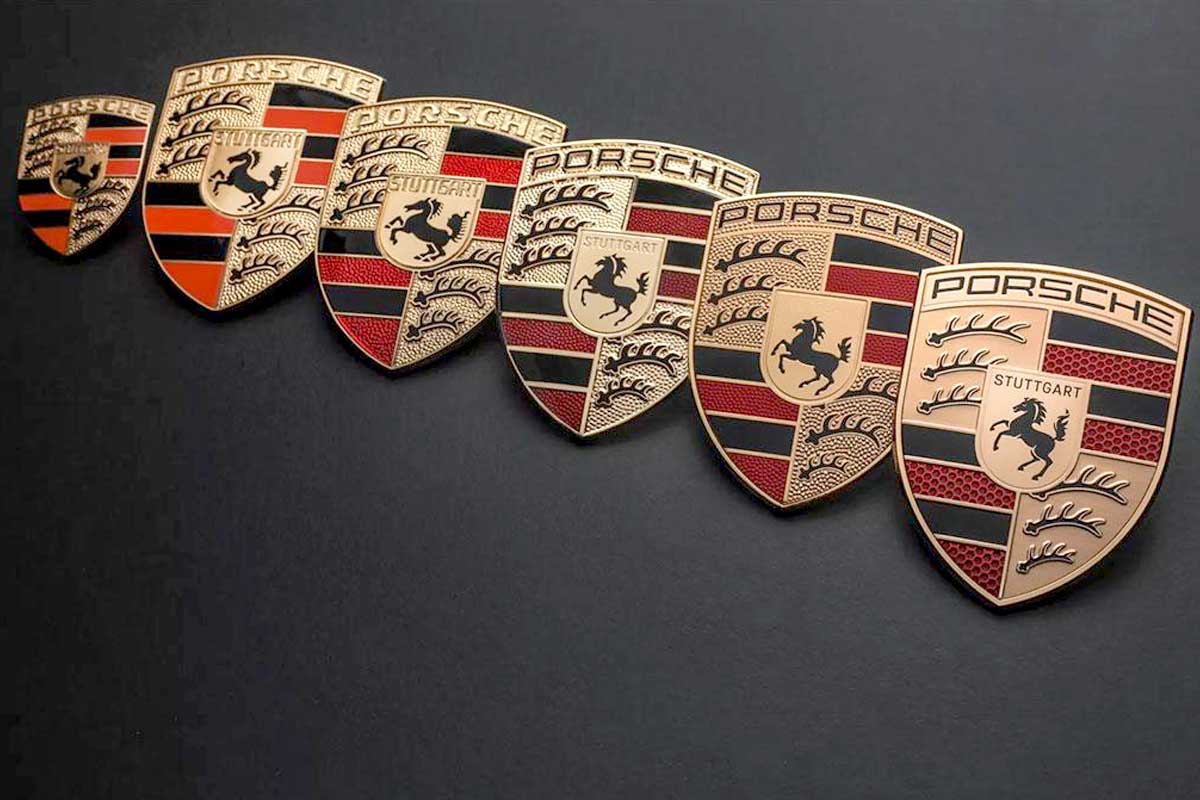
To understand the Porsche horse, we first need to go back to the city where the brand was born: Stuttgart. Long before the first Porsche appeared, the city was already using a prancing horse as its official symbol. The very name Stuttgart comes from Stuotgarten, literally meaning "stud farm", a reminder of the importance of horse breeding in the region since the Middle Ages. When Porsche unveiled its emblem in the early 1950s, the choice of the horse was not an arbitrary aesthetic decision. It was a tribute to its geographical roots. The horse is placed at the center of a complex coat of arms incorporating the name of Stuttgart, that of Porsche, and the colors and motifs of the former Free State of Württemberg. From the Porsche 356 onwards, this coat of arms became an integral part of the brand's identity. Over the decades, the logo evolved in design and finish, but the horse remained unchanged at the heart of the emblem.
The Ferrari horse, a military symbol before it was an automobile
At Ferrari, the origin of the horse is radically different and deeply personal. The famous Cavallino Rampante comes neither from a town nor a territory, but from a man: Francesco Baracca, hero of Italian aviation during the First World War. Even before becoming a fighter pilot, Baracca was a cavalry officer in the prestigious 2nd Royal Piedmont Cavalry Regiment, an elite unit of the Italian army whose heraldic emblem was already a prancing horse. When he adopted a distinctive sign for his aircraft in 1917, Baracca didn't create a new symbol: he used his regiment's, simplifying it and painting it black to make it stand out better on the fuselage.
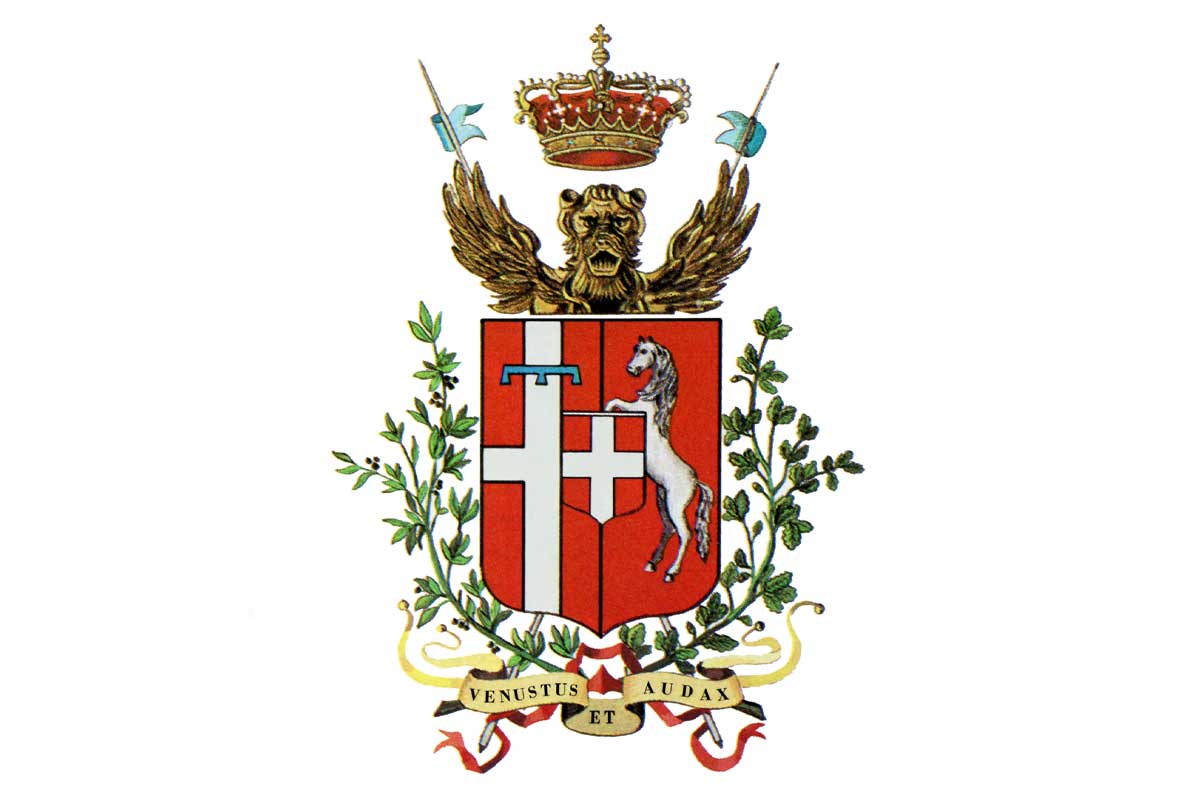
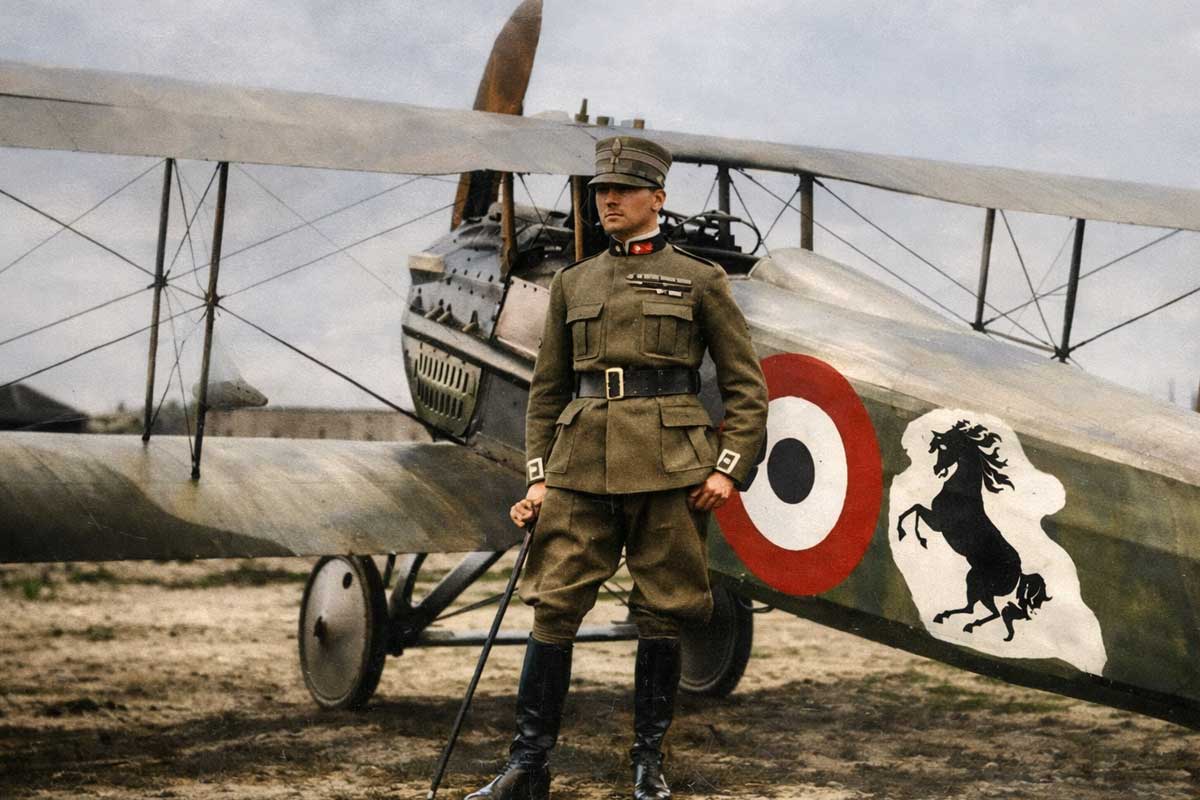
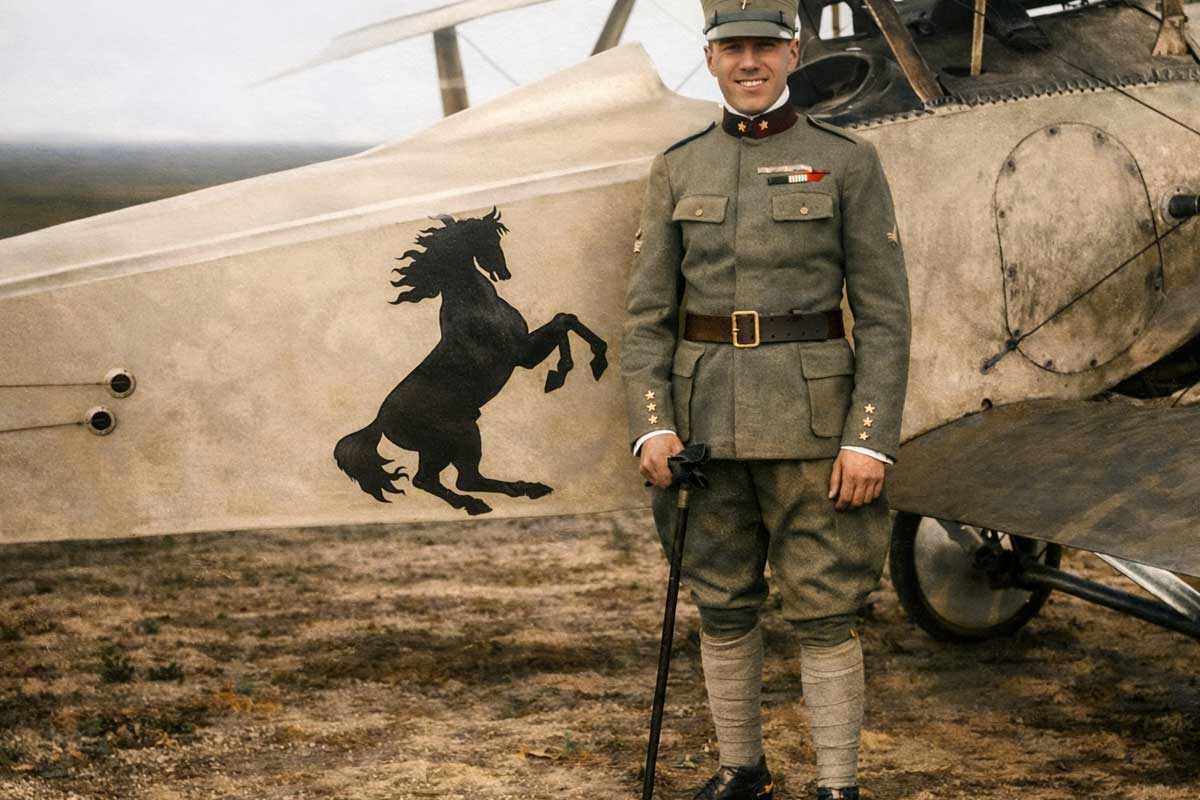
The horse quickly became an integral part of his legend. After Baracca's death in 1918, the symbol acquired a strong memorial dimension in Italy, embodying the courage, nobility and chivalric spirit of the first aviators.
From Enzo Ferrari to Scuderia Ferrari
In 1923, during a victory on the Savio circuit, Enzo Ferrari met Francesco Baracca's parents. The driver's mother suggested that he use her son's horse on his cars, convinced that it would bring him good luck. At the time, Enzo Ferrari was still a racing driver and sports manager at Alfa Romeo, so he couldn't put the symbol on his own cars. It wasn't until 1929, with the creation of Scuderia Ferrari, that the horse began to appear officially in competition. In 1932, at the Spa-Francorchamps 24 Hours, the Alfa Romeos entered by Scuderia Ferrari sported the prancing horse for the first time.
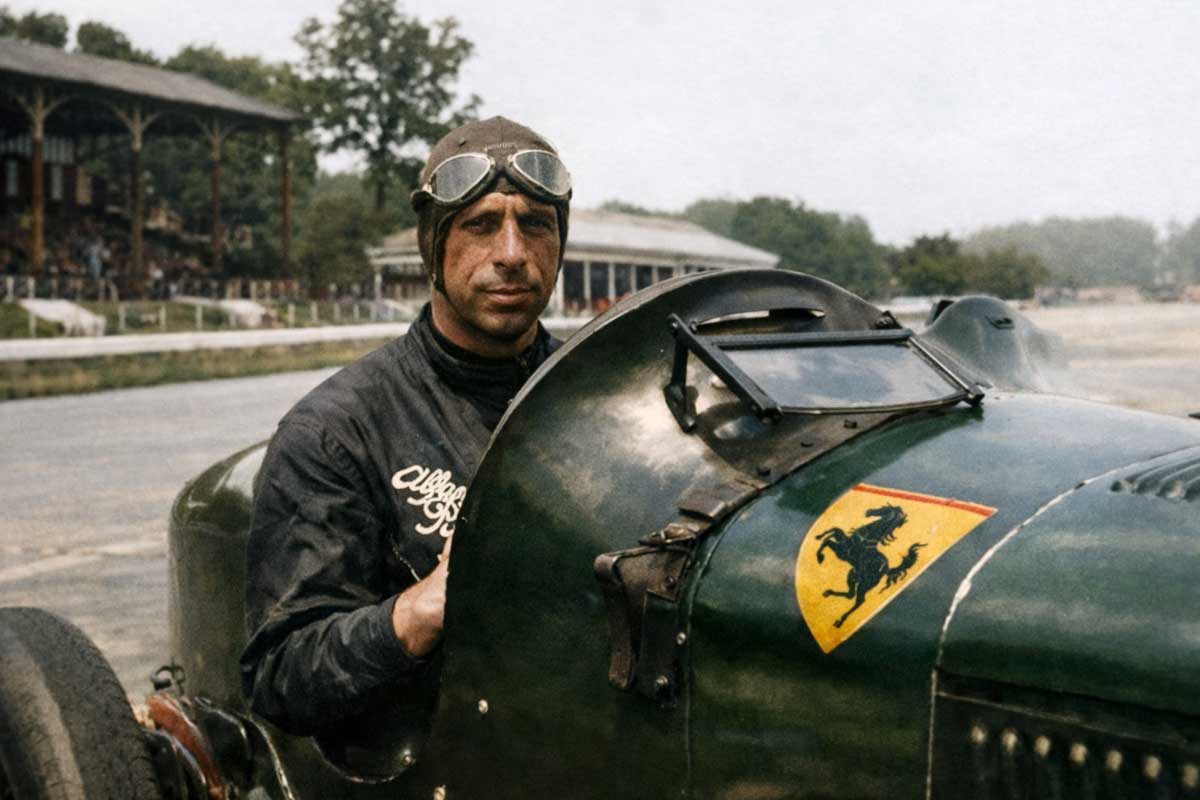
The symbol then evolved. It was no longer exactly that of Baracca: the horse adopted a slightly different posture, its tail was raised, and it was placed on a yellow background - the color of Modena, Enzo Ferrari's hometown - surmounted by the Italian flag. After the Second World War, when Ferrari became a manufacturer in its own right, this horse became the brand's permanent emblem.

From the Baracca horse to the Ferrari horse
Although Enzo Ferrari was inspired by Francesco Baracca's horse, the symbol that would become Ferrari's was not a faithful reproduction of the emblem painted on the Italian pilot's aircraft. Several graphic elements differ markedly: the posture, the style of the drawing and, above all, the horse's tail, which is raised on the Ferrari logo, whereas it is generally pointing downwards on Baracca's planes. This evolution can be explained by an often overlooked step. In 1930, to mark the inauguration of the shrine dedicated to Francesco Baracca in Nervesa della Battaglia, a commemorative booklet entitled "Per Francesco Baracca sul Montello" was published. The cover features the Baracca family heraldic coat of arms, designed by Lugo painter Gino Croari.
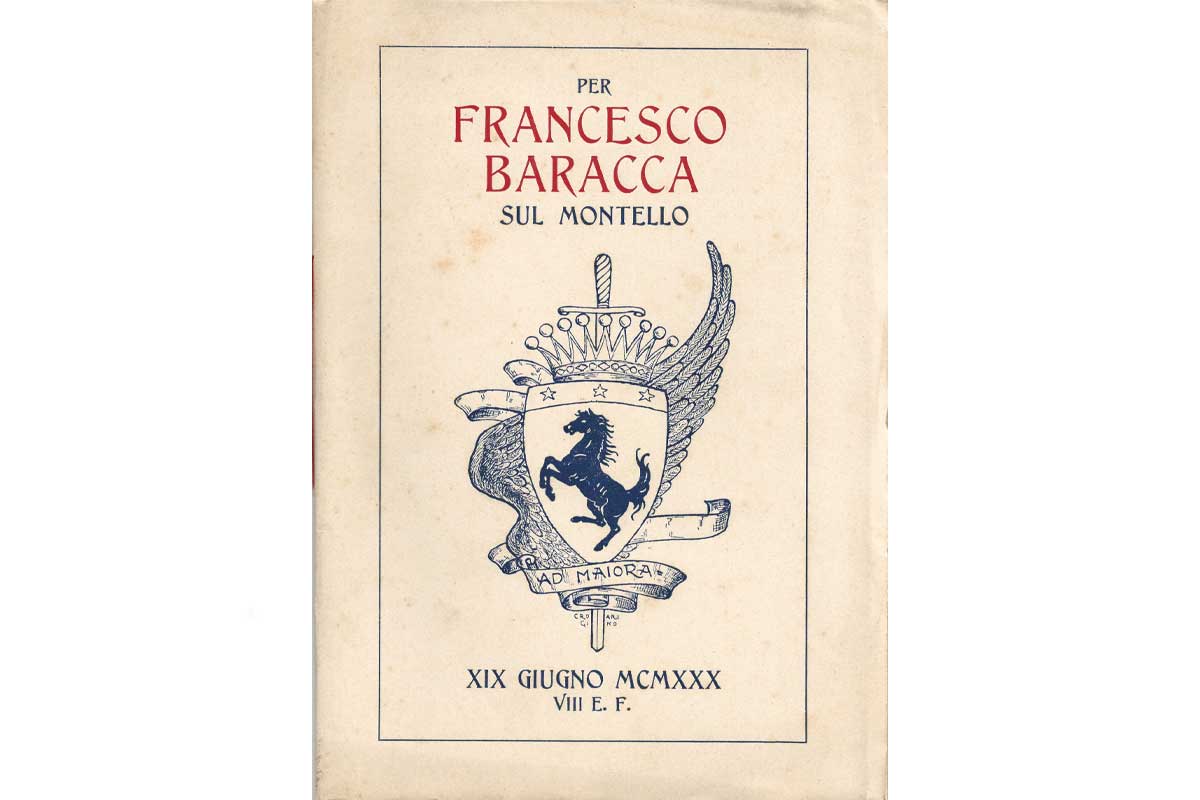
In this version, the artist freely reinterprets the prancing horse: the style is more graphic, the silhouette more dynamic, and the tail clearly raised. This horse, placed on a shield, corresponds almost exactly to the one that would appear a few years later on Scuderia Ferrari cars. This is no longer the horse from Baracca's plane, but a stylized version designed for heraldic and symbolic use. It is therefore highly likely that Enzo Ferrari, wishing to honor the promise made to Francesco Baracca's mother, drew inspiration from this Croari-designed version when defining his team's emblem.
Two horses, a possible common origin?
This is where the story needs to be qualified. The similarities between the two horses may not be purely coincidental, but it would be simplistic to attribute them to a single origin. In the case of Francesco Baracca, the most solidly established explanation is above all military. Before becoming Italy's aviation ace, Baracca was a cavalry officer in the prestigious Royal Piedmont Cavalry Regiment, an elite unit whose heraldic emblem was already a prancing horse. When he adopted a distinctive sign for his aircraft from 1917 onwards, Baracca was naturally following in the footsteps of his regiment, taking up this symbol as an affirmation of his military identity and his attachment to the cavalry tradition.
But this doesn't rule out other influences. During the First World War, many pilots personalized their aircraft with emblems linked to their unit, their region of origin or, sometimes, their victories. Some post-war accounts claim that Baracca shot down a German aircraft bearing a prancing horse, a symbol possibly inspired by the city of Stuttgart, whose coat of arms has featured this motif for centuries. While this hypothesis remains impossible to prove formally, it does illustrate the circulation of symbols across Europe in the early 20th century. In this scenario, the horse could have existed simultaneously in several traditions - German heraldry, Italian cavalry, military aviation - without there being any question of direct copying.
In the absence of irrefutable documentation, this line of enquiry remains in the realm of speculation. It does not invalidate the cavalry origin of the Baracca horse, which is now widely documented, but it does show how the same symbol, deeply rooted in the European imagination, could appear independently in different contexts before later becoming one of the most famous emblems in automotive history. Despite their striking resemblance, the Ferrari and Porsche horses have never posed any legal or symbolic problems. The reason is simple: each tells a different story. At Porsche, the horse is a territorial marker, rooted in the history of Stuttgart. At Ferrari, it is the legacy of a national hero, transformed into a symbol of competition and performance.
 English
  French
  Italian
  Spanish
  Portuguese
  German
  Japanese
  Turkish
  Dutch
Dutch
In this case, Porsche's - and Stuttgart's - prancing horse is a mare.
There's a third theory concerning the Italian prancing horse: the Baracca family were horse breeders.
Barraca is said to have shot down numerous enemy aircraft over the skies of Stuttgart, and to have painted the city's emblem on his plane, so that the same horse would appear on the coats of arms of the two most legendary brands.
Too good to be true? It could be. The first hypothesis, well presented by Alexandre, seems more likely.
It's a false legend peddled by Porsche fans.
Quello della Ferrari in realtà sarebbe un somaro ma per questioni di marketing adeguato 😅