

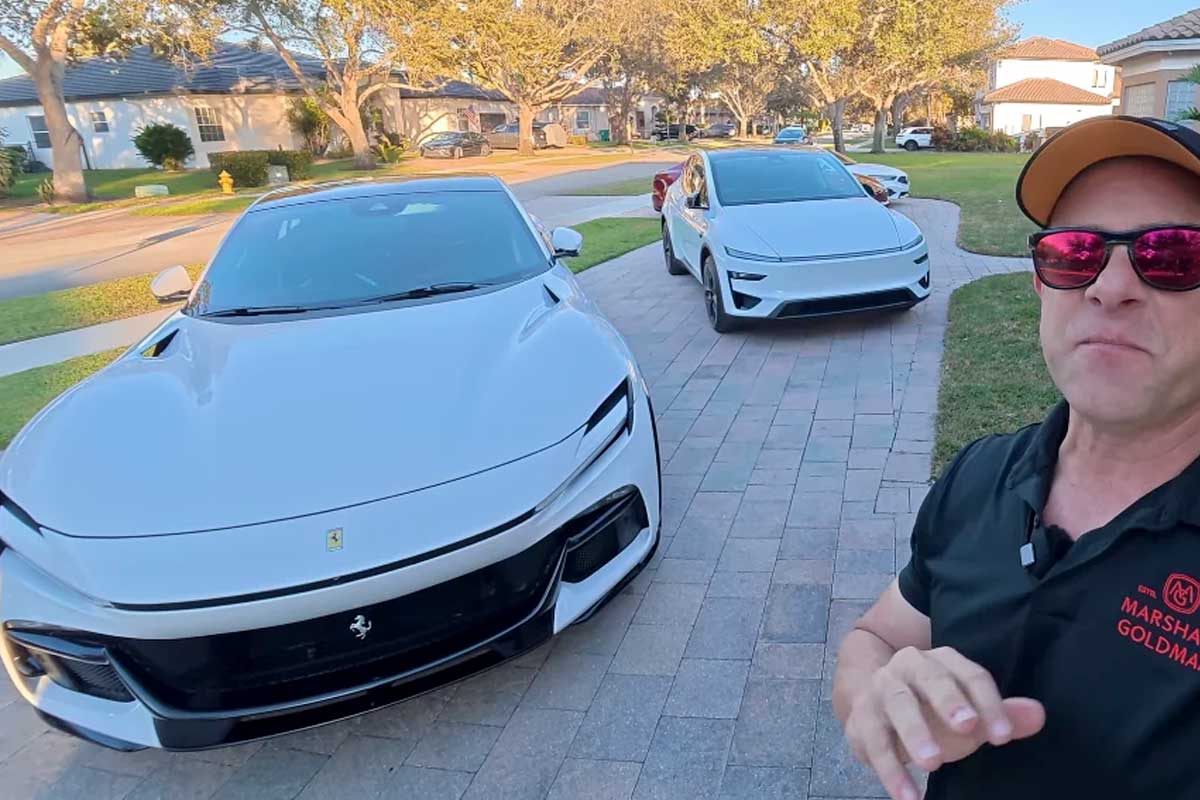
Some comparisons make you jump before you've even read the second line. A $524,000 Ferrari Purosangue V12 versus a Tesla Model Y? On paper, it's the perfect confrontation for social networks: on the one hand, Maranello, drip-feed production, a 6.5-liter naturally-aspirated V12 and all that that still represents in 2026; on the other, electric efficiency, click-and-buy and immediate performance.
Except that this story isn't really about a Ferrari-Tesla duel. Rather, it's the story of one man, Brooks Weisblat , who waited almost four years for a Purosangue promised as a privilege... before giving up at the last minute, collecting his deposit and driving home in a Model Y Performance. Not because a Tesla is "worth" a FerrariIt's because, with all the delays, silence and lost months, even a Ferrari can end up arriving too late.
When he ordered the Ferrari Purosangue nearly four years ago, he was convinced he was on the right track. Ferrari even approached him as a "VIP", with the implicit promise of being among the first to be served on the V12 Purosangue. The kind of detail that, in Maranello, is worth as much as a signature at the bottom of an order form. So he puts down a deposit of 30,000 $. And he waits. For a long time. Too long. Deliveries come and go: first, second, third... and he's left on the quayside, with no clear answers, and that particularly irritating feeling when you're talking about a Ferrari: that of having become a number.
The Purosangue is precisely the opposite of a "reasonable" car.
At that point, it's time to put things in their proper place. A Purosangue was never designed to win a common-sense contest. It exists because Ferrari has allowed itself a paradox: a large format, four seats, and an atmospheric 6.5-liter V12 that still holds its own in the age of turbos and batteries. In the video, everything is reminiscent of that world: the hood that opens like a shop window, the "monstrous" carbon-ceramic brakes, the 22-inch front and 23-inch rear wheels, the list of options so long it doesn't even fit on the main label. And above all, when the camera focuses on the interior: materials, finishes, ambience... luxury "à l'italienne", that which cannot be told, but can be experienced.
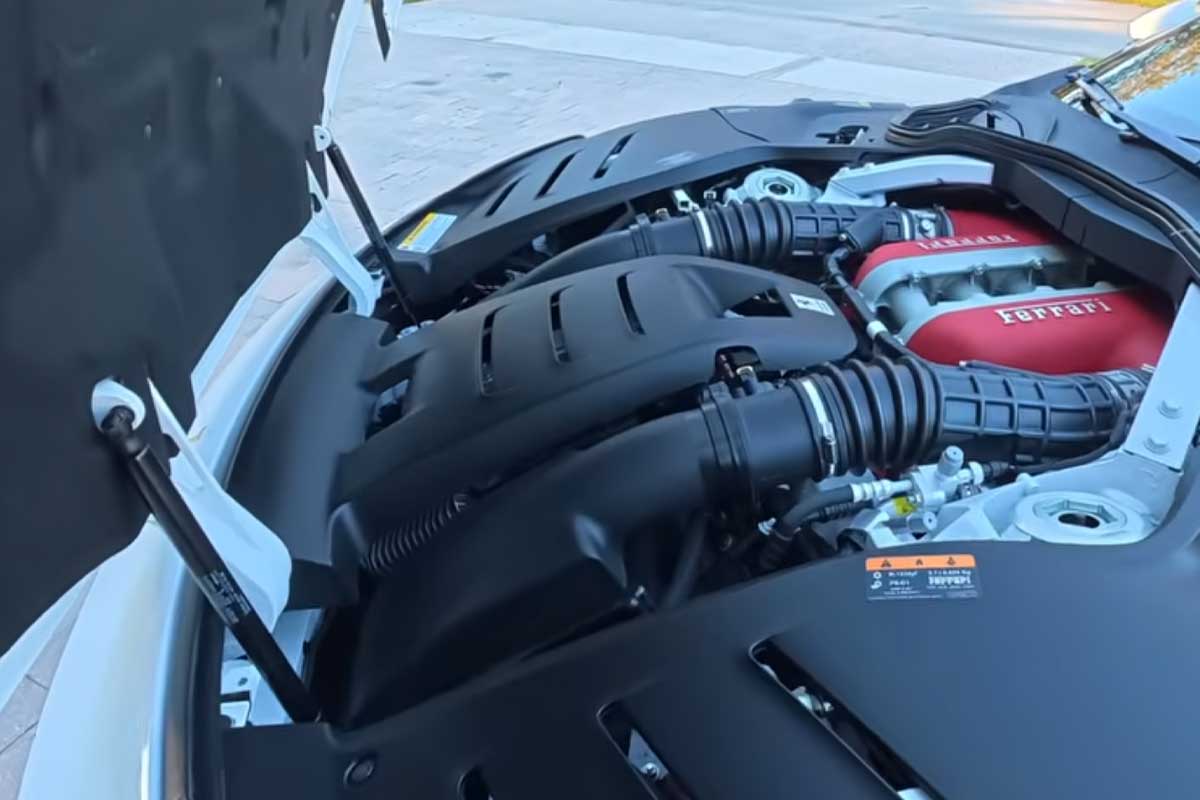
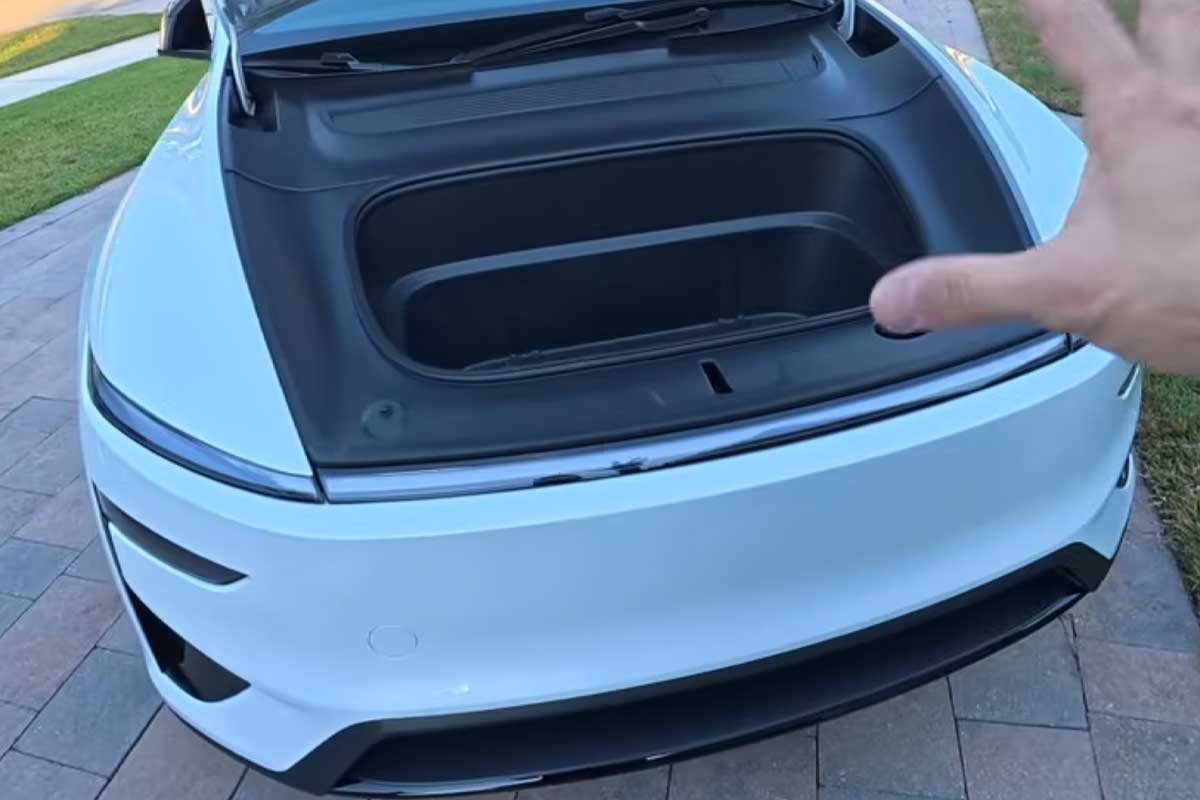
This is where the comparison with a Tesla Model Y becomes what it really is: a culture shock. Yes, you can line up the numbers, and even surprise yourself. But in the automotive imagination, it's like comparing a bespoke suit with an ultra-efficient technical outfit: each can perform a function... except they don't speak the same language.
Too much waiting
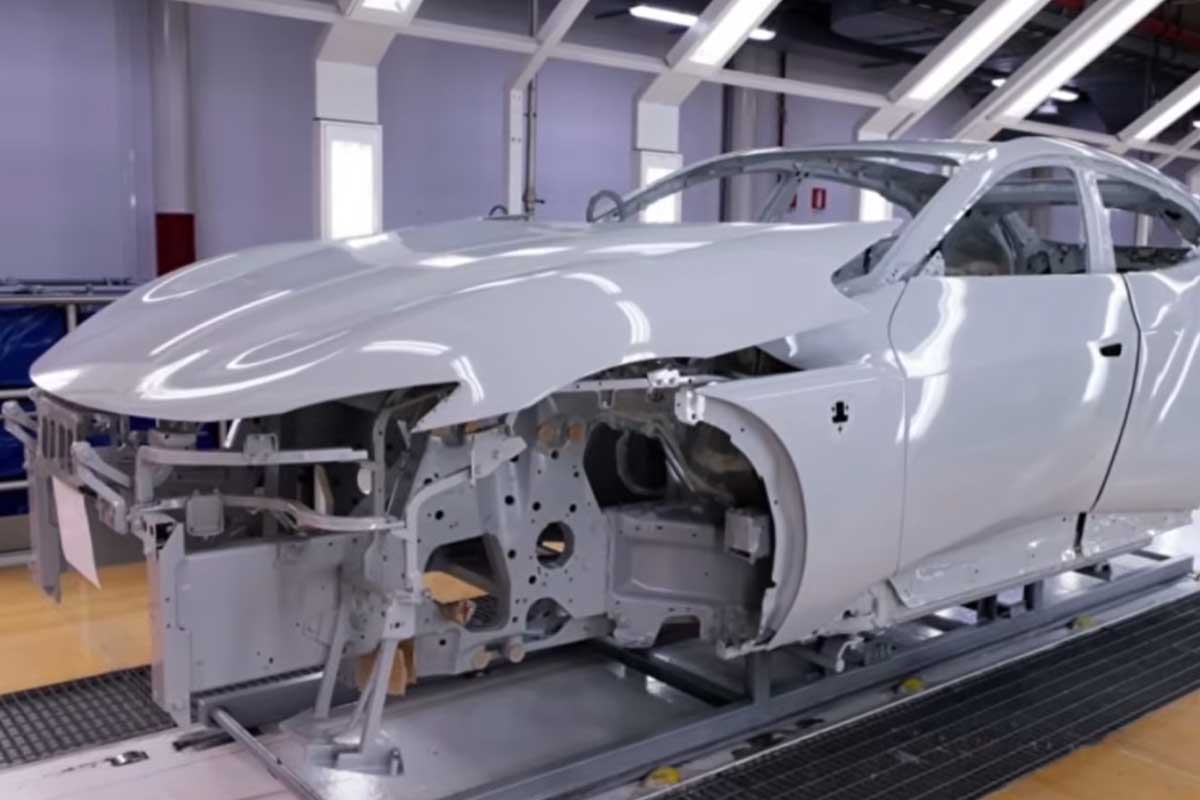
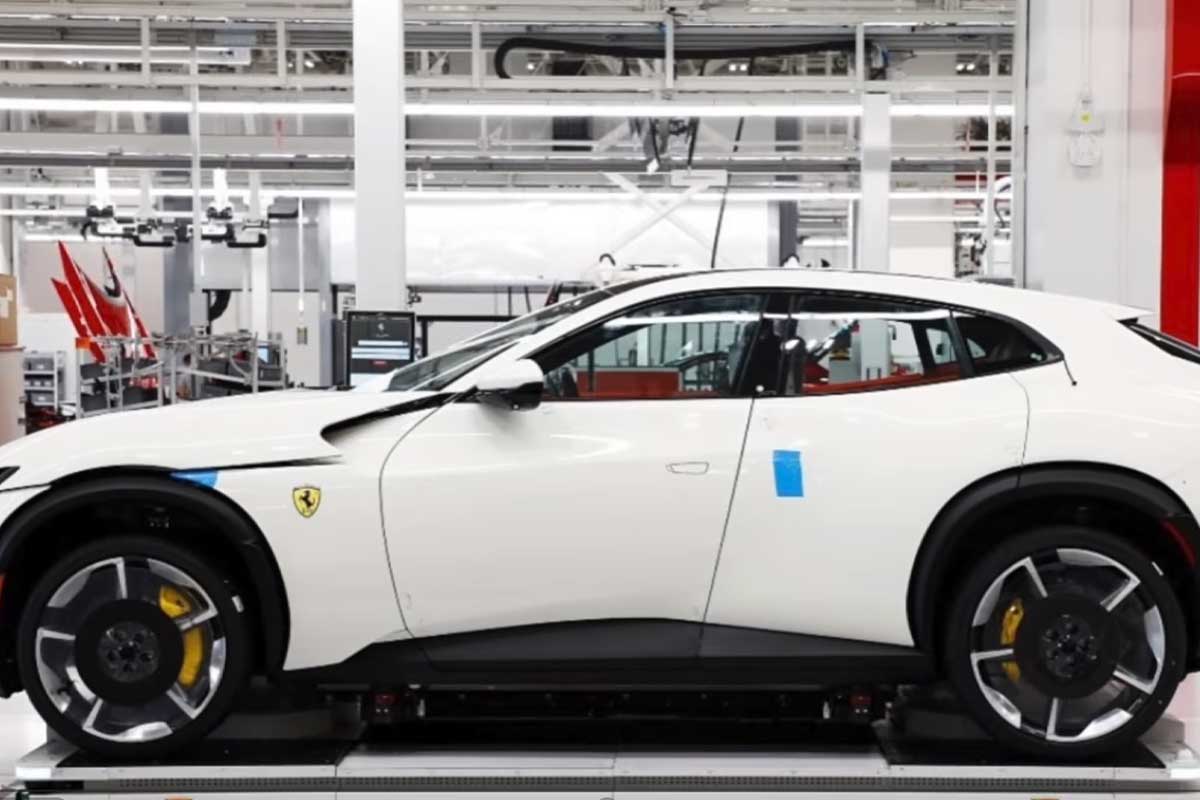
The heart of the story isn't "Ferrari vs Tesla". It's about time. Weisblat explains that his Purosangue eventually came into existence: it was produced, he got photos of it... then months more of immobilization, notably "in port", without delivery. In the end, he snapped: he asked to be taken off the list and have his deposit returned. And he regains control. He can buy the Tesla Model Y Performance right now. He can drive it. He can stop waiting.
The details that made him switch to Tesla
In his arguments, we find some very prosaic things. The Tesla, he says, has more storage, a simpler approach, and above all a "ready-to-live-in" ecosystem. He also points out some surprising absences on the Ferrari side, such as the lack of dashcam functions despite the presence of multiple cameras, or the absence of ambient lighting. He also criticizes the ergonomics: CarPlay is too "on the side", and the controls require navigation rather than being natural, a logic which, in his opinion, does not fit well with the promise of an "everyday SUV" made in Ferrari.
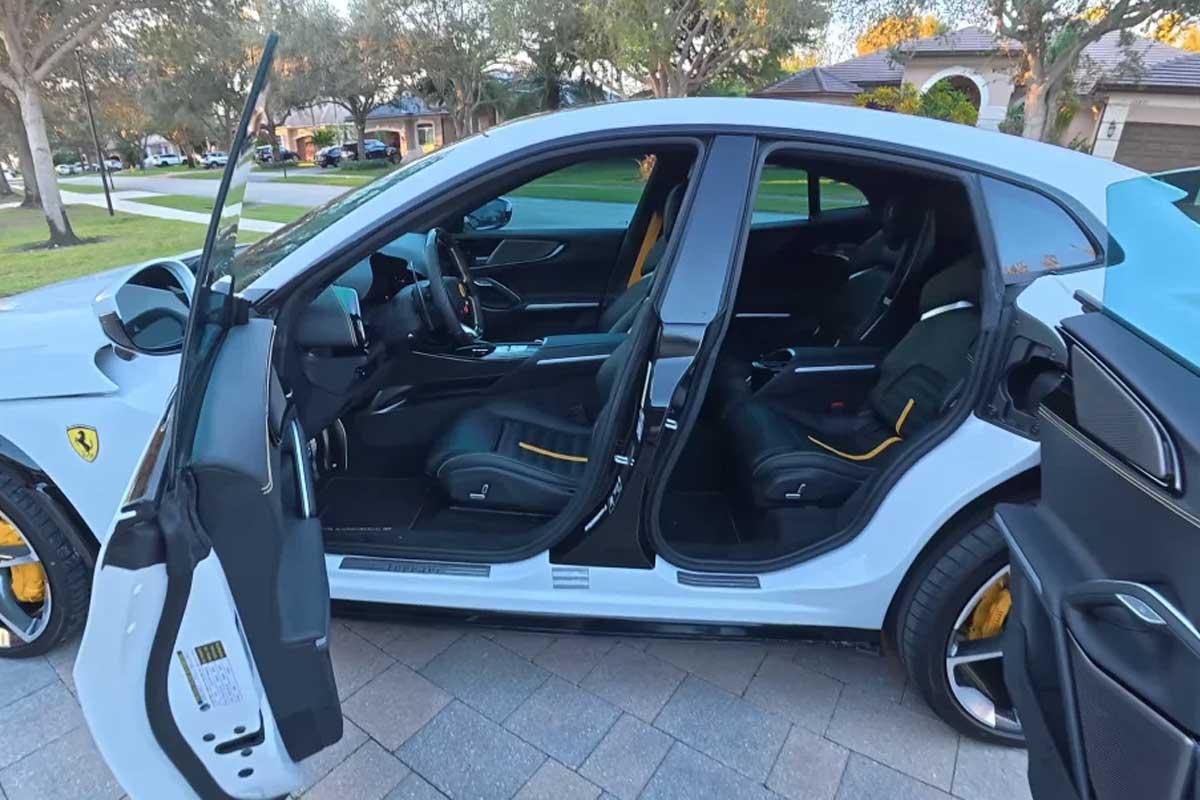
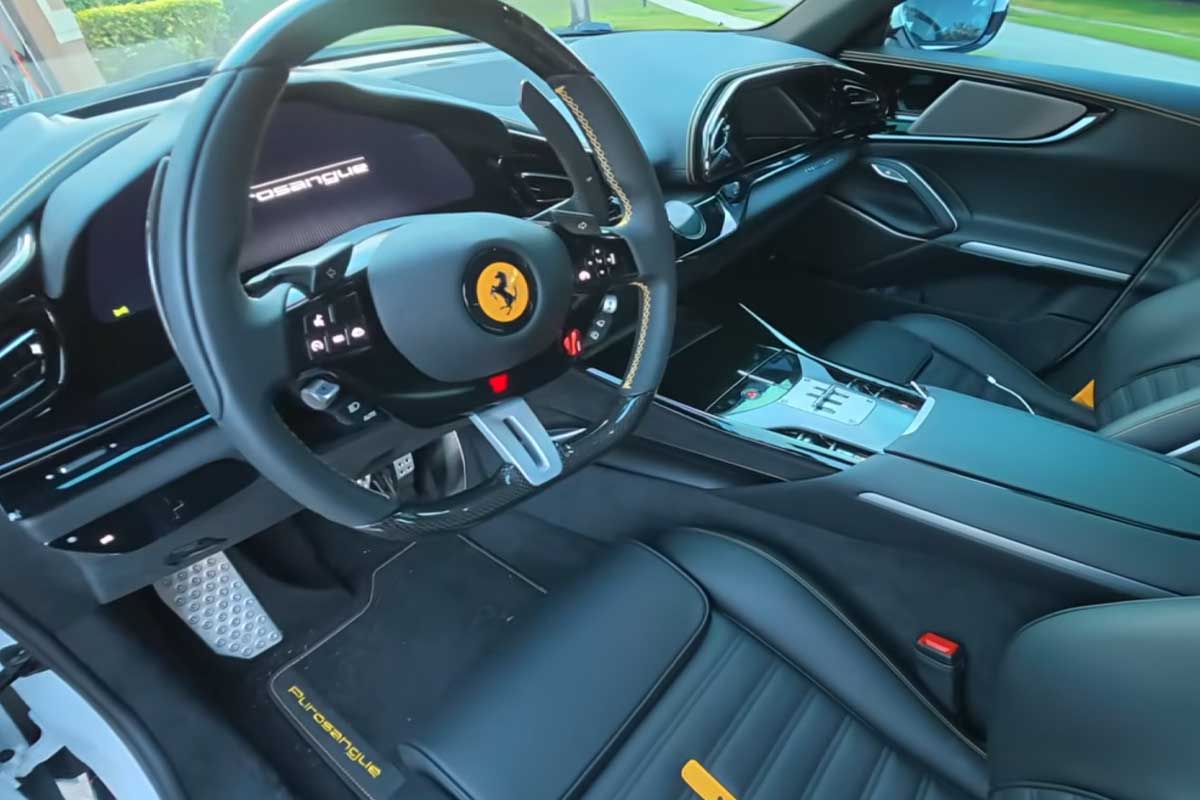
At the same time, he repeats that the Purosangue's interior is "unbelievably good", that the quality is impressive. This is not a rejection of the Ferrari as an object. It's a rejection of the Ferrari as a rational daily, especially after years of waiting.
Figures that fuel the debate
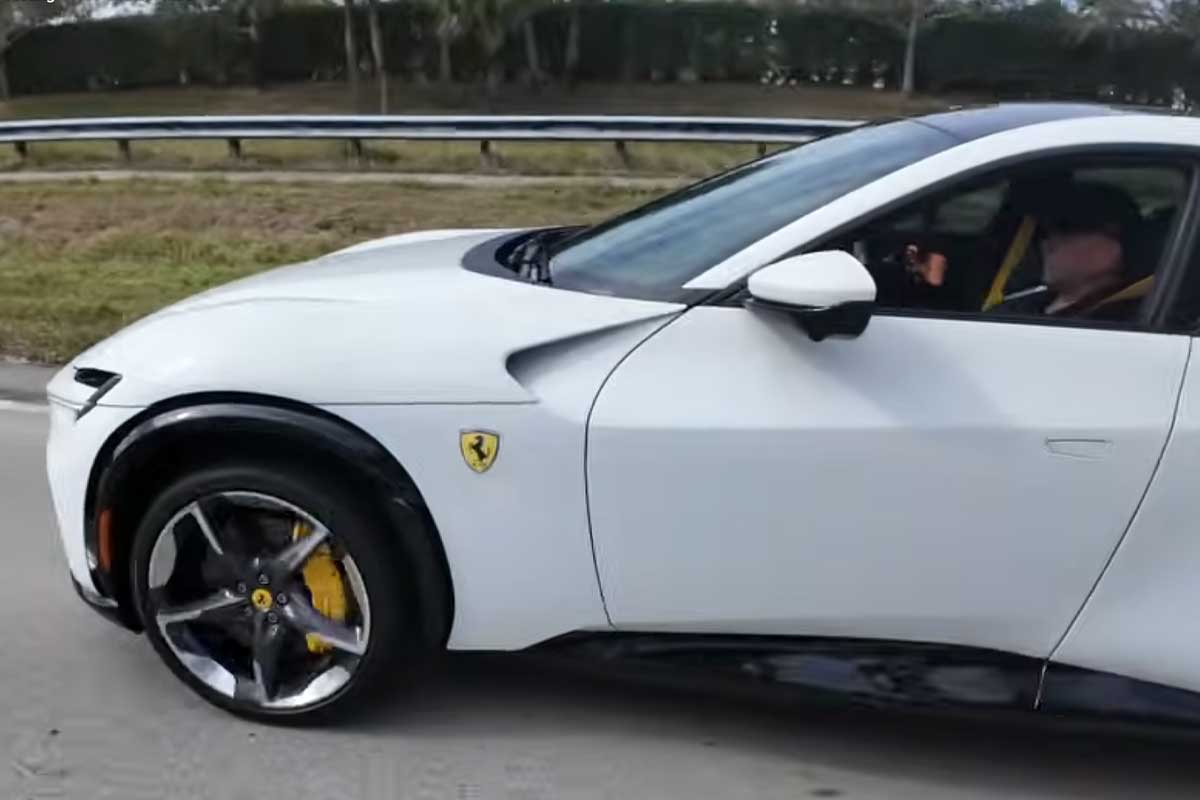
On the track (or rather, in acceleration tests), the Purosangue he tried out produced solid figures: 0 to 100 in 3.3 seconds, 0 to 200 in 10.6 seconds. And that's where the story becomes perfect for the Internet: he claims that it's "just barely" ahead of a Model Y Performance... for a price of 524,000 $ on the example shown. But there's more to the Purosangue than a 0-100. A naturally-aspirated V12 is all about revving up, mechanical response and drama. Even he says it: you have to go for the revs to wake the beast up, and the "atmo" character implies another sensation than the instant torque of an electric. In other words: Tesla wins the "immediate result" game, Ferrari plays in the "desire" league.
A final grain of sand, also very modern: Weisblat points out that there's an 18-month "hold" (impossible to resell quickly), and he wonders what's next: after an interminable wait and a model that's already been "on the market" for a while, what happens if prices calm down? What if the discount becomes violent? Yes, "on paper", a Model Y Performance may look formidable for the money. But the real story is one of an enthusiast who wanted his Ferrari (a real one, a rare one, a V12) and came up against what luxury should never allow: the wear and tear of waiting.

 English
  French
  Italian
  Spanish
  Portuguese
  German
  Japanese
  Turkish
  Dutch
Dutch
Ferrari will be worth the same or more in 15 years.
Tesla will have to pay to sell it in 15 years because its value will be perhaps 10% of what it was when he bought it.
Excellent choice, especially if you have the money and have waited for 4 years, a few more months is nothing.
Wait... you can drive the Ferrari daily to work/shop/school and it'll still be worth the same in 15 years? If so, I'll make the deposit, right now!!!! Not only that, the maintenance will be insane compare to the Tesla Model Y ... but who cares
Ma ti rendi conto che una Ferrari non sarà mai paragonabile ad una Tesla ( mi metto in ginocchio per il nome grande scienziato) ma con l'attuale non.ja nulla a che fare Ferrari orgoglio italiano
...diese Story ist ja so lange wie 4 Jahre Wartezeit....😒
Habe auf einen bezahlbaren sportlichen E-Alfa gewartet. Dan kam ein Model 3 und nun ein Model Y. Mittlerweile Trauer ich Alfa nicht mehr nach. Und ich hatte 4.
Nobody dares to say it, or simply doesn't know it: the Purosangue is a Ferrari rip-off. In fact, the Purosangue is just a disguised 4lusso - same base, same chassis, same engine, same technologies - they haven't even redone the bodywork, just changed the front hood and front and rear bumpers, cut out a rear door and there you have it. Ferrari has become more commercial than creative. Just look at their latest creations: they're using their poor hybrid v6 in every possible way, including in their hypercar, which no one is dreaming of...
Ferrari ist Müll von Verarbeitung!!! Nicht besser als heutige China Autos!!! Die Motoren sind so kurzfristig haltbar wie die von BMW 😀
I find it hard to understand how you can go from ordering a bloody Ferrari to a run-of-the-mill Tesla Model Y. However, the interminable wait eventually wears on you, to the point of giving up on the Ferrari, which you end up wondering if it will ever arrive.
Lasciate che si prenda la tesla...questo di ciò che è arte su ruote non ha capito nulla, ha solo i soldi per acquistare qualcosa da sfoggiare davanti agli altri. Non è un appassionato, non è un cultore, non sa nemmeno qual'è il valore di una Ferrari moderna. Vai vai con la Y.... Ci fosse stato ancora il Drake vivo questo tizio come cliente la Ferrari non l'avrebbe mai avuto....