

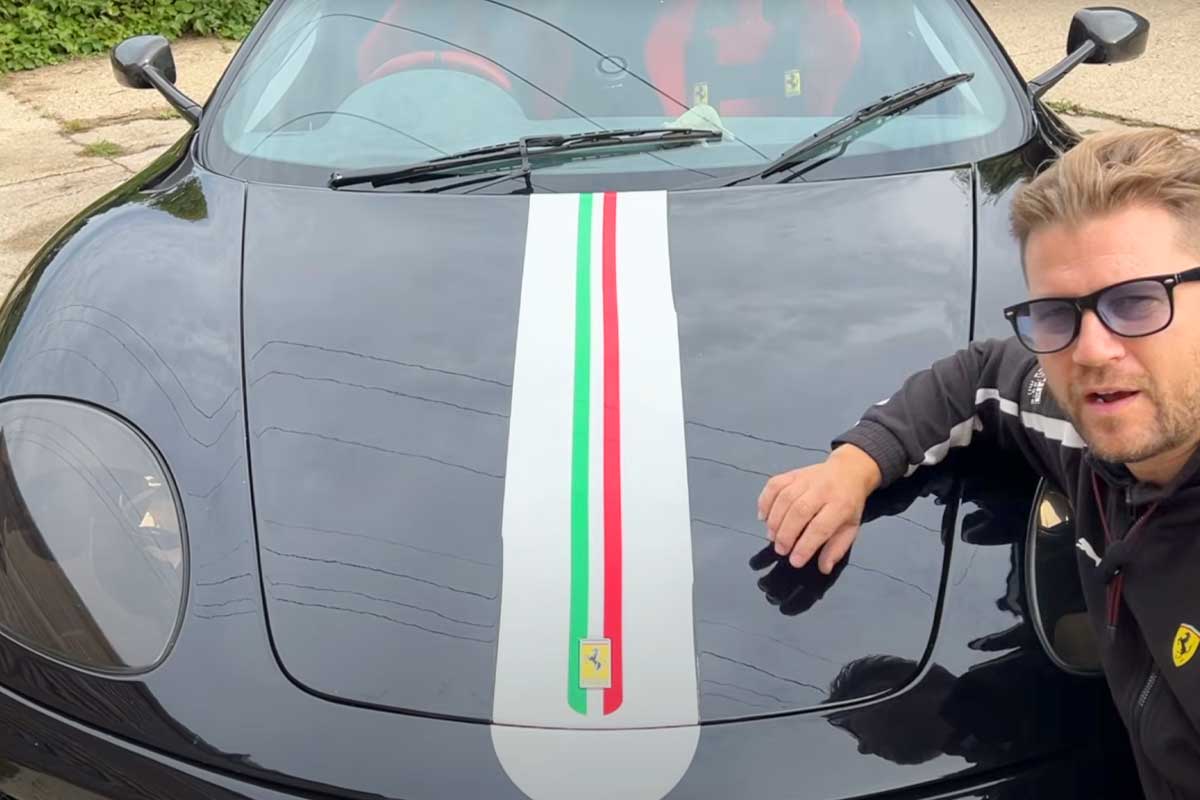
Who doesn't know Ratarossa, the British YouTuber with a passion for FerrariA man capable of breathing new life into cars that others would have sent to the scrap heap? For over fifteen years, he has devoted his weekends, nights and often his savings to saving legendary models: 308328, 512 BB, 360 Modena... His dream? To one day find a Ferrari F40 to restore.
But this time, it's his trusty Ferrari 360 Modena, the one he drives almost every day, that's giving him a hard time. After nine months of meticulous restoration - complete dismantling, full paintwork, new interior, upgraded brakes, restored engine compartment - the result seemed perfect. The car shone, ready to hit the road again, more beautiful than ever. Until a simple vinyl tape turned the dream into a nightmare.
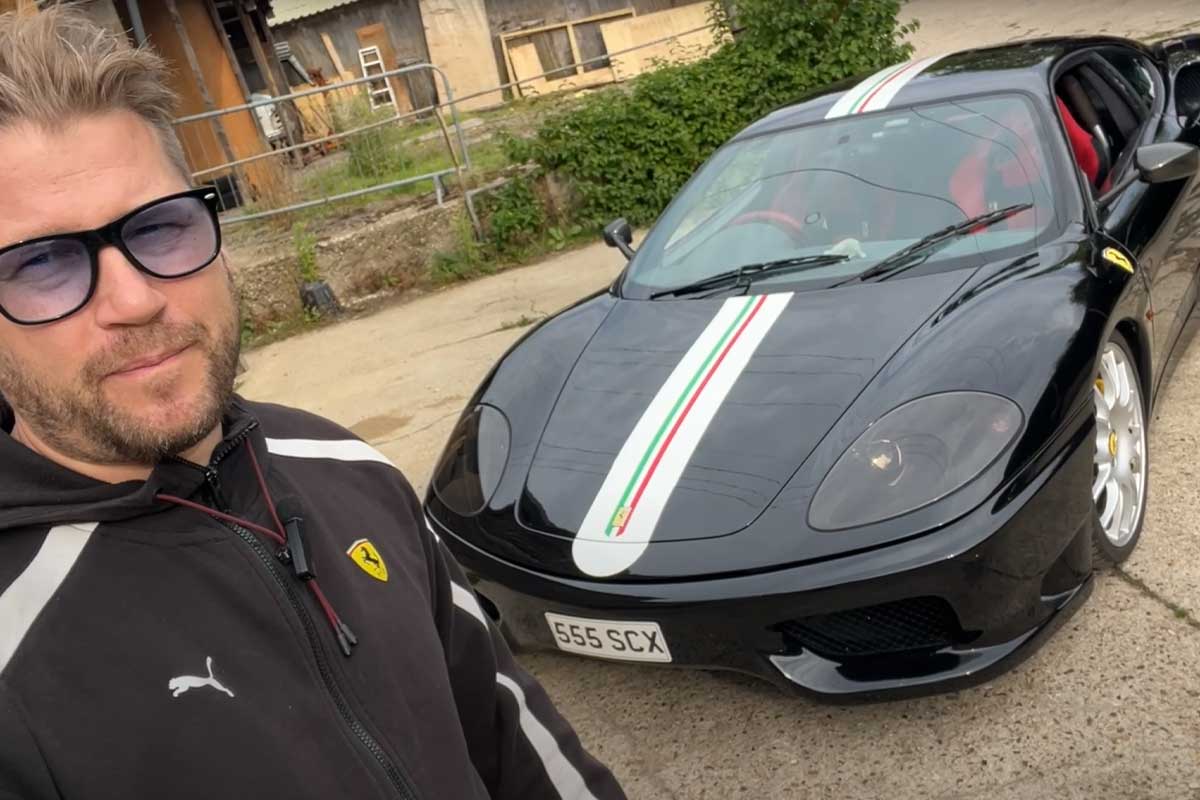
A perfect line... until it gets out of shape
On the 360's black bodywork, Ratarossa had applied a tricolor stripe inspired by the Ferrari Challenge Stradale, a detail typical of Italian sports models. But a few weeks after leaving the workshop, an imperfection appeared. Then another. And before long, the immaculate line was transformed into a succession of beads and sharp cracks, as if someone had sliced through the paint with a scalpel.
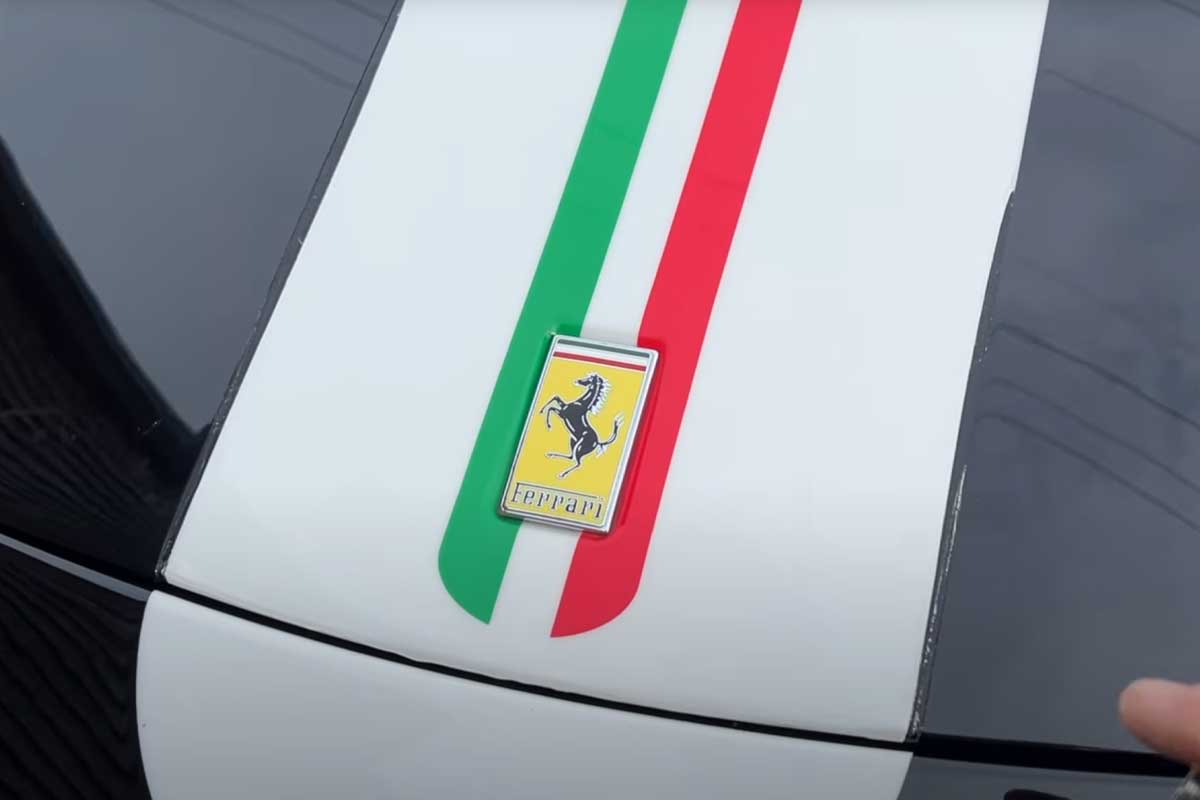
"It's a nightmare," he confides in his video. "We spent nine months redoing the car to perfection, and now the vinyl tape is shrinking by the day."
The diagnosis was clear: the vinyl strip had shrunk, leaving a visible edge under the varnish. Worse still, the initial defects had spread from the hood to the roof. And to repair this properly, almost two-thirds of the car would have to be sanded and repainted.
The culprit: vinyl itself
After his video was published, an industry professional with forty years' experience in vinyl films delivered his verdict: the tape would have been printed on less stable "calendered" vinyl, rather than high-performance "cast" vinyl.
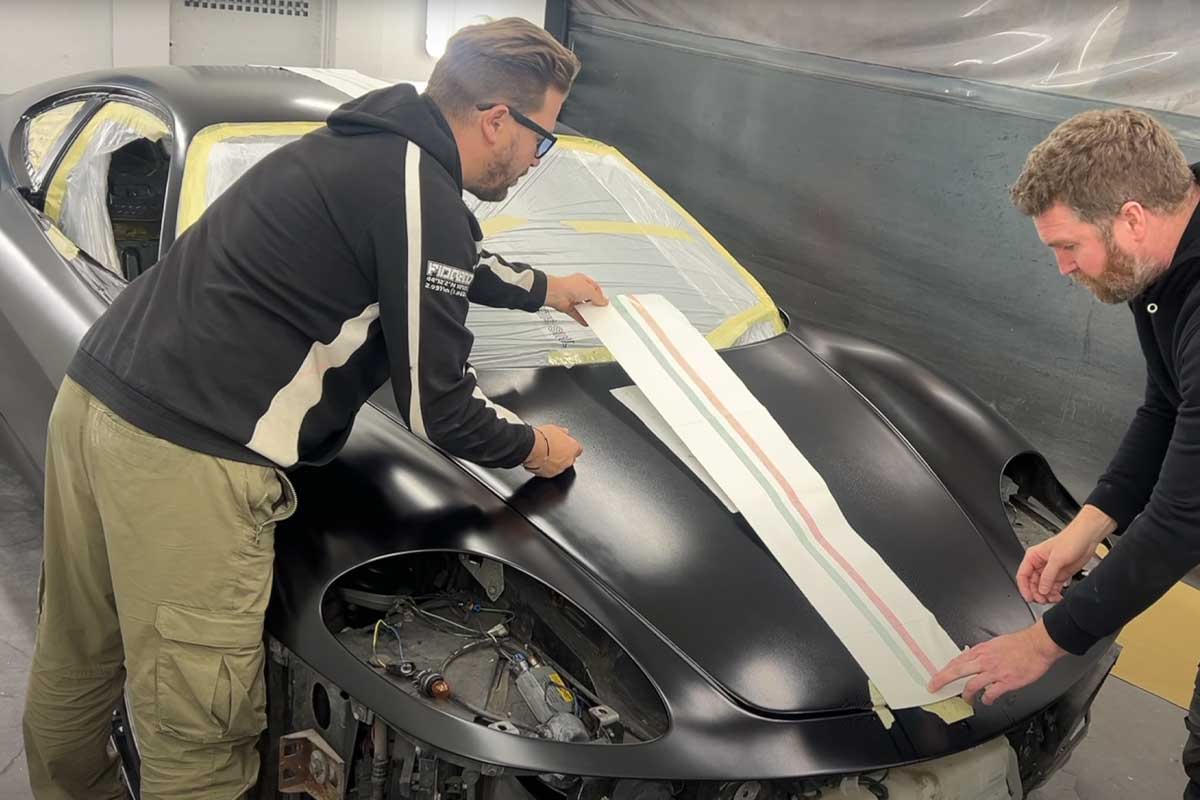
The problem? Calendered vinyl doesn't cope well with wide temperature variations, especially on black bodywork, which absorbs heat. As a result, the material expands and contracts, eventually peeling away under the varnish.
"On a black car, vinyl heats up enormously in the sun. I've seen strips shrink by 20 mm!" explains the expert. In his opinion, the only lasting solution is to repaint the hood and apply a new strip of cast vinyl, without covering it with varnish.
Other defects, other causes
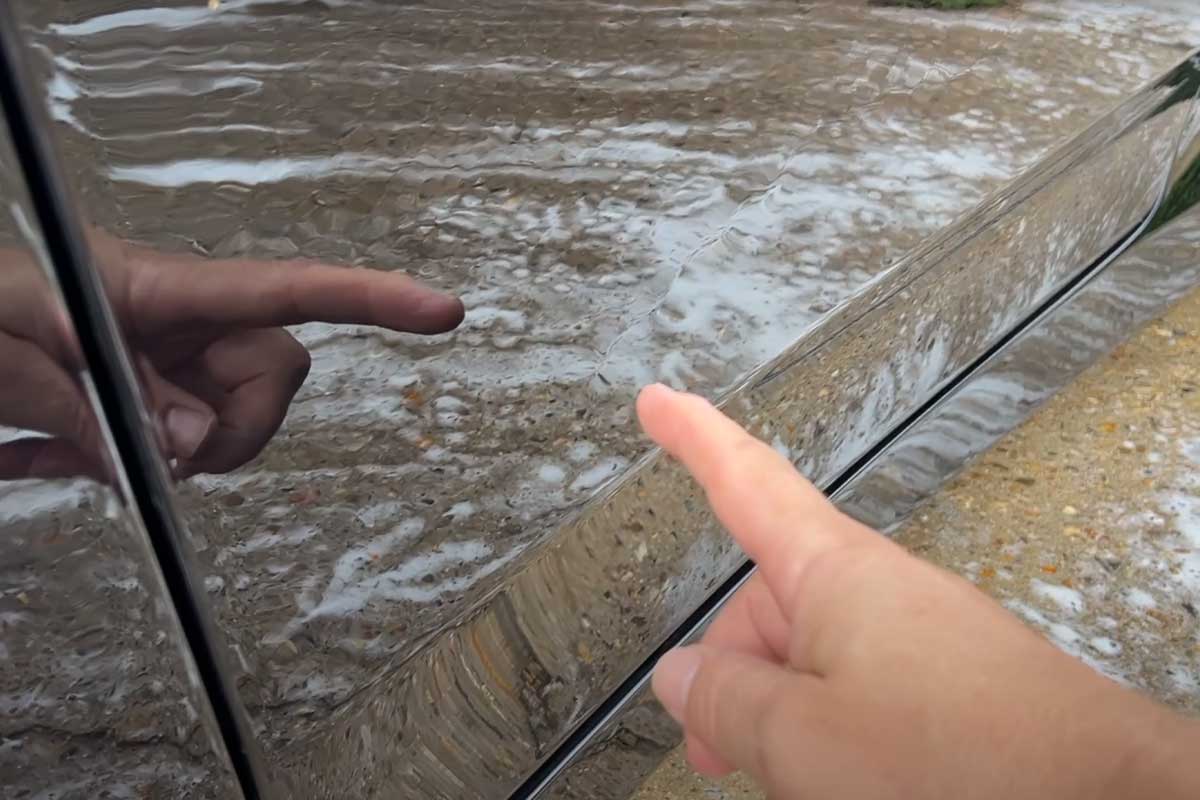
In addition to the problem of the stripe, Ratarossa also found several varnish defects on other parts of the bodywork, such as the doors and fenders, where no vinyl had been applied. These imperfections - runs, dry spots, small bubbles - are not related to the vinyl, but rather to the painting process. Winter conditions, irregular drying or varnish applied too thickly could explain these irregularities. In short, while the vinyl strip is responsible for the disaster on the hood and roof, the other defects are more classically the result of minor bodywork errors, which can only be permanently corrected by a new paint job.
A costly but instructive lesson
Ratarossa, visibly discouraged, acknowledges that the repair will take time and money. "I'm not a perfectionist, but when my ten-year-old daughter asks me what those marks on the body are, I know it shows too much."
Yet despite the frustration, he retains his sense of humor and passion: the V8 engine still runs like a charm, the brakes are impeccable, and the interior is superb. So he's thinking of eventually redoing the paintwork, or opting for a radically different color, like a metallic purple.
As is often the case with Ratarossa, there's probably more to the story than meets the eye. But one thing is certain: in the world of restoration, even the smallest details can ruin months of work.

 English
  French
  Italian
  Spanish
  Portuguese
  German
  Japanese
  Turkish
  Dutch
Dutch
Around the 80' in the US...car maker decide to change brand or co. Fort there primer....if you check or research you discover that..the primer used was not compatible with the paint used...not as much as few years back you could see on the road all the car with missing paint...so you knew what period they were from...
In the many American TV shows that show restorations (sometimes) or customizations (often), we see two approaches to stripes: applying self-adhesive tape or painting the stripes. The latter is more time-consuming, complex and expensive, but at least it's durable.
The coachbuilder didn't seem up to the job, and drips are a shame on a restoration. He wouldn't necessarily have been up to the task of painting the center stripe.
Agreed... on a Ferrari... you have to paint... on a Clio or a Toyota go for the stickers... !!!
The strip is supossed to be painted thats why it shrank. I used to do them in a bodyshop i worked for.
Paint on a Ferrari that has been polished or has defects is not a good restorer.
Indeed, stripping is applied after lacquering but before varnishing, lacquering and stripping being varnished and then dried, thus avoiding any subsequent contraction/expansion.
If installed after sale, only manufacturer's materials removed by authorized personnel are guaranteed.
Otherwise, automotive vinyls have a higher saturated polymer content and lower cellulose content, are more resistant to abrasion, more hydrophobic and less sensitive to thermal variations in terms of expansion. The only point of concern is the phenomenon of UV yellowing, but anti-UV additives have been available for some time, and the standard varnish protects the belts from any external aggression.
Finally, to come back to this sympathetic youtuber (what a noble task indeed to set out in search of Ferraris to restore in order to participate in the preservation of Maranello's heritage.
Nevertheless, I think his dream of one day restoring an F40 will remain a dream.