

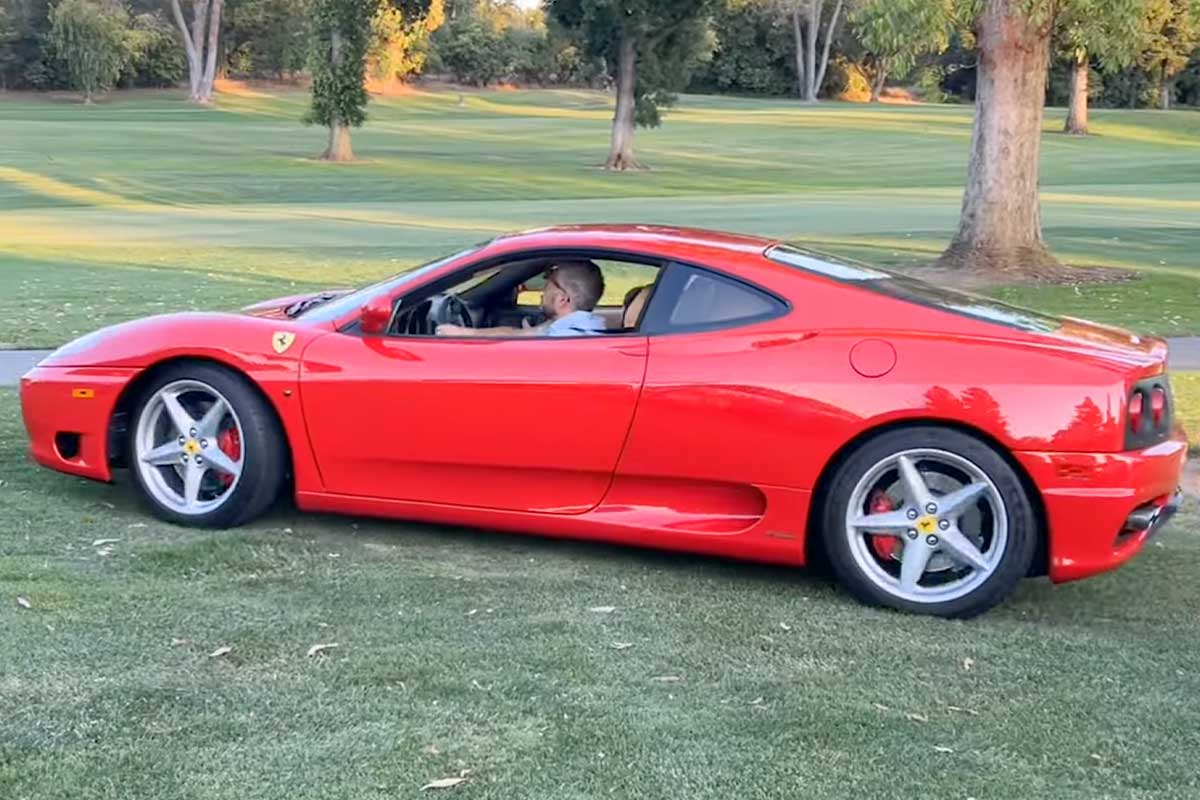
Having a Ferrari is the stuff of dreams. But how much does it really cost, once the key has been turned and the years have passed? A Californian YouTuber, known as Ferrari Matt Life (FML), decided to reveal the financial reality behind his Ferrari 360 Modena, a nearly 25-year-old Italian supercar. And his testimonial, complete with figures, is quite surprising.
The purchase was just the beginning of the story
When Matt bought his Ferrari 360 Modena, enthusiasm was high, but reality quickly caught up with him. The Italian coupé was delivered broken down, with no service history, and above all, in a worrying mechanical state. The engine, gearbox and several other major components had to be replaced before the car could be used with any peace of mind. The bill is high: around $50,000 invested to get the car back on the road: replacement of the engine, gearbox and several major mechanical components. A necessary step, he believes, to transform this Ferrari into a reliable and truly usable 360 Modena. Once this stage has been completed, the car finally enters a more "normal" phase of life. The $50,000 does not reflect the normal cost of running a Ferrari 360, but the price to be paid when buying a cheap, poorly maintained car with no history.
A more reliable Ferrari than expected
Unexpectedly, once the hard work is behind him, Matt finds that his Ferrari proves to be quite reliable. Over the course of 18 months or so of use, routine maintenance and repairs cost just under $5,000. A far cry from the usual fantasies of five-figure bills at the slightest breakdown. Of course, not everything is perfect.
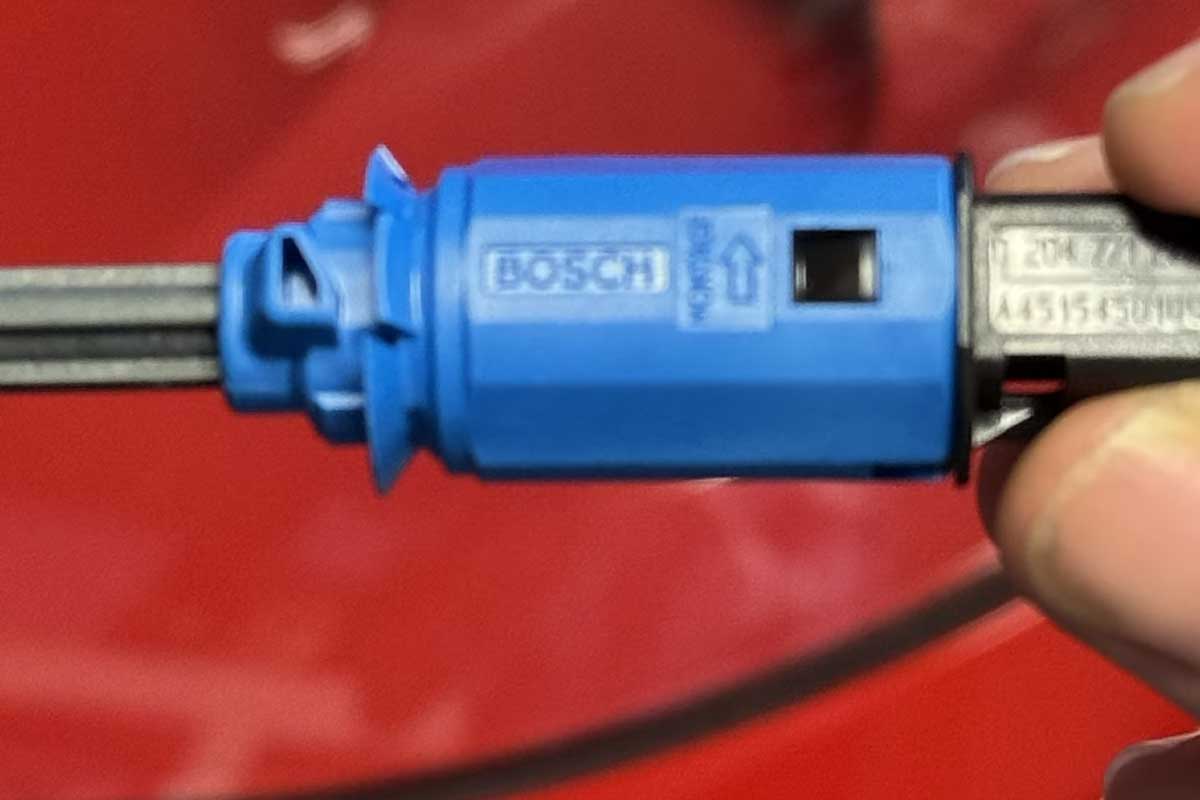
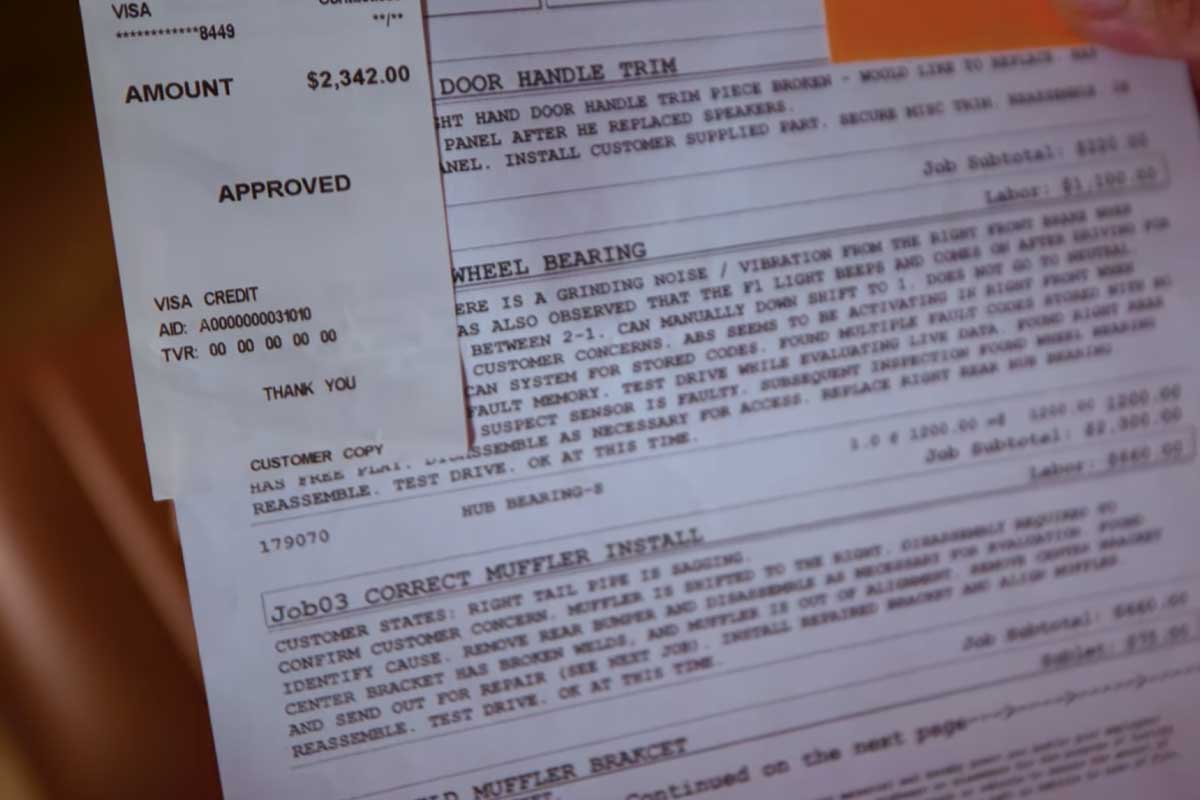
In the $5,000 range, the cheapest breakdown was also one of the most stressful: a simple $35 brake switch was enough to immobilize the car, locking it in neutral during an outing with the Ferrari Owners Club. Fortunately, this incident was quickly resolved, but it revealed the fragility of certain components on a car of this age. Annual maintenance remains true to the brand's reputation. A simple service including oil change, oil filter, synthetic oil and cabin filter costs around $1,000. Nothing out of the ordinary for a Ferrari, but a reminder that even basic operations come with a hefty price tag. The biggest expense during this period concerned a rear wheel bearing. Since Ferrari doesn't sell the bearing alone, Matt had to replace the entire assembly for around $1,100. A frustrating repair, but ultimately reassuring: the problem wasn't with the F1 system of the robotized gearbox, much more feared by owners.
Time doesn't just mark the mechanics. The Ferrari's interior is also beginning to show the effects of the years. The original speakers are literally disintegrating, with the rubber crumbling away inside the doors. The result: complete replacement of the speakers, thorough cleaning of the doors and elimination of unwanted noise. Added to this were a number of ancillary interventions, such as repositioning the exhaust silencer and replacing brackets, for a total cost of around $3,300, combining light mechanical interventions and interior refurbishment.
In addition to the cost, Matt stresses an often underestimated point: time. Repairs on a vintage Ferrari take considerably longer than on a classic car. Between the often overloaded specialist workshops and the parts that sometimes arrive from abroad, a simple intervention can immobilize the car for several days, even weeks. A factor to be taken into account by anyone considering this type of supercar for regular use.
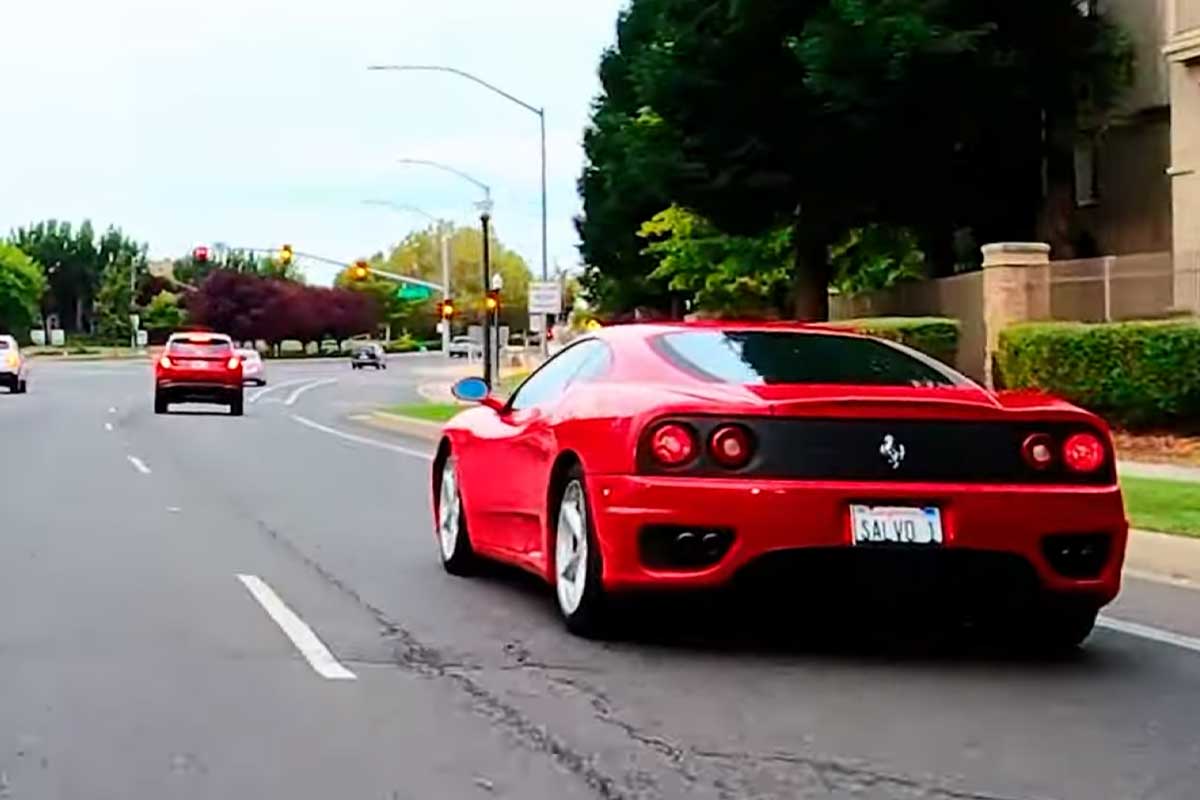
The final verdict: passion or reason?
Adding up the purchase price, the $50,000 reconditioning, routine maintenance and miscellaneous repairs, Matt estimates that he has spent just under $130,000 on his Ferrari 360 Modena (suggesting a purchase price of around $70,000). While he continues to love the car's handling and feel, his verdict is clear: he wouldn't make the same choice again. His advice is straightforward. If budget allows, it's better to buy a newer Ferrari with warranty. A slightly older pre-owned Ferrari can offer an exceptional experience, provided you accept the stress, delays and mechanical contingencies.

 English
  French
  Italian
  Spanish
  Portuguese
  German
  Japanese
  Turkish
  Dutch
Dutch