

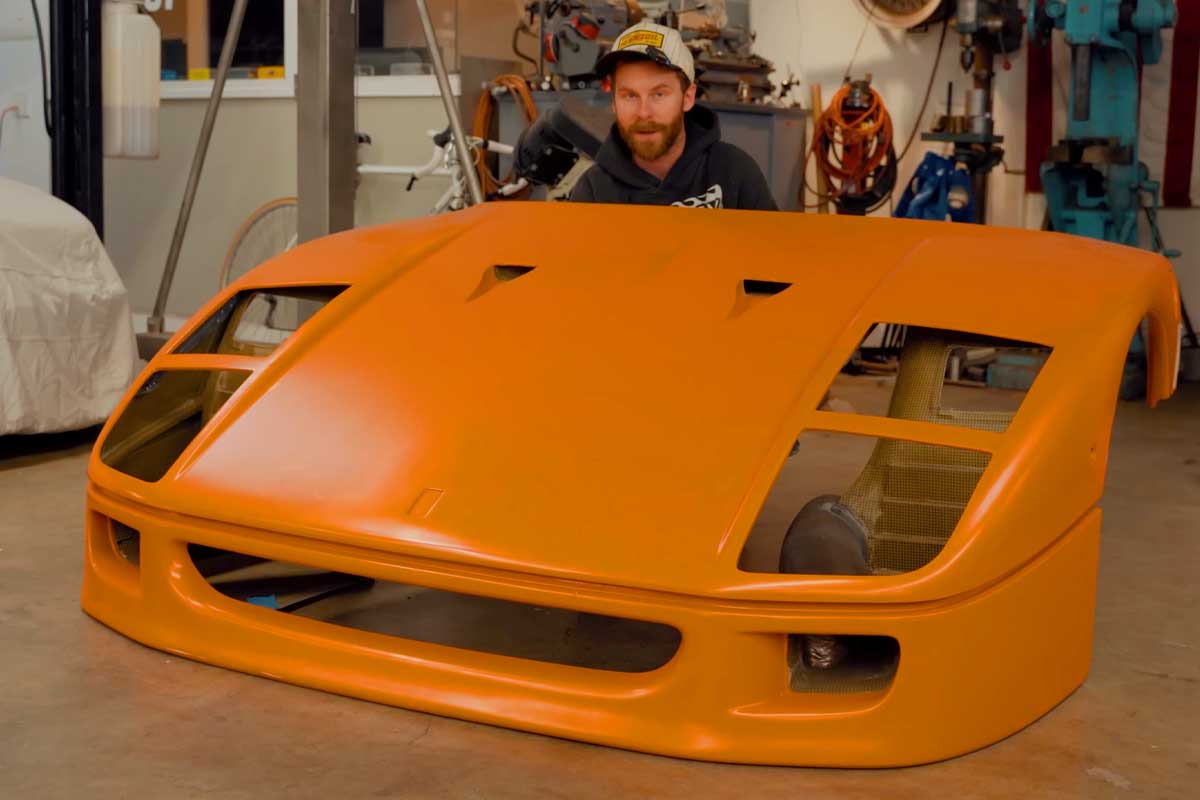
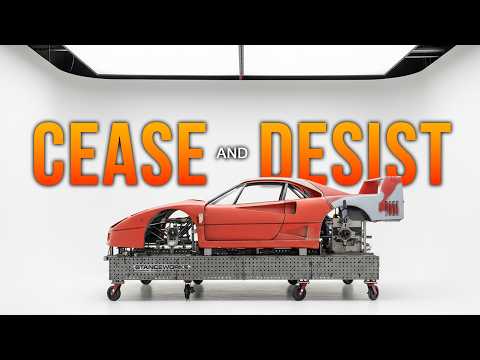
This project has been in the works for several months now: a Ferrari F40 EVO with an 812 Superfast V12 engine. And for months now, Mike Burroughs of Stanceworks has been reading the same question under his videos: "Ferrari's going to come down on you, isn't it?" He knows this lawyer's mail fantasy by heart. And in his latest episode, he cuts to the chase: if Ferrari were to react, he believes it would have happened by now.
Above all, it reminds us that Ferrari isn't really interested in the fact that enthusiasts are modifying cars. What triggers a reaction is "branding": emblems, use of the name, exploitation of brand identity. He cites one of the most famous cases: the Deadmau5 controversy and the "Nyan Cat" livery, where the problem wasn't customization per se, but everything it implied in terms of brand image. And that's precisely where his project is clear: no Ferrari badges. He insists: he does not present his creation as "a Ferrari" in the legal or commercial sense.
"I call it F40... but it's not a Ferrari"
Burroughs assumes responsibility: he calls his car "F40"This is because he believes he's building an F40 in spirit, a machine that carries the skin, the proportions, the visual DNA, but not a Ferrari made by Ferrari. He even takes the argument a step further with an interesting comparison: in the world of historic motorsport, no one is amused to say that a Protofab Mustang "isn't a Mustang" on the grounds that everything is tubular and almost no parts are original. We identify it by what it represents and by its silhouette. In his eyes, his approach is similar. He places the boundary between homage, reinterpretation and counterfeiting in exactly the right place: where brand usurpation begins.
Back to the project
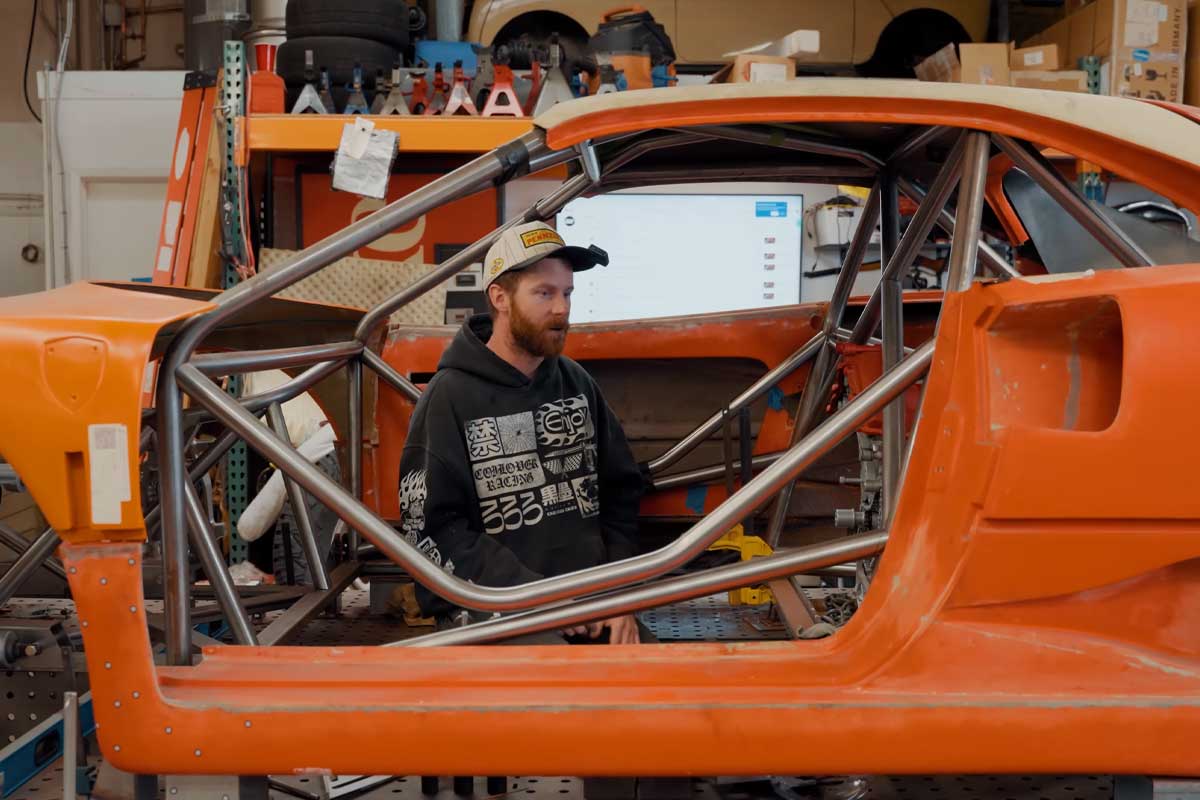
We presented this project at the end of last year, Stanceworks wants to create an F40 EVO from an authentic complete body, then mounted on an in-house tubular chassis. The idea hasn't changed: to take the F40 as a starting point, then make the same "gap" from the F40 road to the F40 LM. Its owner makes it clear: he's not looking for a comfortable GT or a "show" car. He wants a brutal, physical, demanding machine. He wants a road-legal racing car.
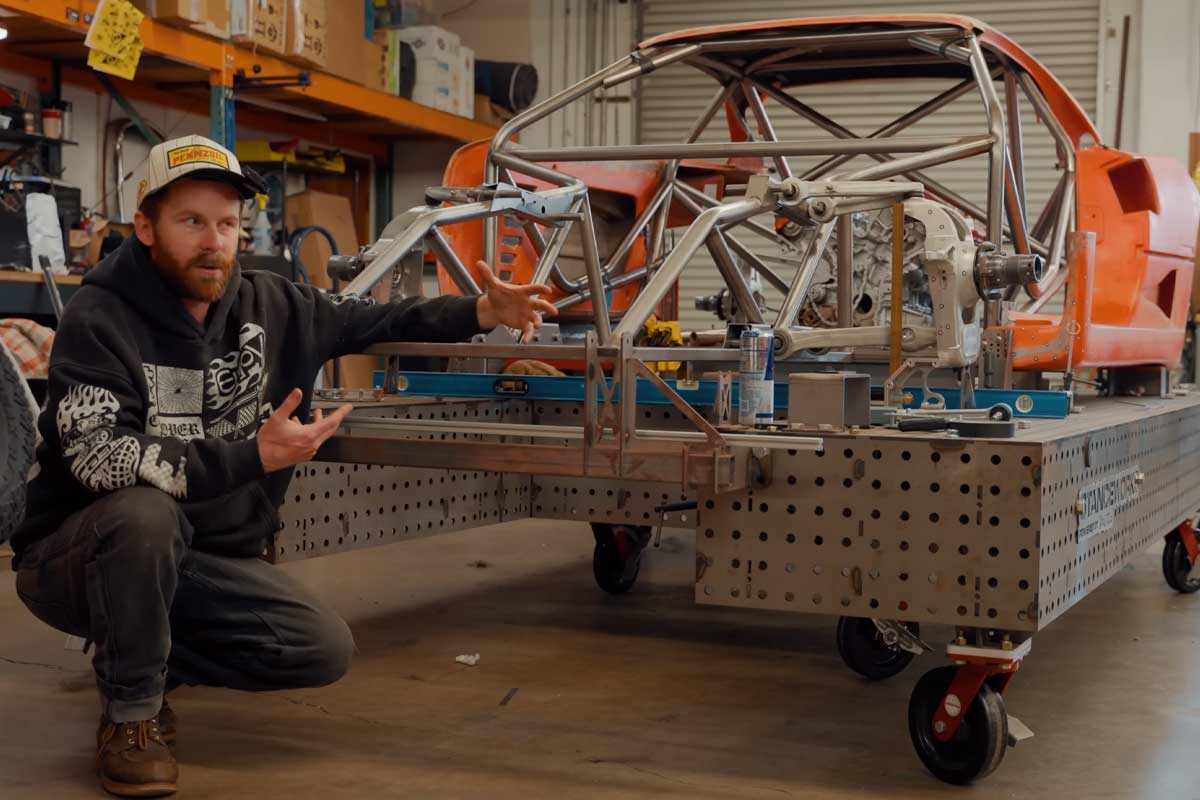
An F40 is small. And even if the chassis looks "big" on the plate, it reminds us that we're talking about an overall size of close to 4.4m, with a short wheelbase, a huge engine, very backward wheels and pronounced overhangs. As a result, the cabin is the most restrictive part of the project. The V12 engine encroaches into the area behind the seat, but without ruining the driving position. He also insists on the philosophy: his choices are not dictated by comfort. The interior will be that of a race car: no luxury, no grand touring, and probably no air-conditioning.
And the tanks?
Interesting moment: the question of fuel tanks. On European F40s, we're talking about bladders (flexible tanks), which are replaced regularly and cost between €15,000 and €20,000 a pair. He notes that "F40-specific" compatible tanks are available from well-known manufacturers, but are nevertheless very expensive.
His problem is the reality of his chassis: he's added so much structure that tanks designed for an original F40 might not fit. He doesn't want to tie up a lot of money just to "see if it fits". The most likely solution: custom-build, but keep the original location, and reuse the filler flaps.
The 812 Superfast V12
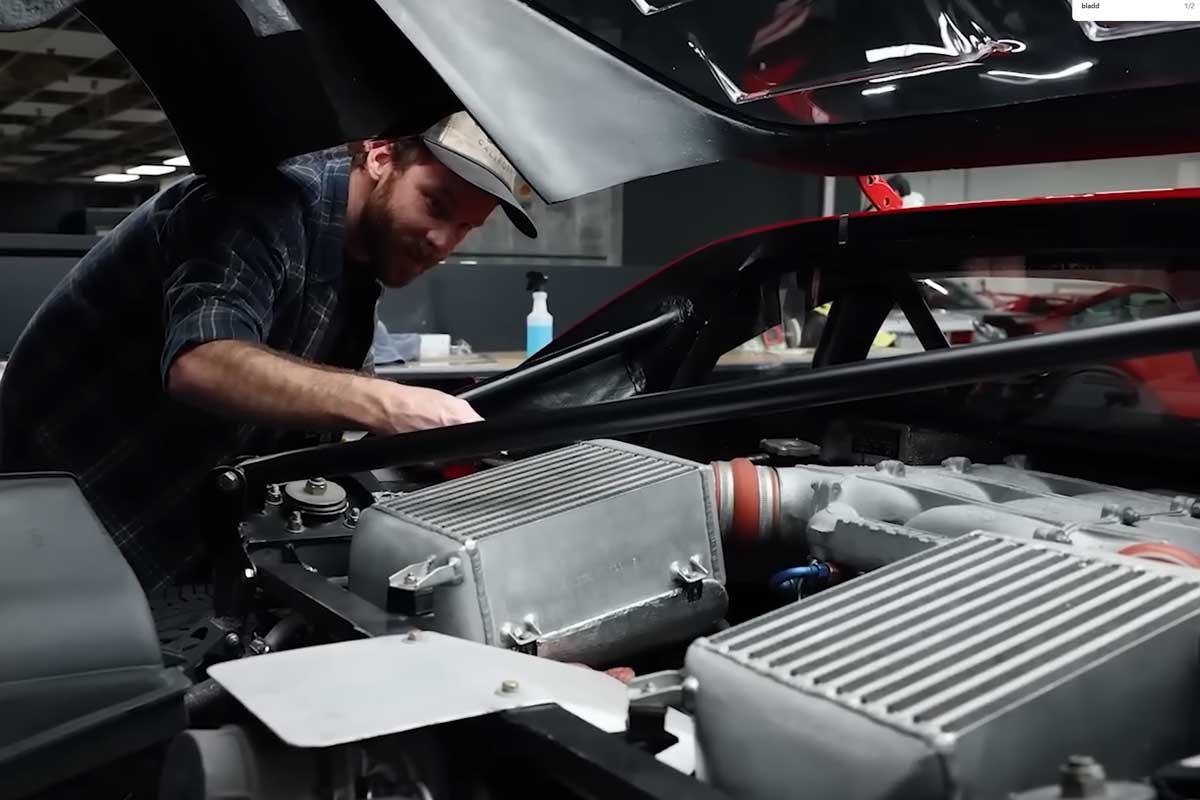
The heart of the project is an F140-type V12 (taken from a crashed 812 Superfast), advertised at 800 bhp from the factory. Burroughs touches on a very important point: after experimenting with a very vibrating engine on his other project (the 308 244K), he doesn't want to make the same mistake again. So he considers compromises: no rigid engine mounting, and silentblocs rather than ball-and-socket joints.
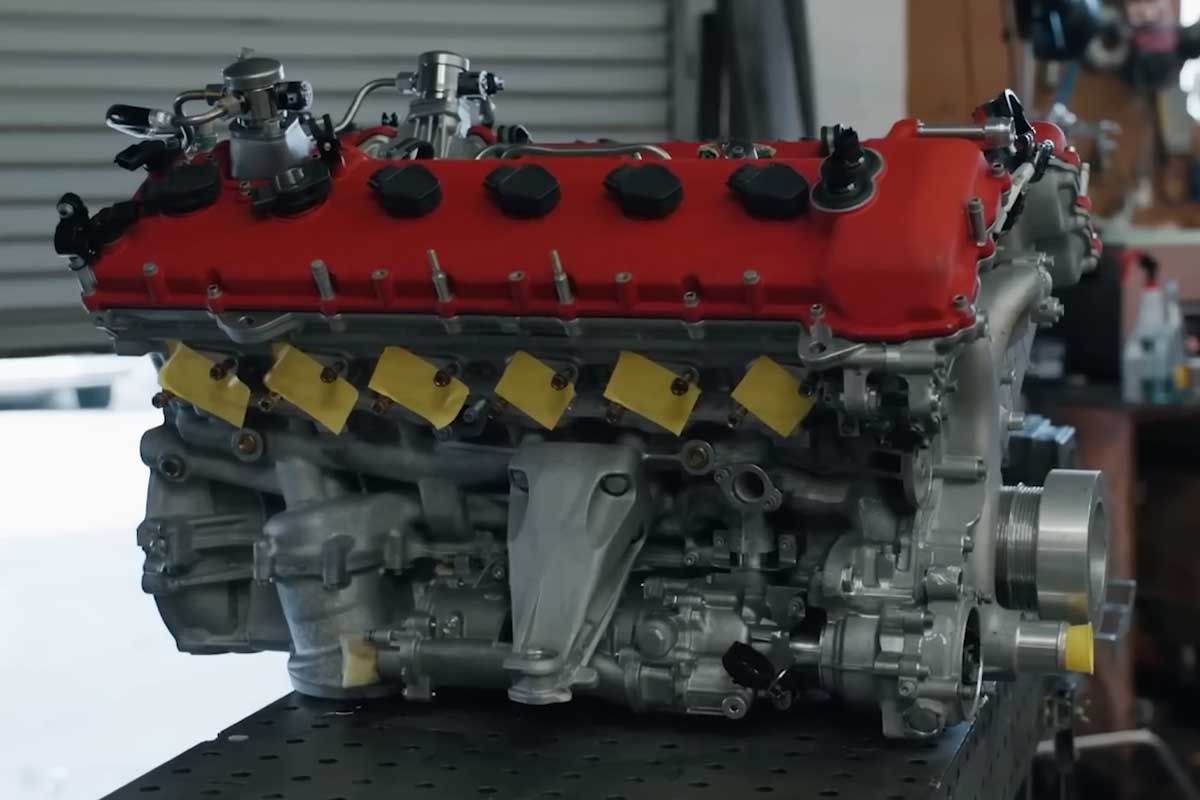
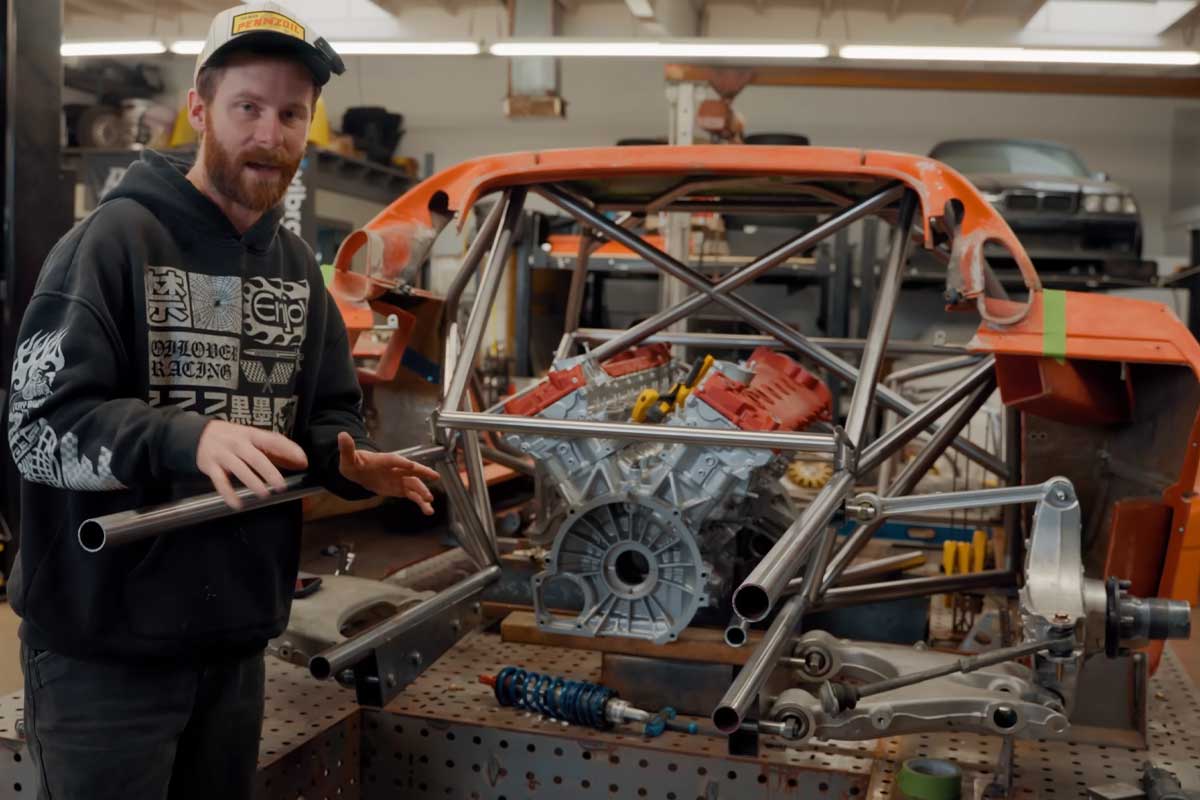
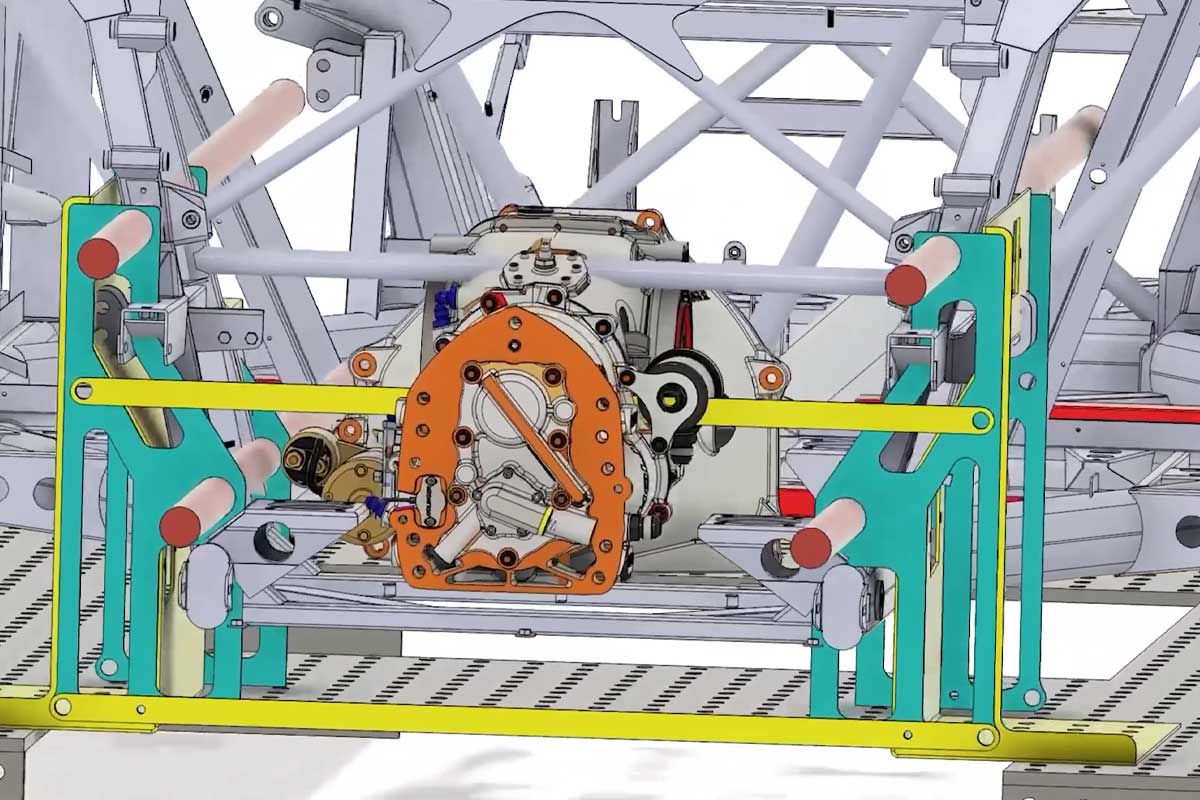
This is one of the most divisive passages: the transmission. Burroughs made a radical choice: a Holinger 6-speed sequential transaxle, with steering-wheel-mounted paddles and pneumatic assistance, but with a clutch pedal for starting and stopping.
The weight
He also debunks a myth: "internet" F40 weights of around 1,090 kg make little sense once the car is ready to run. According to him, a roadworthy F40 is more likely to be around 1,350 kg, depending on variants and configurations, and he's aiming for something comparable, if not better, thanks to a potentially lighter chassis. His dream would be under 1100 kg, but he says it himself: that's optimistic!
In the end, he builds an F40 "his way", with real body parts, an in-house structure, Ferrari components where it makes sense for maintenance and consistency. It's not a kit-car masquerading as a Ferrari. Stay tuned, because we want to see an F40-looking car with a Ferrari 812 Superfast engine!
 English
  French
  Italian
  Spanish
  Portuguese
  German
  Japanese
  Turkish
  Dutch
Dutch
It's the same thing with Subaru and Toyota on the GT86 and BRZ 2012, the two models are visually the same under a different brand.
No, it's nothing to do with Subaru/Toyota, as the two companies worked in concert. On the other hand, in this F40 story, the man may have forgotten that the bodywork is protected by one or more patents. And he's going to pay dearly for that.