

For months, it was just a project, a code name, a technological promise. Today, the first Ferrari The Ferrari Elettrica is finally entering a new, very concrete phase, with the unveiling of both the definitive name and the interior of its future zero-emission model. The Ferrari Elettrica changes its name. It will be called Luce. And not by chance.
From Elettrica to Luce
Long referred to internally as Ferrari Elettrica, the Prancing Horse's first electric vehicle will finally be called Ferrari Luce. A simple, almost poetic word. In Italian, "luce" means both light and electricity, a double meaning that the automaker fully embraces. Benedetto Vigna, Ferrari's Managing Director, sums up the intention in no uncertain terms: Luce is supposed to "illuminate the future of the brand". A strong message, as Ferrari tackles a terrain long considered incompatible with its DNA: that of the ultra-high-performance electric car. In technical terms, the philosophy has not changed. The Luce will remain a large four-door, four-seat GT, powered by a four-motor electric architecture developing up to 1,000 hp. But it's inside that Ferrari now wants to make its mark.
An interior designed to break with the past
To design the interior of the Luce, Ferrari did not work alone. The project was entrusted to Jony Ive and his LoveFrom studio, already behind some of the most iconic technological objects of the XXIᵉ century. The aim was not to make "just another futuristic interior", but to thoroughly rethink the relationship between driver and machine. Contrary to the current trend towards all things tactile, the Ferrari Luce asserts an almost counter-current choice: that of physical control.
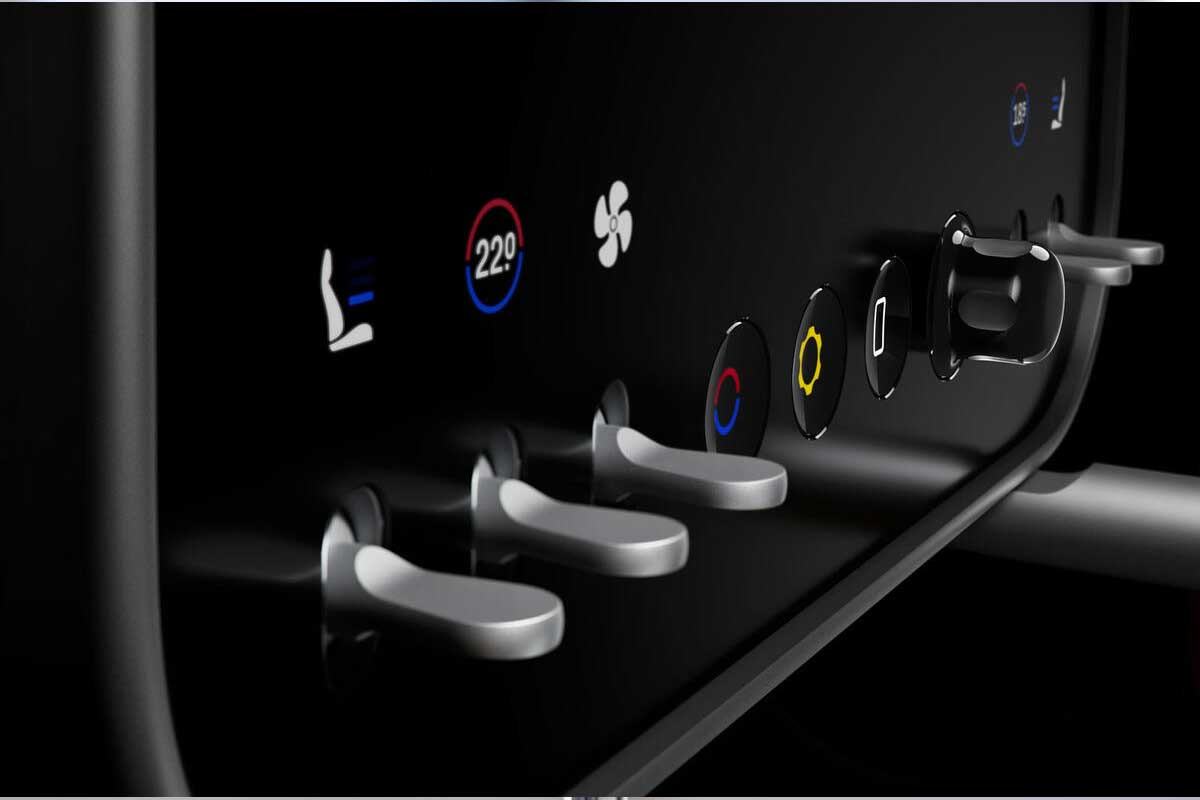
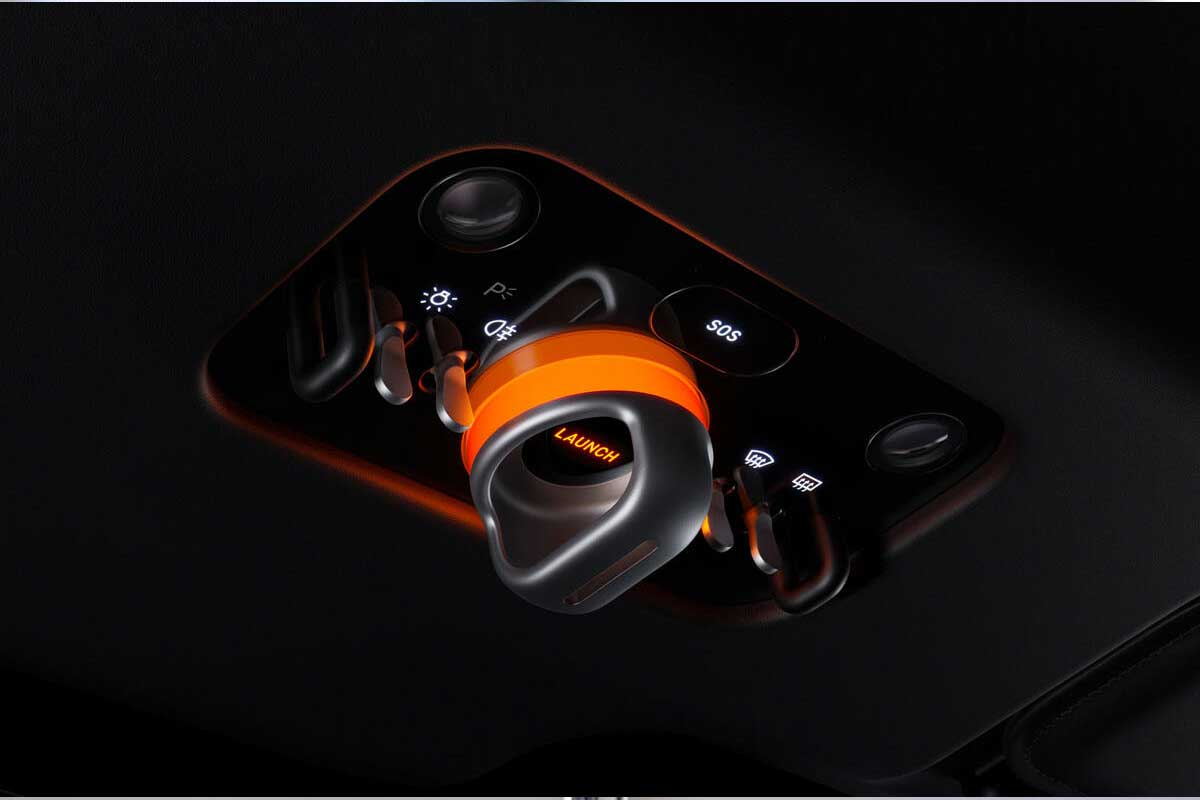
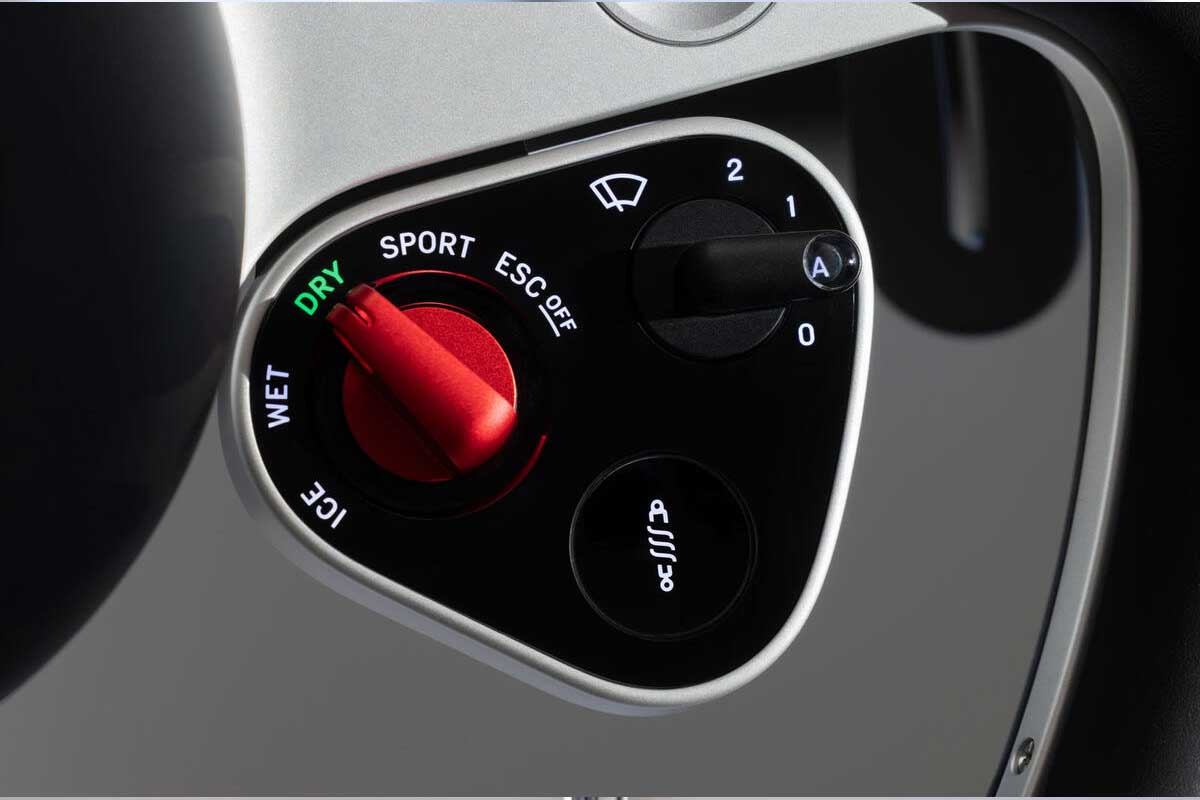
Buttons, knobs, toggles and mechanical paddles are omnipresent. For Jony Ive, the idea that electric cars require an entirely digital interface is "nonsense". A car, he reminds us, is meant to be driven, not manipulated like a smartphone.
When digital imitates analog
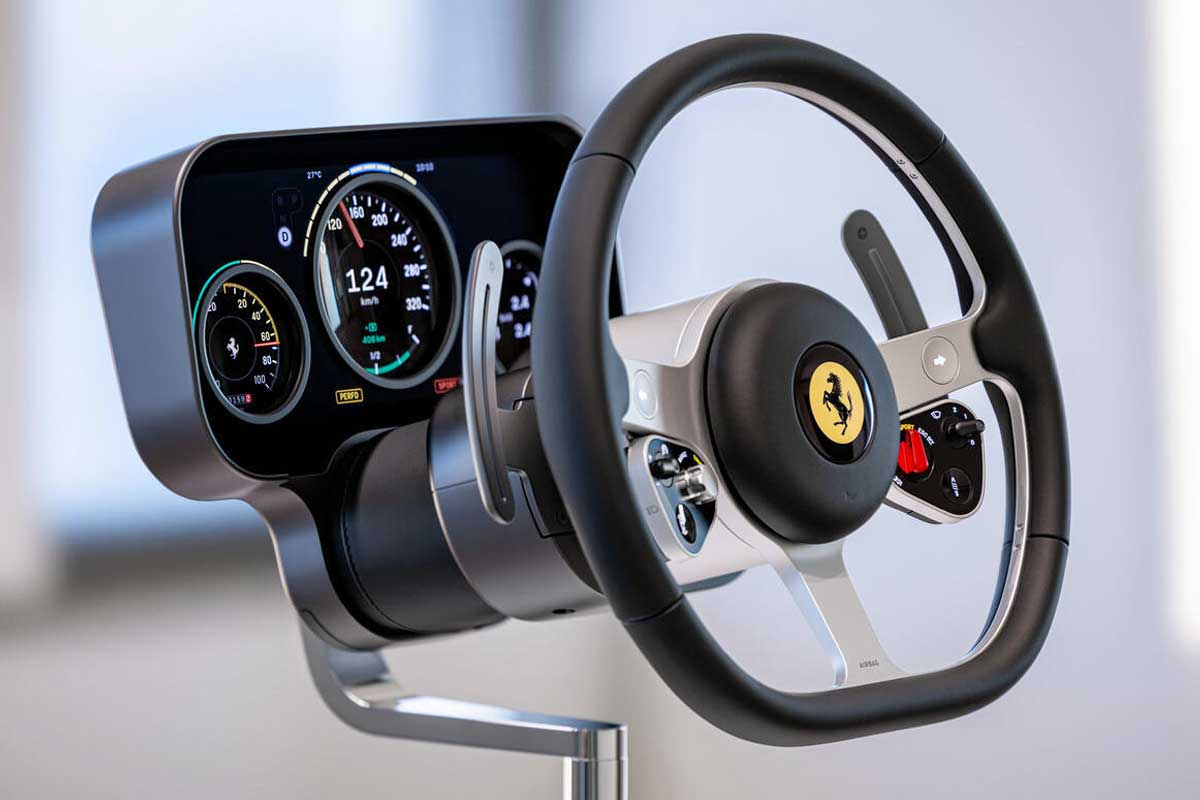
This philosophy is dramatically expressed in the instrument cluster. In front of the driver, three dials give the illusion of classic, almost clockwork instrumentation. In reality, they are based on an extremely complex architecture combining ultra-thin OLED screens, convex glass and even a real mechanical needle for the speedometer.
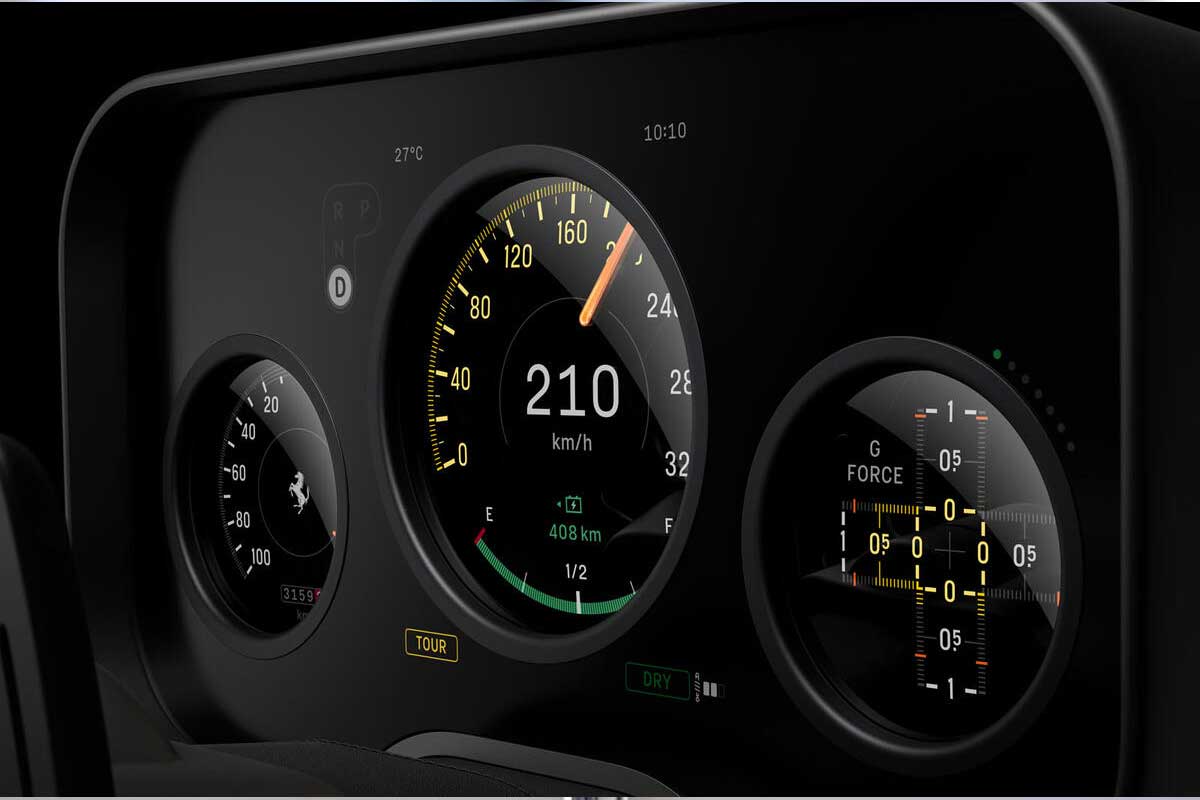
The visual depth is deliberate. Ferrari has stacked up the display layers to recreate a sense of relief, far removed from the flat, impersonal dashboards found on many electric cars. The result is disconcerting, but clearly assumed: digital technology is there to serve emotion, not replace it. The entire unit is attached to the steering column and moves with the wheel, guaranteeing perfect legibility whatever the driving position or speed.
The steering wheel that sums up the Luce philosophy
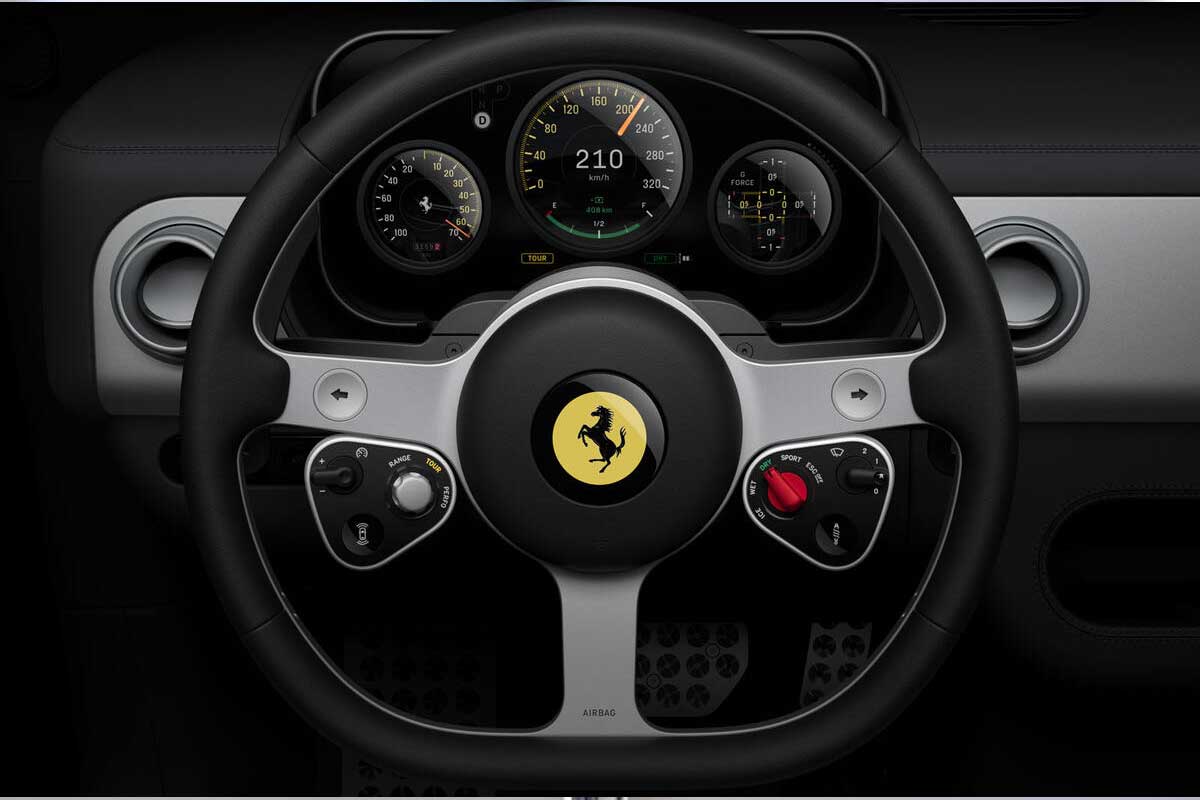
The Ferrari Luce's steering wheel is undoubtedly one of the most symbolic elements of the interior. A slender, almost minimalist three-spoke design, it is directly inspired by the old Nardi steering wheels that equipped some of the legendary Ferraris of the 1950s. A nod to history, but without excessive nostalgia. Entirely machined from a single block of aluminum, it incorporates two separate manettino: one dedicated to energy and range management, the other to dynamic chassis and handling adjustments. The paddles, meanwhile, are no longer used for shifting gears, but for manual control of torque and braking regeneration, with magnetic feedback designed to be as precise as it is satisfying.
iPhone-inspired central interface
At the center of the cockpit sits a mobile 10-inch touchscreen, mounted on an aluminum frame that doubles as a handle and palm rest. Visually, the connection with the iPad is obvious. But Ferrari insists that this screen is only one element among many. Essential functions such as climate control, quick settings or media all have dedicated physical controls. Each button has a specific texture and resistance, making them easy to recognize without taking your eyes off the road. The screen is reserved for deeper settings, navigation and secondary information.
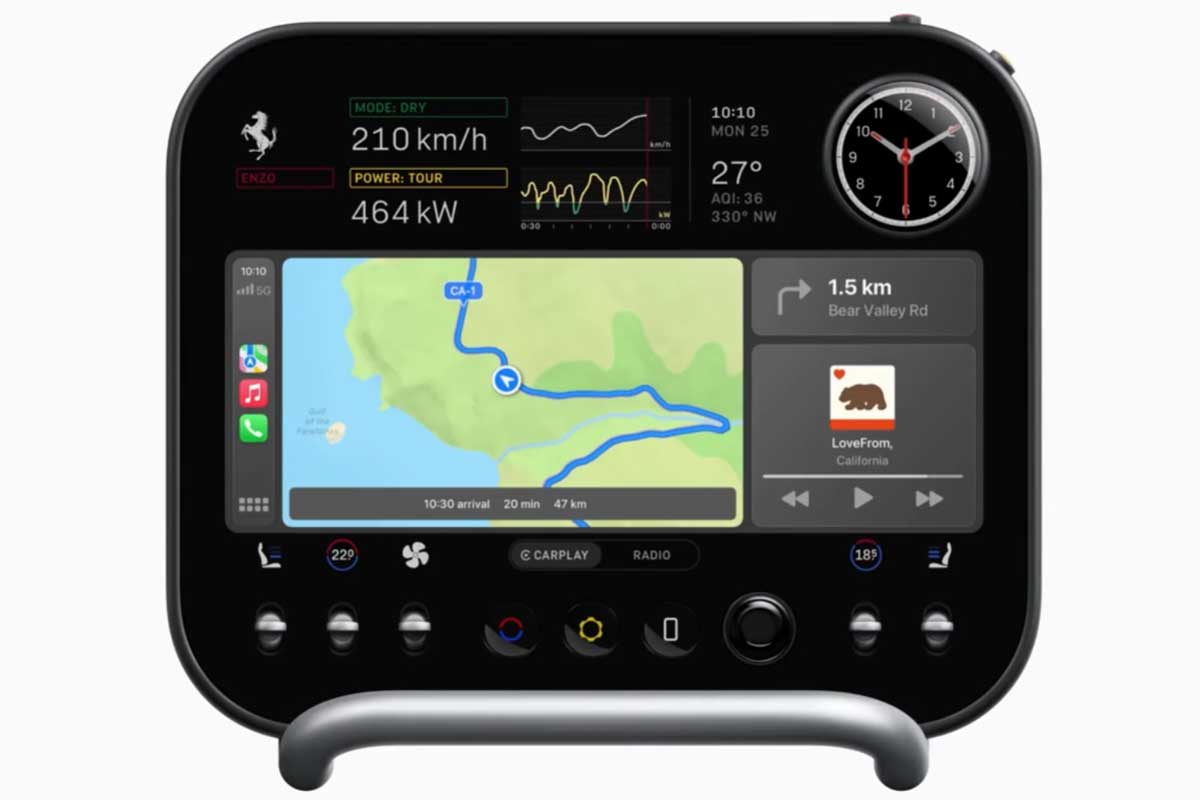
Even the traditional Ferrari chronometer is evolving. It becomes a hybrid instrument, capable of displaying a clock, compass or performance timer, with mechanical hands animated by a digital interface.
Staging the start-up
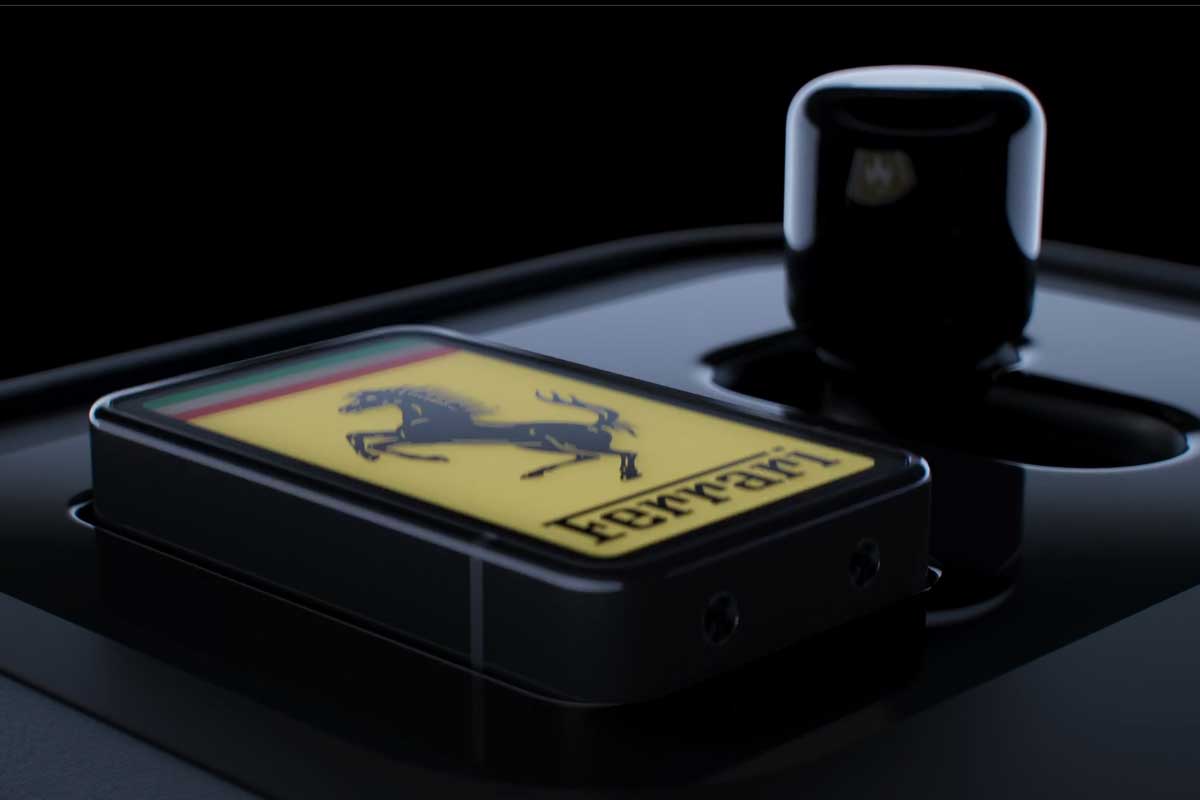
Ferrari also worked on the emotion of start-up, a key moment for a brand deprived of thermal sound. The Luce introduces what Maranello calls a veritable "key ceremony". The aluminum and glass key is inserted into a dedicated slot on the center console. Once engaged, the emblematic Ferrari yellow seems to diffuse visually through the interface, all the way to the driving selector.
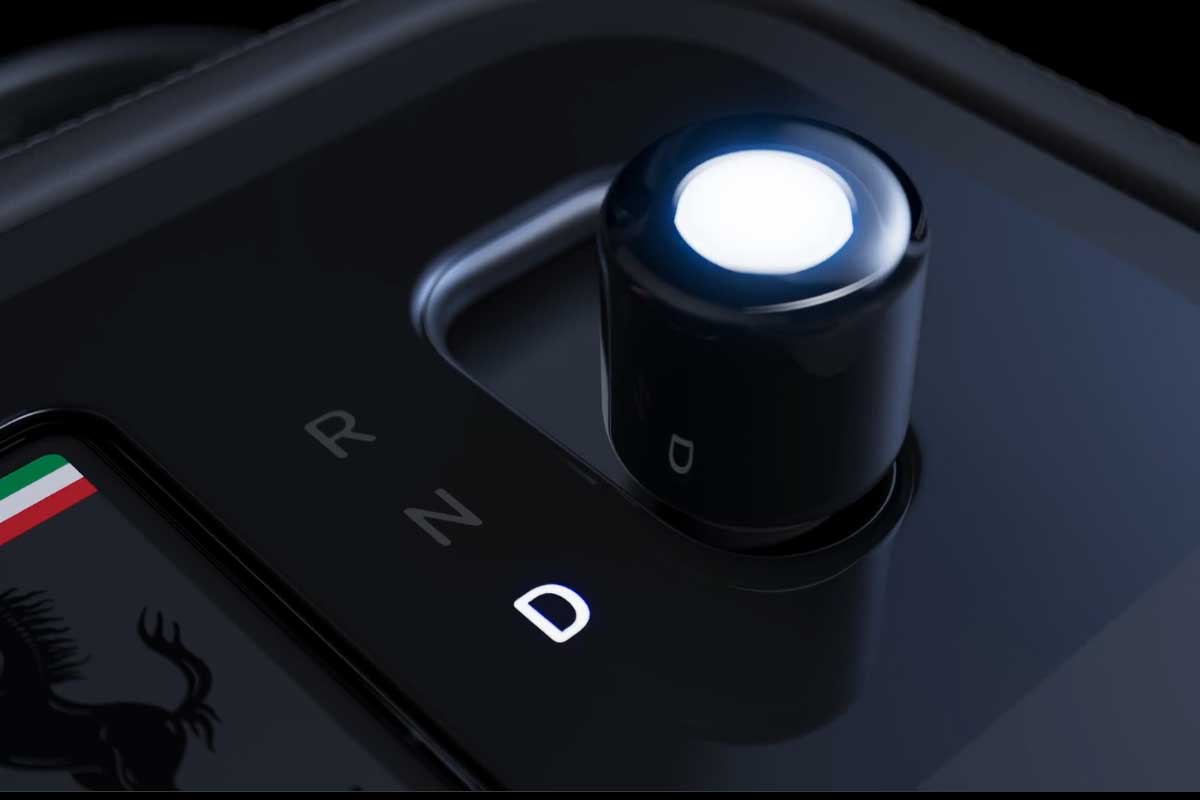
Even Launch mode takes a spectacular approach, with an aeronautically-inspired mechanical control located on the ceiling, and an interface that visually transforms when full power is released.
An electric Ferrari, but still a Ferrari?
With the Luce, Ferrari isn't trying to prove that it can make an electric car. It's about proving that it can make an electric Ferrari. The interior unveiled today is unlike any other on the market, and that's precisely what the brand wanted to demonstrate. As a reminder, the exterior silhouette and final version will be revealed in May.

 English
  French
  Italian
  Spanish
  Portuguese
  German
  Japanese
  Turkish
  Dutch
Dutch