

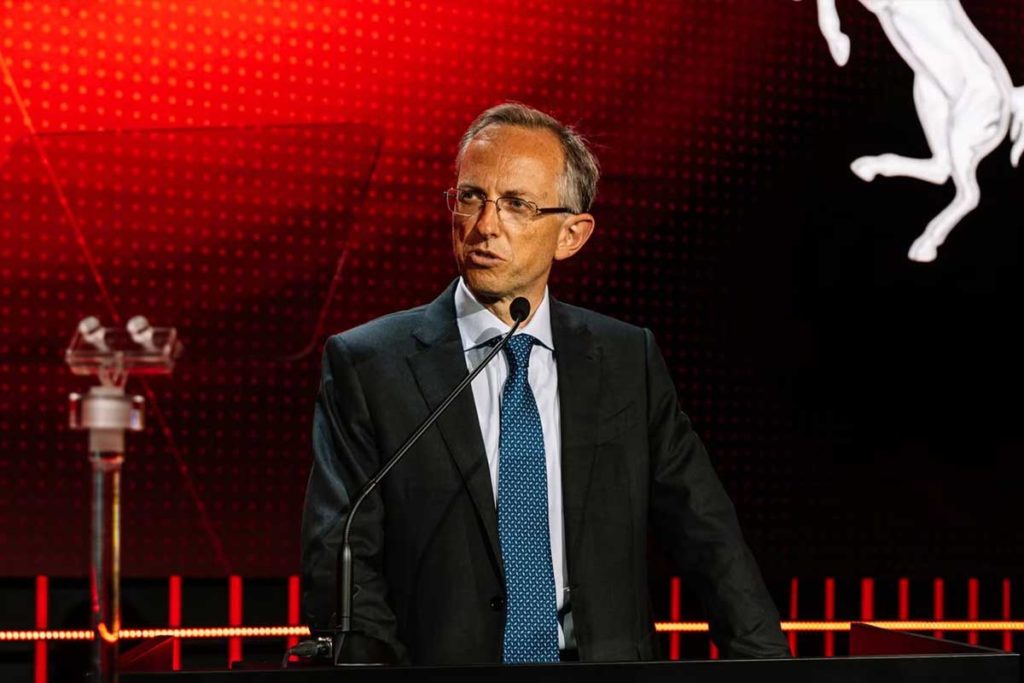
For several months now, Ferrari seems to be moving against the tide of the automotive industry. Where many automakers are still seeking to bolster their volumes, Maranello is now assuming a more controlled trajectory, sometimes perceived as a slowdown. Yet, to listen to Ferrari CEO Benedetto Vigna, the brand's growth has never been so clearly defined. And above all, it won't involve selling more cars.
In an interview with Global Finance, the Italian CEO revealed information that sheds new light on the Group's strategy: Ferrari is to open two new Tailor Made centers, in Tokyo and Los Angeles. A seemingly innocuous announcement, but one that in reality reveals a change of scale in the way Ferrari intends to generate value.
Growth no longer dependent on volumes
After a decade of record-breaking years, Ferrari seems to accept that it is no longer necessary to deliver more and more to continue growing. As we recently reported on deliveries of the new Ferrari F80The brand now prefers to manage its deliveries carefully, even if this means staggering the delivery of models with very high financial implications. This strategy is designed to smooth earnings in a more uncertain macroeconomic context. In this context, growth must come from elsewhere. As Benedetto Vigna explicitly states: over the next five years, sports cars will remain the main driver of sales, buoyed by a richer product mix and an increase in customization. In other words, Ferrari is not looking to sell more cars, but to sell Ferraris that are worth more.
Tailor Made, Ferrari's golden goose
The Tailor Made program is not a recent invention. It's part of a tradition that dates back to the 1950s, when each Ferrari was conceived almost as a unique piece, tailored to the tastes and requirements of its owner. Specific fabrics, rare leathers, woods, particular hues: from the outset, Maranello cultivated the idea that a Ferrari should reflect the personality of its customer. Today, this philosophy is taken to a whole new level. Thanks to the ongoing work of Ferrari's design teams, the choice of materials, finishes and combinations has become virtually limitless. The customer is placed at the heart of the creative process, accompanied by a Personal Designer responsible for interpreting his or her wishes while respecting the brand's DNA and prestige. Every project is visualized in real time, and every material can be touched, compared and selected.
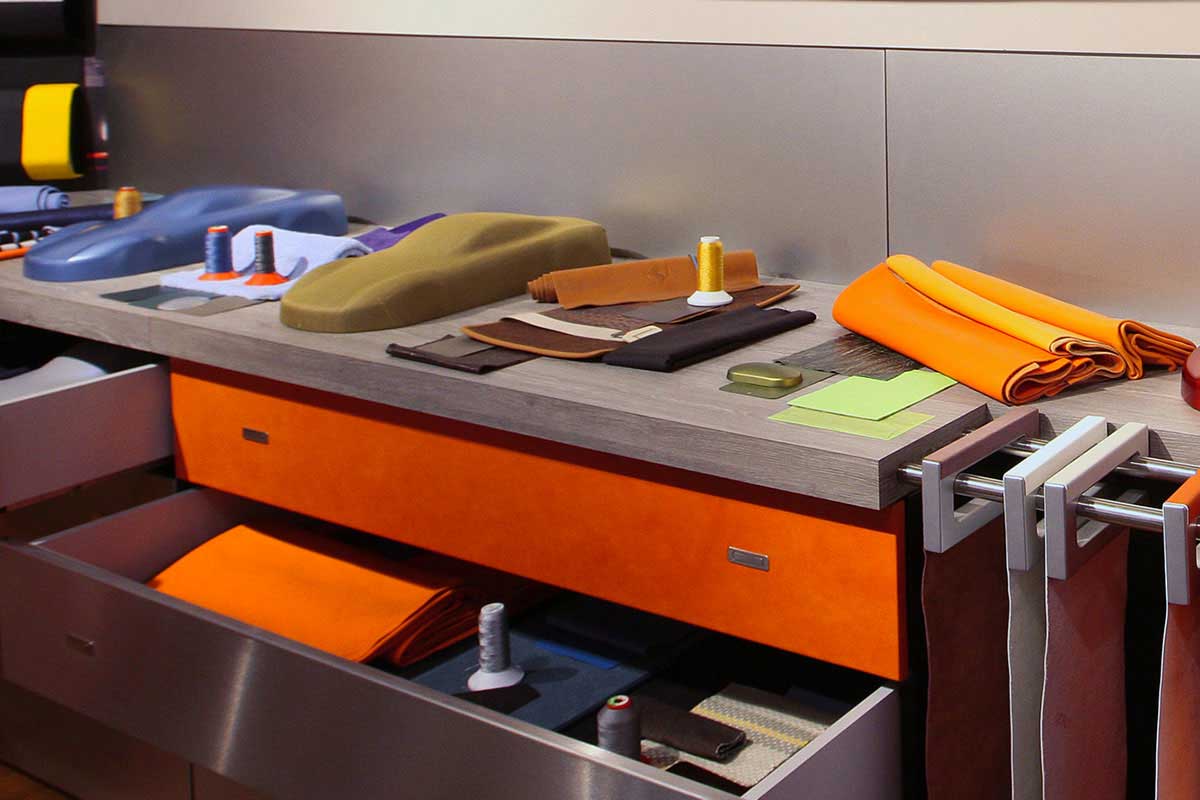
Ferrari offers three major collections as a starting point: Scuderia, Classica and Inedita, inspired respectively by competition, heritage and innovation. But these frameworks are only a foundation. The aim is to create truly unique cars that will gain in prestige and value over time. There are currently three Tailor Made centers: Maranello, New York and Shanghai.
A second Tailor Made Center in the United States: Los Angeles
Against this backdrop, the opening of a Tailor Made center in Los Angeles seems an obvious choice. The United States is not only Ferrari's biggest market, but also one where customization is culturally highly valued. In California, the automobile is as much an object of expression as an industrial product, and each bespoke Ferrari becomes a strong signal, amplified by the local media and cultural ecosystem. By bringing the Tailor Made experience closer to its wealthiest American customers, Ferrari doesn't just make it easy to configure cars. The brand transforms each project into an implicit communication tool, capable of reaching far beyond the final customer.
A second Tailor Made Center in Asia: Tokyo
The choice of Tokyo is equally revealing. Japan is now Ferrari's third-best market and is still forecasting growth of around 5 % in 2025, despite a tighter global environment. By way of comparison, Germany, the brand's second-largest historical market, shrank by almost 7.5 % over the same period. By investing in Tokyo, Ferrari is consolidating a dynamic market while maximizing the value generated by each vehicle sold.
The move to Tokyo also highlights a shift in Ferrari's center of gravity in Asia. Shanghai does have a Tailor Made center, but the Chinese market now only accounts for around 7 % of the automaker's sales, which are declining year after year. Where China was once seen as an essential growth driver, Ferrari now seems to be concentrating its efforts on Japan.
Is ultra-customization the answer to the apparent slowdown?
While 2025 may not be a record year for deliveries (to be confirmed in the coming weeks), Benedetto Vigna is designing a Ferrari that is more disciplined, but no less ambitious. A brand that accepts to slow down its volumes if necessary, while reinforcing the value of each car produced. Ultra-customization thus becomes an almost ideal lever: it increases margins, reinforces desirability and the residual value of each car, and requires neither an explosion in volumes nor risky industrial gambling. Ferrari is no longer looking to break delivery records every year. It seeks to make each Ferrari sold count for more than the last.
 English
  French
  Italian
  Spanish
  Portuguese
  German
  Japanese
  Turkish
  Dutch
Dutch