

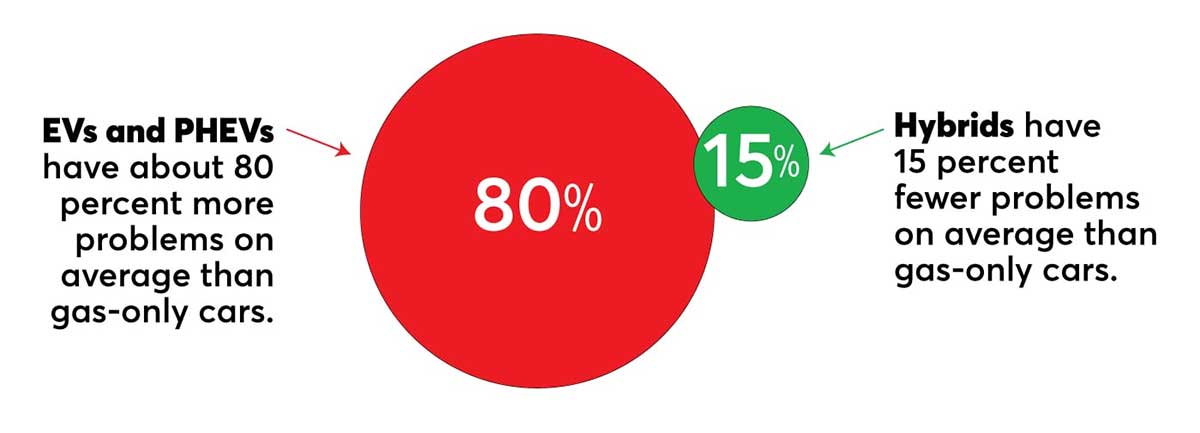
The timing is interesting. While Stellantis has just taken the decision to end the production and marketing of numerous plug-in hybrid models in North America, a recently published benchmark study sheds light on the actual reliability of the various electrification technologies. And the figures are clear: according to Consumer Reports, electric cars and plug-in hybrids have an average of 80 % more problems than conventional combustion-powered models. A finding that resonates with recent news from the Stellantis Group, but is not limited to its own case. The study concerns all automakers.
A large-scale study that's shaking things up
Consumer Reports' annual survey is based on feedback from almost 380,000 owners, covering model years 2000 to 2025, with even some preliminary data on 2026 models. The analysis focuses mainly on the last three years of production, the period deemed most representative of the current offering. First major finding: non-plug-in hybrids (HEVs) are the most reliable vehicles on the market today, with around 15 % fewer problems than combustion-powered cars. Conversely, electric vehicles and plug-in hybrids are characterized by much higher failure rates.
According to Consumer Reports, this difference is primarily due to technological maturity. The more recent the architecture, the more complex it is, and the more it breaks with existing technology, the greater the risk of failure. High-capacity batteries, recharging systems, sophisticated thermal management, increased dependence on software: the potential sources of malfunction are multiplying.
Is plug-in hybrid technology too complex?
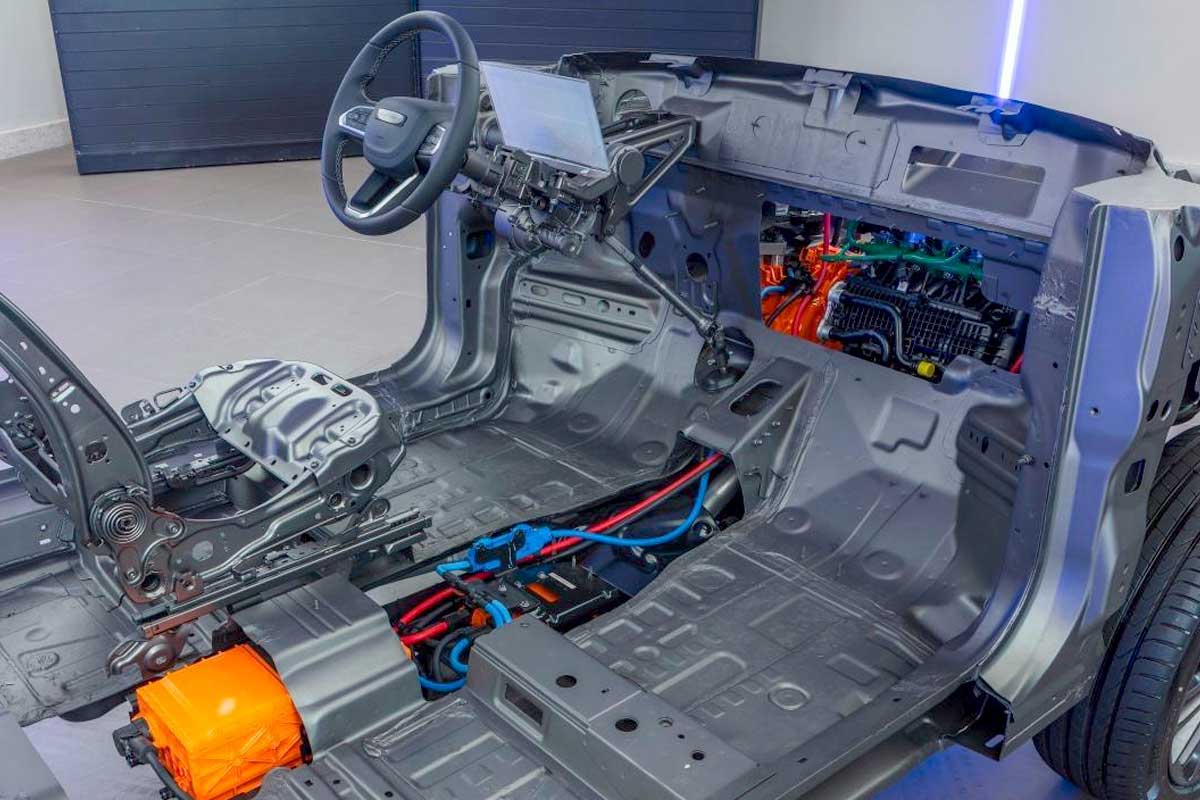
On paper, plug-in hybrids appear to be an ideal compromise. In fact, the study highlights that it is one of the most complex technologies to design and make reliable. Unlike conventional hybrids, PHEVs have to cope with an extremely wide range of uses: driving in 100 % electric mode, external recharging, heating and air conditioning without a combustion engine, while retaining a complete powertrain.
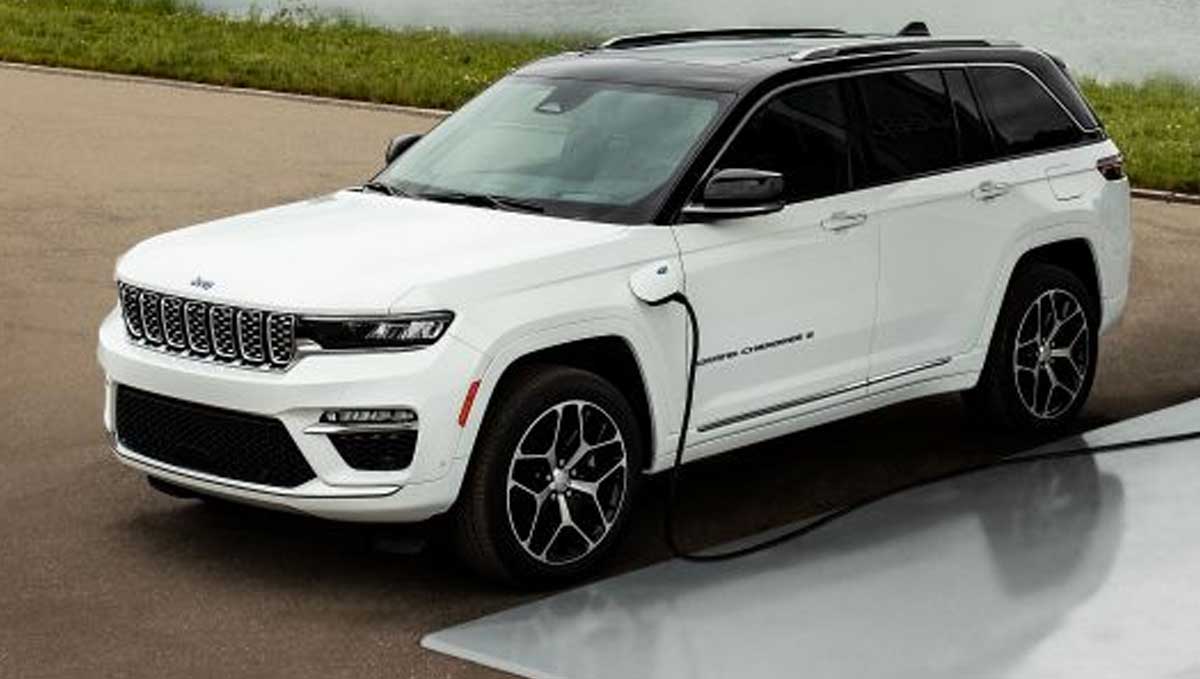
This complexity translates into high failure rates on several well-identified models. Among the least reliable plug-in hybrids are the Jeep Wrangler 4xe, Jeep Grand Cherokee 4xe and Chrysler Pacifica PHEV. Three emblematic Stellantis models, all of which will cease production and marketing in North America from 2026 onwards.
But Stellantis is far from an isolated case. The study also points the finger at the Ford Escape PHEV, the Mazda CX-90 PHEV and the Volvo XC60 PHEV. At Mazda, renowned for its historic reliability, the introduction of entirely new platforms on the CX-90 and CX-70, including the PHEV versions, has led to a significant drop in reliability scores. Consumer Reports insists that major technical changes, even at experienced manufacturers, often generate problems comparable to those of emerging brands.
Electric vehicles: wide variations
The picture is similar for electric cars. While, on average, they have more problems than combustion-powered models, not all are created equal. Consumer Reports highlights clear differences between manufacturers. Tesla emerges as the manufacturer that has made the most progress in recent years. With the exception of the Cybertruck, an entirely new and radical model, the brand's other vehicles boast average to above-average reliability. The Model Y is even named as the most reliable new electric vehicle according to the study.
In contrast, several electric models from Hyundai, Kia and Genesis suffer from recurring problems. Premium brands have not been spared, but some have fared better. BMW, the fifth most reliable brand in the overall ranking, posted solid scores for its i4, i5 and iX electric models. Lexus, the third most reliable brand across all powertrains, even places its RZ among the best performers in the electric segment.
Why HEV hybrids remain the big winners
While non-plug-in hybrids dominate the reliability rankings, Consumer Reports urges caution in their interpretation. Their success is largely due to the experience accumulated by certain automakers over almost thirty years. Toyota, Lexus and Honda, for example, have developed their hybrid systems in small, gradual steps.
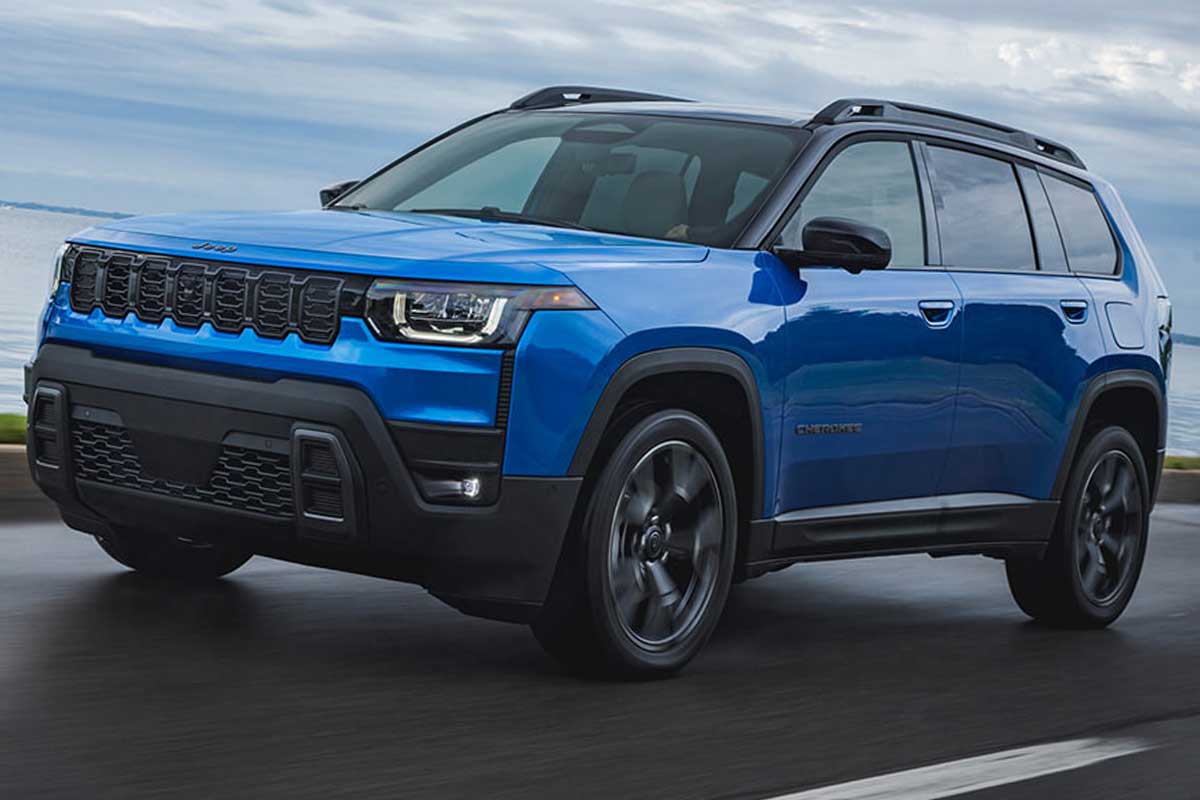
In contrast, many recent PHEVs and electric vehicles are based on entirely new platforms, often developed under time pressure to meet environmental regulations. This difference in industrial philosophy largely explains the discrepancies observed today.
Stellantis bets on HEV?
Stellantis' decision to abandon its plug-in hybrids in North America seems less ideological than pragmatic. Between massive recalls, industrial complexity and perfectible reliability, the group seems to be learning the lessons of a technology that is still immature on a large scale. The Consumer Reports study does not condemn either electric vehicles or plug-in hybrids. It highlights a more nuanced reality: not all forms of electrification are equal when it comes to technological maturity. By focusing more on non-plug-in hybrids and range-extending electric vehicles, Stellantis is joining a broader trend observed among several automakers. It remains to be seen whether this approach can be transposed to Europe, where constraints on CO₂ emissions remain far more stringent. One thing is certain: behind the marketing rhetoric, reliability is once again becoming a central criterion.
 English
  French
  Italian
  Spanish
  Portuguese
  German
  Japanese
  Turkish
  Dutch
Dutch
It's funny, that's exactly what I said yesterday in the article about Stellantis abandoning the PHEV... It combines the disadvantages of the internal combustion engine and the electric without having their respective advantages.
A gas factory to operate. More complex than a simple HEV. Much heavier batteries. Thermal mechanics are generally undersized and therefore more exposed to mechanical hazards. Consumption worthy of an empty-battery Hummer. In fact, it was just a way of artificially lowering Co2 averages to meet standards, without investing too much in HEV development.
Interesting study, but it doesn't make it clear that Toyota and Honda PHEVs, which are closely derived from HEVs, don't cause any problems. So it's not the PHEV that's the problem, but the manufacturer that produces it. So as usual, Stellantis is up to no good🙁
after all, the study doesn't point the finger at Stellantis, but rather at manufacturers with more or less experience of a given technology. In fact, I think that Toyota, having a lot of experience with HEVs, has a high probability of making more reliable PHEVs. As for Stellantis' models, they're mainly those dating back to the FCA era...
電動車においてトヨタとトヨタ以外との間には10年以上の技術格差がある。単にそれだけの話でしかない。
can you share a link to the survey please.
Yes https://www.consumerreports.org/cars/car-reliability-owner-satisfaction/electric-vehicles-are-less-reliable-than-conventional-cars-a1047214174/
The conclusion is simple: we need to buy combustion engine cars and store them for the future, so that we can drive without problems for many, many years to come. No thanks to PHEVs and electric cars.
I read an article somewhere indicating that a good proportion of plug-in hybrid car owners don't recharge them half the time. So for CO2 reduction it's pointless.
Met ruim 65.000 km op de teller is rijden in een Peugeot 308 SW 180 pk hybrid een genot. Maar .... ik hem tijdens vakantie in Frankrijk wel te maken gekregen met een rare en zeer ongemakkelijke storing in mijn routeplanner. Dankzij Peugeot-dealer Nefkens in Tilburg heel snel en binnen de garantie opgelost (terwijl andere dealers niet wisten hoe dit op te lossen). Door dagelijks laden is het verbruik 1:23 km! Met gemiddeld een bereik van 35 km (winter) tot 55 km (zomer) rij je binnen de stadsgrenzen dus altijd emissieloos. En....heerlijk geluidsarm electrisch rijden ook nog eens. Iedereen blij.
Im Detail steckt dahinter keine " Studie ", sondern eine Umfrage. Weiterhin wird nicht definiert was ein " Problem " darstellt. Es gibt aber tatsächlich Untersuchungen, die mit zuverlässigeren Daten prüfen, welche Antriebsform wie zuverlässig ist. Ich kann jeden nur ermutigen mal selbst nach solchen Untersuchungen zu suchen, denn das Ergebnis ist ein völlig Anderes.