

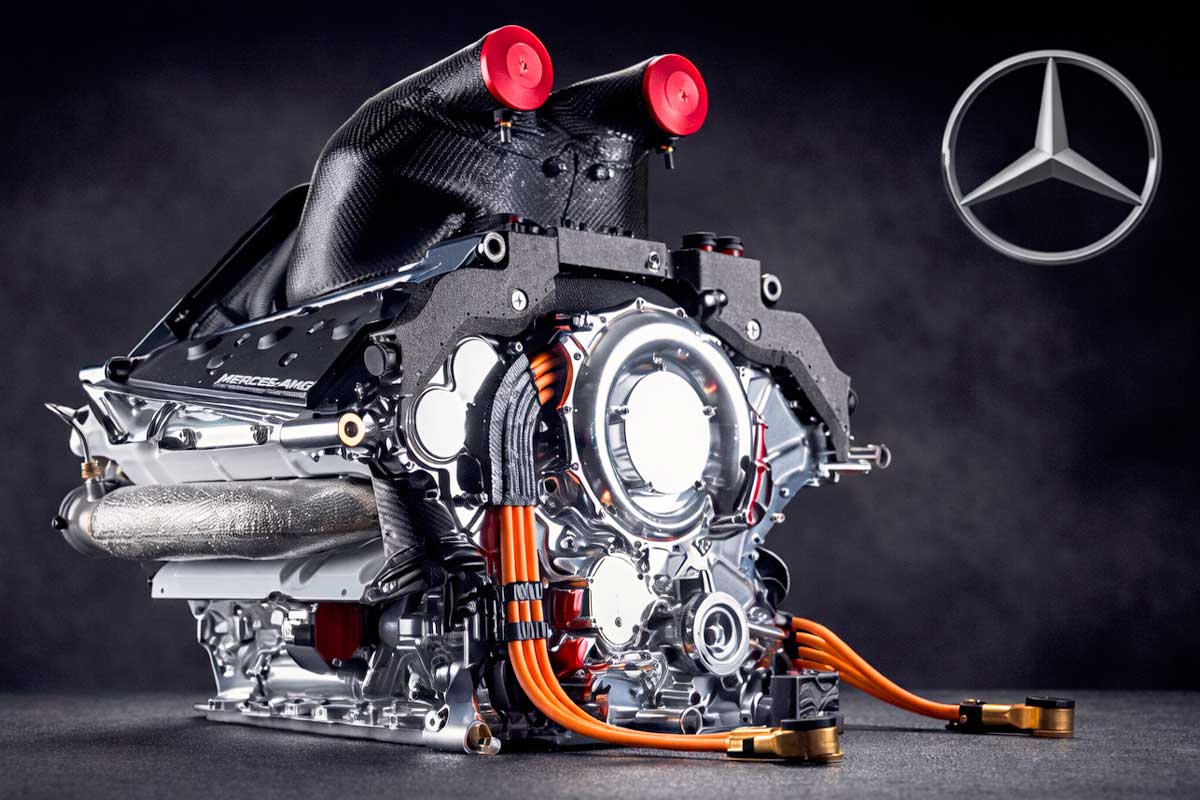
With only a few weeks to go before the start of the 2026 season of Formula 1the paddock is already under high tension. Not because of an on-track duel or a spectacular aerodynamic revelation (despite the images from the Barcelona tests), but around a much more sensitive subject: the legality of the Mercedes engine in the new technical era that will open in Melbourne. A twist could threaten the balance of the championship even before the first green light is given.
The heart of the matter
At the heart of the controversy is the new 2026 engine regulation, which lowers the maximum compression ratio of hybrid V6s to 16:1. On paper, the rule is clear. In practice, it is much less so. Up to now, testing has been based on measurements taken at room temperature, with the engine cold. However, according to Ferrari, Audi and Honda, this method leaves a sufficiently large grey zone to allow an advantageous interpretation once the engine is in real-life conditions, i.e. hot.
The suspicion for the Mercedes engine is as follows: a perfectly compliant engine during static checks could, once up to temperature, display a compression ratio higher than the authorized ceiling. In the paddock, some people are talking about a potential gain of two to four tenths per lap, or even an extra 15 or so horsepower. These are far from insignificant figures on the eve of a regulatory change designed to put all teams on an equal footing.
Mercedes defends itself and denounces a political battle
Mercedes, for its part, has always rejected all accusations. Toto Wolff has repeatedly stressed that the engine developed at Brixworth respects the text, the control procedures and the spirit of the regulations. As far as the German manufacturer is concerned, the problem is not technical but political, with certain rivals seeking to shift the debate because they have not found an equally effective solution. A firm line of defense, but one that did little to allay concerns.
Red Bull's about-face
The case has taken a new twist with Red Bull's change of position. Initially suspected of exploring a similar interpretation, the Austrian team not only denied any involvement, but also chose to officially join the front led by Ferrari, Audi and Honda. By signing the protest letter sent to the FIARed Bull has turned the balance of power on its head.
This turnaround is far from symbolic. Unanimity is not required to modify testing procedures during the season. A qualified majority is sufficient: the FIA, Formula 1 and four out of five engine manufacturers. With Red Bull now in the dissenting camp, Mercedes risks finding itself alone against the rest of the field. A situation which makes the adoption of a new testing protocol highly probable.
New controls for the Australian Grand Prix?
The solution envisaged by the FIA would be to measure the compression ratio using static, hot-worn components, in order to get closer to actual track conditions. This change would enable the question of legality to be settled quickly and clearly, leaving no room for interpretation. According to reports, the new method could be introduced as early as the Australian Grand Prix, making any official protest at the opening race pointless.
Behind this desire for appeasement, however, lies a major dilemma. Changing the testing criteria in the run-up to final engine homologation, scheduled for March 1, exposes the FIA and FOM to considerable legal risk. Mercedes could denounce a change in the rules midstream, with serious sporting, economic and commercial consequences. Conversely, maintaining the status quo would mean launching the season under a cloud of suspicion, with the prospect of cascading appeals from the very first races. With just one month to go before the start of the 2026 championship, the FIA is faced with a delicate choice: decide quickly to preserve the credibility of the show, or wait and see whether the new technical era will open with controversy.
 English
  French
  Italian
  Spanish
  Portuguese
  German
  Japanese
  Turkish
  Dutch
Dutch