

The 2025 season has barely come to an end when the Formula 1 is already caught up in the storm. With just a few months to go before the 2026 engine regulations are due to come into force, a decision by the FIA could well have the opposite effect. By validating a key interpretation exploited by Mercedes, and taken up by Red Bull Powertrains, the Federation de facto acknowledges a potential technical advantage... even before the first turn of the wheel. For Ferrari, Audi and Honda, the reality is stark: the battle for 2026 may already have been lost on paper.
A grey zone becomes an official line
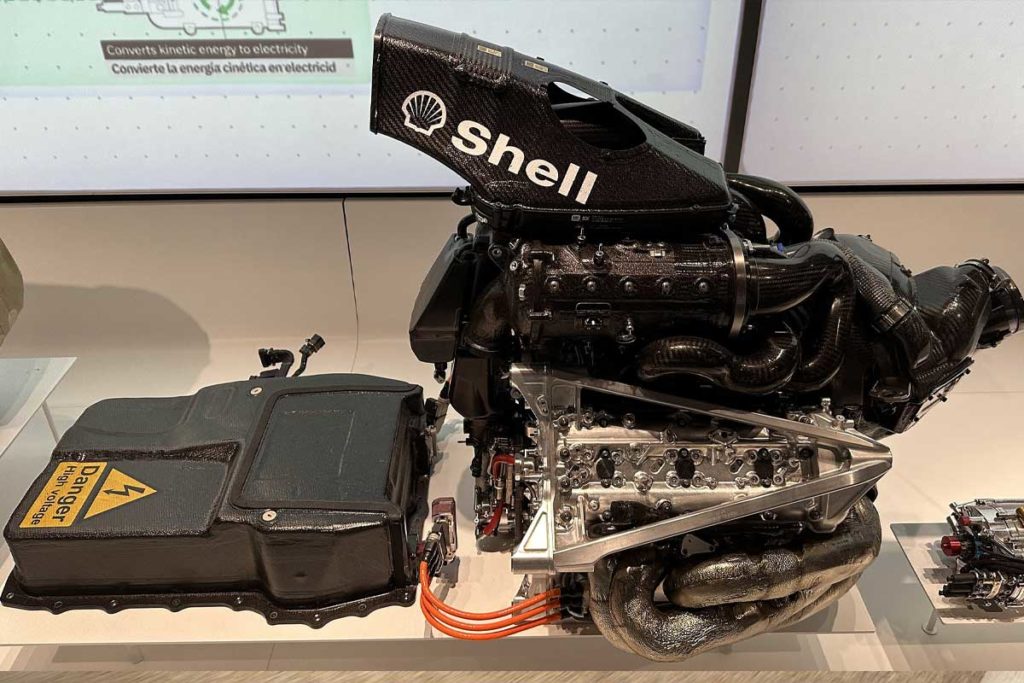
It all started with a detail in the new 2026 power unit regulations. To limit costs and control performance, the FIA has lowered the maximum compression ratio for internal combustion engines from 18:1 to 16:1. A major constraint, as this parameter is so decisive for efficiency and power. The fundamental problem is that this compression ratio is measured during static tests, with the engine cold and at ambient temperature. Mercedes has developed a technical solution that exploits the thermal expansion of internal components. When cold, the engine scrupulously respects the 16:1 limit. But in real operating conditions, at high temperatures, the internal geometry changes, reducing the volume of the combustion chamber and mechanically increasing the actual compression ratio. Until now, the question was simple: legal or not? The FIA's answer is clear and unambiguous.
According to several corroborating sources, including Motorsport.com, the Federation has given the green light: as long as the compression ratio complies with the static tests, the engine is considered legal, regardless of its behavior under heat. This logic is strangely reminiscent of that used for flexible wings, which were long authorized because they passed the tests, despite obvious deformations on the track.
A potentially significant advantage
From a purely technical point of view, the potential gain is far from anecdotal. Estimates from the paddock suggest an extra 10 kW, or almost 13 horsepower. In a regulation designed to freeze performance and limit development possibilities, such a differential is colossal. On current simulations of the 2026 single-seaters, this advantage could represent between three and four tenths per lap, depending on the circuit. Enough to freeze a hierarchy from the outset and force competitors to chase a structural deficit.
Ferrari, Audi and Honda hit a wall
This was precisely the scenario Ferrari, Audi and Honda were trying to avoid. By addressing a joint letter to the FIAThe three engine manufacturers were hoping to obtain regulatory clarification before it was too late. They got it... but not in the way they'd hoped. The problem is not only technical, but also temporal. The 2026 engines are already in an advanced validation phase. Rethinking a combustion chamber, modifying materials or revising the internal architecture involves months of development, complete cycles of reliability testing and considerable costs. In the best-case scenario, a technical evolution would not arrive before 2027. Each major modification means we have to start from scratch on the duration tests, to the detriment of other areas of development.
Two camps, two philosophies
Behind this controversy, the fault lines are clearly visible. On one side, Ferrari, Audi and Honda. On the other, Mercedes and Red Bull Powertrains. None of this is really surprising. To recall Audi recruits Wolf Zimmermannformer head of Ferrari's new power unit, which explains a common reading of the regulations and similar technical choices. Honda, for its part, would have deliberately chosen not to exploit this grey area, in keeping with a more conservative approach to the regulatory framework.
On the other hand, Mercedes is playing a score it knows by heart. The German engine-maker had already crushed the competition at the start of the hybrid era in 2014, thanks to a decisive conceptual advance. Being avant-garde is part of its DNA. As for Red Bull Powertrains, the team benefited greatly from the recruitment of engineers from Mercedes, which explains how this interpretation of the regulations could have been circulated at a very early stage, and above all leaked publicly. As a result, Red Bull would have been working simultaneously on two engine architectures, one taking full advantage of this aggressive interpretation of the regulations, the other more conservative.
2026, a championship already underway... and already under tension
With just a few months to go before the big technical upheaval, one thing is now clear: the 2026 version of Formula 1 will not be a smooth transition. The duel will not only be played out on the track, but also in the offices, the interpretations of texts and the margins of the regulations. Is Ferrari already being penalized even before the first Grand Prix? The question is worth asking. For if the Mercedes engine trick is indeed legal, it could well determine the hierarchy right from the start... and force the others to race after a race that has already begun.
 English
  French
  Italian
  Spanish
  Portuguese
  German
  Japanese
  Turkish
  Dutch
Dutch
Ferrari is always a metro behind in F1, when they've finished developing a technical advance, the others are always one step ahead!
La zona grigia in Ferrari non funziona da anni.......si dorme!!!!
Fia. Corrotta con le bustarelle e ora di finirla direi 6squadre di ritiro campionato f12026 e portala la fia in tribunale. Sono uguali ai politici sono delle merde
Toller und informativer Beitrag!! Verständlich und auf den Punkt gebracht 👍 !!!
Alpine will also benefit 😮
Mittlerweile habe ich gar keinen Bock mehr auf die Formel1 Regeln machen alles kaputt. Als Fan willst du Racing sehen wie in alten Zeiten.
Senna, Prost, Schumacher, Hill Häkinnen. Heute diese Fahrer alles nur noch Mimösien. Nur noch jammern am Funk wie kleine Kinder diese Millionäre.Rennstecken wo du nicht mehr überholen kannst dieses blöde hinterher fahren. Wer vorne steht gewinnt.
Der Grund für diese Ungleichheit liegt meines Erachtens darin, dass die Personen, die die Regeln aufstellen, offensichtlich keine kreativen Ingenieure sind, sondern eher nur Verhinderer.
Was sie zählen oder messen können, können sie verbieten. Das es noch viele andere Möglichkeiten gibt, erkennen sie nicht.
Nur normal schlecht übersetzt oder von KI geschrieben. Sprachlicher Stuss!
Hallo, das ist kein Geheimnis, auf der Startseite wird darauf hingewiesen, dass die Inhalte aus dem Französischen übersetzt werden, um sie für alle zugänglich zu machen. Bitte entschuldigen Sie die Unvollkommenheiten. Einen schönen Tag noch.