

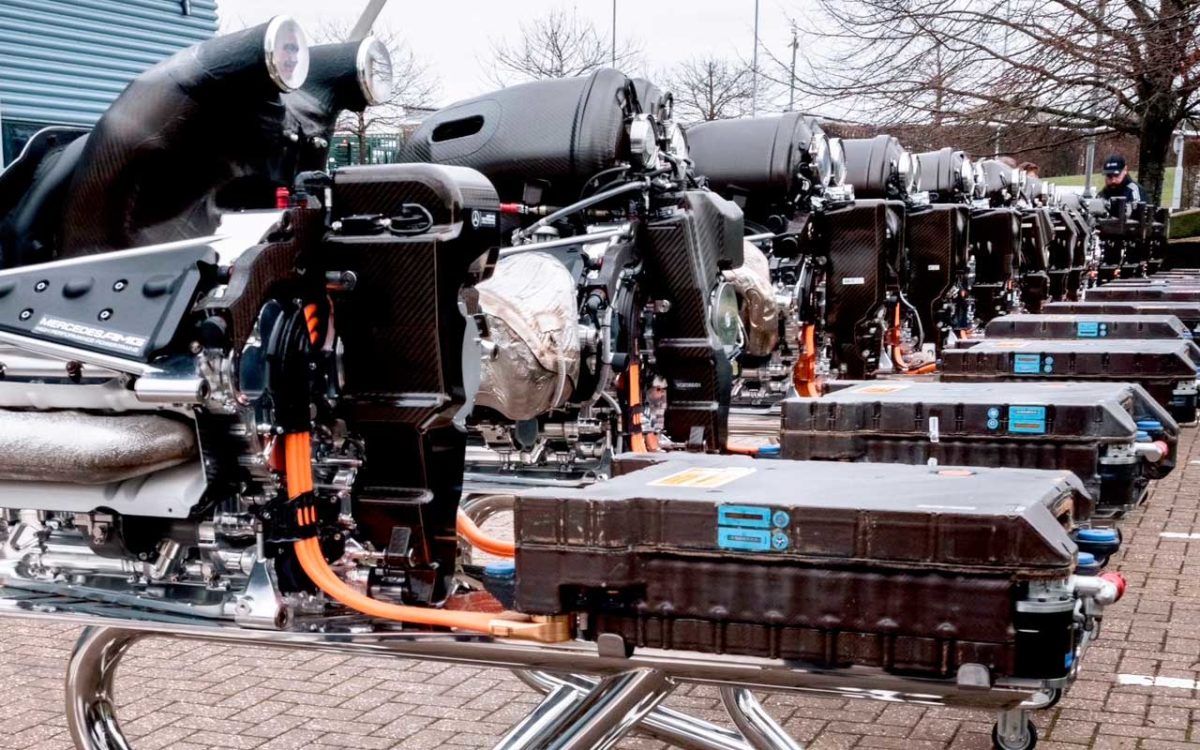
The first major technical battle of the Formula 1 he 2026 version didn't even wait for the single-seaters to take to the track. It was played out in the FIA offices, around a Mercedes engine already at the heart of all suspicions. After weeks of tension, political pressure and paddock rumours, the International Automobile Federation has made its decision: the solution developed by Mercedes is deemed legal. A decision that leaves a bitter taste in the mouths of Ferrari, Audi and Honda... and does not entirely extinguish the fire.
The controversy
Since the end of 2025, the paddock has been buzzing with the same topic: the compression ratio of the future Mercedes V6 hybrid. The 2026 regulations are clear on paper: maximum compression is set at 16:1. But in practice, the way this ratio is measured has opened the door to a bold interpretation. According to leaked information, the FIA checks the engine compression ratio when the car is cold and stationary, during technical scrutineering. However, when the engine is running at high temperatures, certain internal components expand. As a result, the engine's internal geometry changes, bringing the piston closer to the cylinder head and mechanically increasing actual compression... up to values estimated at around 18:1 on the track. A considerable potential gain in efficiency, fuel consumption and pure performance.
Ferrari, Audi and Honda take to the streets
Ferrari, Audi and Honda were quick to express their concerns. Not only about the legality of the solution, but above all about its compliance with the spirit of the regulations. For these engine manufacturers, accepting that an engine should be compliant at standstill but different when launched at full load was tantamount to ratifying a major regulatory loophole. The protest became official with sending a joint letter to the FIA. The objective was clear: to obtain rapid clarification, or even an outright ban before the start of the 2026 season. Political pressure was accepted, but it was difficult to sustain on a technical level, as it was impossible to inspect competing engines. Mattia Binotto summed it up bluntly: if the advantage exists, it's significant, but it can only be demonstrated by the FIA.
The last chance meeting
It was against this explosive backdrop that the long-awaited meeting between the FIA and all the engine manufacturers took place, just a few days before the start of the first winter tests in Barcelona. Many were hoping for a strong decision. It failed to materialize. The Federation chose to maintain the status quo. No immediate ban, no regulatory changes before the start of the season. The Mercedes engine, as designed today, remains compliant with the 2026 rules.
The FIA's director of single-seaters, Nicholas Tombazis, had prepared the ground in advance:
"We want to race, not sit in court after the first race." A clear message. To touch the rules now would be to open the door to legal recourse, just a few weeks away from a regulatory change that is already extremely complex in industrial terms.
Why the FIA wouldn't back down
From the Federation's point of view, the position is coherent. Mercedes has been transparent from the outset. The concept was presented to the FIA at a very early stage, discussed, analyzed and then validated. Toto Wolff and his team would never have invested so many resources in a solution likely to be banned on the eve of a new technical era. In strictly regulatory terms, the argument is simple: as long as the engine respects the 16:1 ratio during official checks, it is compliant. The fact that this ratio changes when the engine is hot is not, at this stage, explicitly forbidden by the text.
In the paddock, estimates are circulating. The potential gain from this solution would be between two and three tenths per lap, or more than ten horsepower according to some sources. But the FIA is cautious. The engine is just one piece of an extremely complex puzzle for 2026, between active aerodynamics, revised energy recovery and new weight and balance constraints. There's no guarantee that this advantage will translate mechanically into dominance on the track.
A door ajar for the future
While the FIA did not give in on an immediate ban, the debate is far from over. Several avenues were explored at the meeting, including the idea of more thorough checks on the compression ratio in operating conditions, or even the installation of specific sensors. But these solutions raise technical, cost and political issues. To put it plainly, even if an evolution were to see the light of day, it would have little chance of being applied before 2027. In the meantime, there is another lever available: ADUO, the aid mechanism for engine manufacturers in difficulty, which could reshuffle the cards after the first performance evaluations scheduled for the sixth Grand Prix of the season.
 English
  French
  Italian
  Spanish
  Portuguese
  German
  Japanese
  Turkish
  Dutch
Dutch