
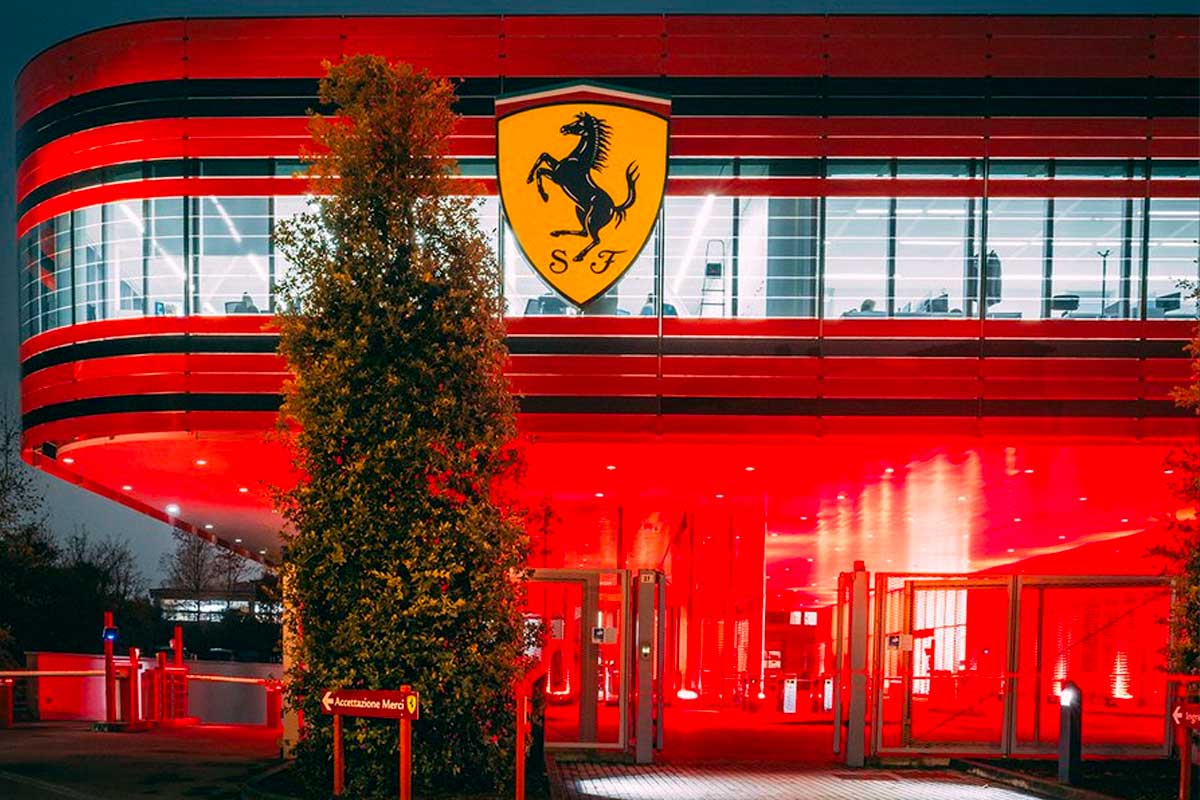
In Maranello, nothing is left to chance for the new 2026 season. While the Formula 1 is about to enter a new technical era, the Scuderia Ferrari continues the in-depth transformation of its internal organization. Under the impetus of Frédéric Vasseur and his Technical Director Loïc Serra, the reorganization is being carried out methodically, with a clear objective: to make the structure clearer, more fluid and more efficient.
High-intensity post-holiday recovery
After the break for the festive season, Maranello was back in full swing. As early as January 6, Loïc Serra was in close contact with all the technical departments, as the countdown to the Barcelona tests was officially launched. The single-seater in its final assembly phase already crystallizes some of the new organizational principles put in place over the last few months. Internally, Ferrari now wants a car designed in a climate of technical "silence": less friction between departments, fewer decision-making grey areas, and a clearer chain of responsibility. A philosophy that applies as much to the design of the single-seater as to the human governance of the F1 project.
John Lockwood reassigned
According to AutoRacer, the first symbolic move illustrates this change. John Lockwood, previously Head of Composites Design at Scuderia Ferrari, is leaving the F1 racing department. However, he is not being ousted from the group: the British engineer is being reassigned internally to join the new Ferrari Hypersail project, dedicated to competition sailing. This transition is part of a logical redistribution of skills. The position vacated by Lockwood will be filled on an interim basis by experienced members of the F1 composites department.
WEC as a reservoir of expertise
But the most significant change concerns the bridges between programs. Again according to AutoRacer, a structured exchange of engineers is currently underway between Formula 1 and the Hypercar program engaged in WEC. Leading engineers from a program that has won the Le Mans 24 Hours three times and is the 2025 World Champion are to join F1. The aim of this internal move is to capitalize on a winning culture recently acquired in endurance racing, where Ferrari was able to rebuild a high-performance, robust and disciplined organization. It's a success that John Elkann was quick to hail at the end of the year, particularly when Ferrari won the WEC constructors' title.
Elkann had hinted at the need for change in Formula 1, also by observing what was working within the group itself. The Scuderia is now moving towards a more pyramidal structure, designed to clarify technical responsibilities and limit hesitation. In the run-up to the major regulatory upheaval of 2026, Ferrari is not looking to stack the deck with individuals, but to strengthen its system as a whole. A smooth, gradual but far-reaching reorganization, which shows that Maranello is fully aware that tomorrow's battle will be won as much in the workshops and design offices as on the track.
 English
  French
  Italian
  Spanish
  Portuguese
  German
  Japanese
  Turkish
  Dutch
Dutch
ferrari need to start listening to drivers if they want to win in f1
Una buona notizia, perché penso che se hanno fatto una macchina vincente nel wec contro avversari di primo ordine non vedo perché non dovrebbero di fare lo stesso in F1.