

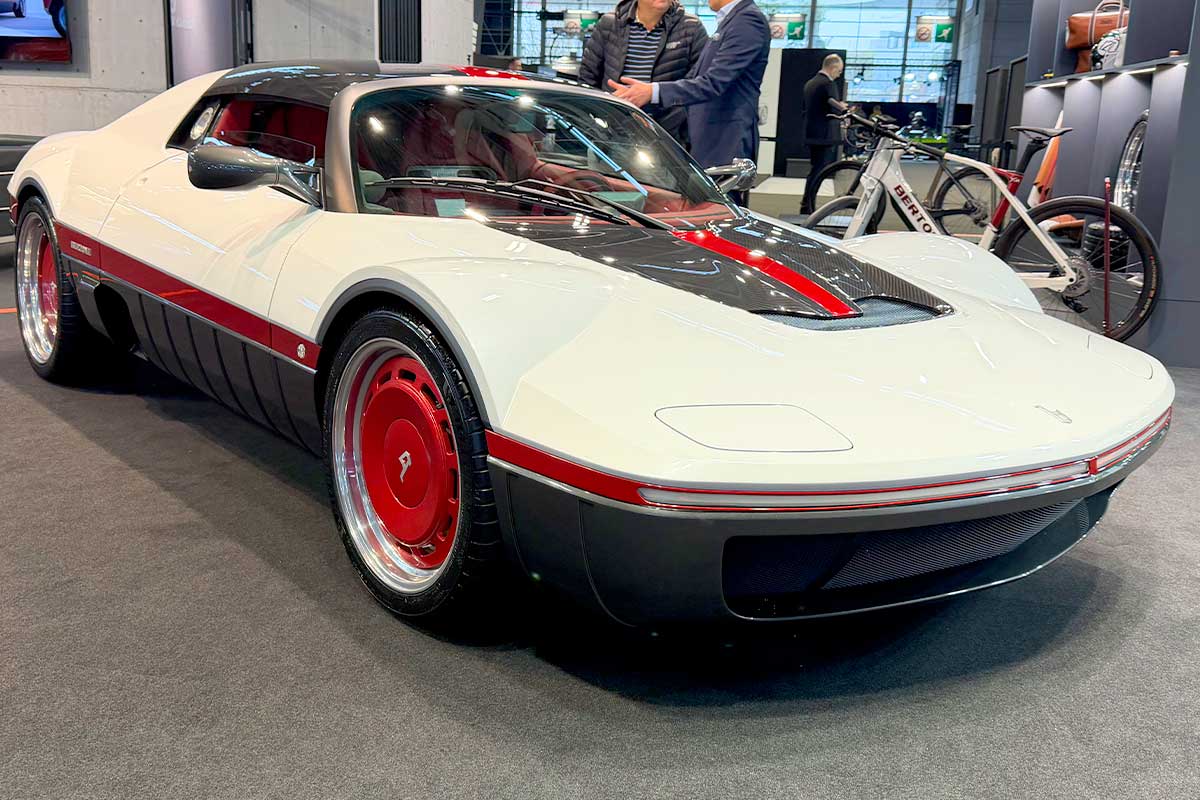
There are cars that you discover behind a press release. And then there are those you see in real life, a few meters away, camera in hand, and realize that the object is real. This is the new Bertone Runabout. Exhibited in Paris at the Ultimate Supercar show, this rebirth of a mythical 60s concept confirmed one thing: Bertone is not content to play the nostalgia card.
The 1969 concept finally a reality
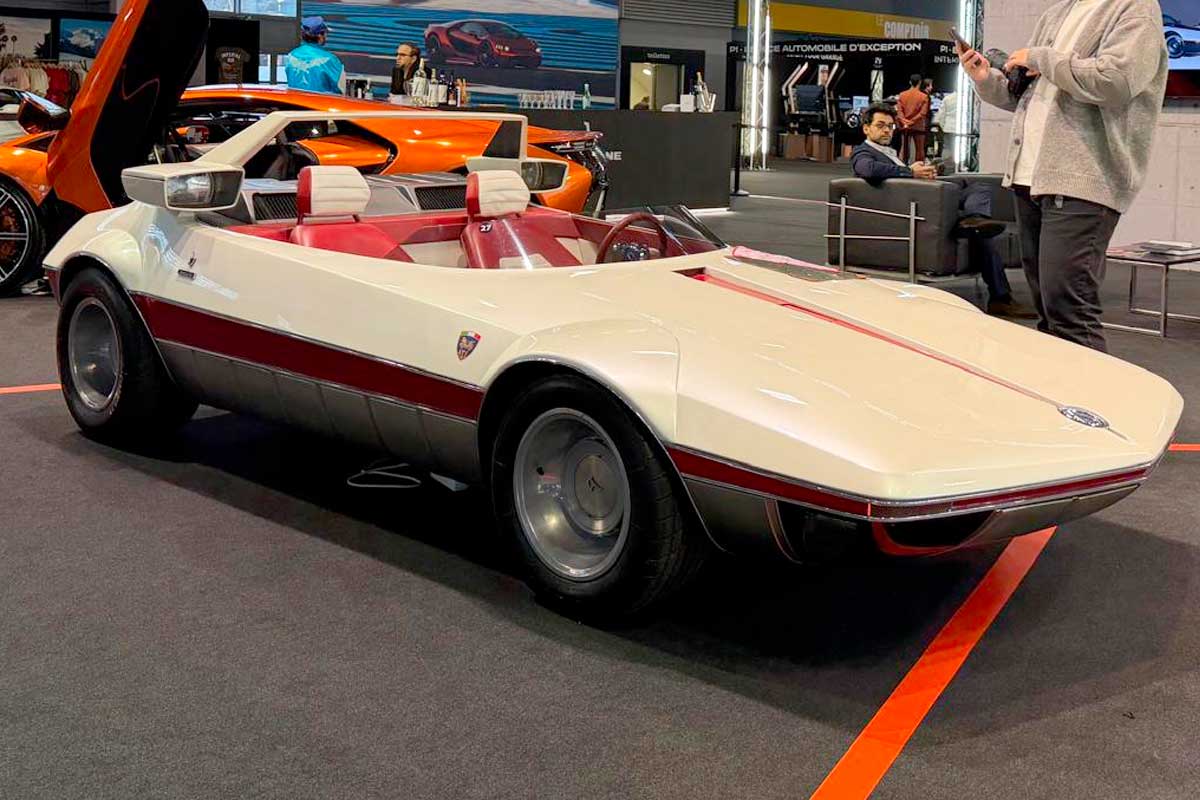
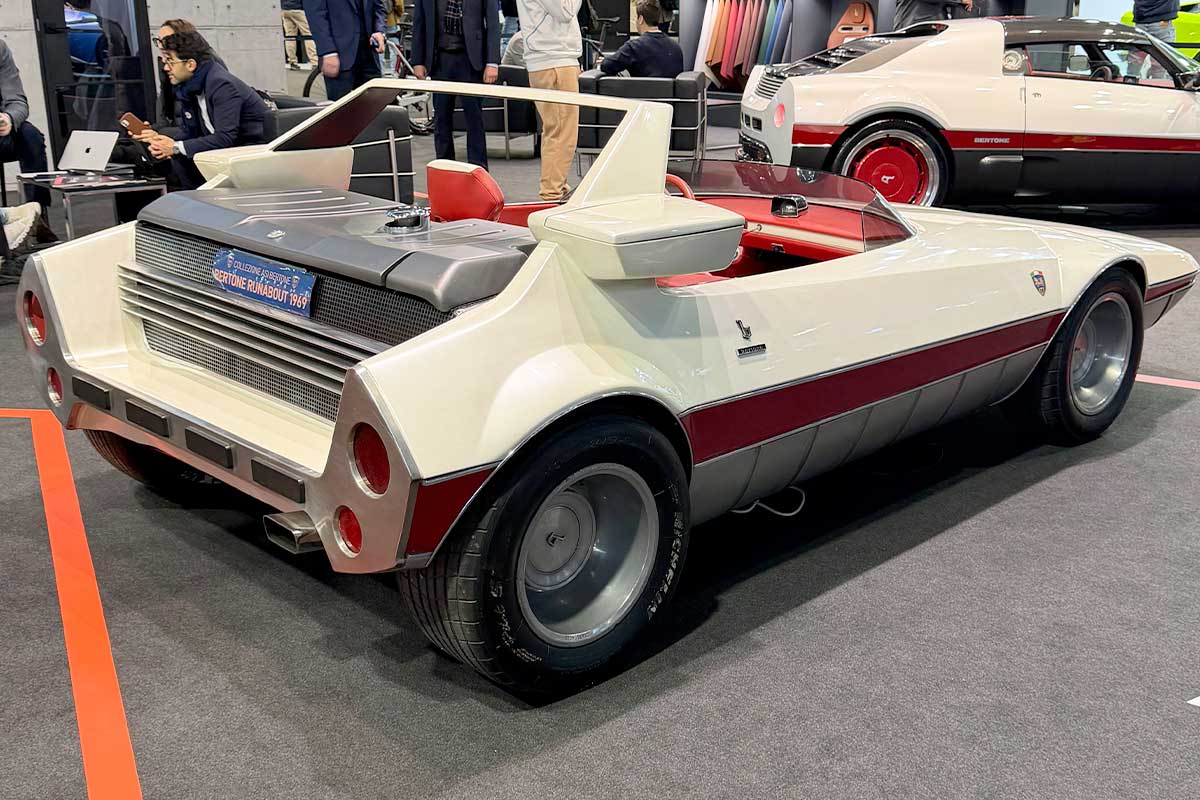
It took 57 years for the Autobianchi A112 Runabout concept, designed by Marcello Gandini in 1969, to finally reach production. At the time, this radical little roadster, inspired by the nautical world, served primarily as a styling laboratory... before directly influencing the Fiat X1/9. In 2026, Bertone takes up this historic base but transposes it into a very contemporary context: that of a pleasure car, analog, deliberately elitist, and designed above all for the driver.
Neo-retro silhouette
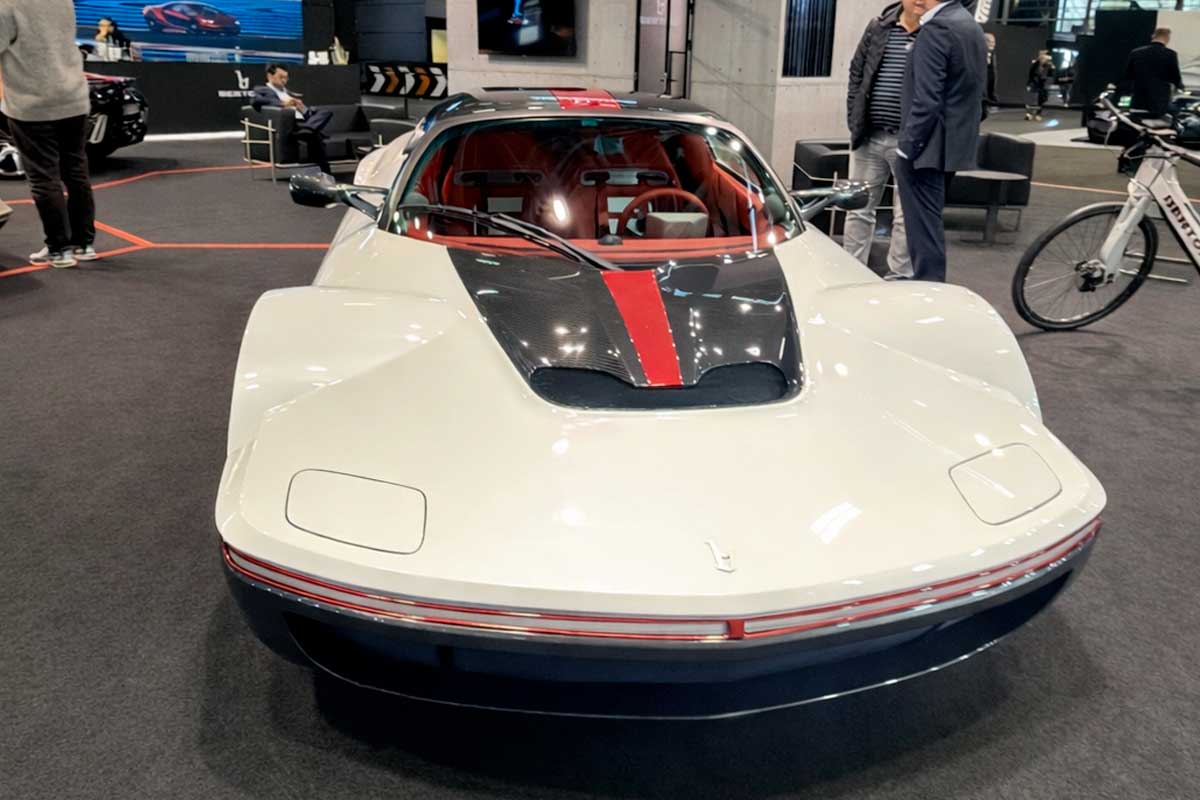
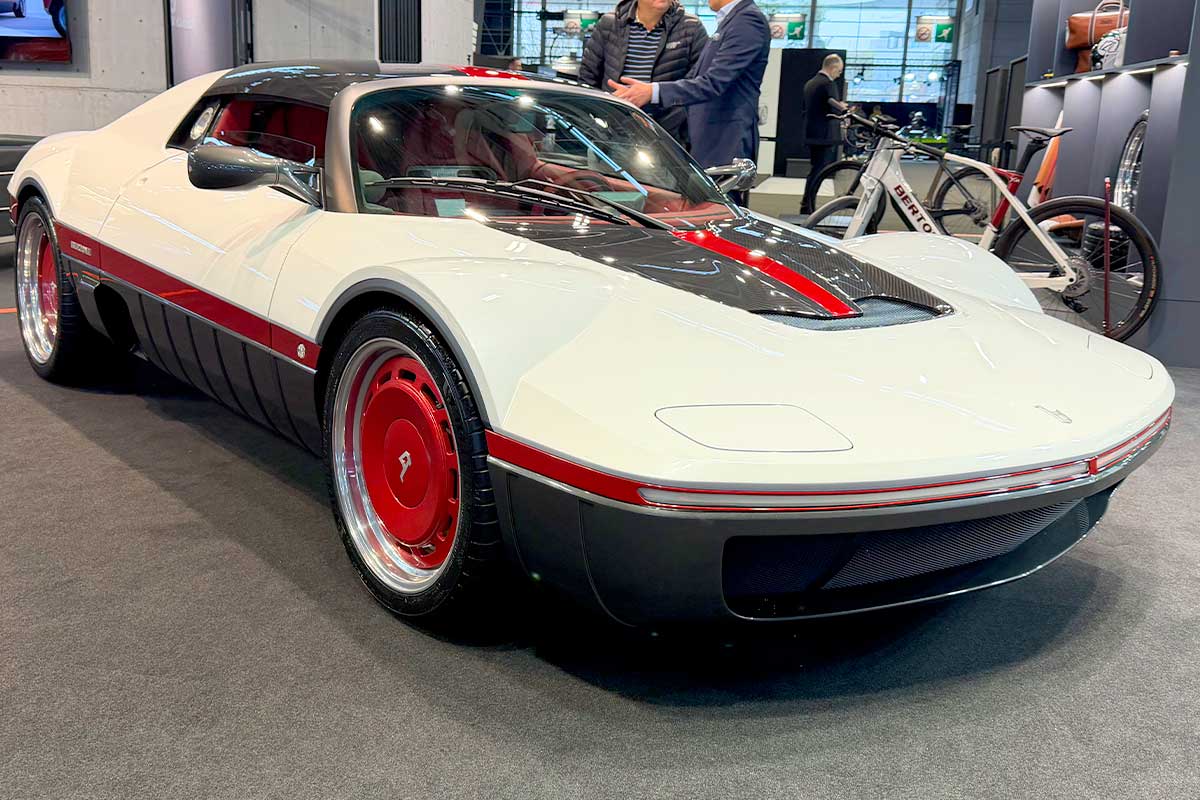
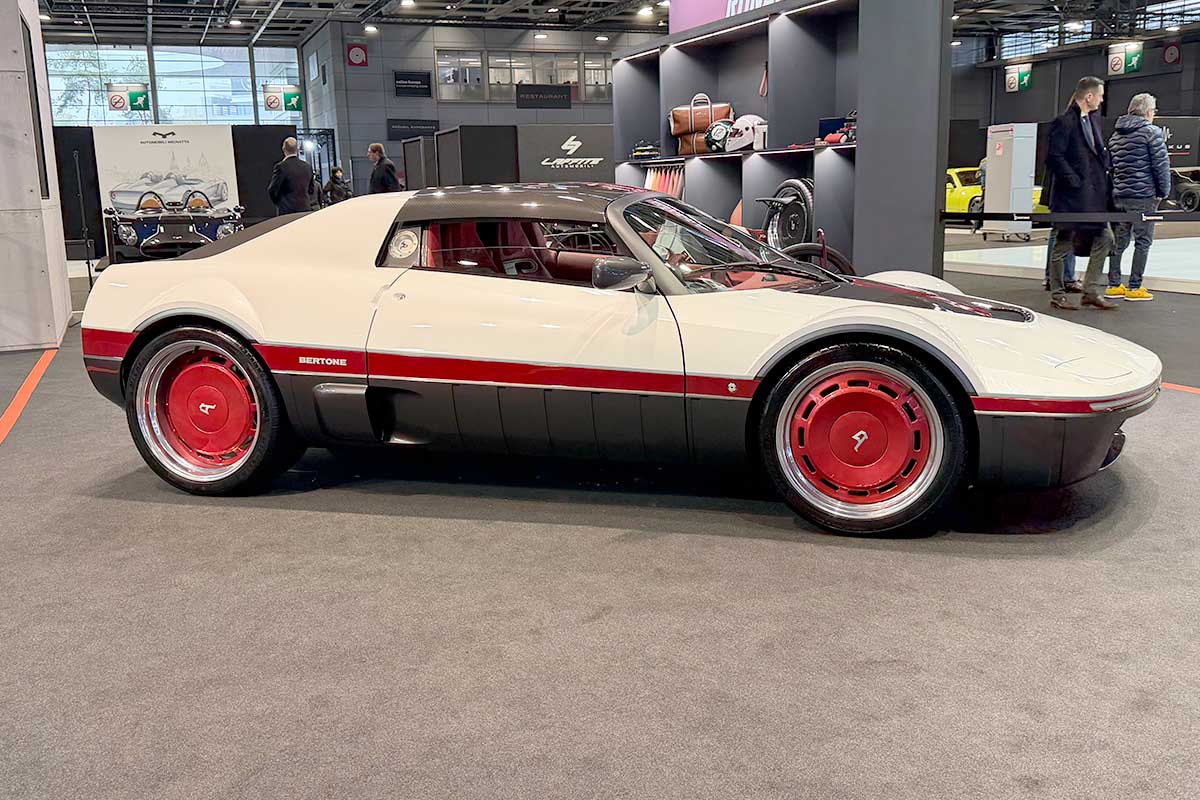
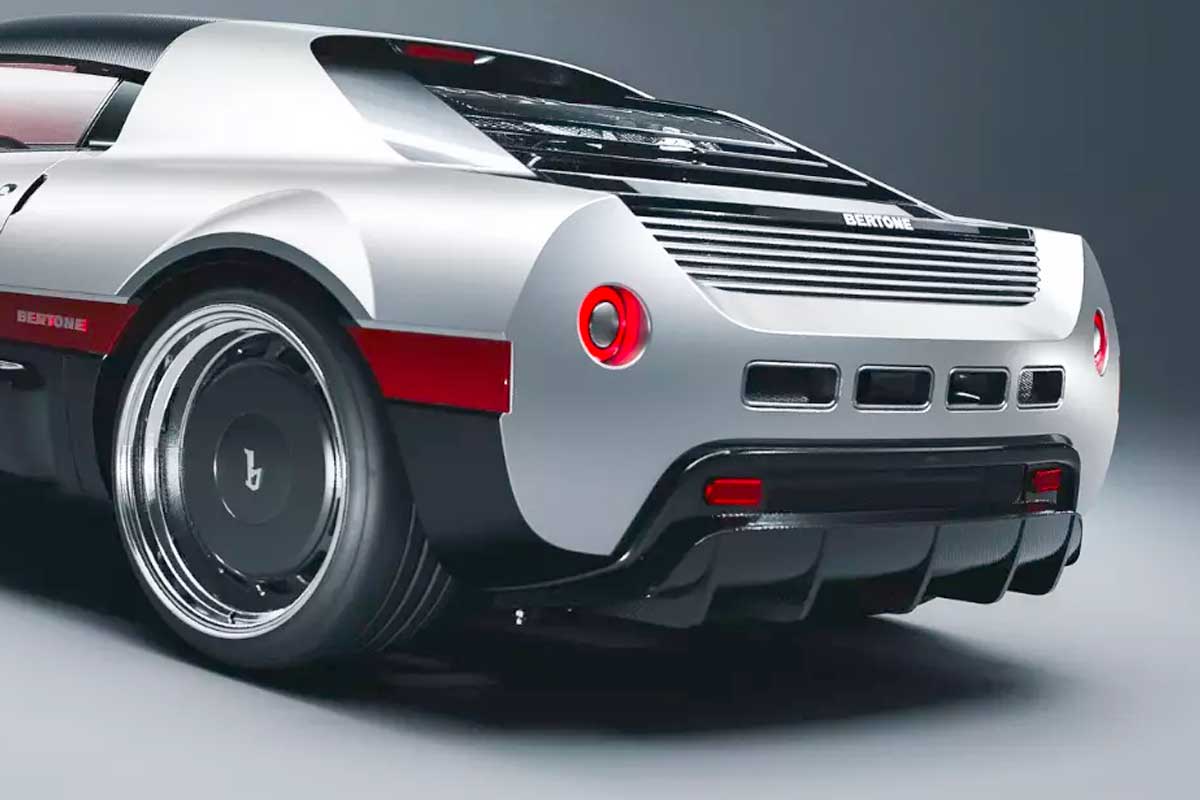
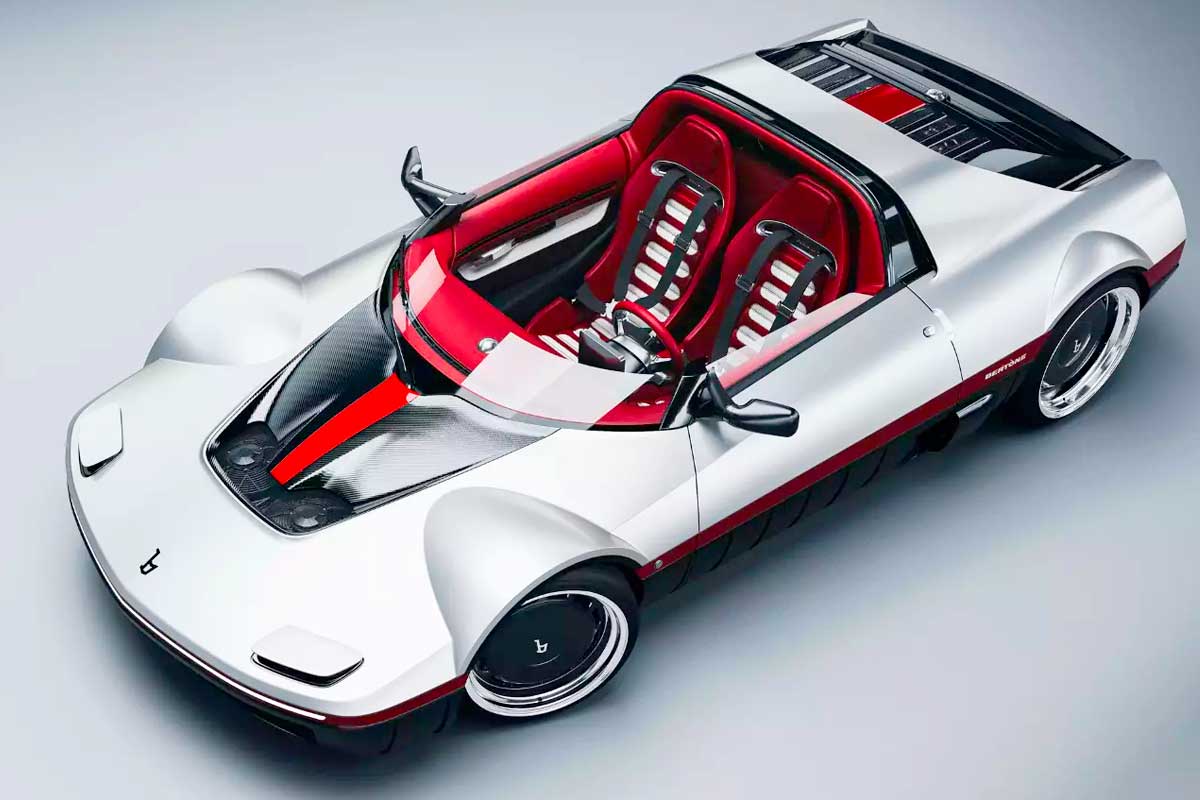
Faced with the Runabout, it's impossible to confuse it with anything else. The proportions are compact, with a length of less than 4 meters, short overhangs and a pronounced wedge-shaped line. The eye is immediately drawn to the retractable headlamps, a detail that has become a rarity today, made possible here by the absence of conventional homologation constraints thanks to ultra-limited production. The extremely low muzzle is crossed by a thin LED signature, while the front wings seem to emerge independently from the ventilated hood. At the rear, the car packs a lot of personality into very little space: exposed arch, round lights, carbon diffuser and four rectangular openings, two of which serve as exhaust. The overall effect is as reminiscent of the 70s as it is of certain racing barchettas. Bertone offers two interpretations: a totally open, almost radical Barchetta, and a more versatile Targa, with removable roof panels for easy on-board access.
Interior against the current
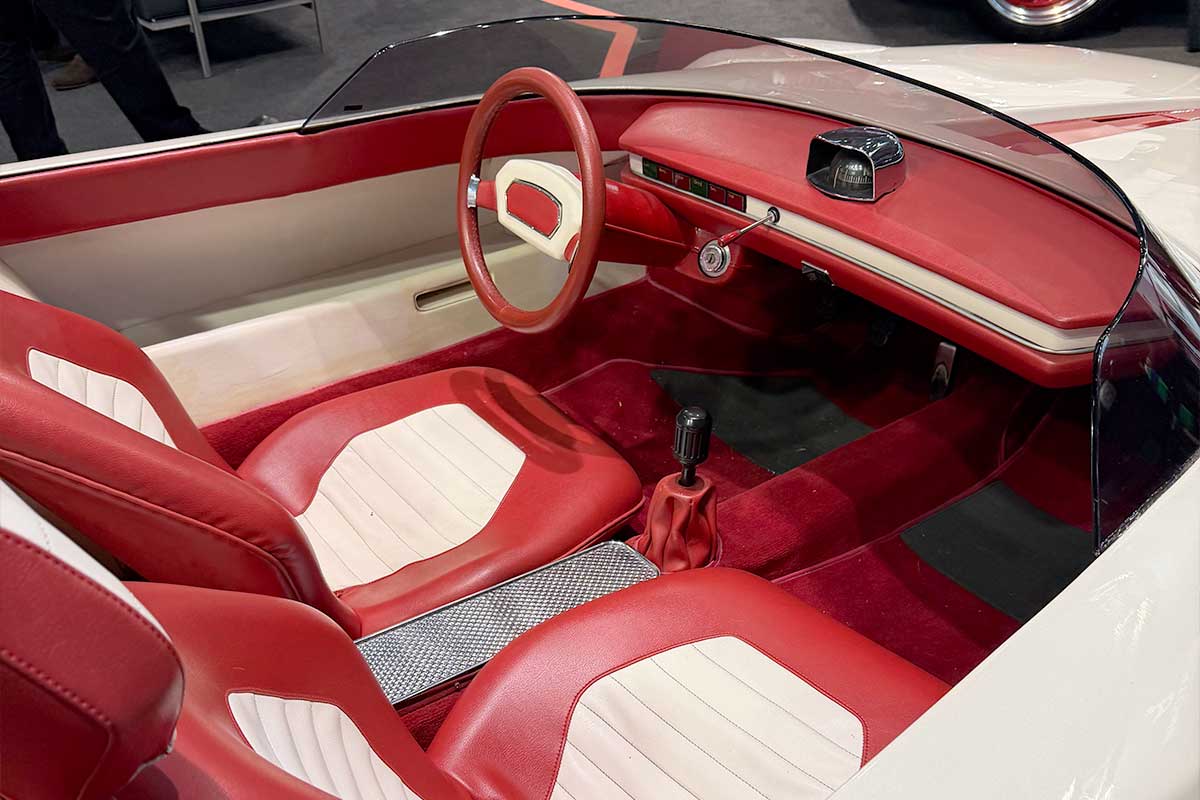
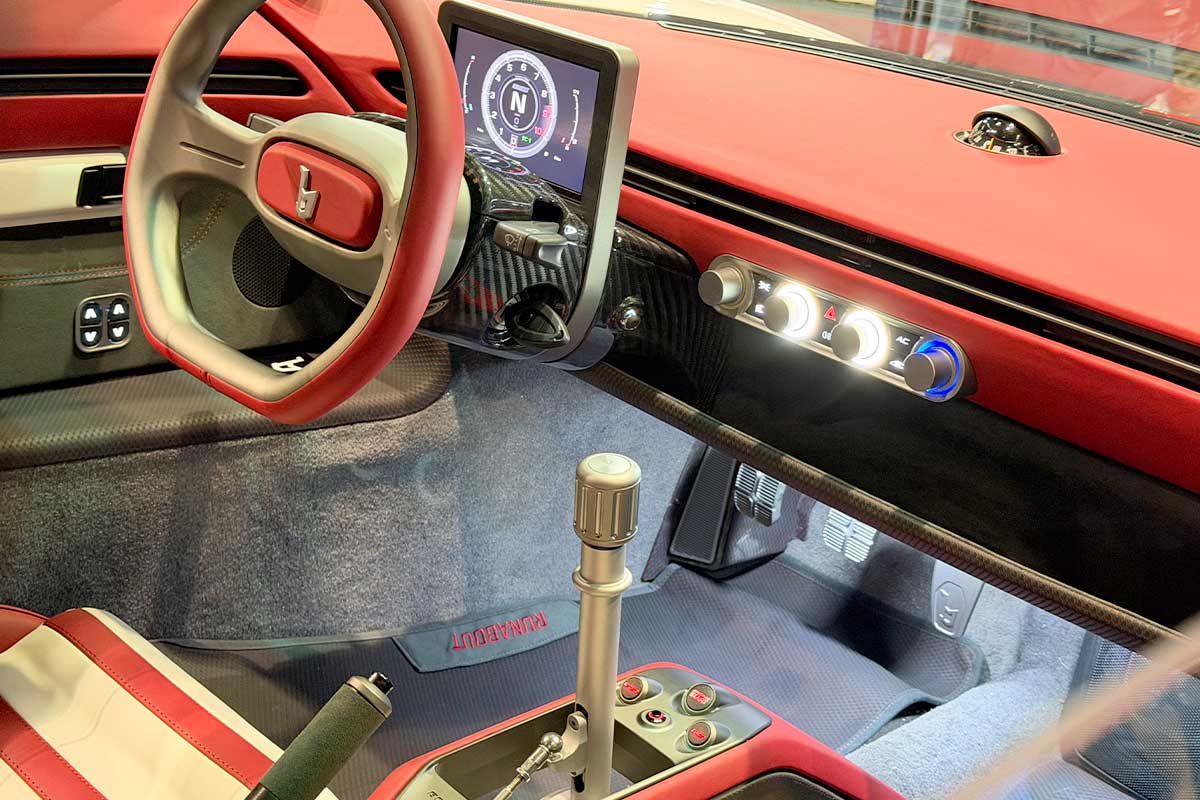
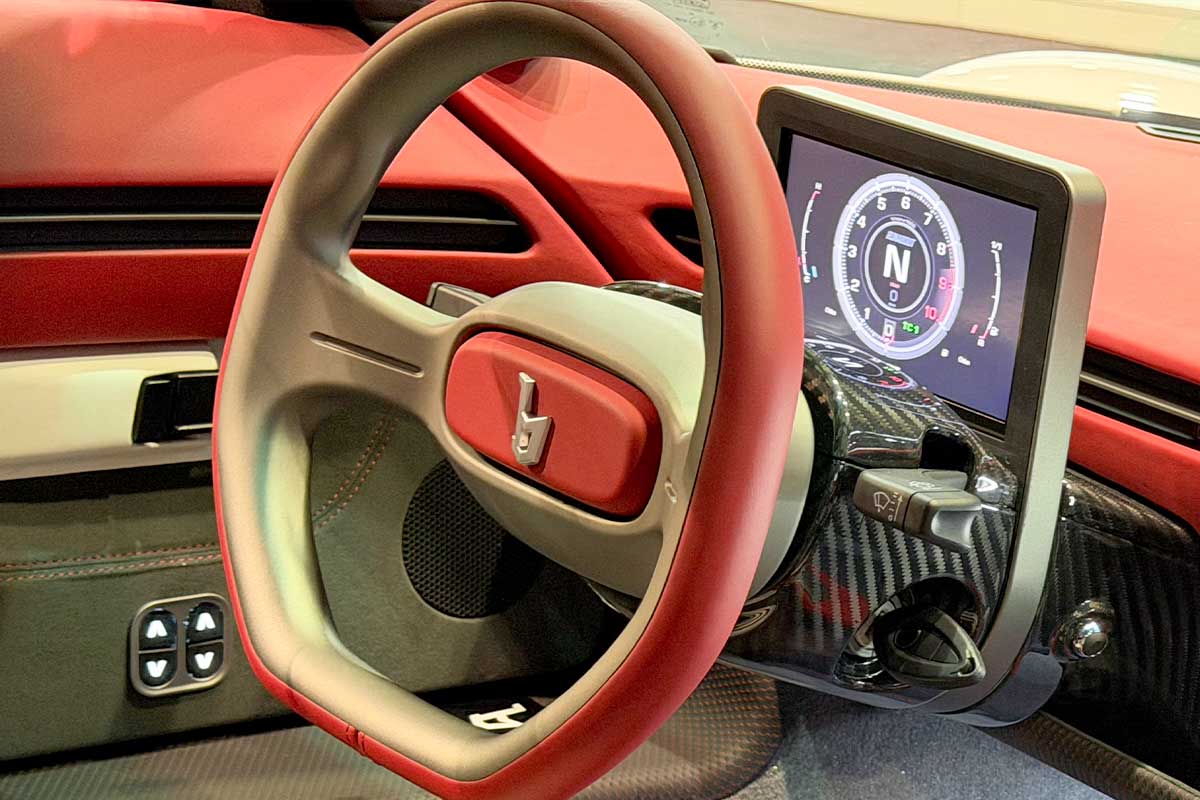
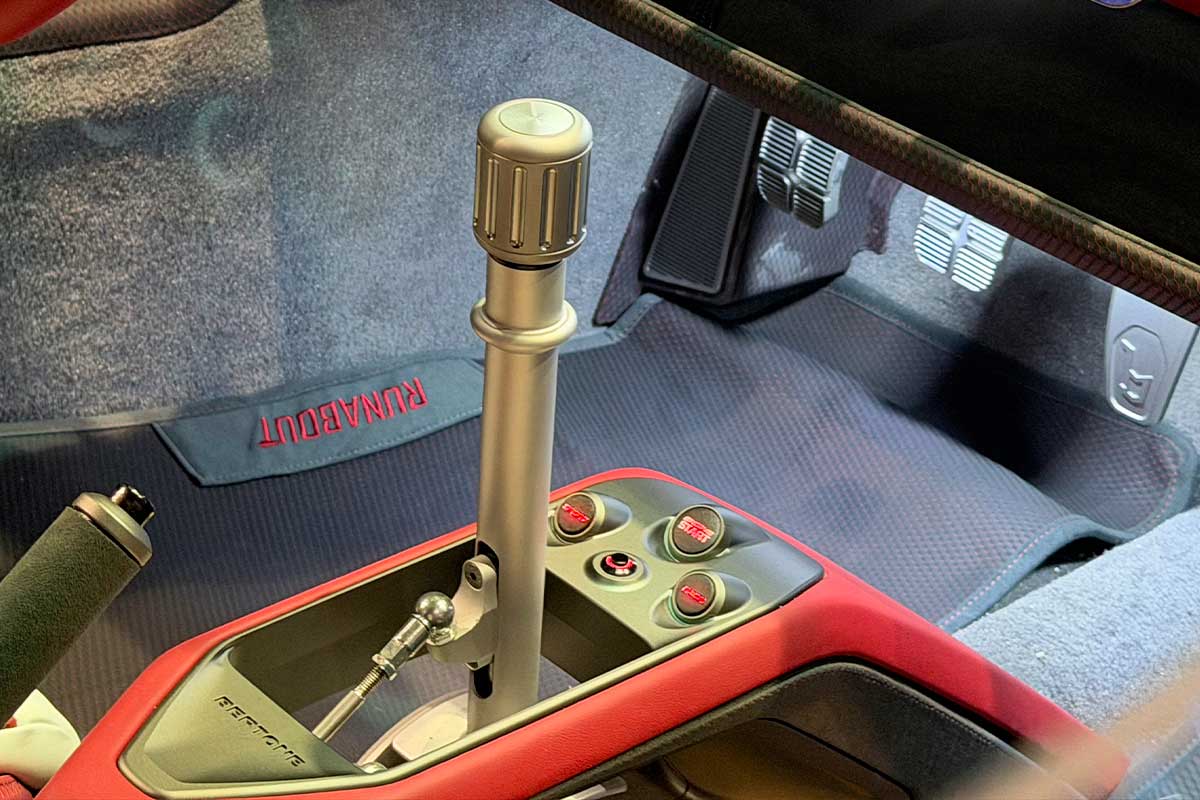
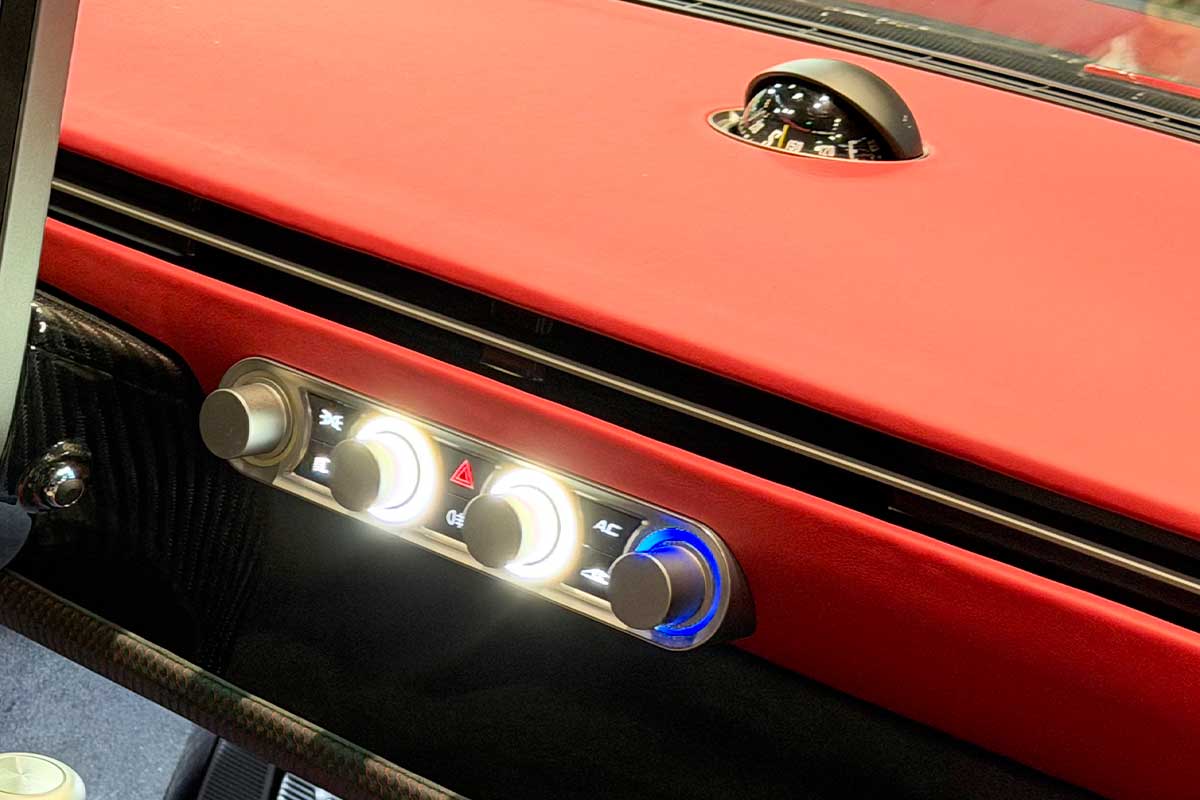
Inside, the Runabout confirms its positioning. There are no big screens or intrusive digital displays. The cabin is clearly inspired by the maritime world, with a hull-shaped cell, minimalist dashboard and even a floating compass, a direct nod to the original concept. The sculpted bucket seats, slim two-spoke steering wheel and, above all, the visible manual gearshift are a reminder that this car is aimed at those who still like to drive. The instrument cluster is digital, but discreet, surrounded by physical controls in machined aluminum and hand-stitched leather.
A Lotus chassis and a Japanese V6!
Beneath this retro bodywork lies a technical base that's not really Italian. The Runabout rests on a Lotus-derived bonded and extruded aluminum chassis, specifically adapted by Bertone. The double-wishbone suspension, with adjustable dampers and anti-roll bars, confirms that the car's handling has been taken very seriously. The engine, meanwhile, comes from Toyota: a compressed 3.5-liter V6, mounted in a central rear position. It develops 475 hp, transmitted exclusively to the rear wheels via a six-speed manual gearbox. Weighing in at around 1,100 kg, the Runabout boasts a 0 to 100 km/h time of 4.1 seconds and a top speed close to 270 km/h. Very respectable figures indeed.
Already a collector's item
Only 25 examples will be produced, all of which can be extensively customized via the Centro Stile Bertone: colors, materials, finishes, configurations... no two Runabouts should be identical. The starting price is set at €390,000 before tax, and would easily exceed half a million once options are added.
 English
  French
  Italian
  Spanish
  Portuguese
  German
  Japanese
  Turkish
  Dutch
Dutch