

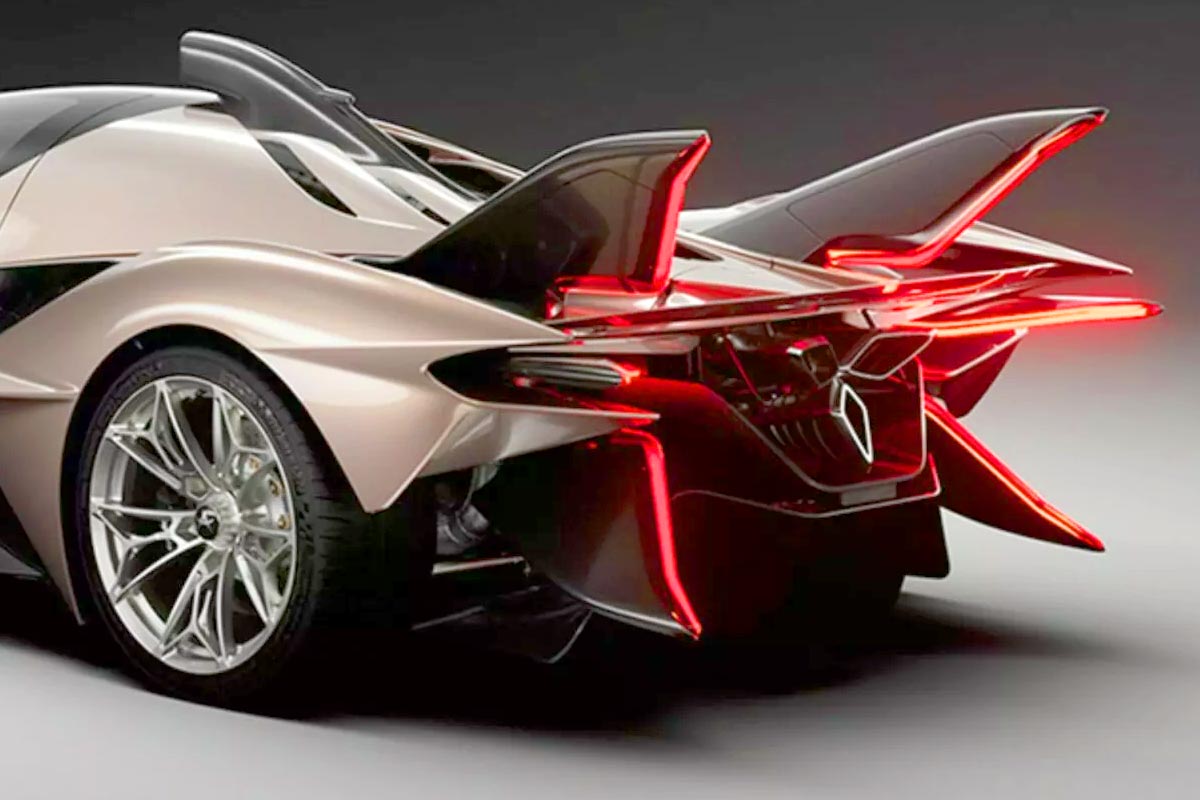
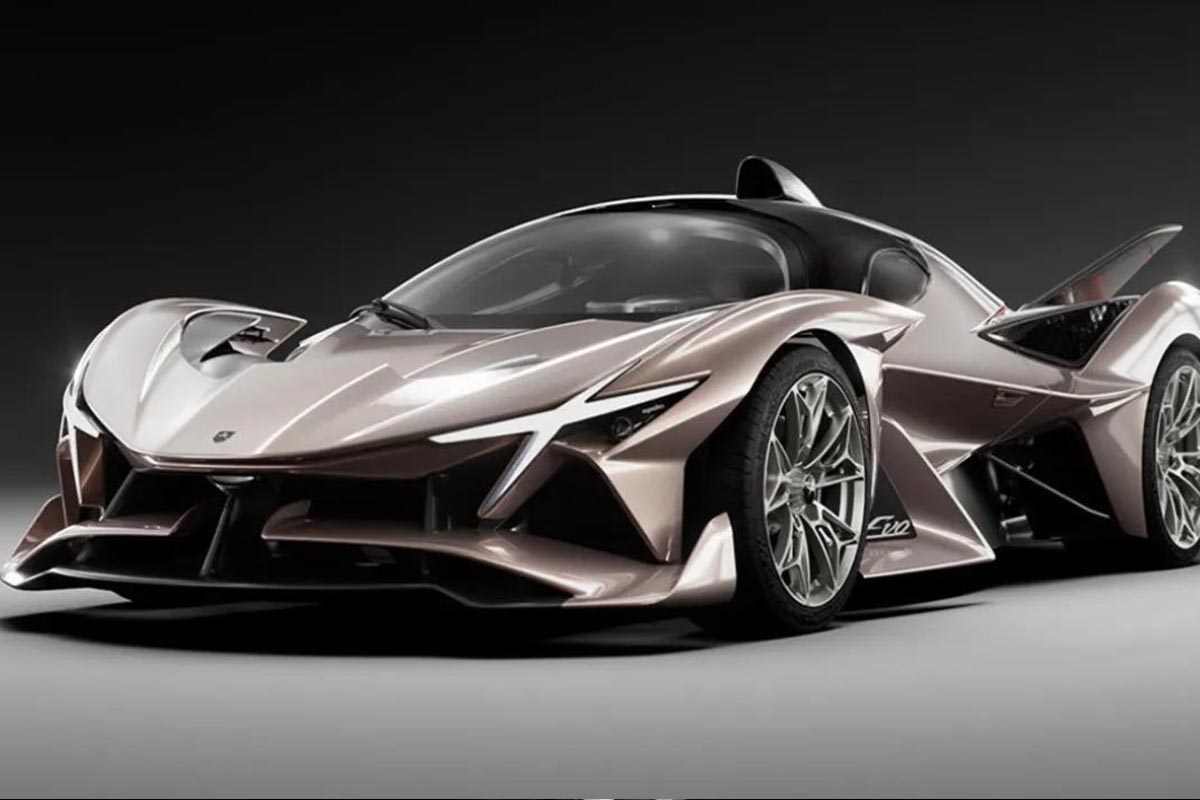
There are cars that seem to exist to defy the laws of reason. And then there's the Apollo Evo, a machine so extreme it looks straight out of a science-fiction comic book. Three years after being unveiled as a concept, the German hypercar with Ferrari V12 engine has finally become a reality. In 2026, only ten examples will go into production, all reserved for the track, and all priced at around three million euros.
Behind the Apollo Evo lies the singular story of Apollo Automobil, spiritual heir to Gumpert and its mythical Apollo of the 2000s. After the Intensa Emozione, produced in just ten units, the German brand celebrates two decades of unbridled engineering with an even more extreme model. The Evo takes the philosophy of its predecessor a step further. Here, everything is designed for the track and for a handful of customers ready to invest millions in a raw driving experience.
Unfiltered sci-fi design
At first glance, the Apollo Evo sets the tone. With its X-shaped headlamps, deeply indented flanks, gaping air intakes, monumental diffuser and oversized rear spoiler, the car seems frozen in metamorphosis, like a Transformer stopped in mid-motion. The whole thing is more reminiscent of a science-fiction revisited Le Mans prototype than a classic hypercar. With no regulatory constraints, Apollo has allowed itself to be so daring that the most exuberant creations by Pagani or Koenigsegg seem almost wise by comparison.
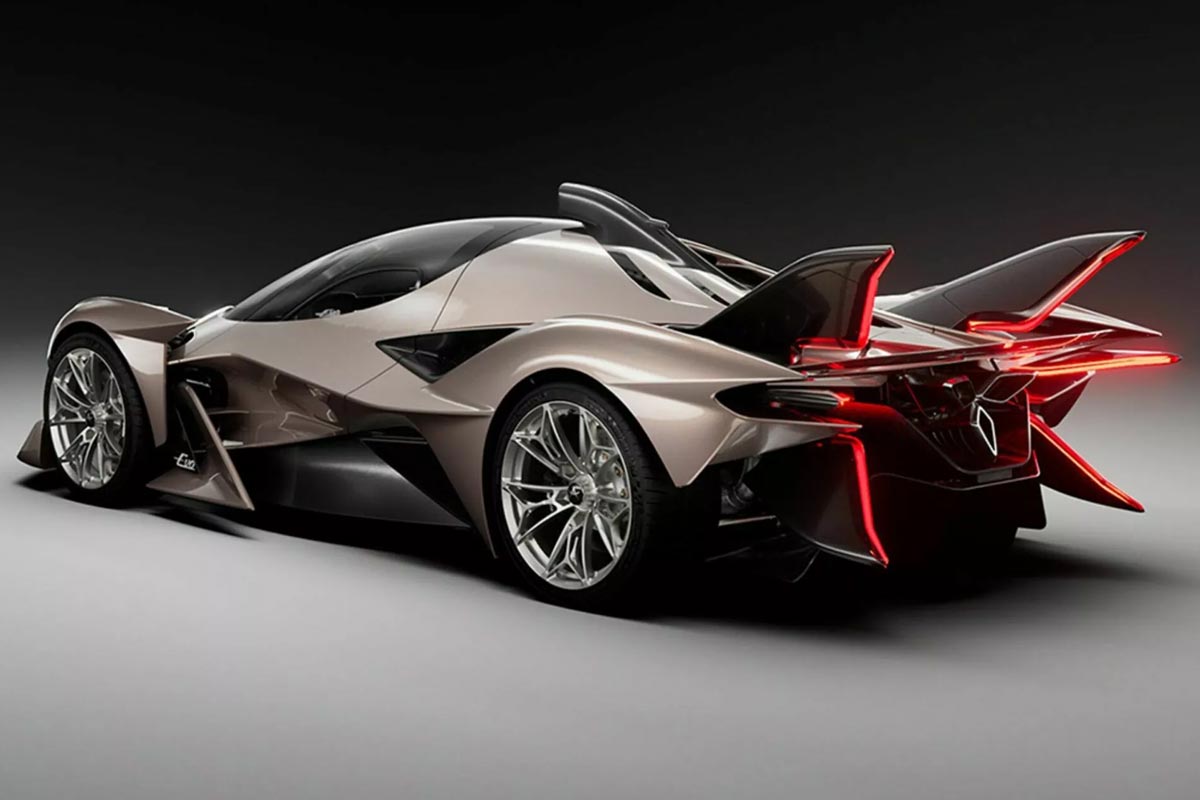

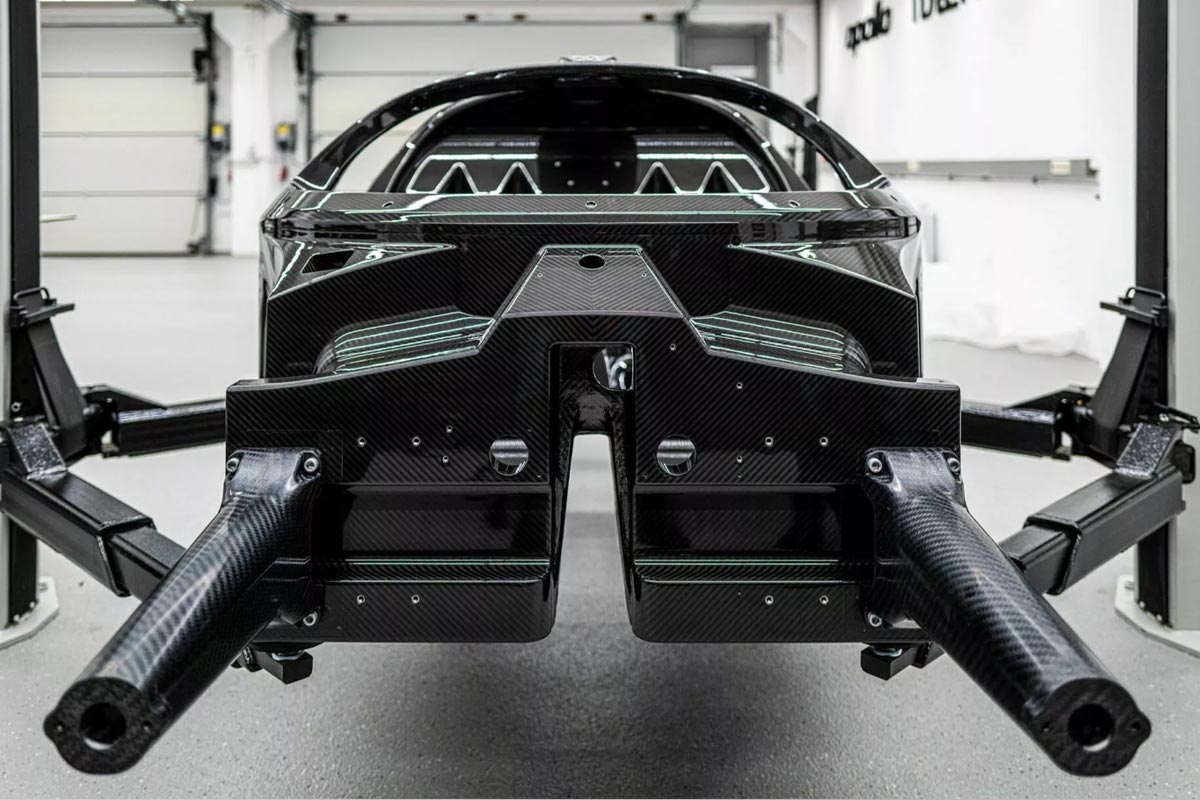
The Apollo Evo is based on a carbon-fiber monocoque weighing just 165 kg, ten percent less than that of the Intensa Emozione, yet fifteen percent stiffer. Combined with Michelin Pilot Sport Cup 2 R tires and an aerodynamic arsenal worthy of an endurance prototype, this structure enables the rear spoiler to generate up to 1,300 kg of downforce at 320 km/h.
A Ferrari V12 for a beating heart
Beneath this all-carbon bodywork lies the Apollo Evo's most precious component: a Ferrari-sourced, naturally-aspirated 6.3-liter V12. Derived from the engine used in the F12 Berlinetta, it develops 800 hp and 765 Nm of torque, with maximum revs peaking at 8,500 rpm. Power is transmitted exclusively to the rear wheels via a six-speed sequential gearbox. Weighing just 1,300 kg, the Evo accelerates from 0 to 100 km/h in 2.7 seconds and reaches 335 km/h. But these figures tell only part of the story. The deliberately extreme aerodynamics prioritize cornering speed over the hunt for top speed.

Functional interior
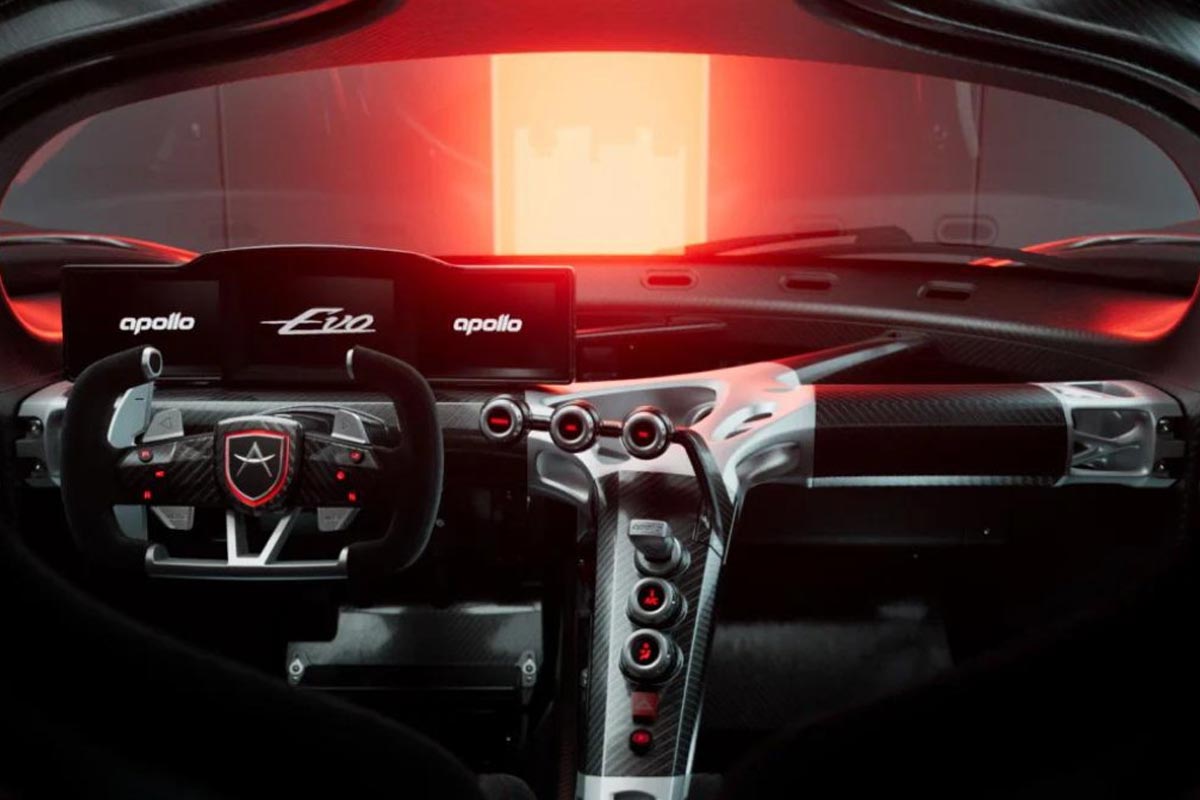
Inside, there's no ostentatious luxury or decorative materials. Carbon is omnipresent, 3D-printed aluminum remains visible, and the very structure of the car becomes a design element. The dashboard acts as a structural beam, the controls follow a purely functional logic, and the driving environment straightforwardly exposes the car's mechanical anatomy. Ultra-light bucket seats, sliding pedals, three screens and even air conditioning make up a minimalist cabin, designed for intensive driving rather than bourgeois comfort.
Ten copies, ten unique pieces
Each Apollo Evo will be fully customized thanks to the Apollo Forge program. Materials, finishes, technical details: no two cars will be identical. This extreme rarity is reinforced by a strictly limited production run of ten units worldwide. The first deliveries are expected in 2026, for a price of around three million euros excluding tax.
 English
  French
  Italian
  Spanish
  Portuguese
  German
  Japanese
  Turkish
  Dutch
Dutch
Certainly a designer doped up on SF series, but when you overdo it, it becomes ridiculous! It's really ugly inside and out!
Se ve que realmente,estás segado por tu ingenuidad,llamas realmente feo a algo que está por muy lejos de tener un diseño moderno y ordinario como las demás marcas que están ejecutando,no le puedes llamar feo a algo que se viene haciendo desde un modelo anterior,no es de esperarse que su diseño sea parecido a su predecesor, por el nombre de la empresa "apollo",no es de esperarse que sea un auto con un diseño ordinario, el único feo aquí eres tú
After watching the video, I have to admit I don't understand the designer's approach! What's with the rear end? Even the worst tuners of the '90s wouldn't have dared! I hope it's at least dictated by a concern for aero efficiency!
Depression! on wheels!