

There's a lot of talk aboutAlfa Romeo 33 Stradale from 2023and its unmistakable positioning. But to understand why this name still resonates so strongly today, we need to go back nearly sixty years, to another 33 Stradale, born in 1967. A car as mythical as it was paradoxical, whose commercial failures gave rise to some of the greatest concept cars in Italian automotive history.
The original 33 Stradale: technical masterpiece, financial failure
The origins of the 33 Stradale lie in the Alfa Romeo Tipo 33, a racing car developed to dominate endurance events. Contrary to usual logic, Alfa Romeo decided to move away from racing to create a road-going version, in order to gain homologation and prestige for the car. Franco Scaglione was commissioned to design the bodywork, while the technical basis remained that of a pure racing car: tubular H-shaped chassis, two-liter V8 in a central rear position, extreme lightness.
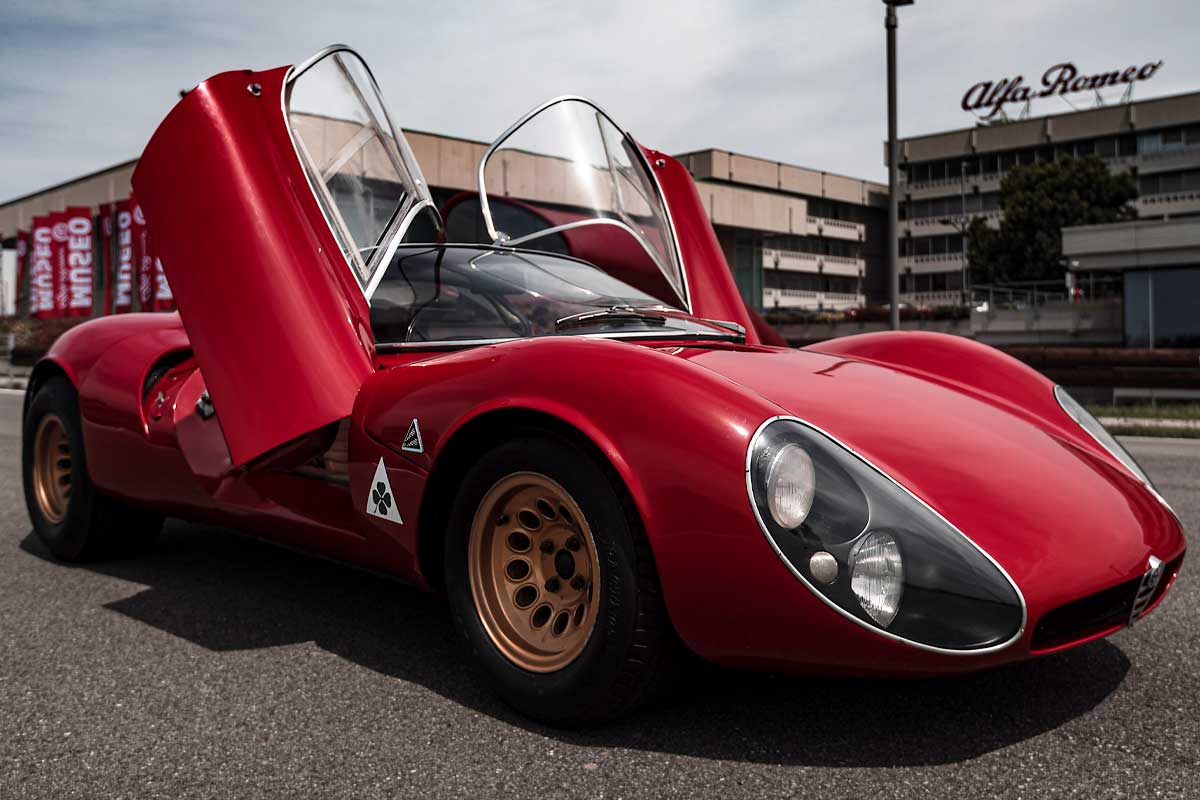
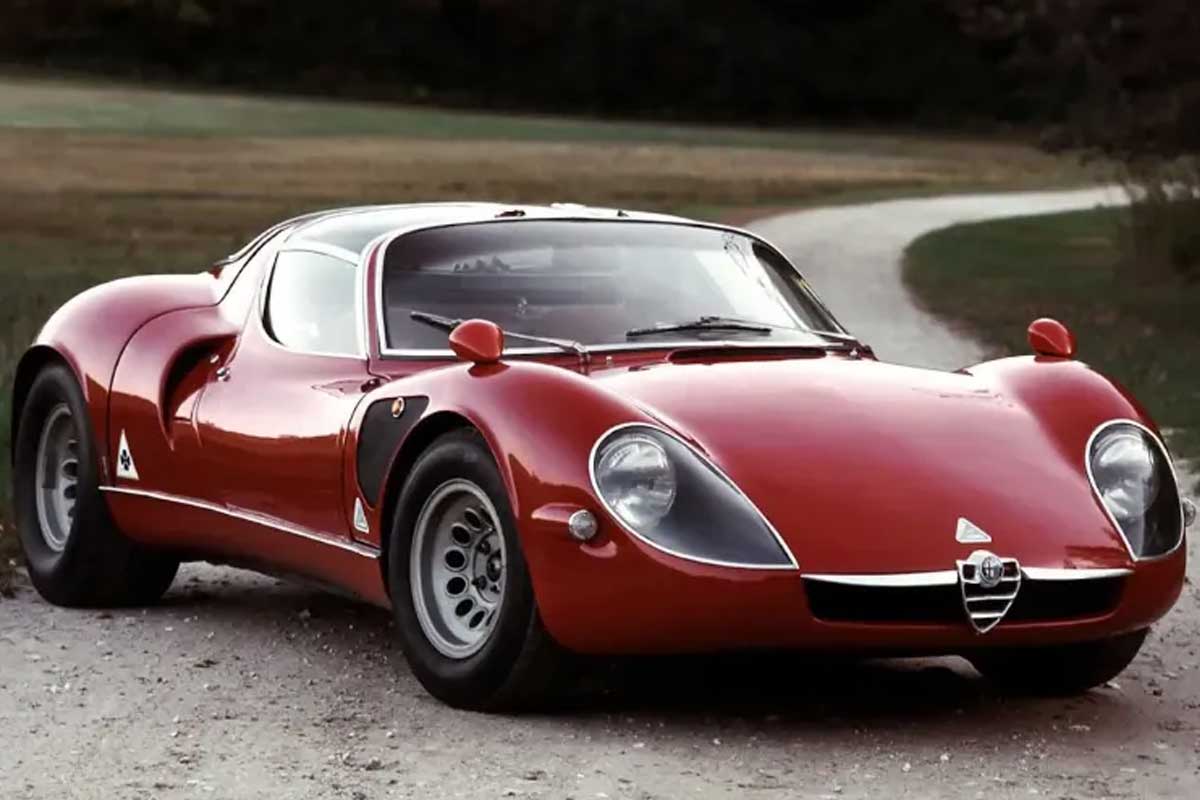
In 1967, the 33 Stradale was offered at the astronomical price of 9,750,000 lire. By comparison, a Ferrari 275 GTB was priced at around 6,500,000 lire. At the time, one million lire was equivalent to around 1,600 US dollars. Despite its aura and performance, the 33 Stradale didn't even cover its production costs. Alfa Romeo aimed to sell 50 of them, but the reality was quite different: only a few complete examples found takers.
Officially, 18 chassis of 33 Stradales are produced. Not all of them would ever be sold in the form imagined by Scaglione. And that's precisely where another story begins, that of an exceptional playground offered to the greatest Italian coachbuilders. Lacking customers, Alfa Romeo made several unused chassis available to prestigious coachbuilders. Pininfarina, Bertone and Italdesign then seized this exceptional base to propose their own vision of the ultimate sports car. Each project is unique, radically different from the others, and reflects the meteoric evolution of automotive design from the late 1960s to the mid-1970s.
Carabo: Bertone's total breakthrough
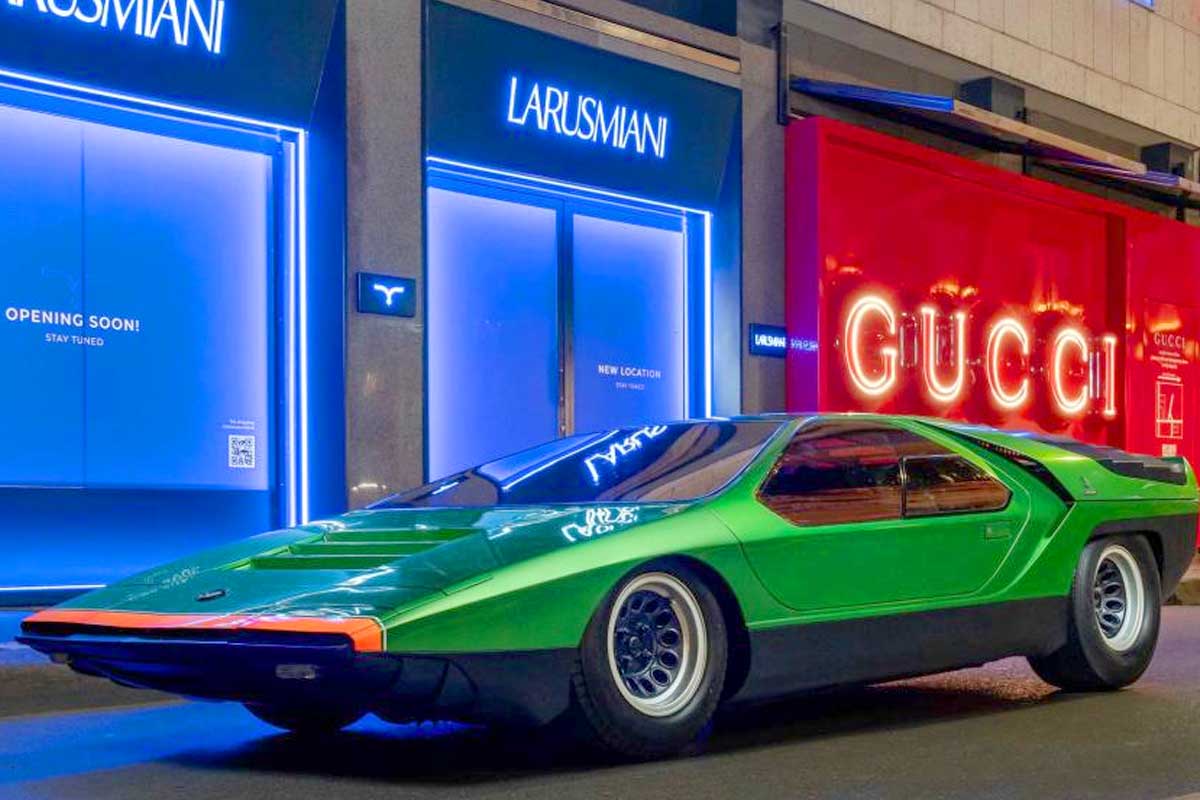
Introduced in 1968, the Alfa Romeo Carabo is arguably the most revolutionary concept to emerge from the 33 Stradale. Marcello Gandini, then a young designer at Bertone, took the complete opposite tack to Scaglione's sensual design. Here, no more curves: everything is angles, taut lines and geometric shapes. The Carabo introduces an extremely low wedge-shaped silhouette, vertically opening doors, retractable headlamps and a radical approach to aerodynamics. Painted in a fluorescent green inspired by the Carabus Auratus beetle, with an orange hood and reflective gold windows, it shocks as much as it fascinates. Under the body, the 2.0-liter V8 develops 230 hp for just 700 kg.
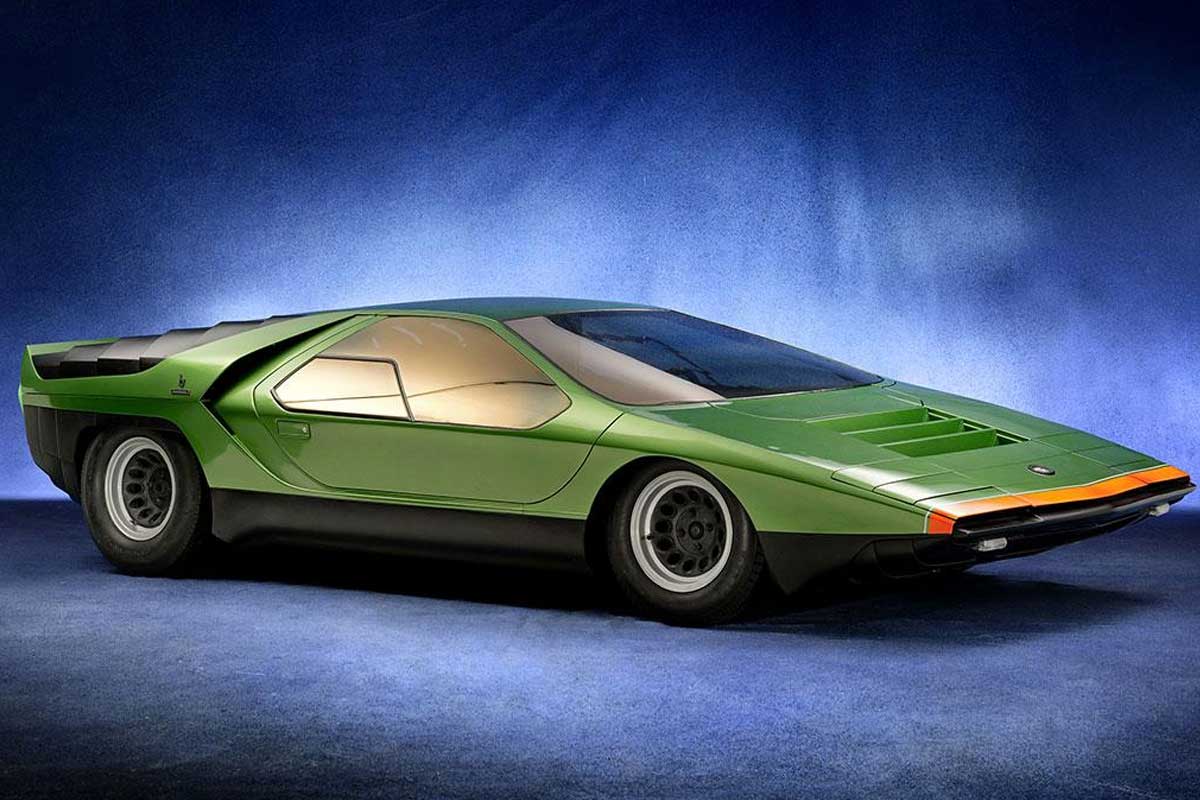
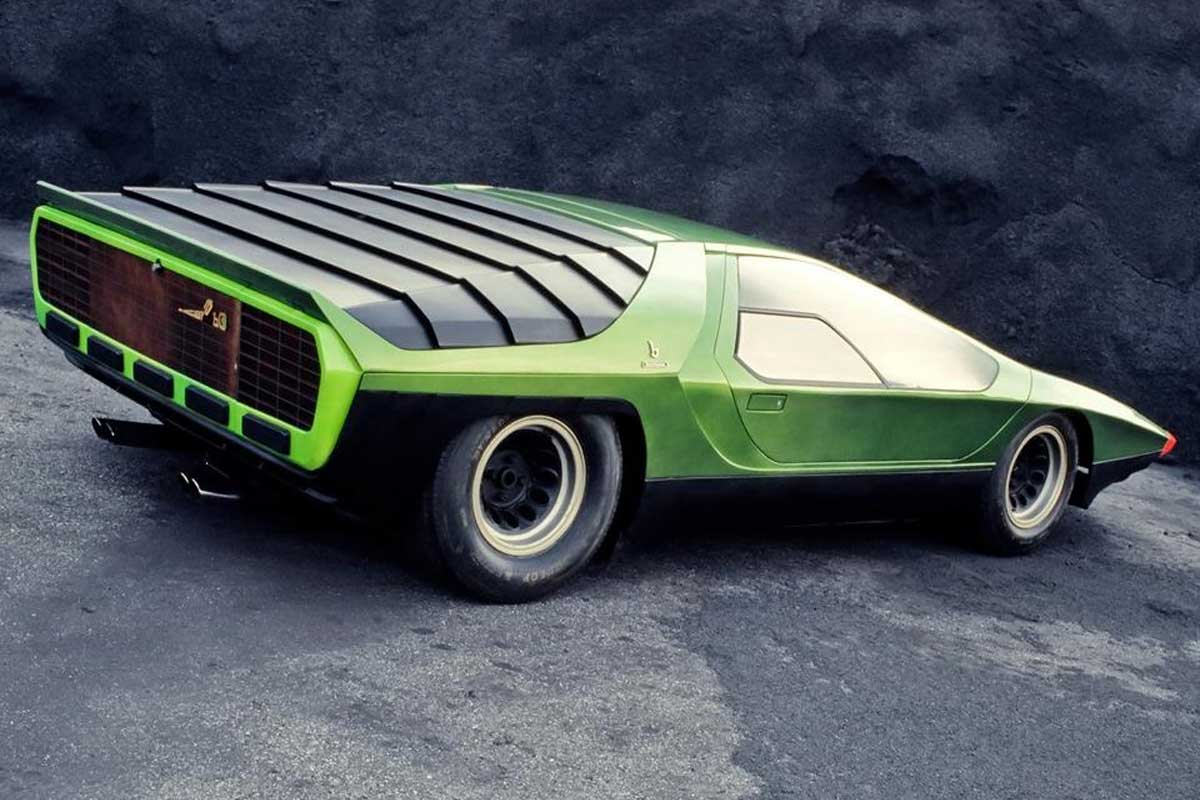
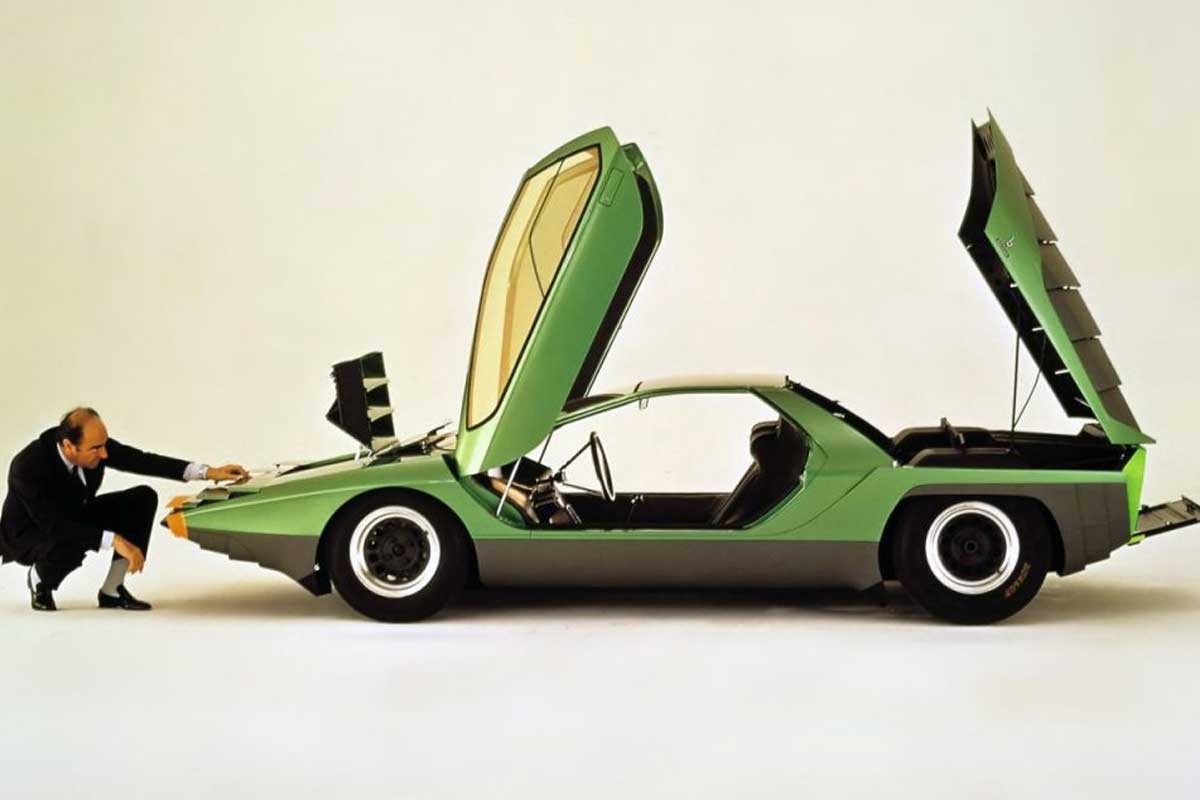
The Carabo is not just a styling exercise. It directly influenced future icons such as the Lancia Stratos Zero, the Maserati Khamsin and, later, the Lamborghini Countach. Only one example was ever built, and it is now housed in the Alfa Romeo Museum in Arese.
33 Roadster GS: Pininfarina's experimental vision
In the same year, at the Turin Motor Show, Pininfarina presented the Alfa Romeo 33 Roadster GS, designed by Paolo Martin. Where Bertone sought to break new ground, Pininfarina experimented. This low-slung roadster blends soft surfaces and clean lines, with an immediately recognizable visual identity. The front end is marked by an unusual lighting signature consisting of six headlamps aligned in a row. A wide black rubber bumper runs across the entire width, while two black spoilers frame the front fenders. At the rear, a huge orange spoiler dominates the engine. It's not just an aesthetic element: it acts as a roll-bar and houses the oil cooler, while displaying the four-leaf clover, the symbol of sporty Alfa Romeo.
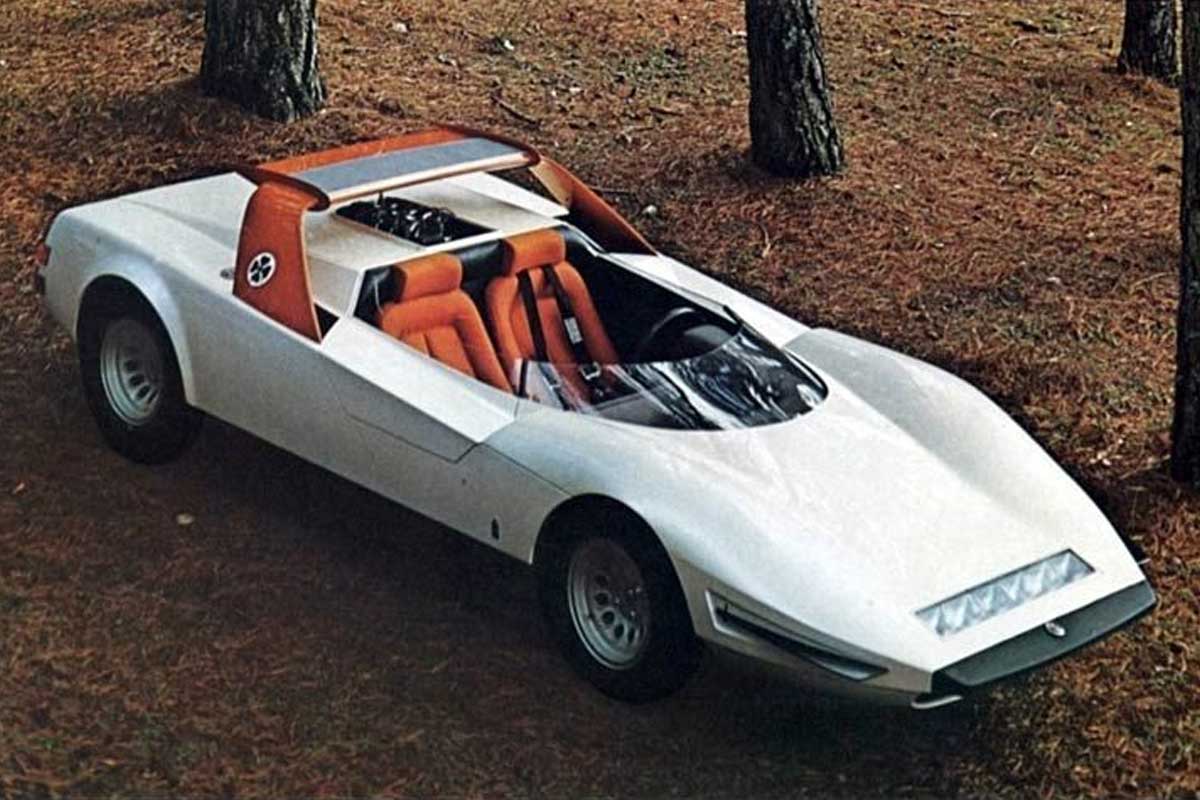
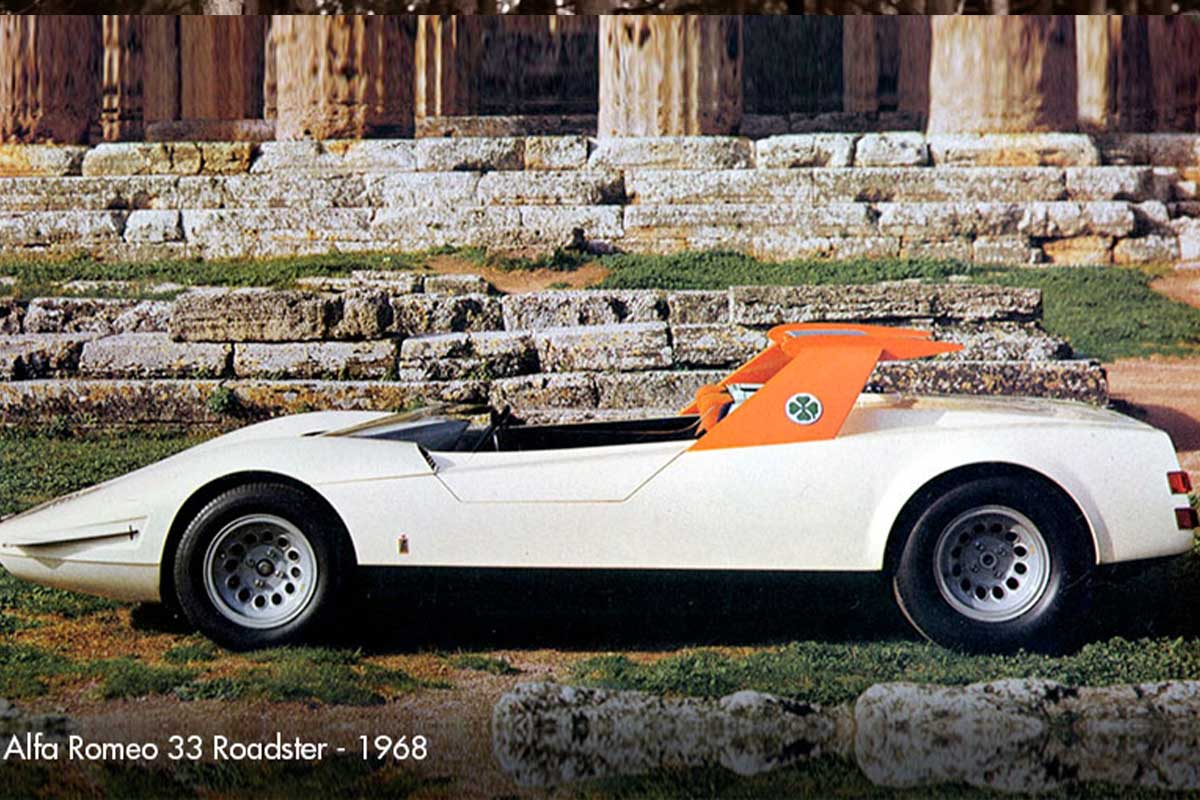

The doors open vertically, the windscreen is minimalist, and the interior is deliberately uncluttered, black with orange seats. The 33 Roadster GS will remain unique, but it will serve as the basis for an even more extreme evolution.
33 Coupé Speciale: sophistication by Fioravanti
In 1969, Pininfarina did it again with the Alfa Romeo Tipo 33/2 Coupé Speciale, designed by Leonardo Fioravanti. Presented at the Paris Motor Show, this version took a more technological and luxurious approach. Built on chassis 750.33.115, it features a glass roof, hydraulically operated gullwing doors and retractable headlamps.
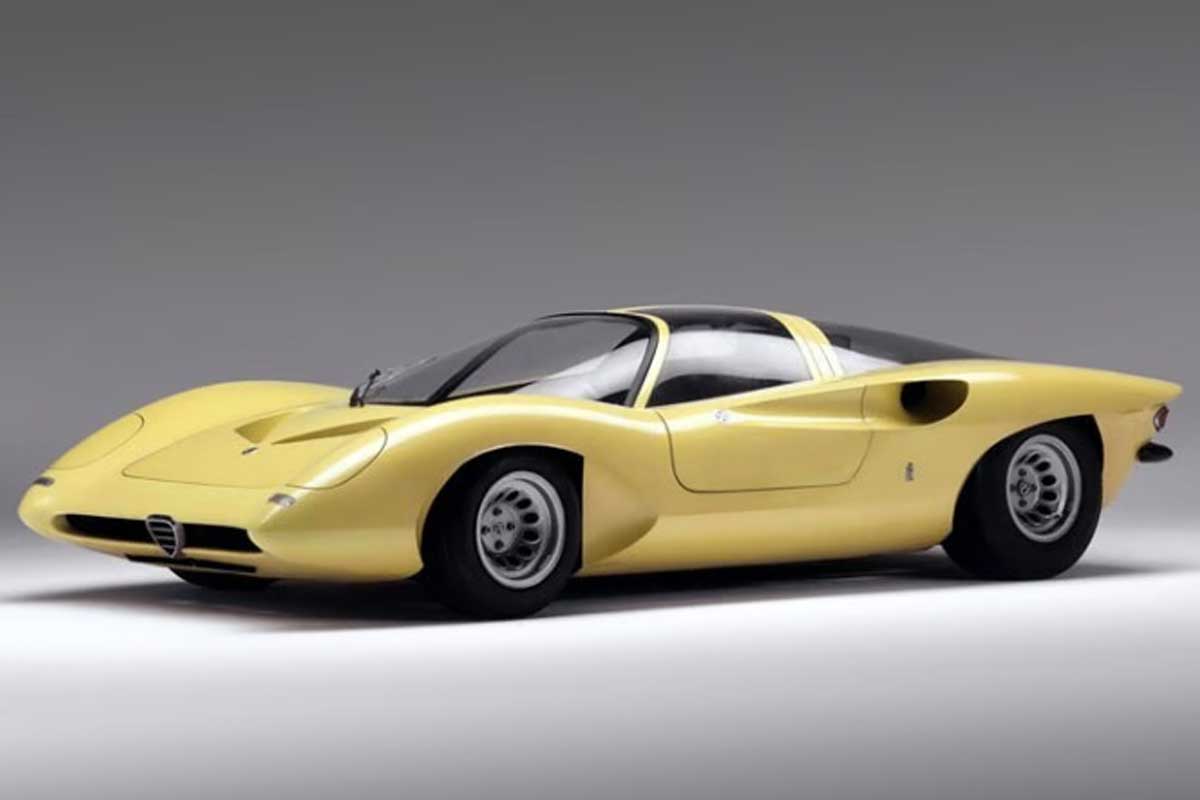
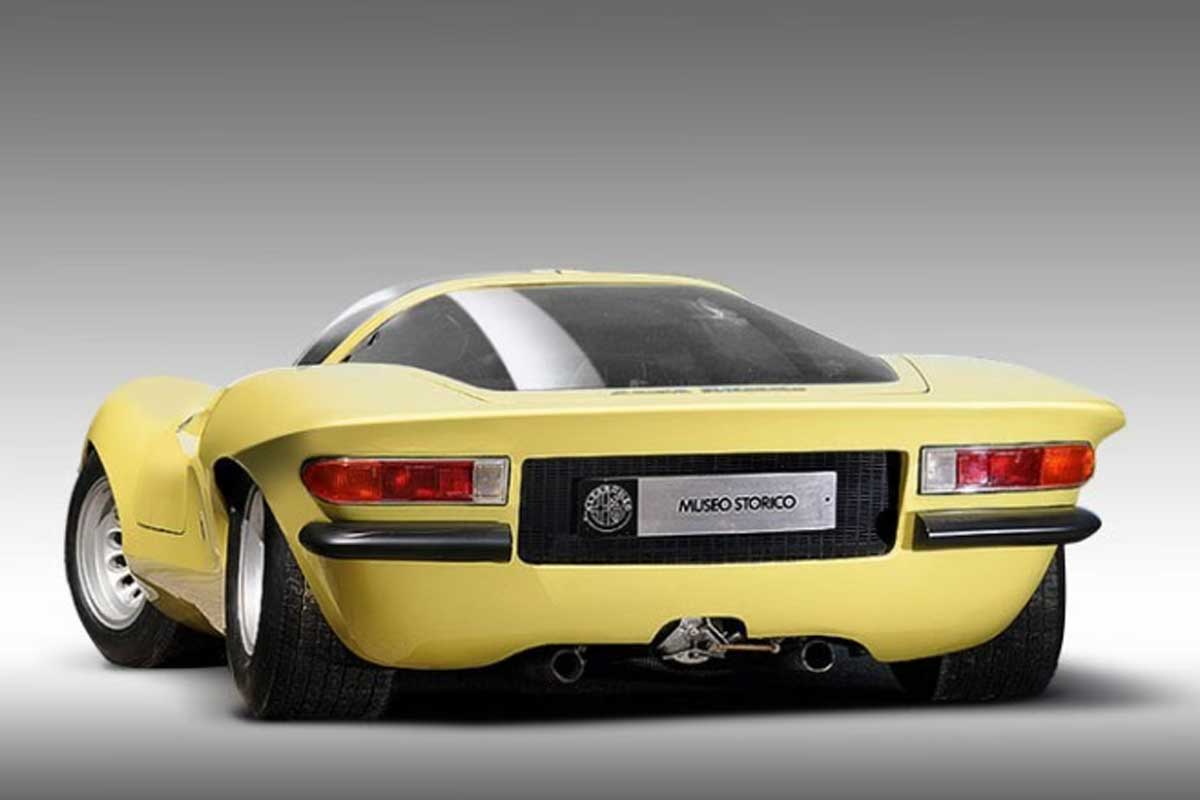
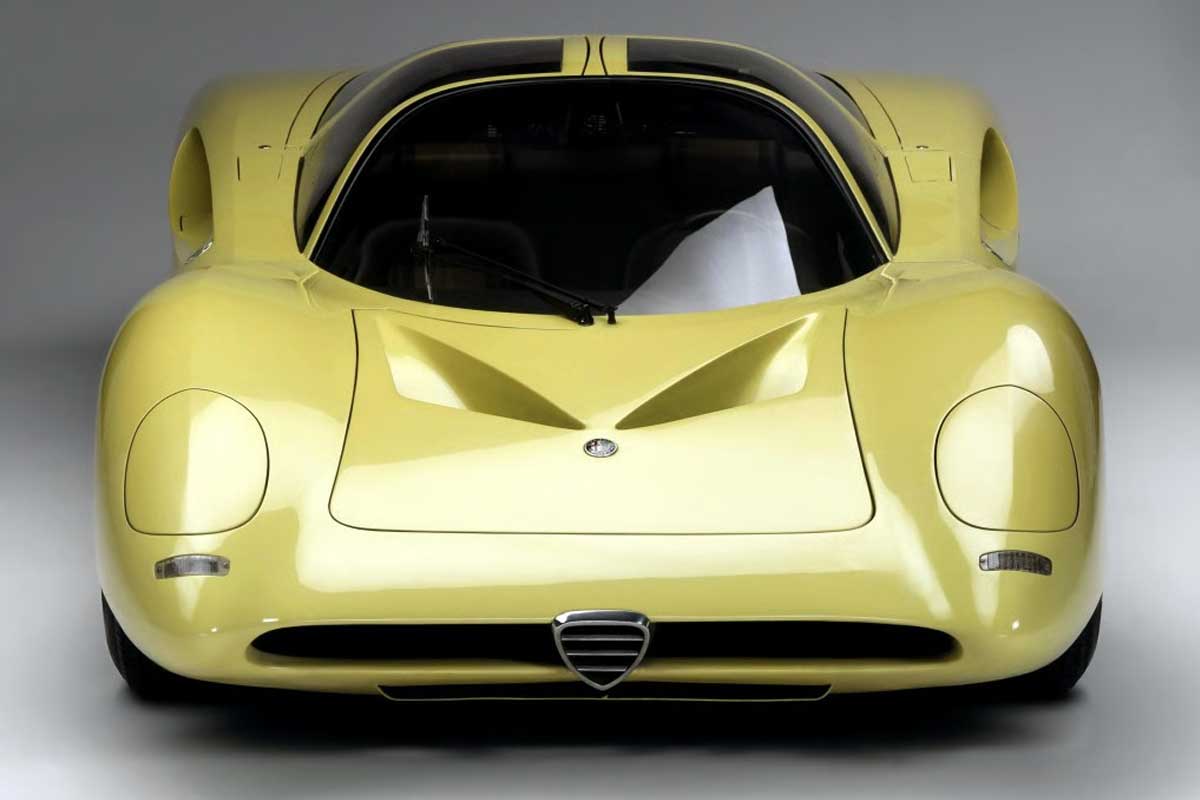
Painted in a bright yellow, this 33 Coupé Speciale was initially intended to be produced in a small series. In the end, it remained a one-off, a symbol of what the 33 Stradale could have become had Alfa Romeo persevered in the road-going supercar market.
Iguana: the birth of the Giugiaro style
With theIguanapresented in 1969, Giorgetto Giugiaro signed one of his first stylistic manifestos under the Italdesign banner. Based on the 750.33.116 chassis, the Iguana still uses the 230 hp 2.0-liter V8, before later adopting the Alfa Montreal's 2.6-liter V8 for reliability reasons. Visually, the concept stands in stark contrast to everything else on the market at the time. Metallic gray fiberglass bodywork, brushed metal roof and pillars, angular lines and a plunging windshield give the Iguana an almost timeless allure. Its aesthetics directly influenced models such as the Maserati Bora and Merak, and even prefigured the DeLorean DMC-12.
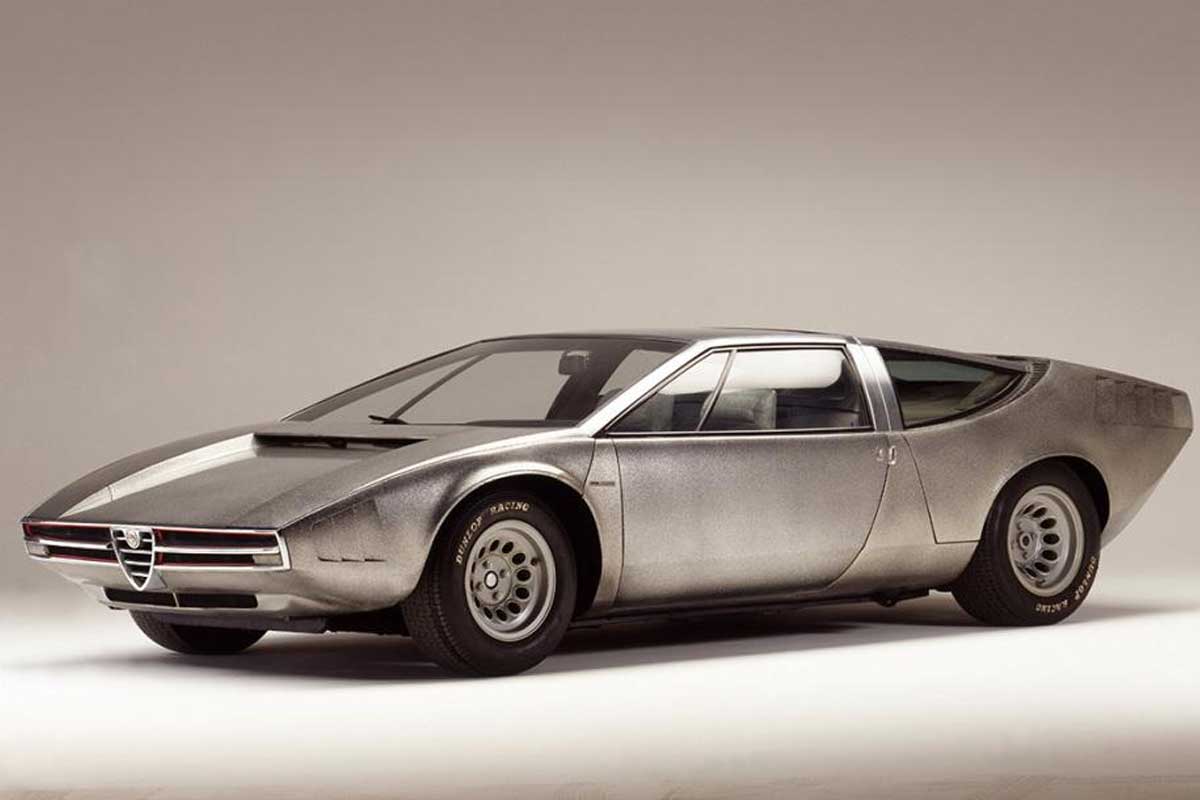
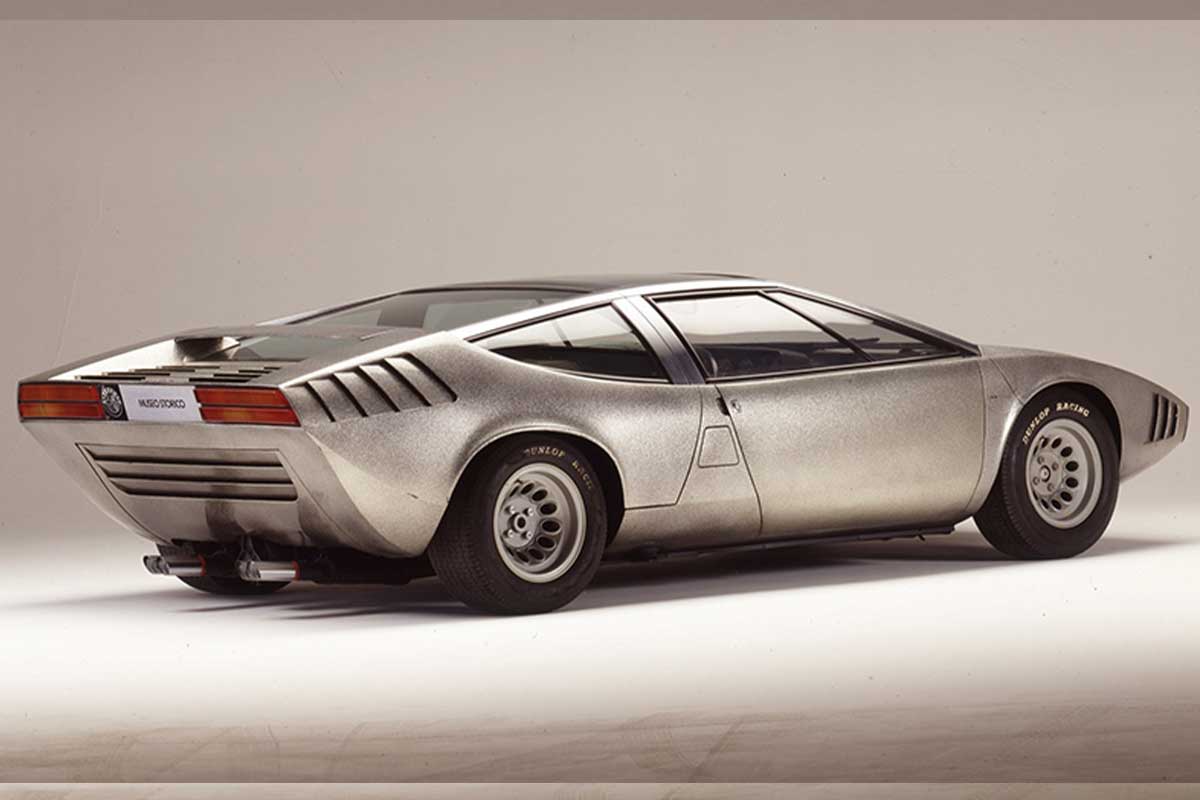
Also unique, the Iguana now rests in the Museo Storico Alfa Romeo, a reminder that Italian design in the 60s knew how to anticipate decades in advance.
33 Spider Cuneo: taking the concept to the extreme
In 1971, Pininfarina transformed the GS Roadster into an even more radical new creation: the 33 Spider Cuneo. Presented at the Brussels Motor Show, it abandoned almost all roundness in favor of a pure, sharp wedge-shaped profile. The car has no doors, the windshield forms a wraparound visor, and NACA air intakes sculpt the flanks. At the rear, six lights and eight tailpipes evoke the world of motorboat racing. The V8 remains unchanged, as does the featherweight of 700 kg.
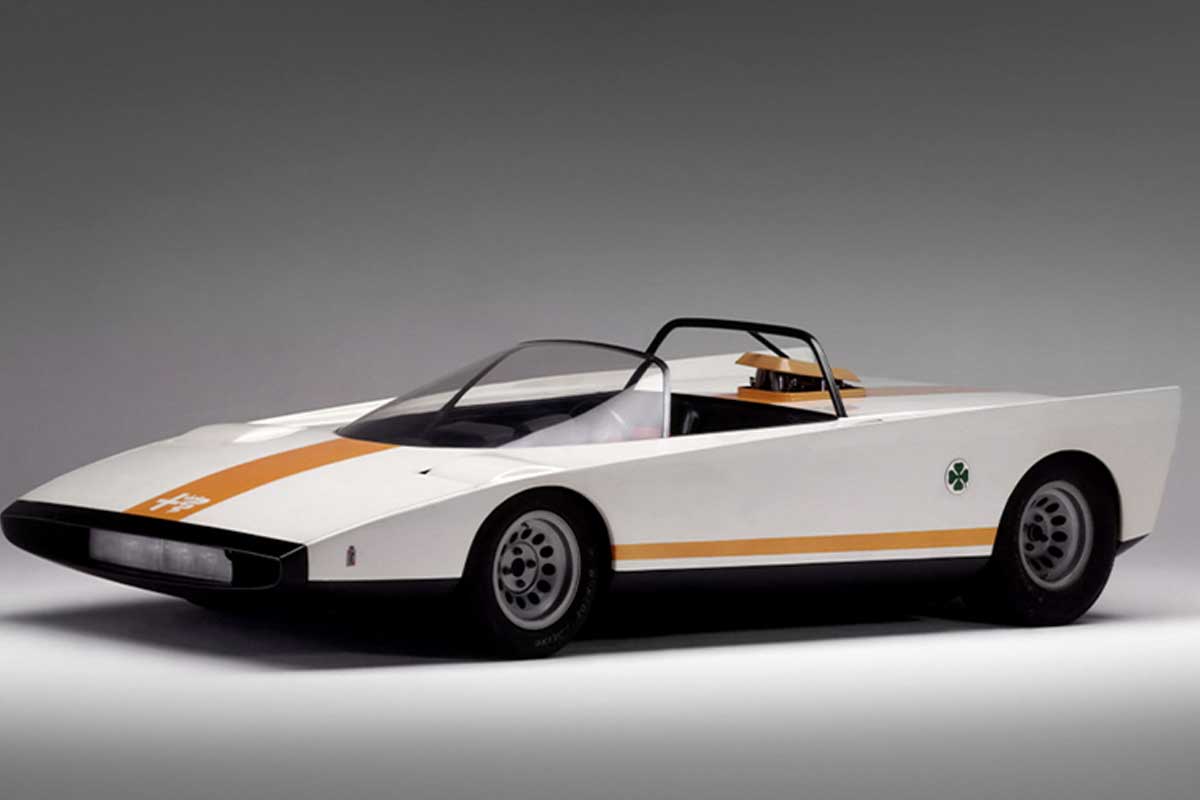
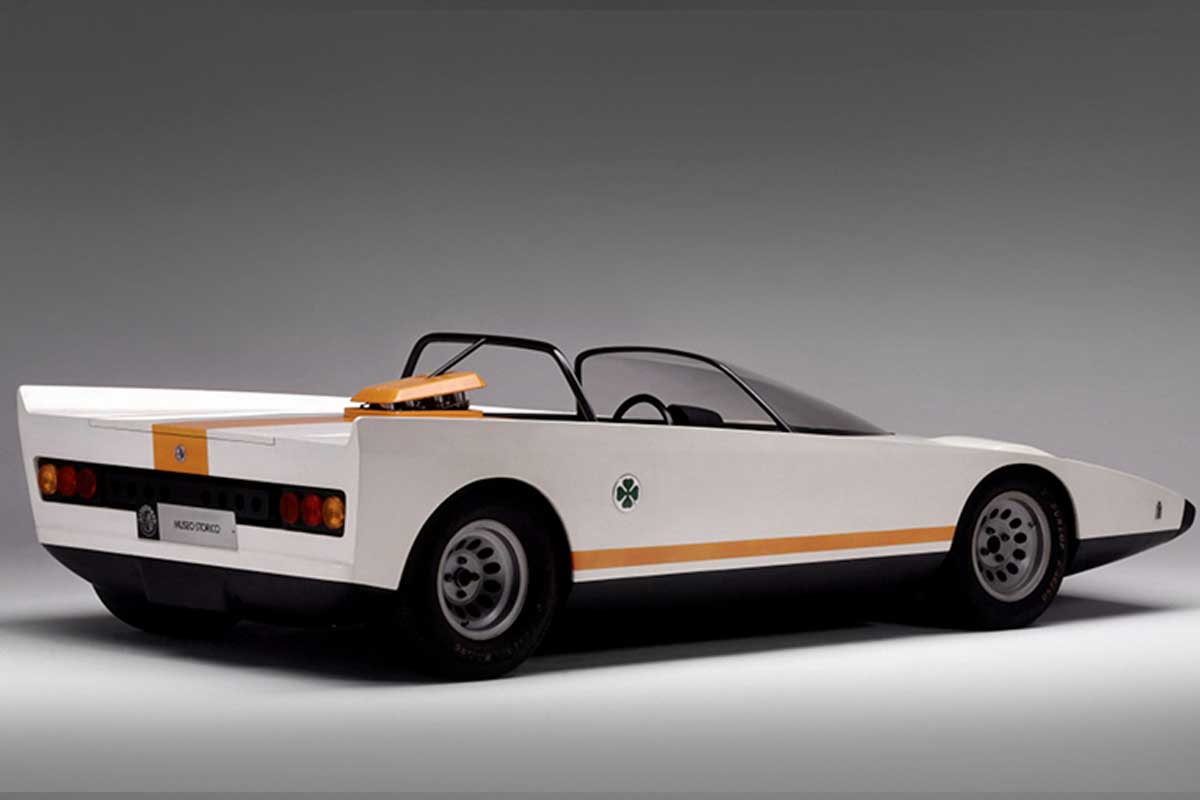
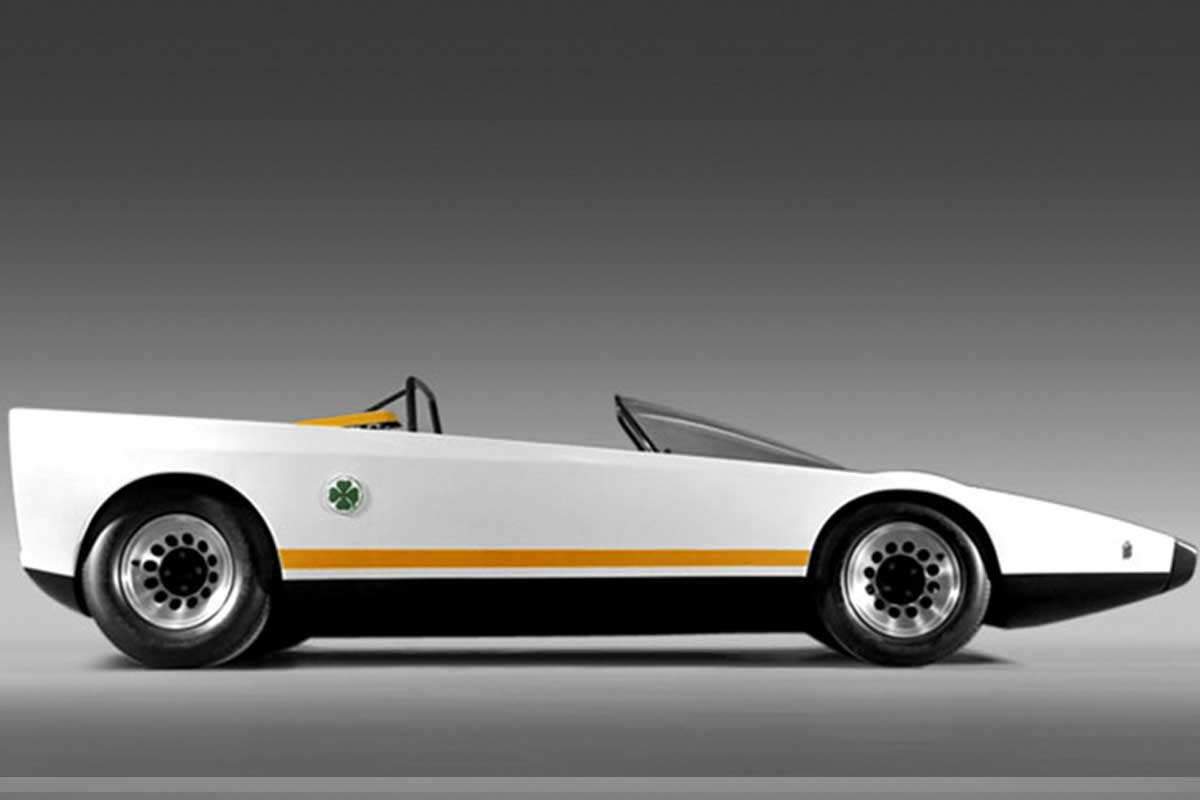
The Spider Cuneo is a true laboratory car, a demonstration of what the ultimate sports car could become when design was not limited by commercial constraints.
Navajo: the end of a futuristic era
The Alfa Romeo Navajo, the last concept based on a 33 Stradale chassis, appeared in 1976. Bertone and Gandini extended the wheelbase to incorporate a huge square rear spoiler, a central design element. Aerodynamics were at the heart of the project, with a movable spoiler, a speed-dependent front spoiler and retractable headlamps on the sides.
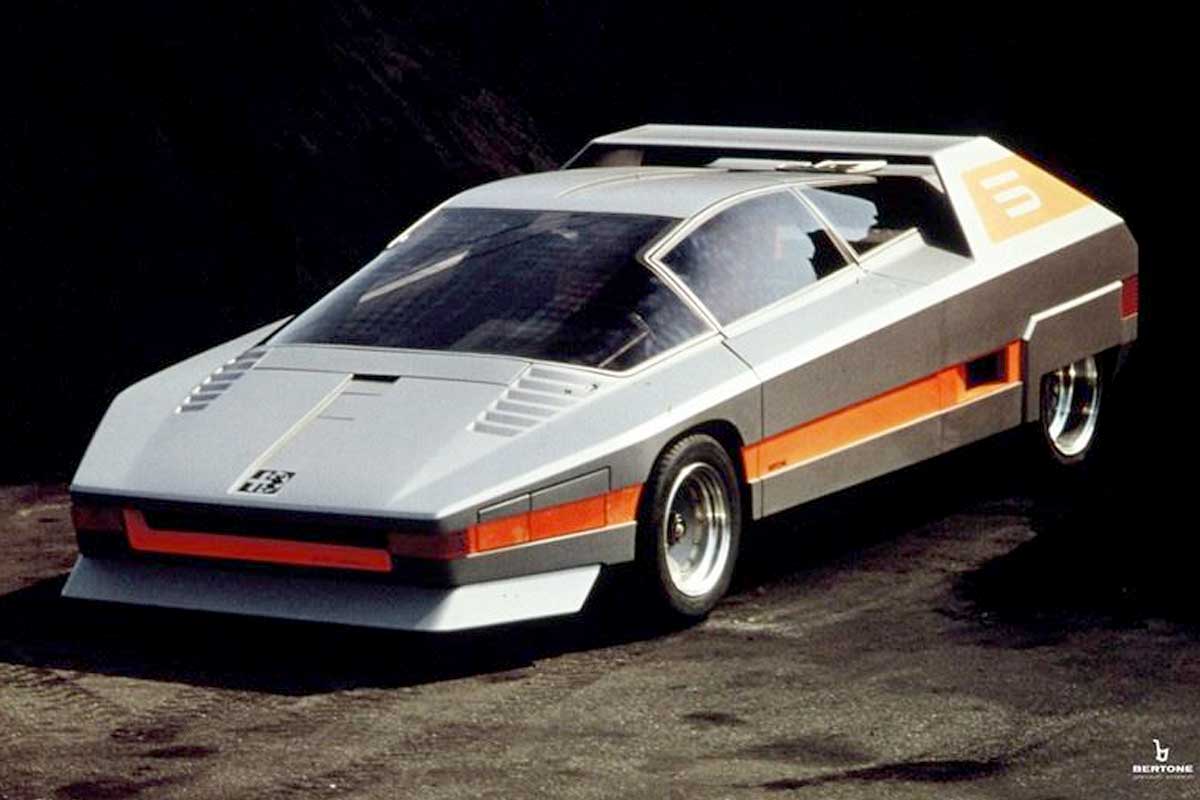
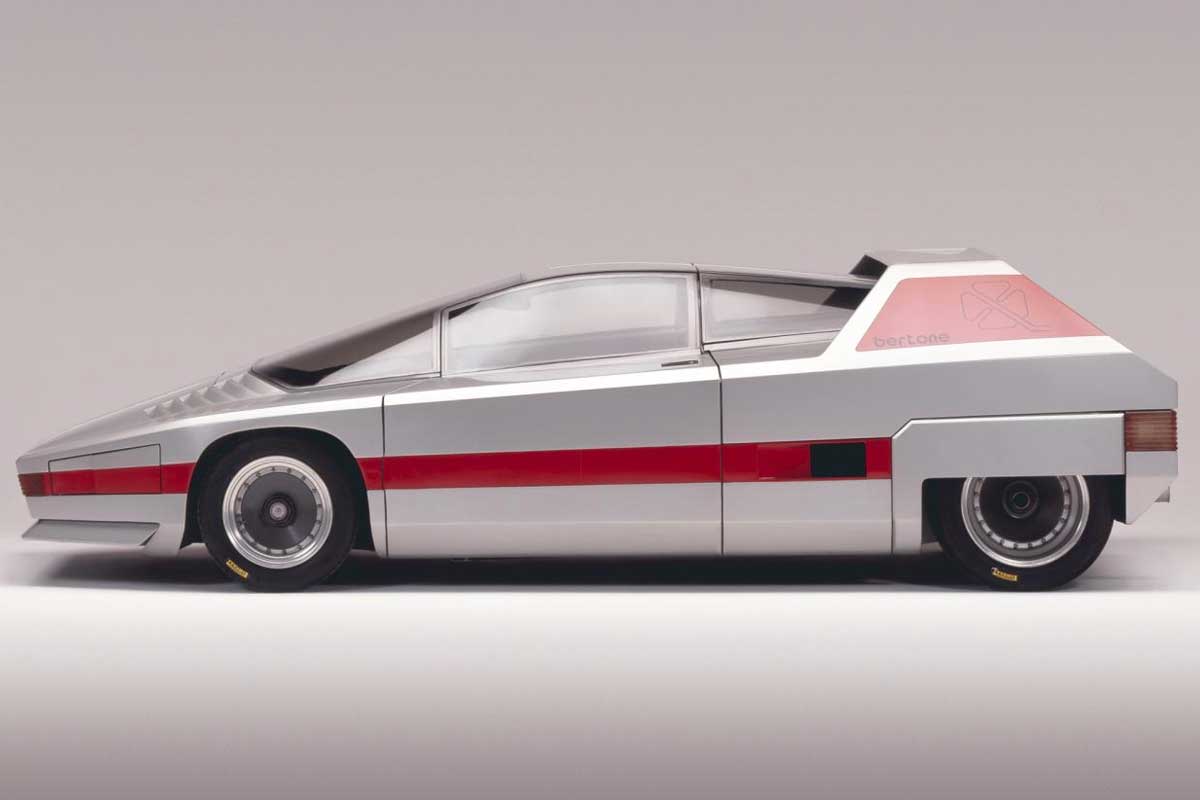
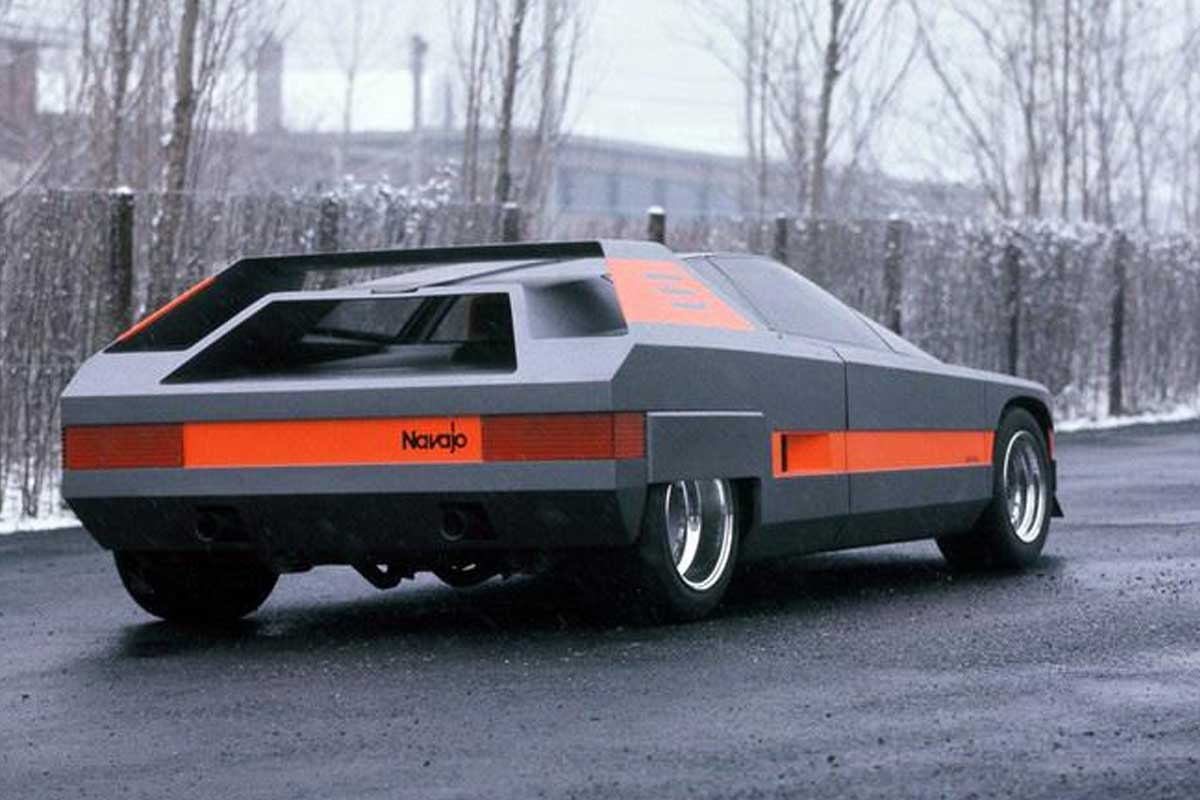
At just 3.80 meters long, 1.86 meters wide and 1.05 meters high, the Navajo is compact yet visually spectacular. Its minimalist interior contrasts with its spaceship-like appearance. It also marks the end of a cycle of extreme dream cars based on the 33 Stradale.
Ironically, it was the unsold Alfa Romeo 33 Stradale that gave rise to six legendary concept cars. Where the road car failed to find its audience, its chassis offered total freedom to the greatest Italian designers, giving birth to an unparalleled concentration of creativity.
 English
  French
  Italian
  Spanish
  Portuguese
  German
  Japanese
  Turkish
  Dutch
Dutch
Supper