

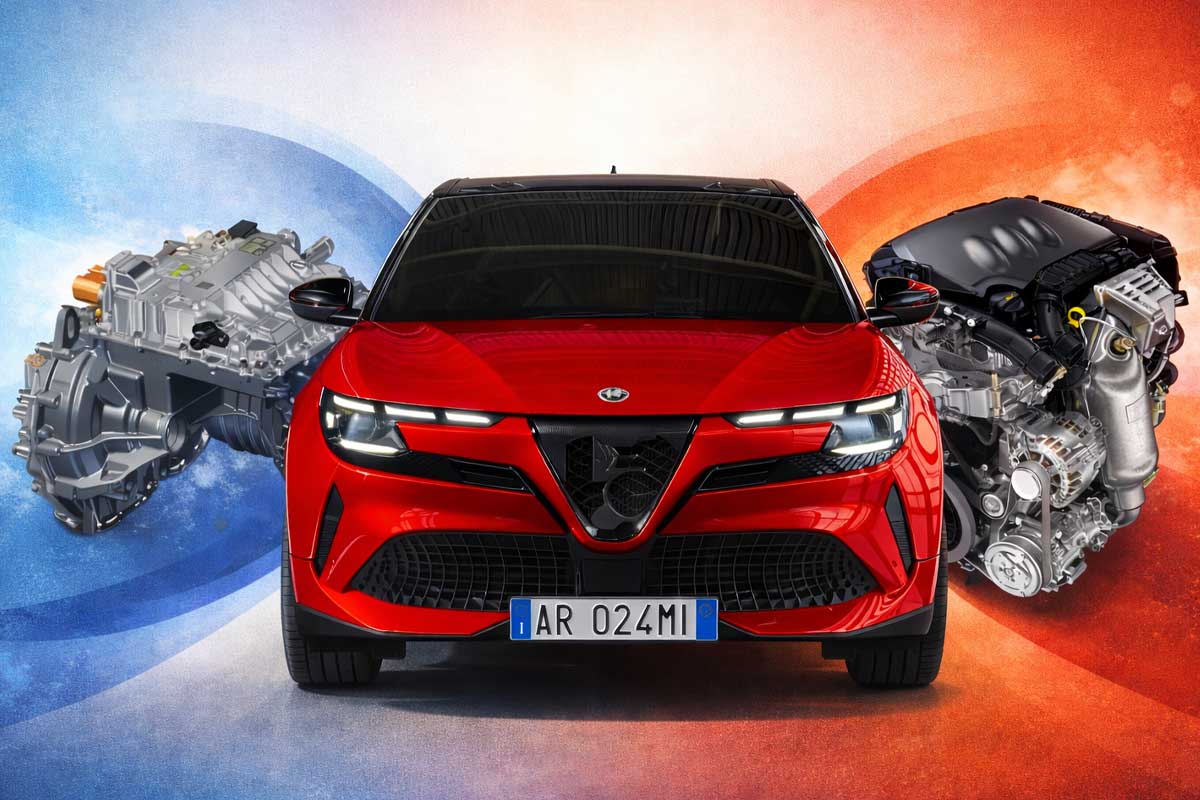
It's a tune you hear more and more often in the automotive industry. While the Stellantis should officially accelerate towards 100 % electric vehicles in Europe, the reality of the market is very different.
The year 2025 was marked by a strong signal: almost 22 billion euros in write-downs, This is largely due to the uncertainties surrounding electrification and the commercial prospects of zero-emission models. This situation prompted Stellantis to adapt its approach and, above all, its strategy. Since then, the Group has repeatedly stated that, rather than imposing an abrupt transition, customers should be given a choice. In other words, continue to offer a range of powertrains (internal combustion, hybrid and electric), so that everyone can buy a vehicle suited to their means.
But what about the Italian brands? Have customers really switched to electric vehicles?
To answer this question, we analyzed 2025 sales of three recent models, all designed in the Stellantis era and offered in multi-energy: the’Alfa Romeo Junior, the Fiat 600 and the Lancia Ypsilon. Three cars launched between 2023 and 2024, and three major markets studied: France, Germany and Italy.
Alfa Romeo Junior: electrics in the minority everywhere
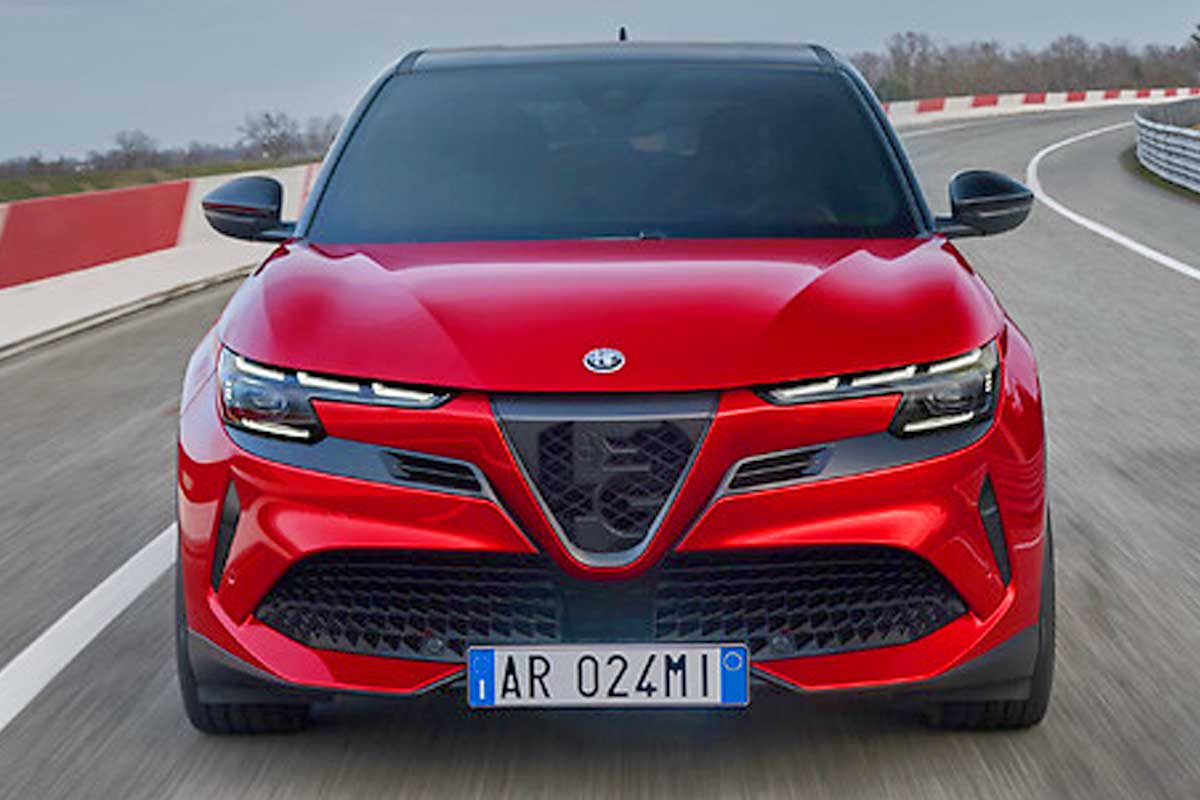
With 22,744 units sold in these three markets in 2025, the’Alfa Romeo Junior is a good indicator of current trends.
- In France, 1,307 of the 4,573 units sold were electric. This represents around 29 % of sales.
- In Germany, the situation is radically different. Out of 3,999 Juniors sold, only 217 are electric versions. Just over 5 %s.
- Italy confirms this cautious approach to the electric 100 %. Out of 14,172 units sold, 1,284 were electric, i.e. around 9 %s.
In other words, even on a recent model designed to support the energy transition, electric motorization is still very much in the minority.
Fiat 600: a timid transition
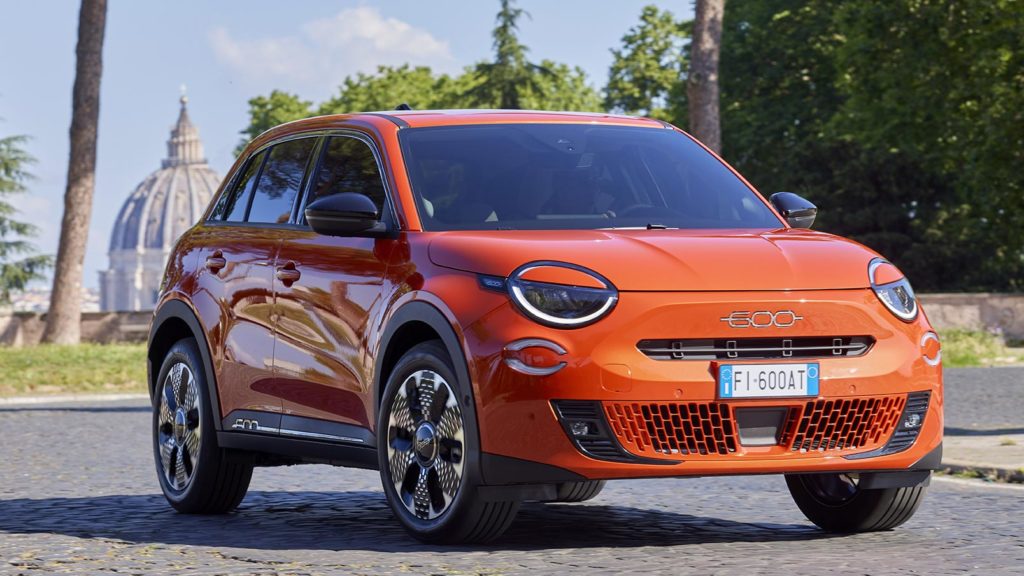
The Fiat 600 follows a similar trajectory, despite its more mainstream positioning.
- In France, 7,723 units were registered in 2025, 1,819 of them electric. This represents around 24 % of sales.
- In Germany, the share falls sharply: of 6,972 vehicles sold, only 383 are electric, or around 5.5 %.
- But it's in Italy that the gap becomes spectacular. Out of 21,266 Fiat 600s sold, only 487 are electric versions. Just over 2 %.
A figure that perfectly illustrates the reality of the market: in a country where purchasing power remains a key factor, combustion and hybrid vehicles continue to dominate.
Lancia Ypsilon: Italy sticks to thermics
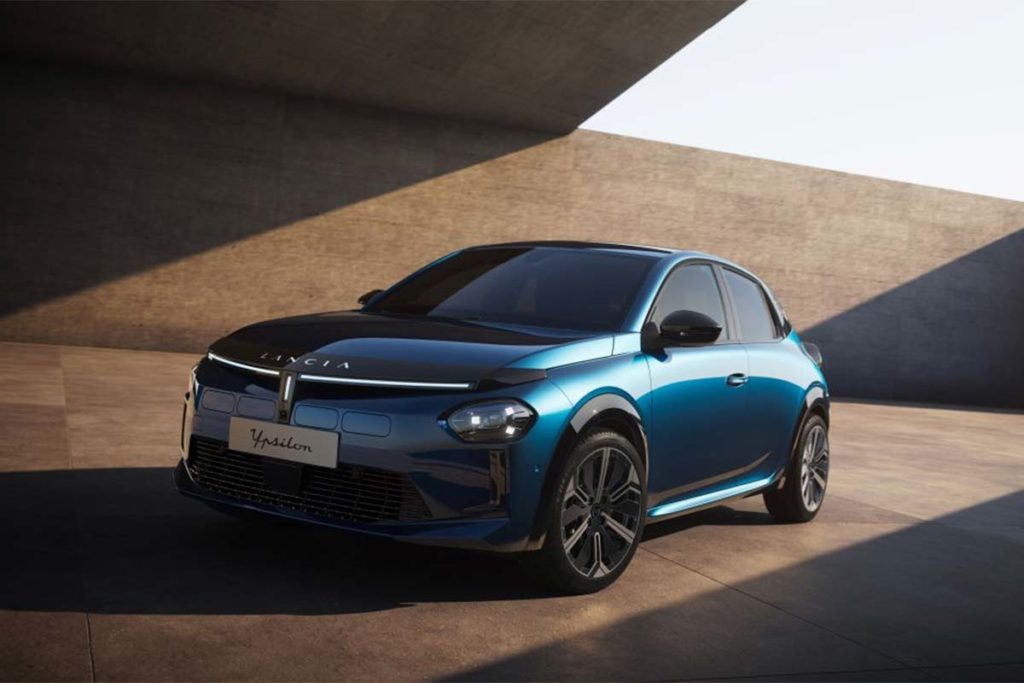
The news Lancia Ypsilon, relaunched under the Stellantis era, also confirms this trend.
- In France, out of 850 sales, 148 were of the electric version, i.e. around 17 %s.
- In Germany, the model is simply not on the market.
- In Italy, on the other hand, its main market, out of 9,708 units sold, only 951 were electric. This represents less than 10 % of sales.
Here again, most customers opt for more affordable engines.
A market reality far removed from political rhetoric
These figures tell a very clear story: despite regulatory targets and stated ambitions, actual demand remains largely oriented towards non-electric powertrains.
Even on recent models designed to support the energy transition, the 100 % electric does not exceed 25 % of sales... and often falls below 10 % depending on the market. Of the three countries studied, France appears to be the most open to electric vehicles. Germany and especially Italy, on the other hand, show strong resistance.
Against this backdrop, Stellantis' current strategy of offering all engines and leaving the choice to the customer seems less like a compromise than a commercial necessity.
 English
  French
  Italian
  Spanish
  Portuguese
  German
  Japanese
  Turkish
  Dutch
Dutch