

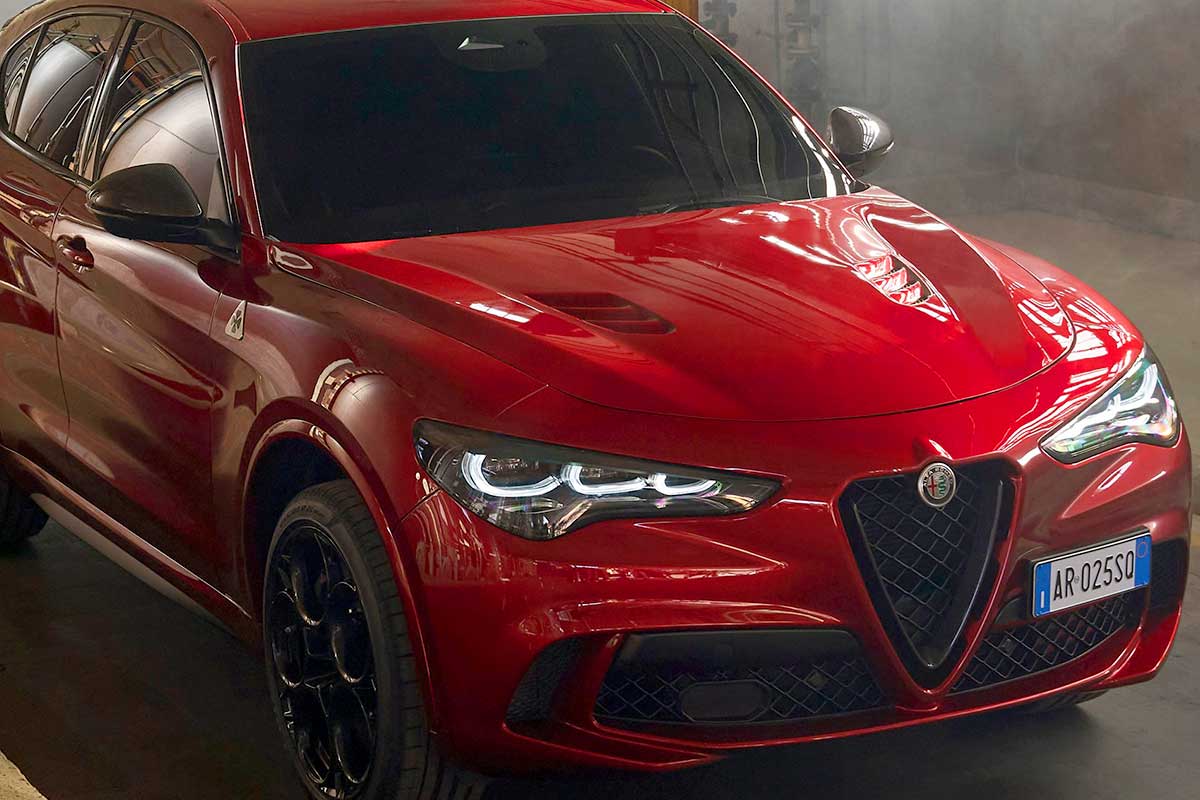
When Alfa Romeo presented its latest Giulia and Stelvio Quadrifoglio in a "Collezione" edition, many first looked at the photos, the finishes, the presentation details. But something else immediately jumped out: the prices. How can we explain the fact that a Giulia Quadrifoglio priced under €70,000 a few years ago now happily tops the €100,000 mark in France, while the cars, in both philosophy and performance, remain more or less identical? Instinctively, we might point the finger at Stellantis and speak of a pure increase in margins. But in reality, the mechanics are far more regulatory than commercial. And above all, it goes far beyond Alfa Romeo.
The European rule that makes prices soar
Since 2020, carmakers operating in Europe have been subject to the CAFE law, for Corporate Average Fuel Economy. The principle is simple and implacable: each manufacturer must pay €95 per gram of CO₂ above a threshold set at 81 g/km on average sales. This is not a tax displayed to the customer in black and white, but a penalty that manufacturers integrate directly into their pricing grids.
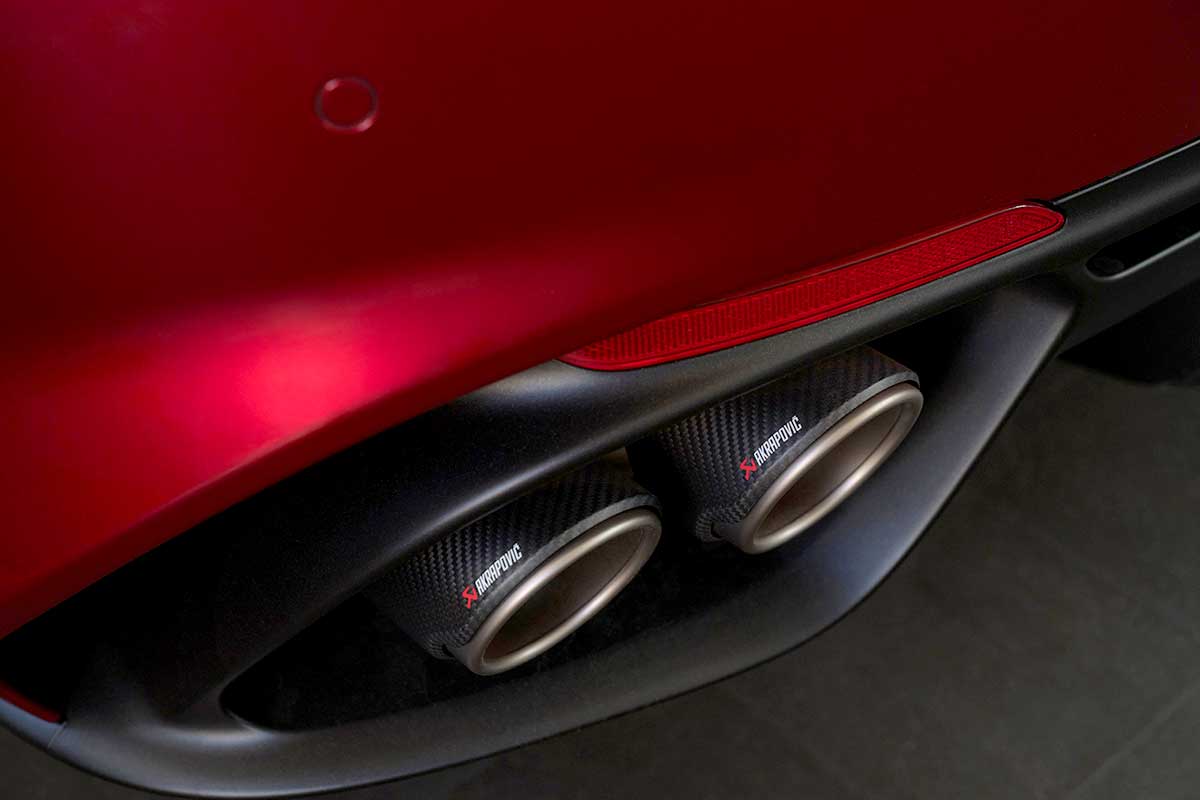
Let's take the case of the Alfa Romeo Giulia Quadrifoglio. In its 2019 model year, its price was around €83,300, with CO₂ emissions measured at 237 g/km. In 2025, its list price in France now stands at €100,400. The difference? It comes neither from a radical change of engine, nor from a technological upheaval.
Yet the calculation is very simple: 237 g of CO₂, minus the European threshold of 81 g, gives 156 grams in excess. Multiplying these 156 grams by the €95 penalty, we arrive at a tax of €14,820, directly integrated into the selling price. Removing this sum, the "real" price of the car drops to around €85,580. In other words, very close to the original price.
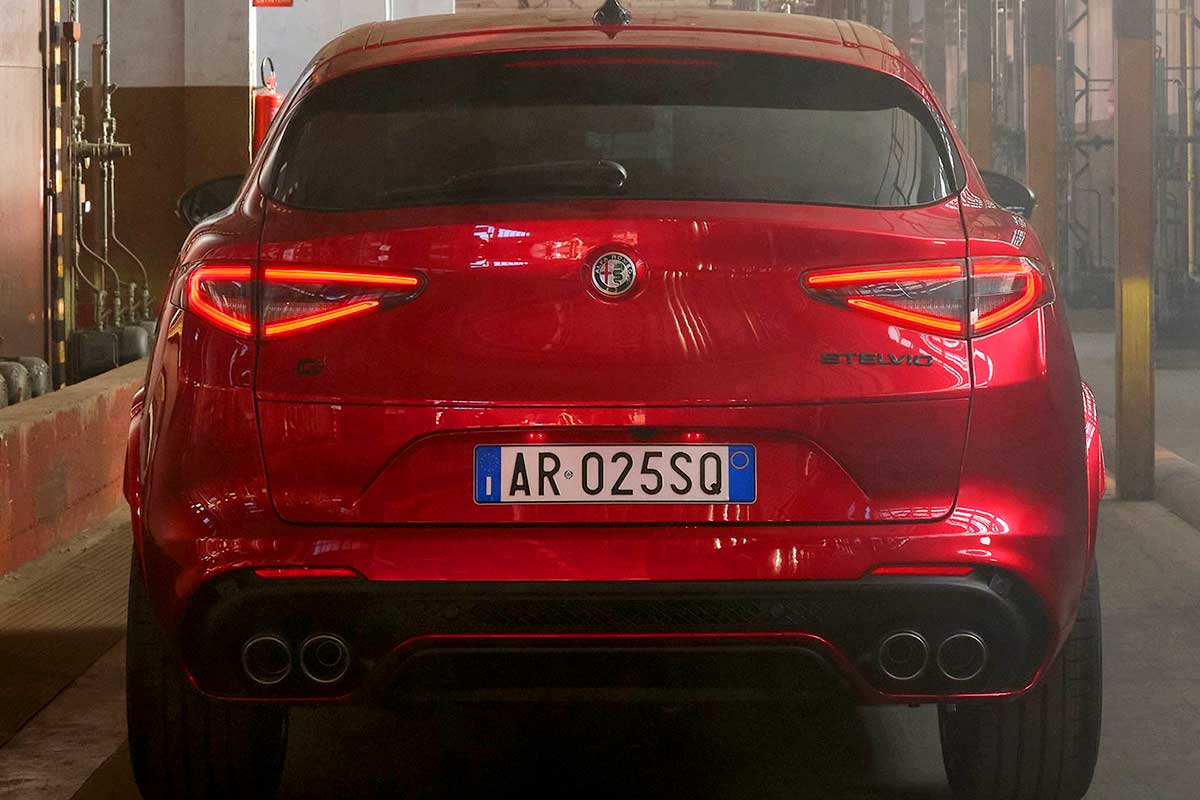
The reasoning works in exactly the same way with the Alfa Romeo Stelvio Quadrifoglio. In 2018, it cost around €91,400. In 2025, it will cost €110,900. Emissions reach 267 g/km, 186 grams above the European threshold. The manufacturer's penalty is €17,670. Once removed, the real price will also be comparable to that of a few years ago.
| Alfa Romeo Giulia Quadrifoglio | Alfa Romeo Stelvio Quadrifoglio | |
|---|---|---|
| Price list 2018 | 83 300 € | 91 400 € |
| Price 2025 | 100 400 € | 110 900 € |
| of which CAFE tax | 14 820 € | 17 670 € |
| Price 2025 without tax COFFEE | 85 580 € | 93 230 € |
To put it plainly: the cars didn't take €20,000. It's the taxes that have taken €20,000. And that's not even the end of the story. Because this invisible tax paid by the manufacturer at the time of marketing is only the first layer. The second comes at registration.
In France, the ecological malus now reaches up to €70,000 for vehicles exceeding 194 g/km of CO₂. In the case of a Stelvio Quadrifoglio, a French buyer therefore suffers a double penalty: around €17,670 built into the price of the vehicle, then up to €70,000 paid out of pocket at the time of purchase. This represents almost €88,000 in cumulative taxation for a single car. In other words, a French customer literally pays twice for the same emissions.
This mechanism is not limited to Alfa Romeo. It has been extended to the entire European automotive industry. A Fiat 500 hybrid with around 120 g of CO₂ already has more than €3,700 in tax built into its price. In 2030, when the European threshold falls to 59 g/km, this penalty will climb to almost €5,800 for this small car.
For exceptional cars, the phenomenon is even more brutal. A Maserati MCPura with an emissions level of 279 g/km already carries a penalty of over €18,800, a figure that will exceed €20,900 by 2030. Even a much wiser Alfa Romeo Junior hybrid already carries a European tax of around €3,420 in its list price. And in almost all European countries, these amounts are then added to local taxes, whether in the form of purchase deductions, annual surcharges or user fees.
What's most alarming, however, is what's coming. In 2030, the European threshold will fall from 81 to just 59 g/km. At this level, even "reasonable" hybrid cars will be fiscally penalized. As for combustion-powered sports cars, they will become virtually unmarketable as new models, unless we can offer high-performance hybrid engines.
The logic is mathematical. The lower the thresholds, the higher the prices. Manufacturers have only three options: massively electrify their ranges, abandon combustion engines, or raise prices to absorb the penalties. This is precisely what which explains the difficulty of relaunching Abarth with internal combustion models in Europe.Ferrari and Lamborghini have understood for several years that they need to offer plug-in hybrid powertrains in their range. As a result, their customers pay less tax than a Fiat 500 customer. In short, think about it when comparing new car prices in the future!
 English
  French
  Italian
  Spanish
  Portuguese
  German
  Japanese
  Turkish
  Dutch
Dutch
Well, it's all about gas-guzzlers! The new Clio and our 130 hp Yaris cross are not subject to this tax craze. It just goes to show that the 500 hybrid is technically out of date!
Any car that emits more than 81g, and soon 53g. The Clio 6 in fact emits 89g for the 160hp, which is excellent, and only adds up to 760 euros in COFFEE tax. Nevertheless, the article explains: 1- why car prices have risen in recent years. 2- the non-transparency of the CAFE tax in the selling price.
This article explains all about car price increases. Double penalty: one for the manufacturer, the other for the buyer. As a result, powerful cars are becoming too expensive for almost everyone.
All you have to do is buy these cars second-hand, like the extraordinary Giulia Quadrifoglio or Stelvio Quadrifoglio.
Planet Earth is 4 billion years old and has experienced a multitude of cataclysms, yet it's still here. Mankind is only a few thousand years old, i.e. not even a day in 4 billion years when we disappear, and it'll still be here. You've got to tell our European leaders, who are environmentalists at heart! 😂
Extremists can't listen to reason. Just sit back and watch the ship sink.
This has nothing to do with the planet and everything to do with the survival of our grandchildren. We have no choice but to decarbonize at high speed. The "solution" we've found here isn't a solution at all, since all we have to do is pay a little more to continue emitting CO2. In other words, only middle-class households are really affected, and they'll be turning to the second-hand market in droves. As far as the 500 is concerned, the electric version is better in every respect, even if it still has room for improvement in terms of efficiency and recharging.
Mitteleuropa wird in ca 2.500 Jahren unbewohnbar sein, das verursacht die Polarverschiebung, mit oder ohne Autos, es ist ja auch der Hausbrand und viele veraltete Frachtschiffe und Paketbomber der Expressdienste.
If I follow your reasoning, it means that certain manufacturers are confusing us... How do audi, bmw, mercedes and wv manage to sell us so many top-of-the-range and powerful cars? Here's a tip !!!!!
There are several possible policies: some can smooth co2 across all brands (renault, dacia, alpine), others will buy co2 credit (from Tesla, for example), others are much better on average co2 (look at the number of electrics, phevs and hevs at bmw). I think that some manufacturers who will exceed the overall average, and won't want to buy a co2 credit, are choosing to include the co2 tax in the selling price.
Aaah EU leadership. I wonder what their excuse will be when their automotive industry collapses.
Don't forget that it was Fiat that bought Chrysler, not the other way around.
So schauts aus, in Deuschland werden Fiat,Alfa Romeo, Maserati, von den Mitbewerbern in hohen Maßen denunziert 🤧
Warum baut man dann nicht für weit weniger eine attraktive Elektroversion .Gerade bei Alfa sind die Stückzahlen so klein das Skaleneffekten auch bei Verbrennern kaum greifen. Mann hätte die Chance ergreifen müssen. Nun kommen Chinesen wie Xiaomi mit hübschen SuV und Limousinen. Wir hatten 6 Alfa Romeo und sind nun mit 2 Tesla unterwegs. Schade eigentlich.
It's also worth noting that, for manufacturers, the penalties, while significant, don't make cars unmarketable, but a little more expensive. What really makes cars too expensive is the French malus, which climbs drastically every year.